Japanese Miso Dipping Sauce
Tsukemen (Miso Tsukedare)
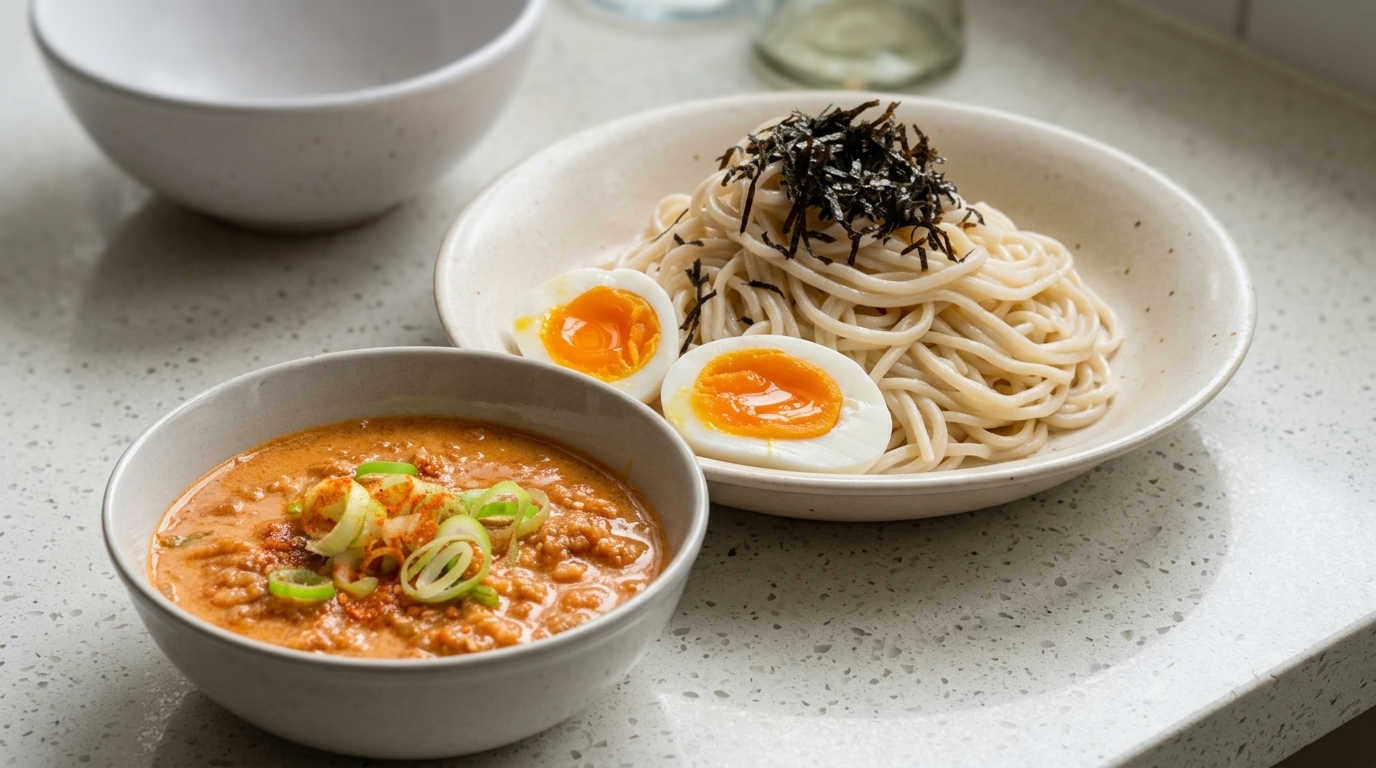
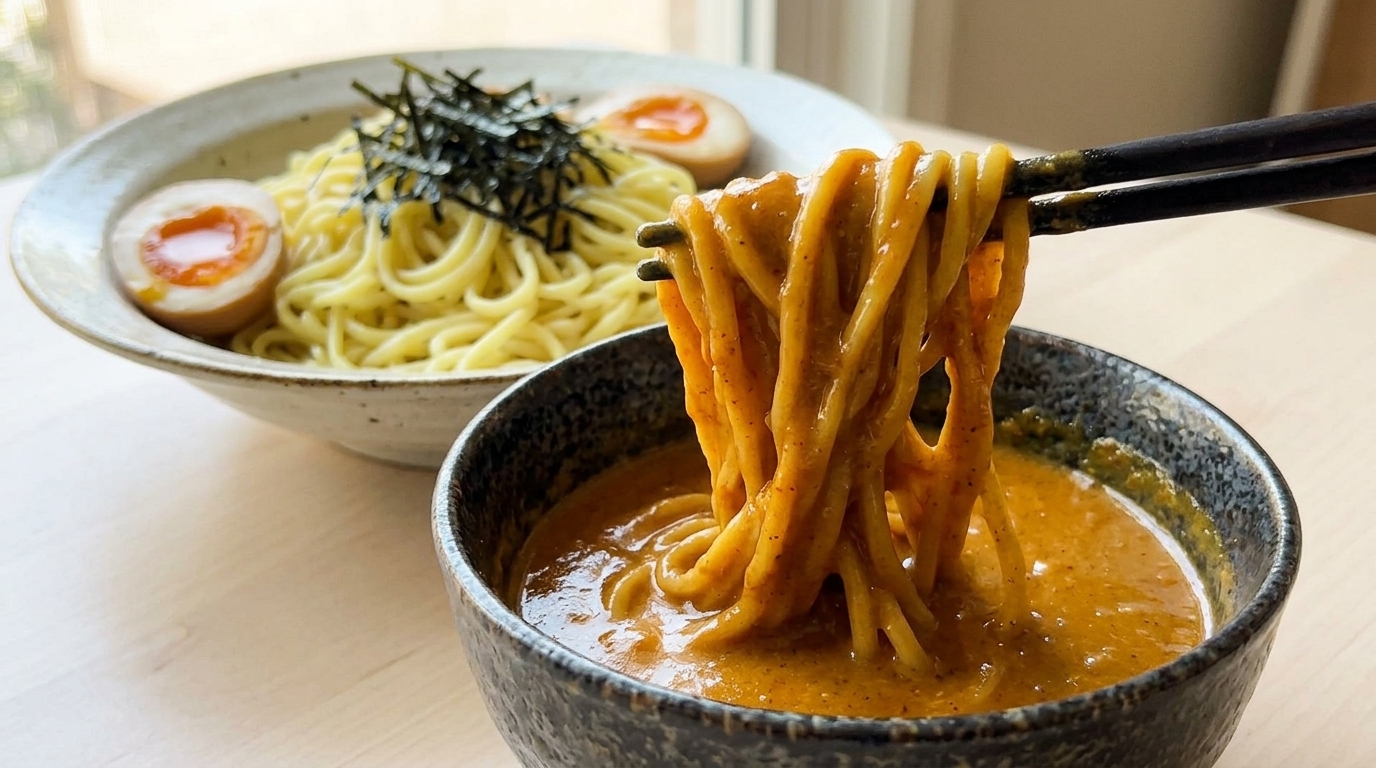
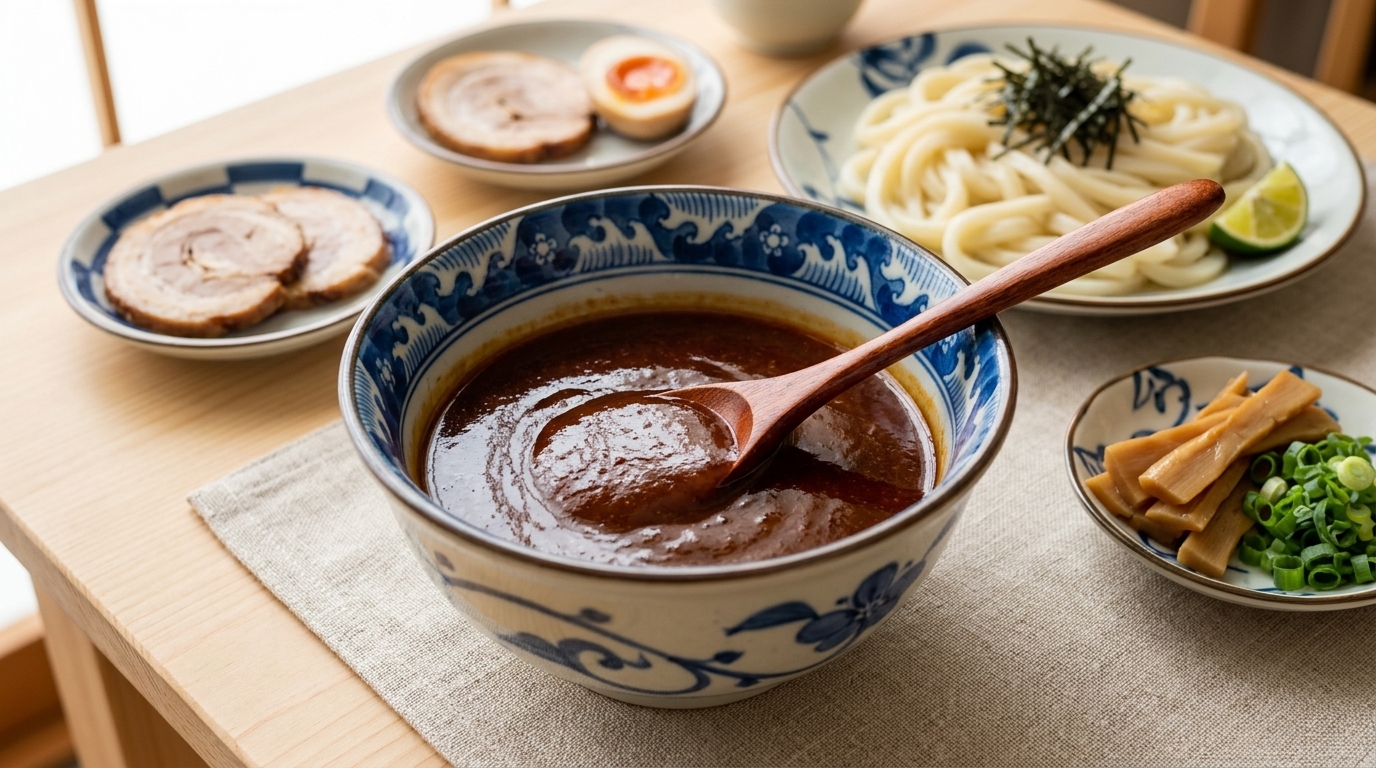
A rich and velvety Miso Tsukedare — a concentrated dipping sauce with the deep umami of aged red miso, aromatic dashi, and a glossy, syrupy finish.
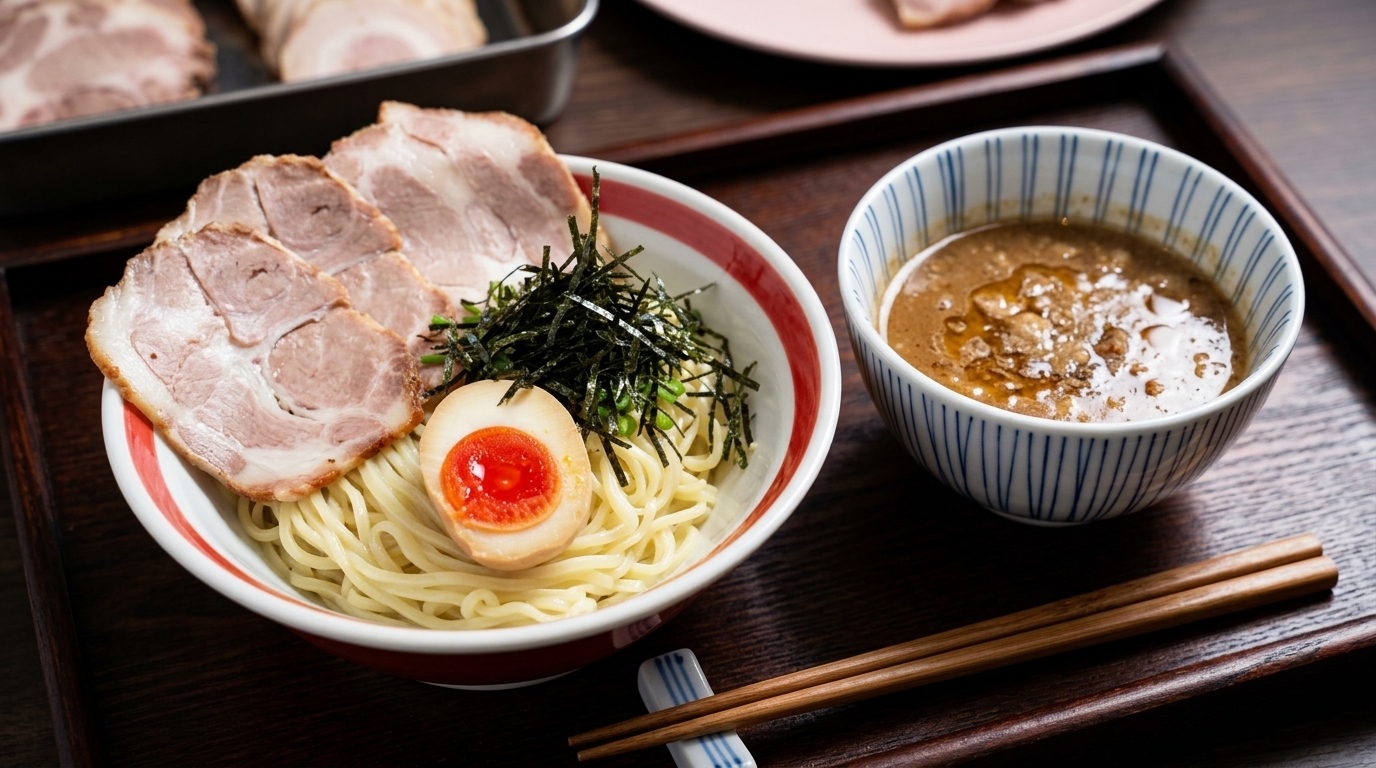
Tsukemen, or dipping ramen, is a cornerstone of Japanese ramen culture where the soul of the dish lies in the intensity of its sauce. This recipe balances the robust saltiness of red miso with the delicate sweetness of white miso and mirin, creating a heavy-bodied glaze that perfectly coats thick, chewy noodles. It is an essential component of professional ramen training, focusing on the careful reduction of flavors.
Ingredients
- 100 ml dashi broth
- 50 ml mirin
- 30 g red miso
- 50 ml dark soy sauce
- 30 g white miso
- 50 g sugar
- 50 ml sake
Instructions
- 1Start with mirin and sake
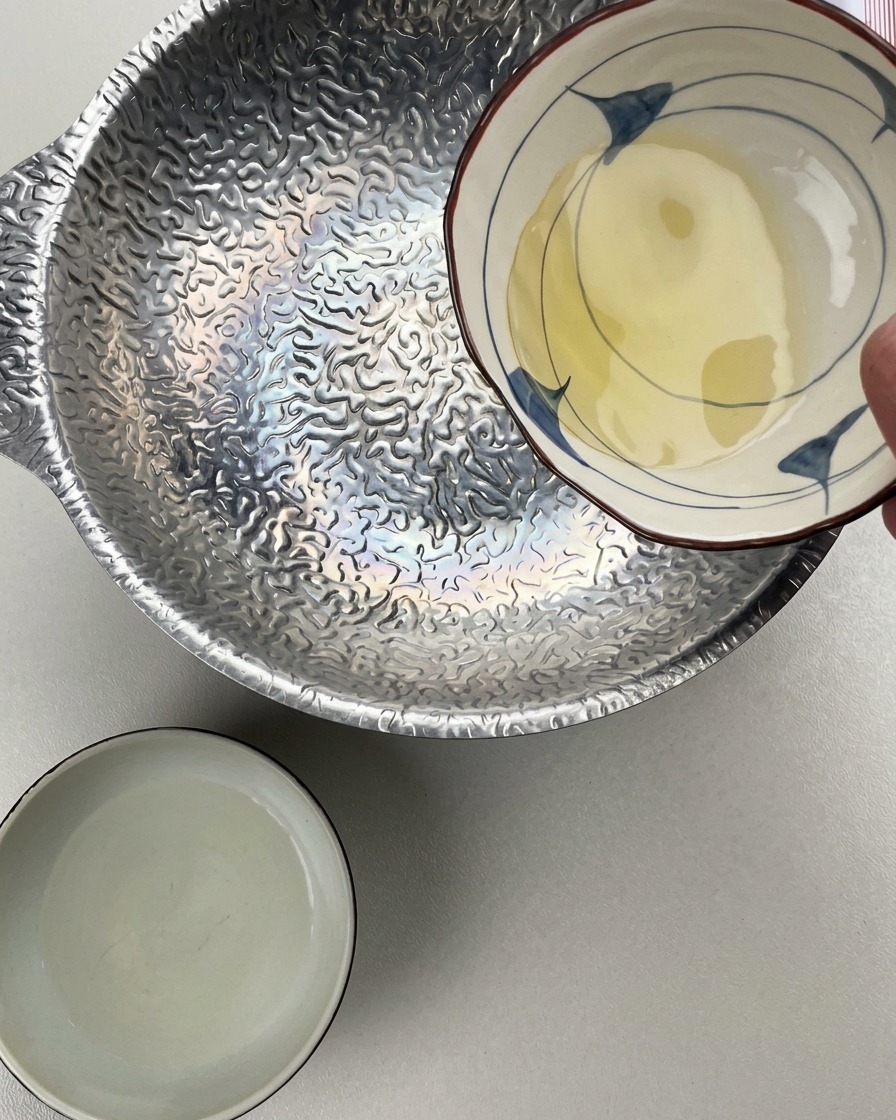
Pour the measured mirin and sake into a textured silver cooking pot. These two ingredients serve as the liquid base for the sauce, providing a subtle sweetness and aromatic depth that will be concentrated through reduction.
Tip: Use high-quality Japanese mirin and sake to ensure the most authentic and refined flavor profile for your dipping sauce. - 2Evaporate the alcohol
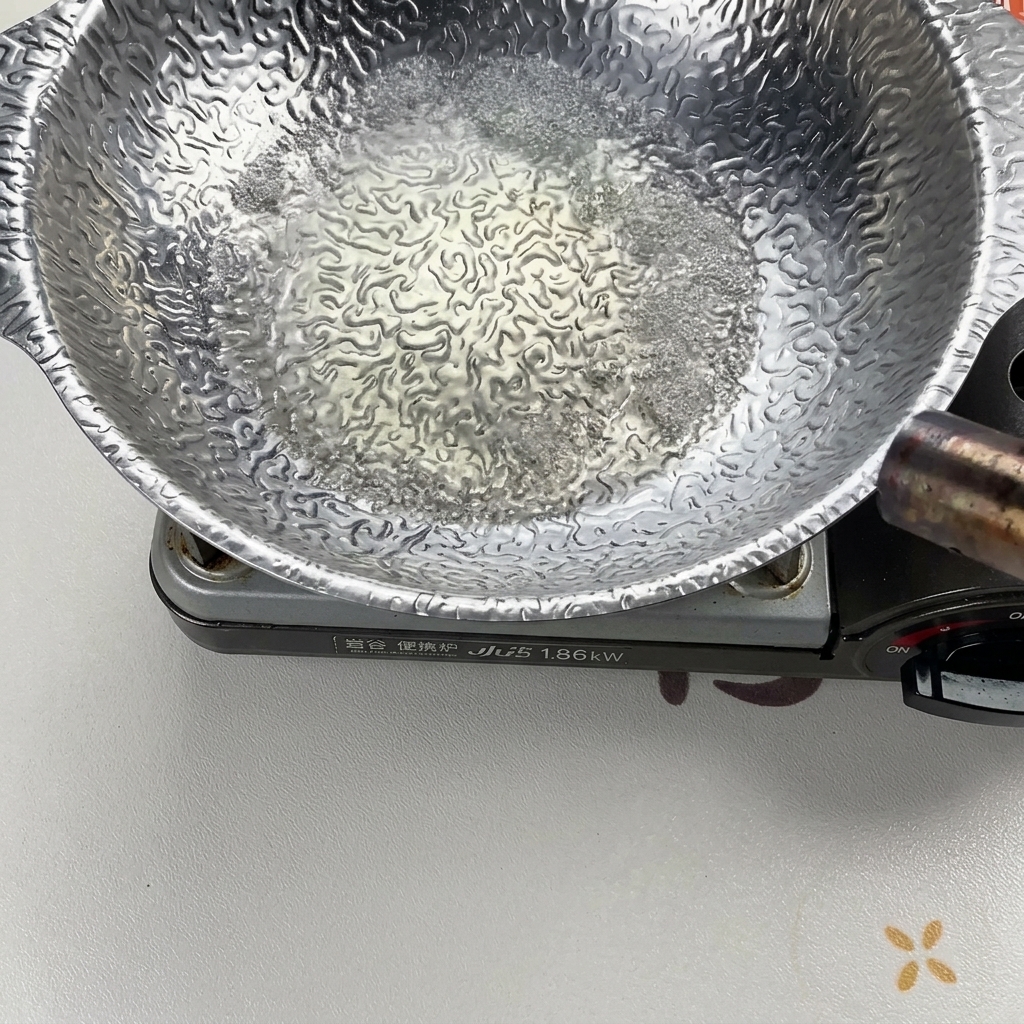
Place the pot on the burner and use a handheld torch to carefully ignite the liquid. The alcohol will catch fire, creating a blue flame that burns off the harsh spirits while leaving the concentrated flavors behind. Let it burn until the flame extinguishes naturally.
Tip: Always keep a safe distance when igniting alcohol and ensure there are no flammable objects nearby. - 3Add the red miso
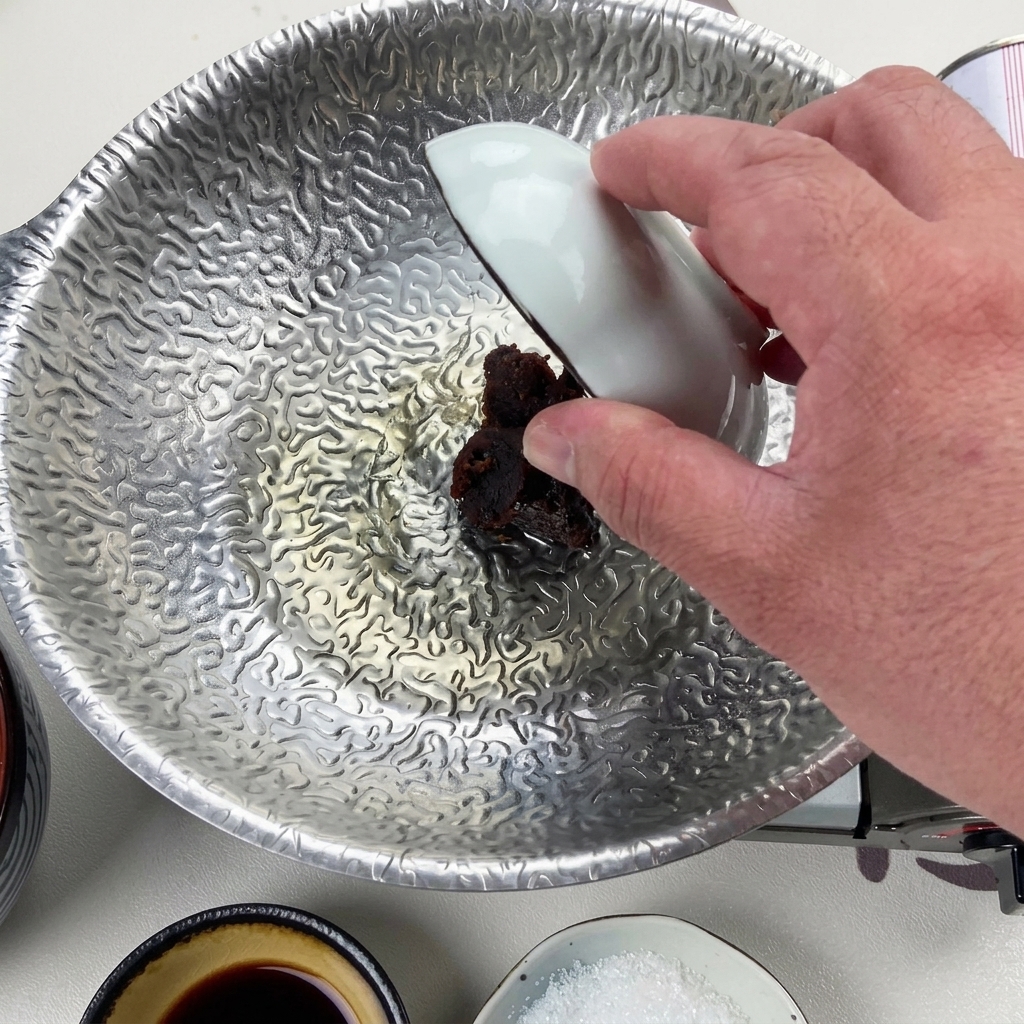
After the alcohol has evaporated, add the red miso paste to the pot. Red miso is aged for a longer period, giving it a deep, salty, and complex flavor that serves as the strong foundation for this savory dipping sauce.
Tip: You can use a spoon to slightly break up the miso scoop to help it dissolve faster once you start simmering. - 4Add the dark soy sauce
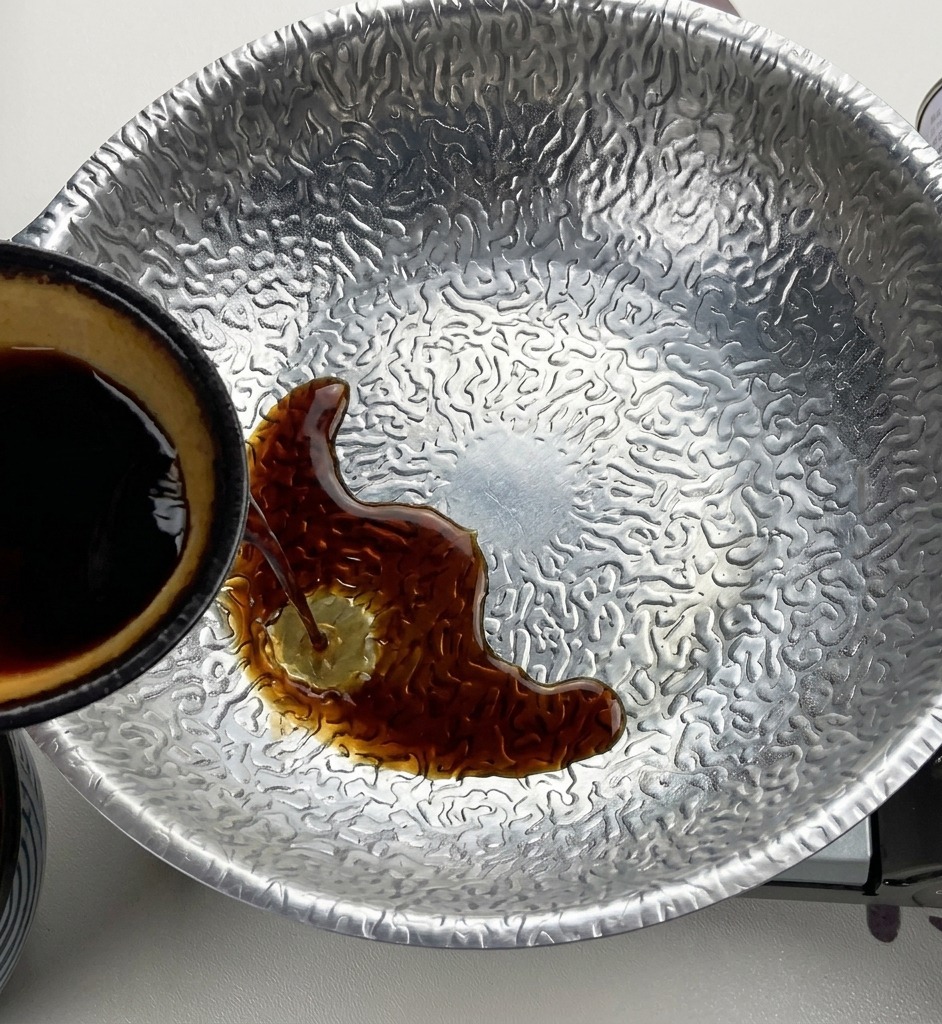
Pour the dark soy sauce into the pot along with the red miso and sugar. This adds a rich, salty depth to the base and helps dissolve the sugar into the miso mixture for a smooth, uniform sauce.
Tip: Pour slowly to avoid splashing, and begin stirring immediately to prevent the sugar from sticking to the bottom. - 5Incorporate dashi broth
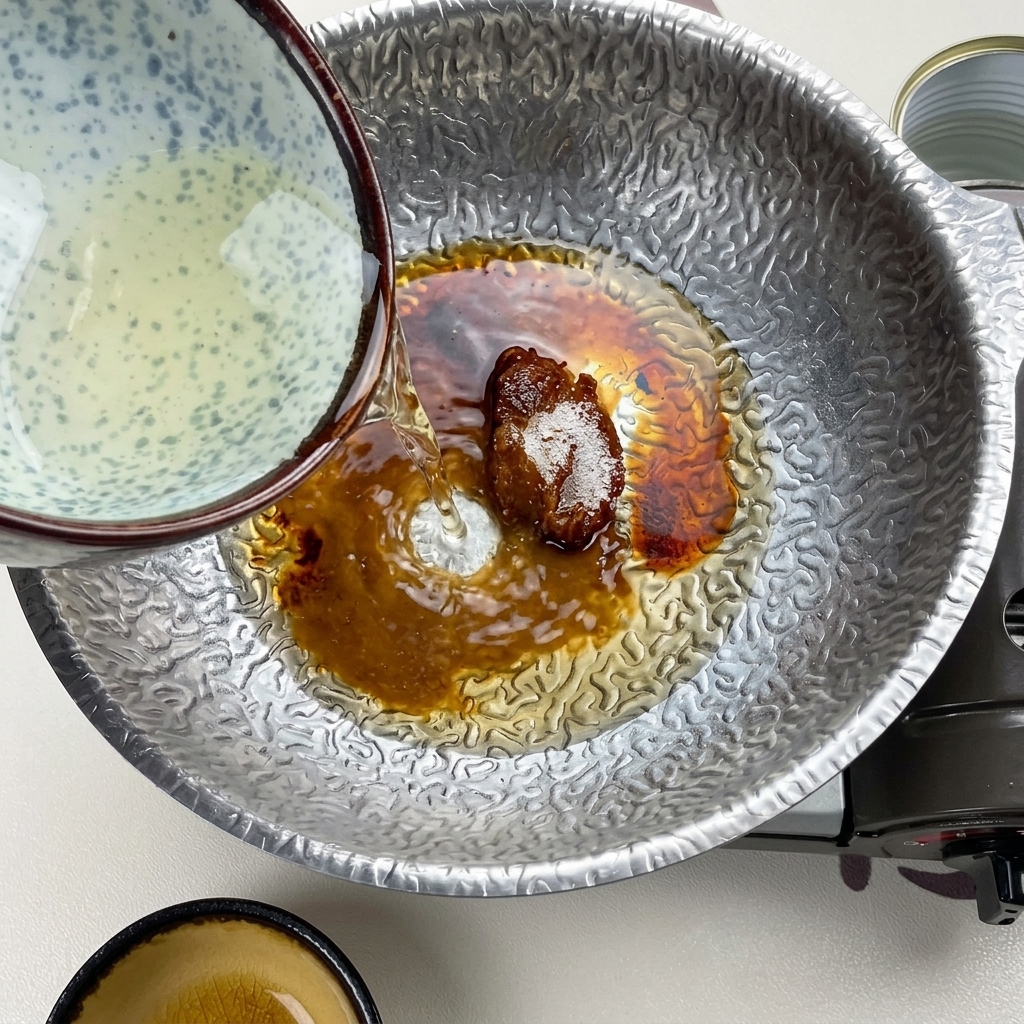
Pour about half of the clear dashi broth into the pot with the miso and sugar. The dashi provides essential umami from kombu and bonito flakes, helping to thin the thick paste and create a smooth sauce base.
Tip: If you do not have fresh dashi, a high-quality dashi powder dissolved in water works as a great substitute. - 6Simmer and thicken the sauce
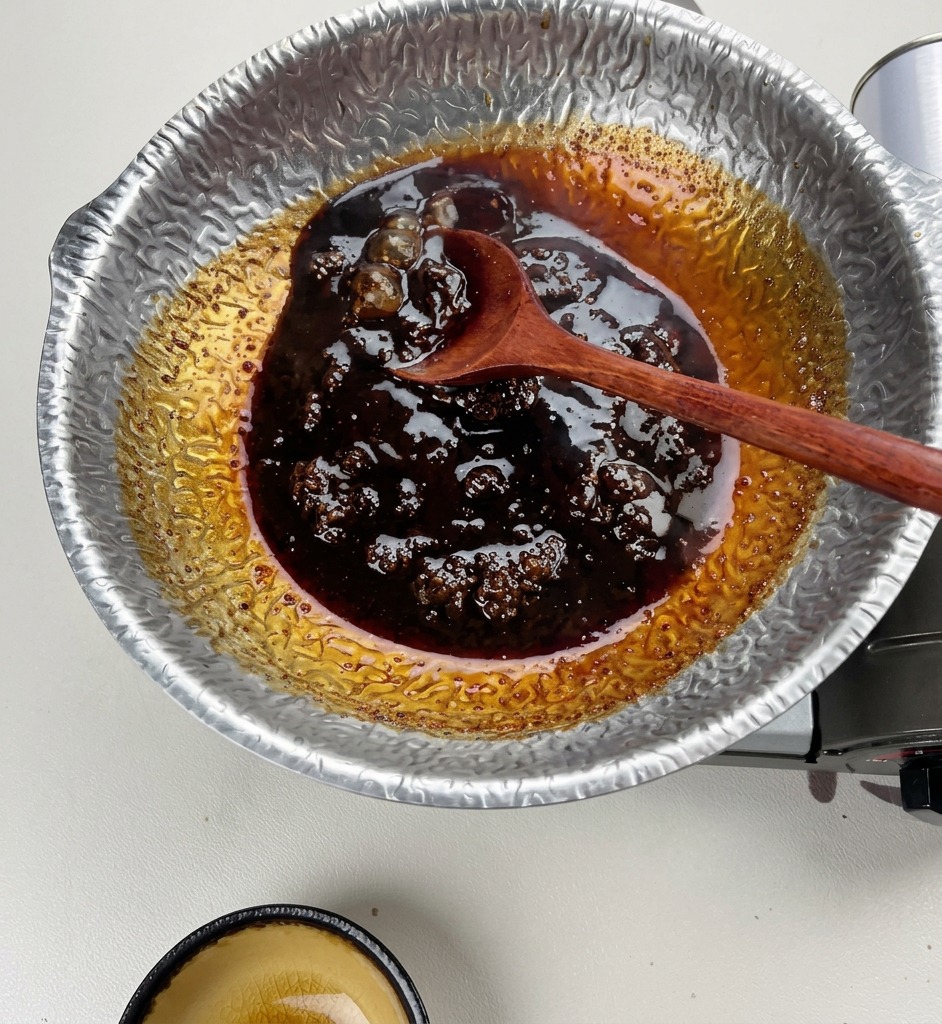
Bring the mixture to a gentle simmer over low heat. Use a wooden spoon to stir continuously as the sauce bubbles, allowing it to reduce until it becomes thick, smooth, and glossy.
Tip: Keep the heat low to avoid burning the miso, which can introduce a bitter flavor to the dipping sauce. - 7Incorporate the white miso
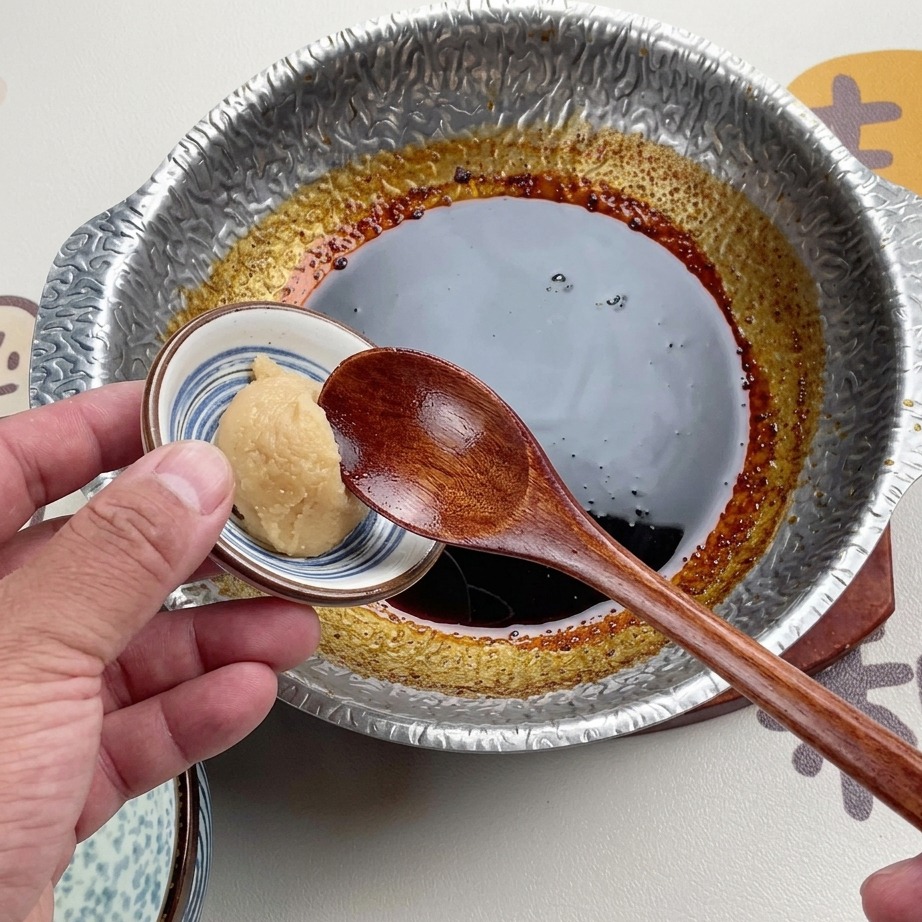
Turn off the heat and add a scoop of white miso paste to the pot. This provides a delicate, slightly sweet balance to the intense savory profile of the red miso already in the sauce.
Tip: Adding the white miso after turning off the heat preserves its subtle aroma and prevents it from becoming overly salty. - 8Adjust the consistency
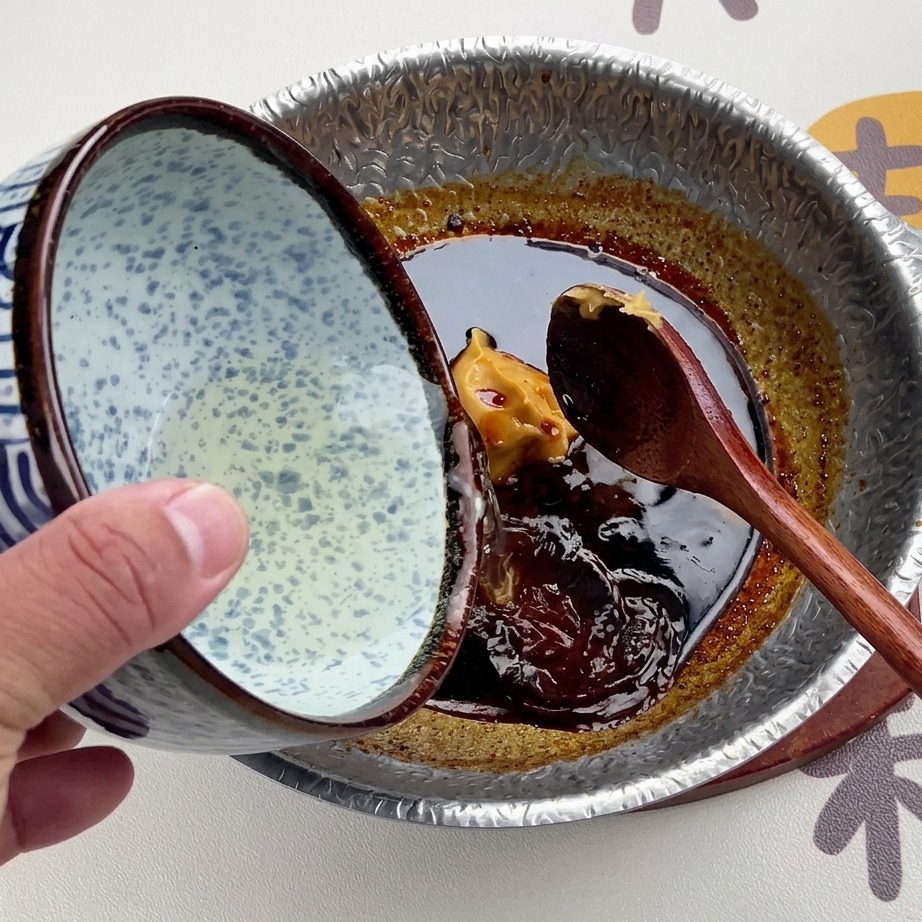
Pour in the remaining portion of the dashi broth. Stir well to integrate the liquid with the thickened miso, reaching the ideal consistency for a dipping sauce that coats noodles perfectly.
Tip: Adding the broth in two stages allows you to better control the final thickness and ensure the miso pastes are fully dissolved. - 9Final simmer and finish
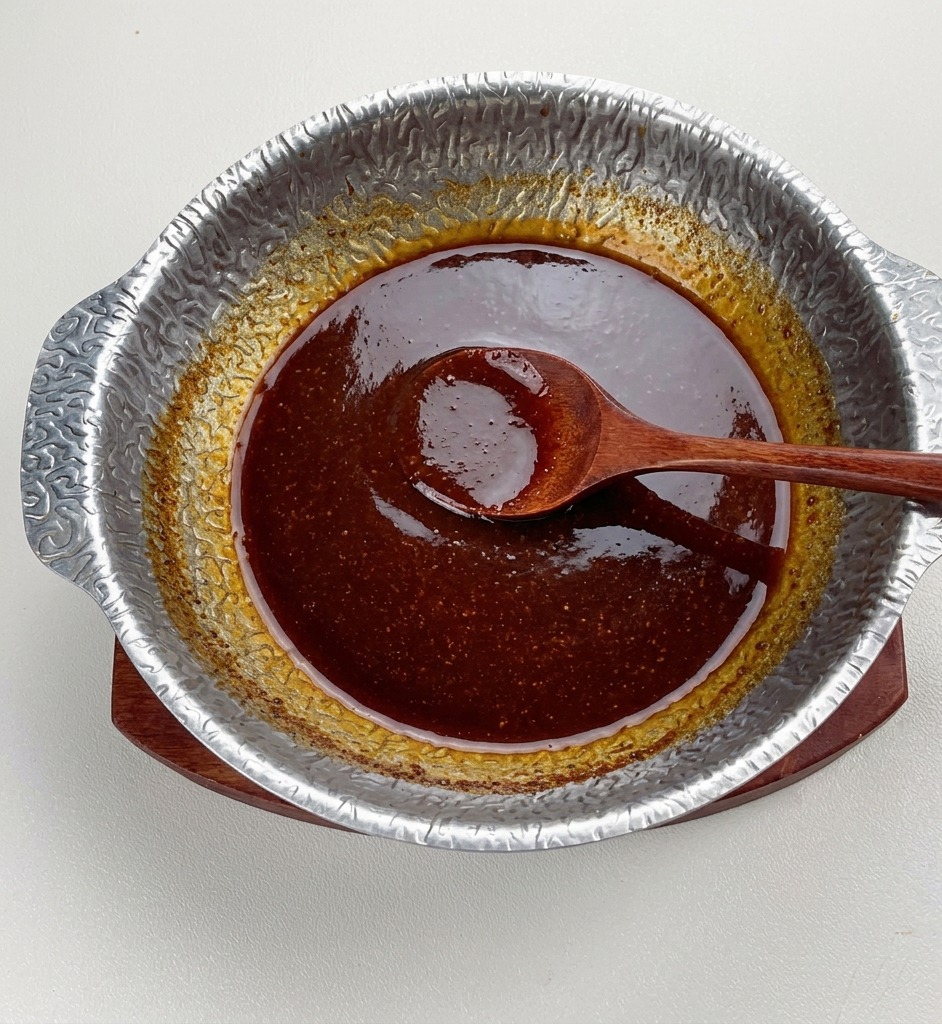
Give the sauce a final stir over low heat until it reaches a velvety, glossy finish. Once the texture is smooth and uniform, the savory miso dipping sauce is ready to be served.
Tip: If the sauce appears too thick, you can whisk in a tiny amount of hot water or dashi to reach your desired consistency.