Authentic Japanese Tsukemen (Dipping Ramen)
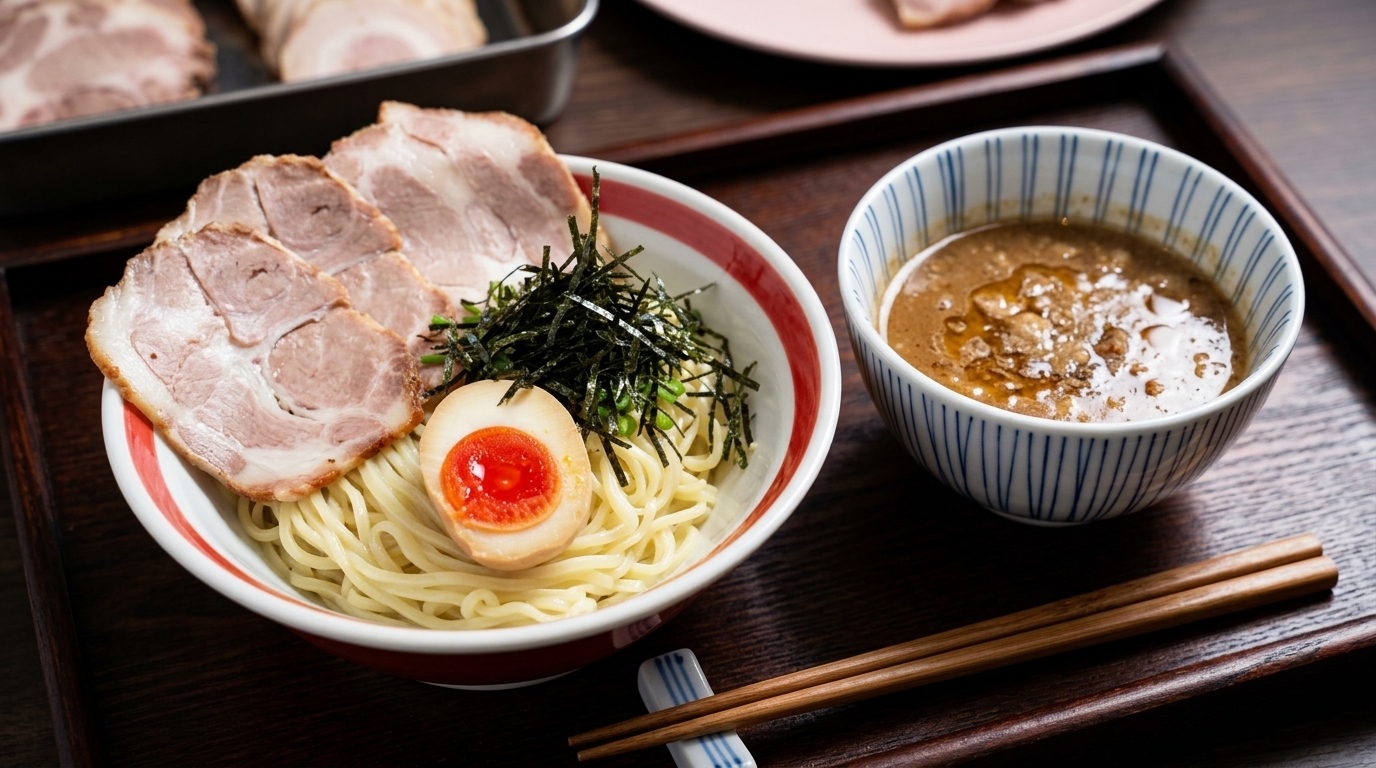
Master the art of Tsukemen — thick, chewy cold ramen noodles served alongside a hyper-concentrated, savory pork bone dipping broth finished with aromatic shrimp oil.
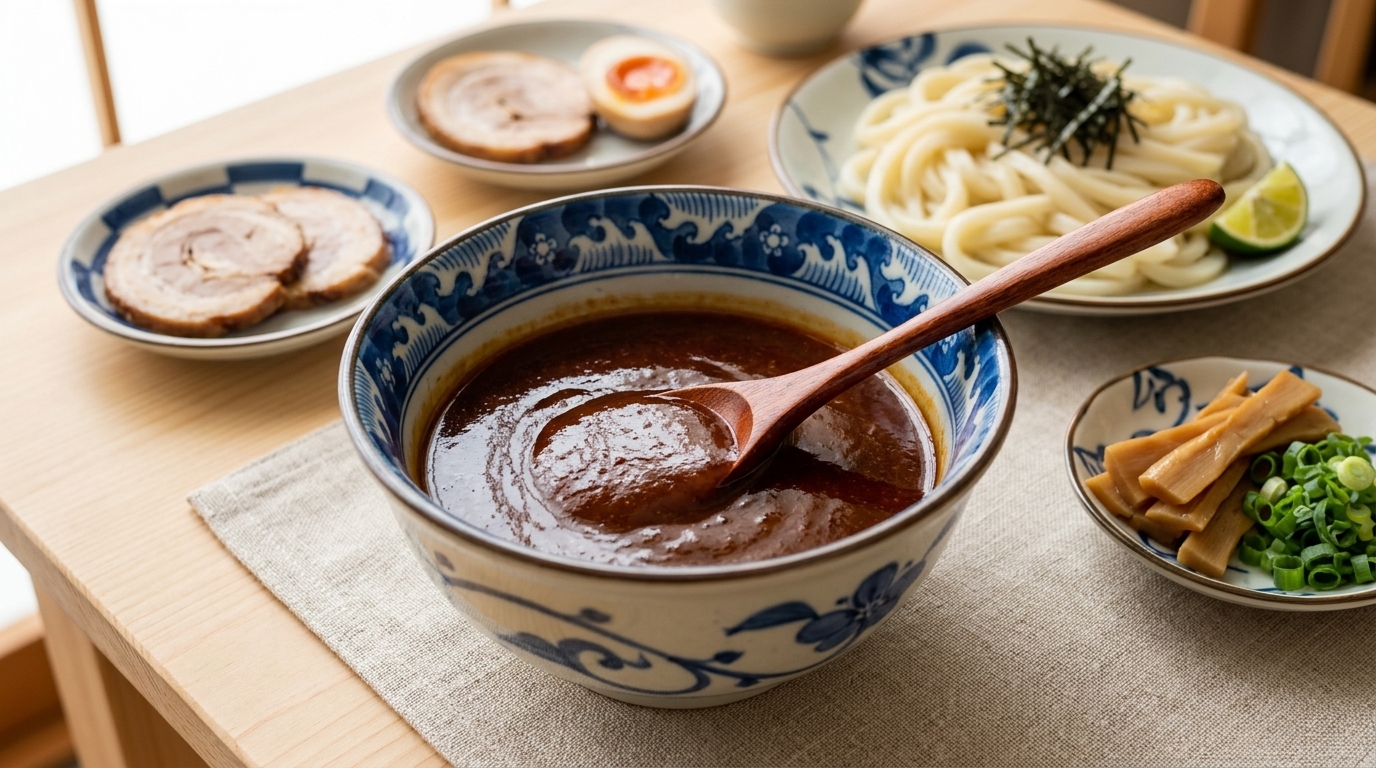
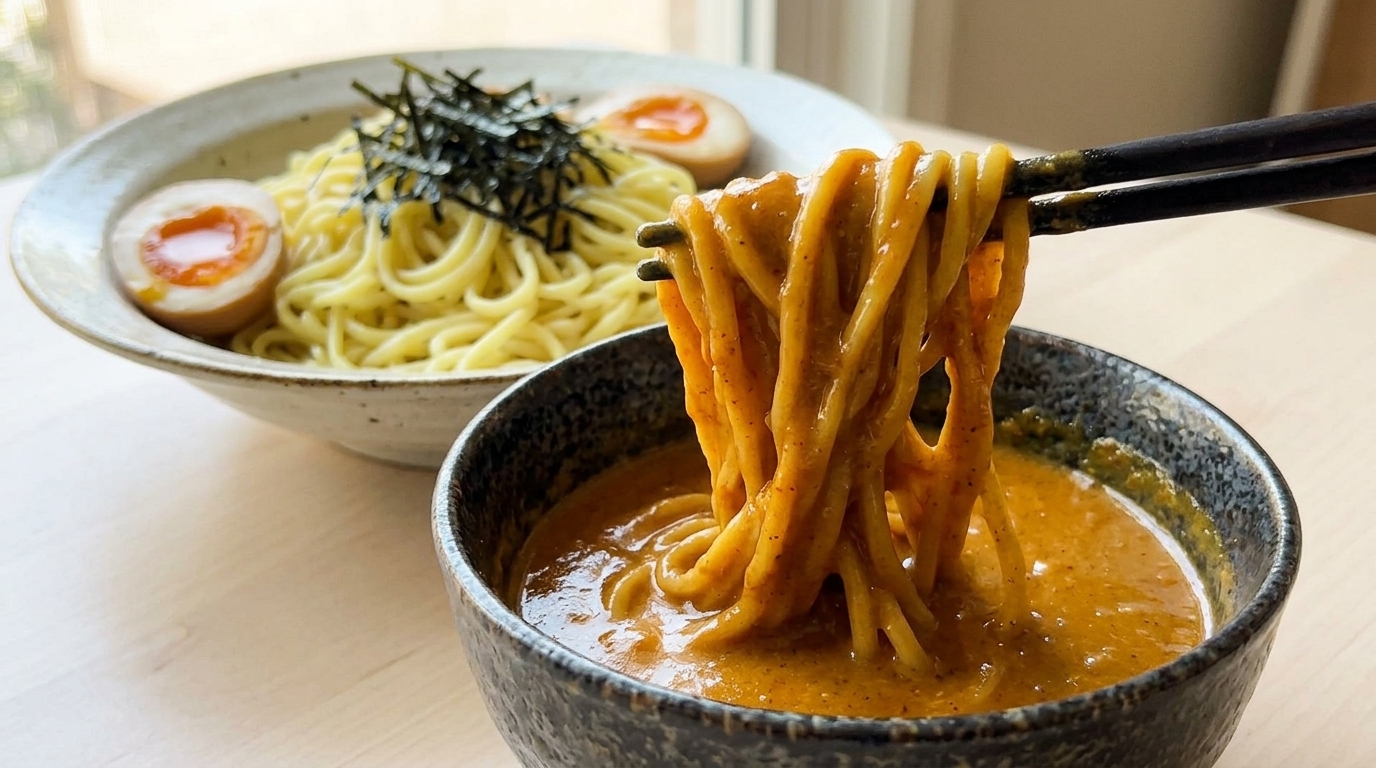
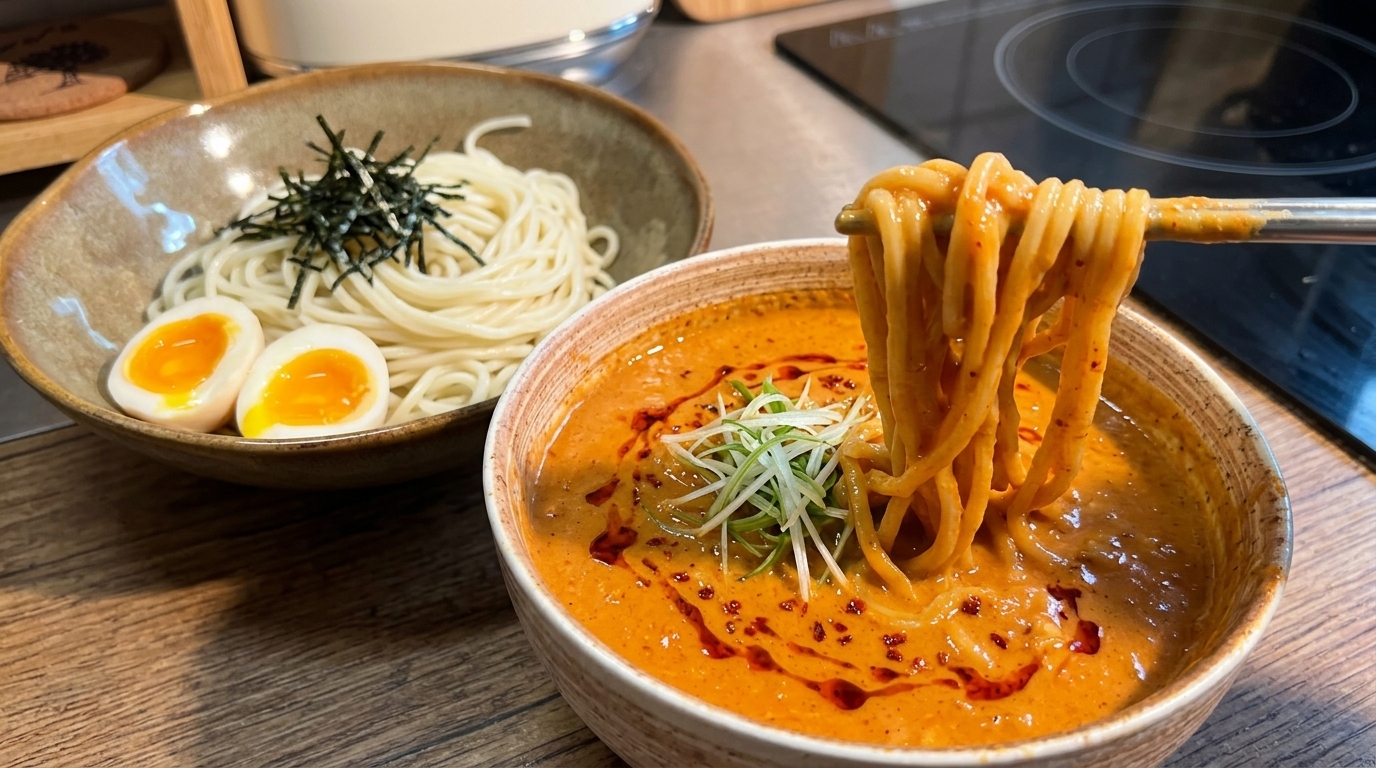
Tsukemen, or dipping ramen, is a modern Japanese classic born in Tokyo. Unlike traditional ramen where noodles sit in soup, Tsukemen keeps them separate to preserve their firm texture, allowing the diner to dip each bite into a rich, intensely flavored reduction of pork broth.
Ingredients
- 200 g ramen noodles
- 300 ml pork bone broth
- 2 tbsp soy sauce
- 1 tbsp white vinegar
- 3 slices Chashu pork
- 12 soft-boiled marinated egg
- 1 tsp shrimp oil
- to taste black pepper powder
- to taste bean sprouts
- to taste green onions
- to taste shredded nori seaweed
Instructions
- 1Prepare the dipping sauce base
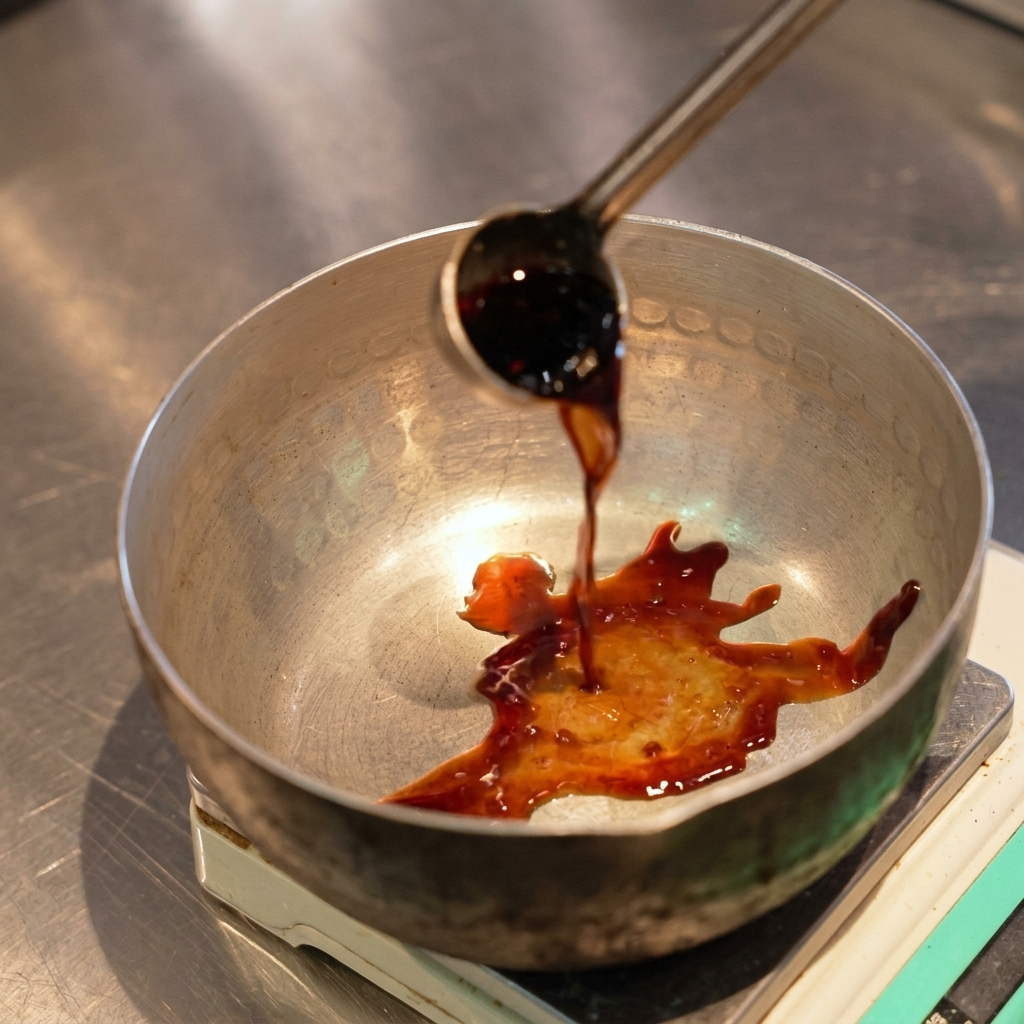
Begin by measuring out the soy sauce and pouring it into a small metal saucepan. This forms the savory foundation of your dipping sauce to which you will later add the vinegar and rich pork bone broth.
Tip: Using a scale to weigh your liquid ingredients can ensure perfect consistency every time you make the sauce. - 2Combine soy sauce and vinegar
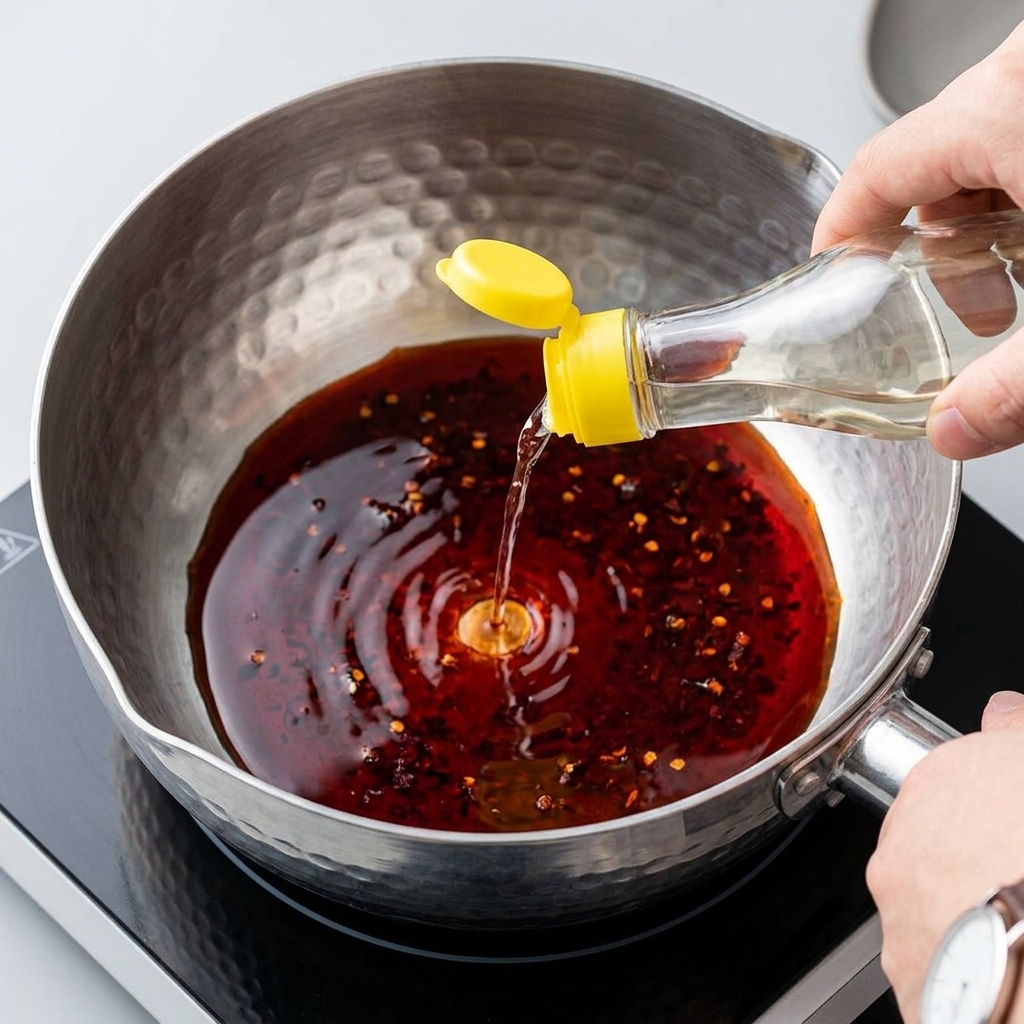
Pour a measured amount of white vinegar into a small hammered metal pot already containing soy sauce and chili flakes. This mixture forms the acidic and savory foundation of the Tsukemen dipping sauce.
Tip: Using a clear rice vinegar or white vinegar provides a clean sharpness that cuts through the rich pork broth later. - 3Add the pork bone broth
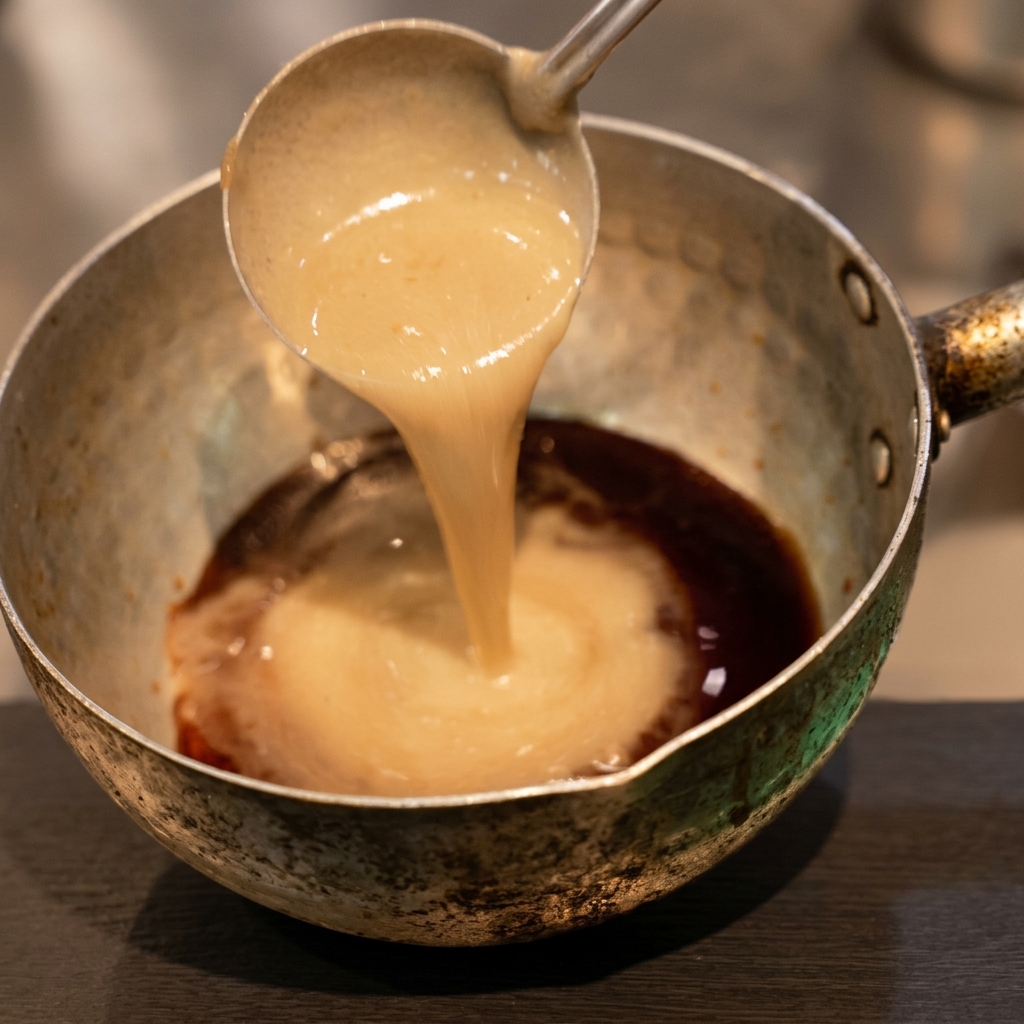
Use a large metal ladle to pour thick, creamy, and collagen-rich pork bone broth into the pot with the seasonings. The broth should be an opaque tan color indicating a long simmer time.
Tip: If your broth has cooled and thickened into a jelly, do not worry; it will liquefy perfectly once heat is applied. - 4Season with black pepper
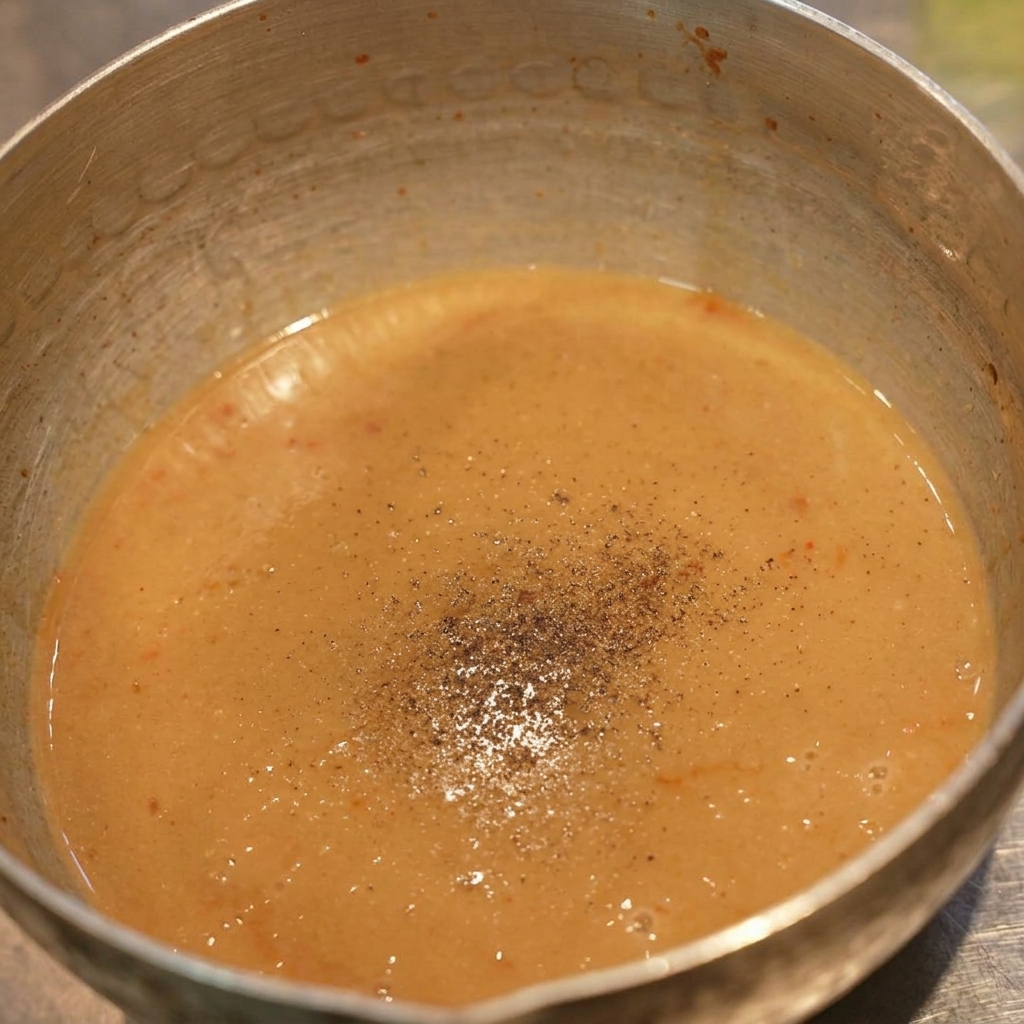
Sprinkle a generous amount of ground black pepper over the surface of the combined broth and seasonings. This adds a subtle heat and earthy aroma to the dipping sauce.
Tip: Freshly cracked black pepper will provide a much stronger aromatic punch than pre-ground powder. - 5Heat and stir the sauce
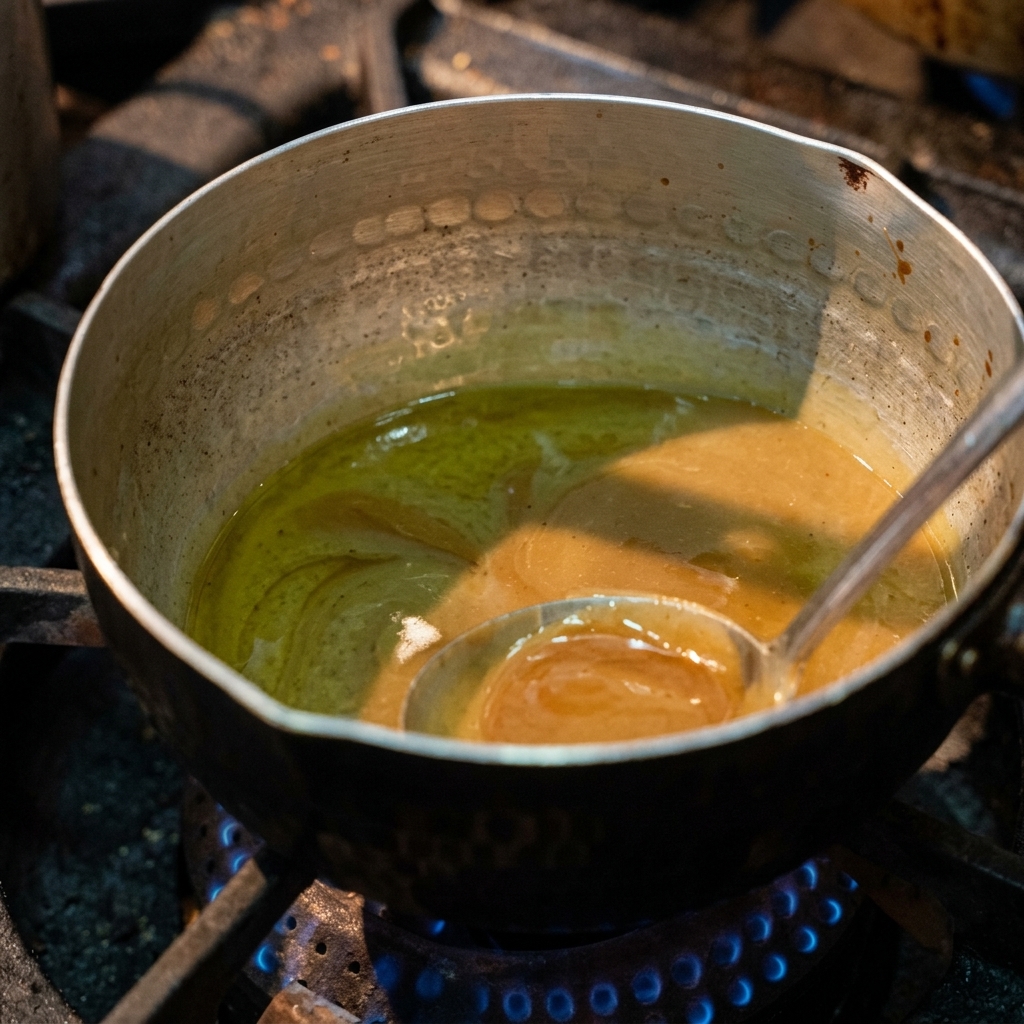
Place the pot over a medium gas flame. Use a ladle to stir the mixture continuously as it heats, ensuring the soy base, vinegar, broth, and pepper are perfectly emulsified and steaming hot.
Tip: Do not let the sauce come to a rolling boil for too long, as this can overly concentrate the saltiness of the soy sauce. - 6Blanch the ramen noodles
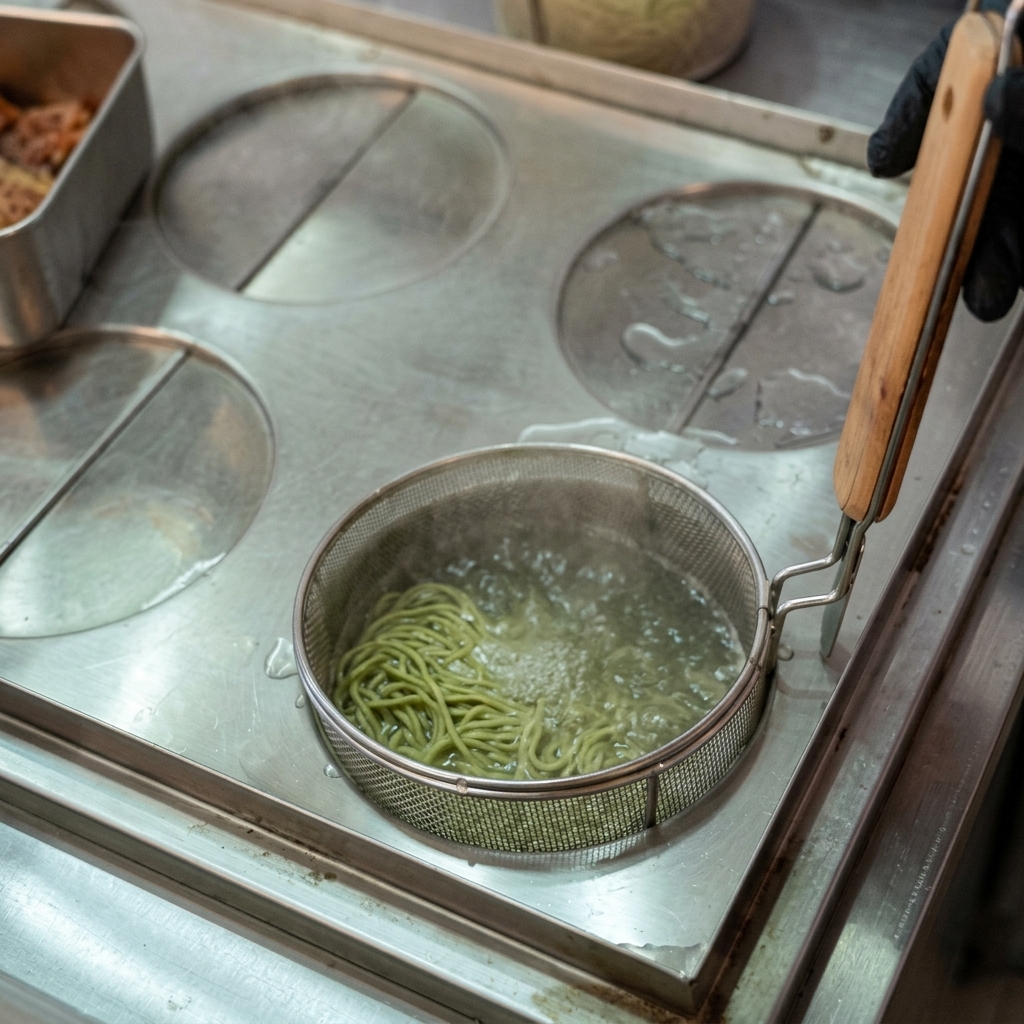
Submerge the ramen noodles in a cylindrical mesh noodle strainer into a pot of rapidly boiling water. Blanch them briefly until they reach the desired chewy texture.
Tip: Keep the water at a vigorous boil to prevent the noodles from sticking together or becoming gummy. - 7Portion the dipping sauce
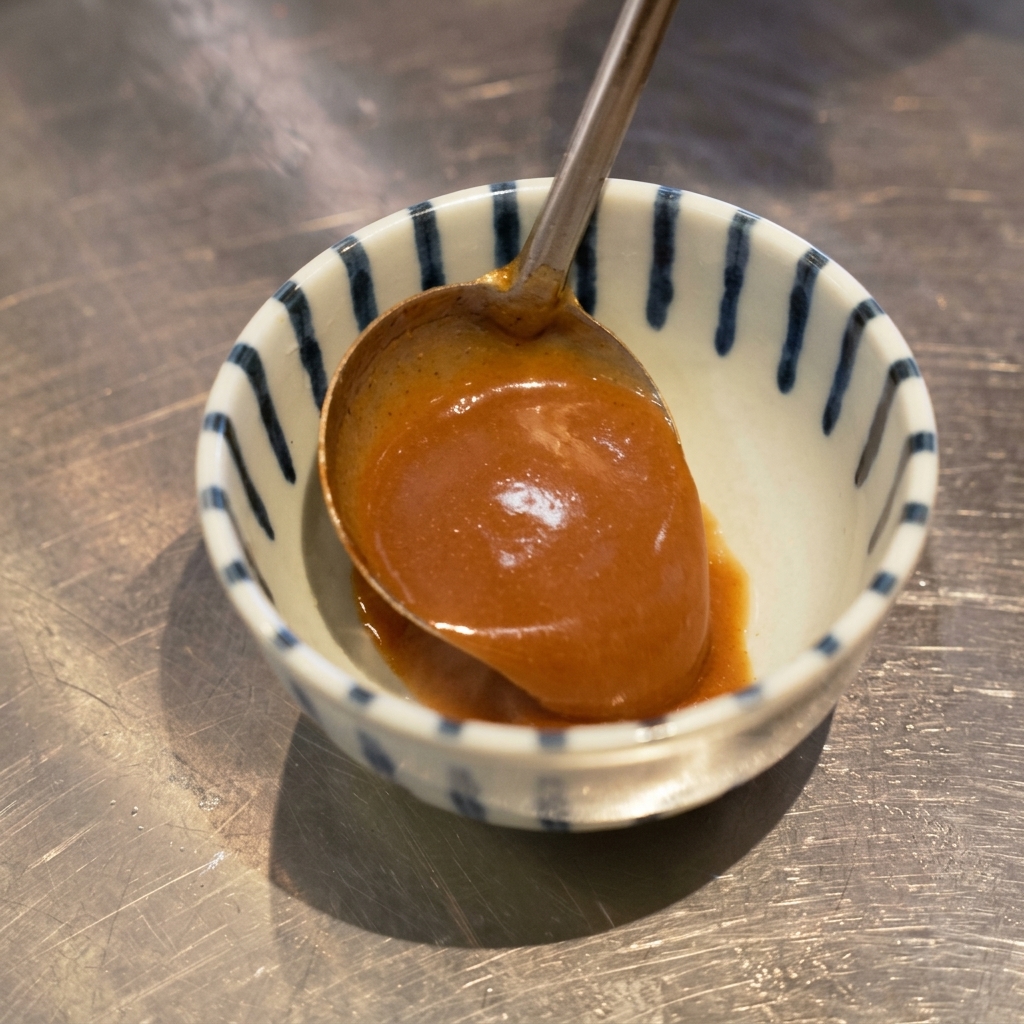
Carefully ladle the heated dipping sauce into a small blue-and-white striped serving bowl. Ensure the sauce is steaming hot, as the temperature is crucial for the Tsukemen experience.
Tip: Pre-warming the serving bowl with hot water can help keep the sauce at the ideal temperature for longer. - 8Add bean sprouts
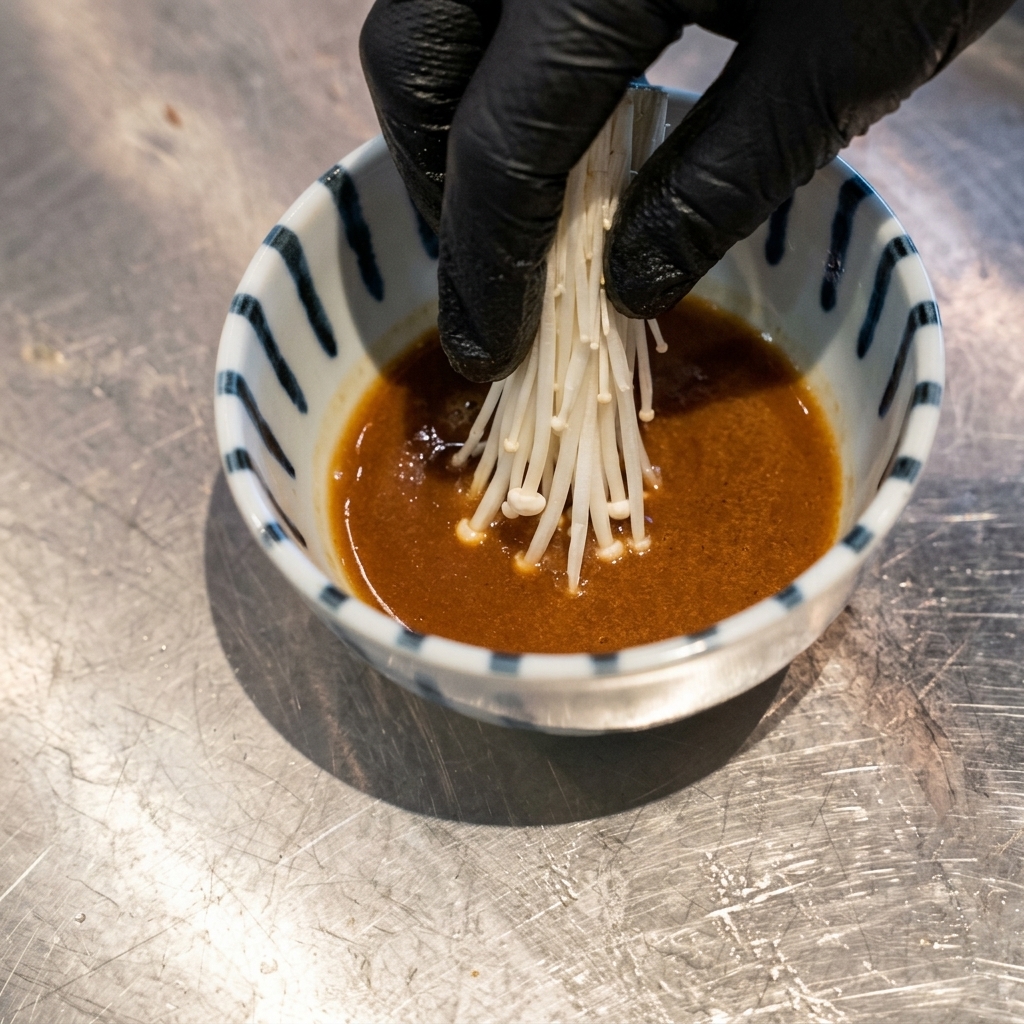
Place a small pile of fresh, blanched bean sprouts into the center of the dipping sauce bowl. The sprouts add a nice crunch and texture to balance the rich savory broth.
Tip: Drain the bean sprouts well before adding them so they dont dilute the concentrated flavor of the dipping sauce. - 9Finish with shrimp oil
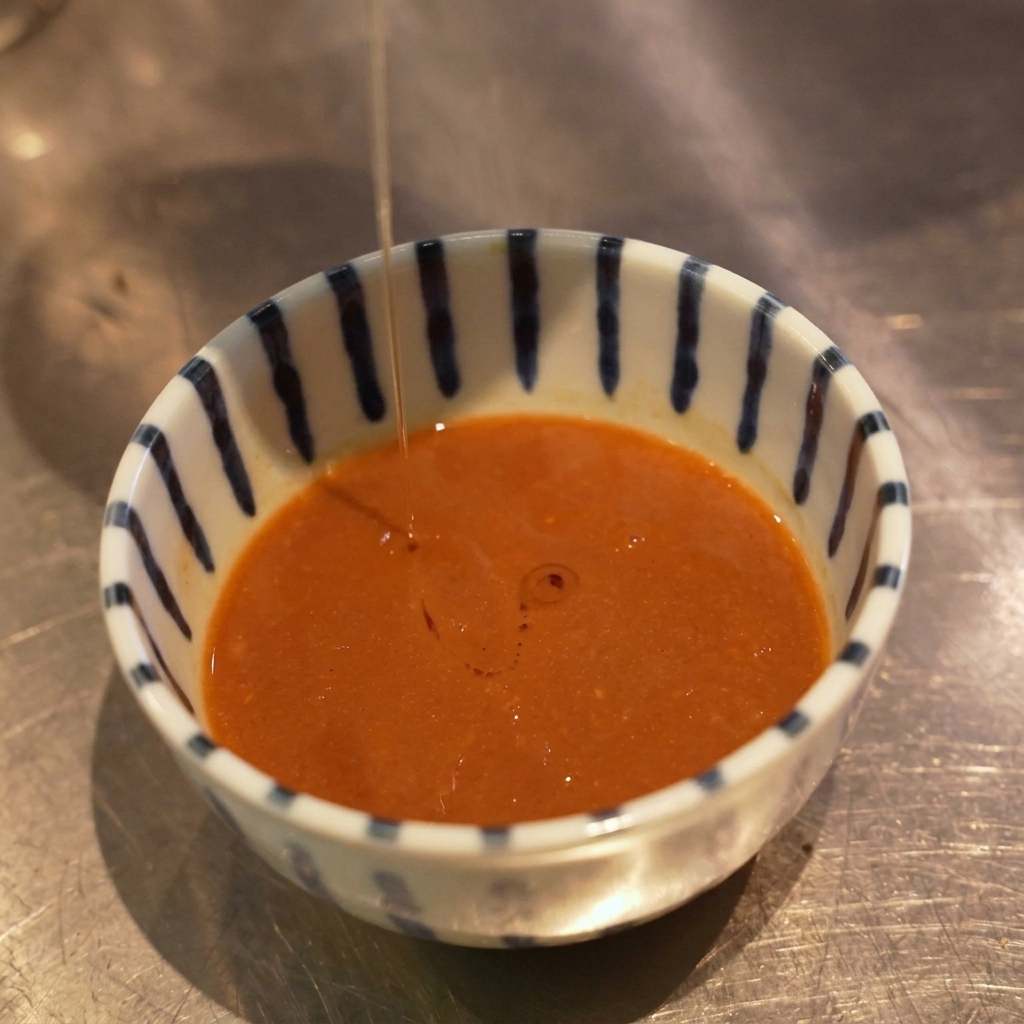
Drizzle a small amount of aromatic shrimp oil over the surface of the dipping sauce. This adds a glossy finish and a deep, seafood-infused aroma to the dish.
Tip: Start with just a few drops; shrimp oil is very potent and you want it to enhance, not overpower, the pork broth. - 10Rinse the noodles
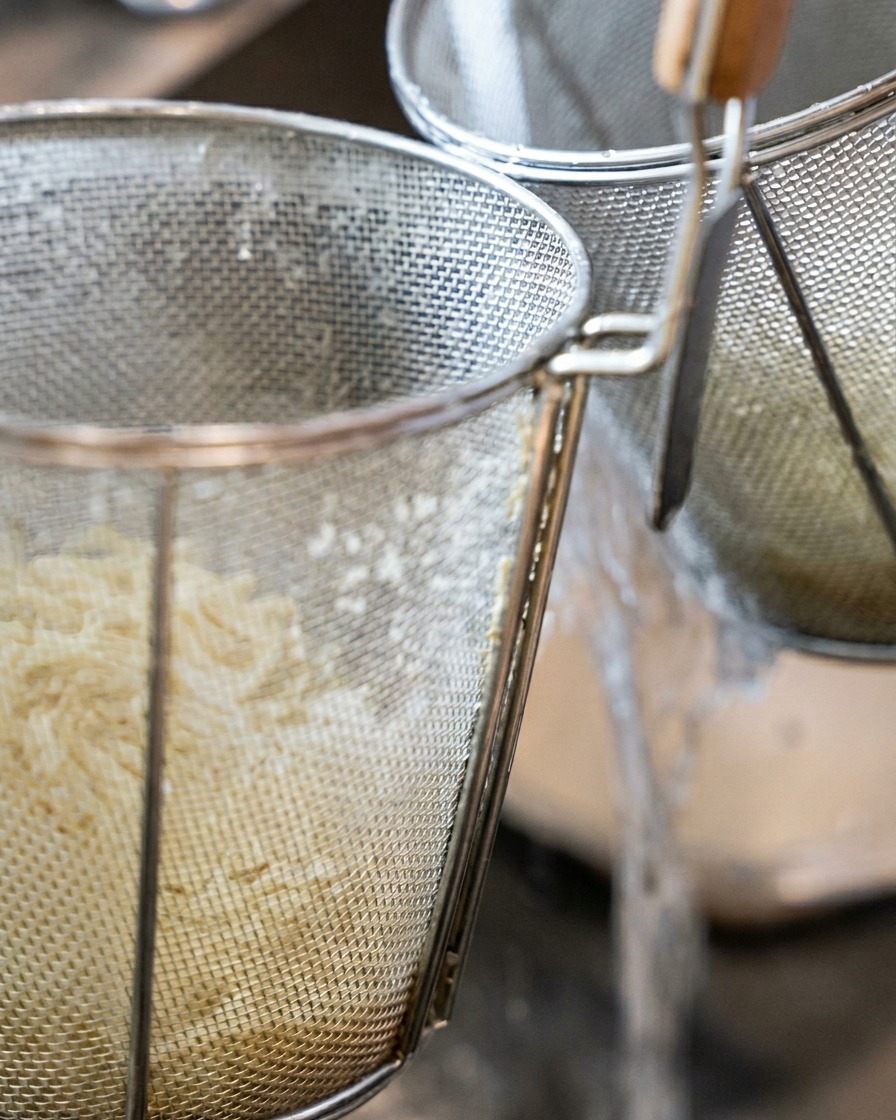
Immediately after cooking, place the noodles in a mesh strainer and rinse them thoroughly under cold running water. This stops the cooking process and removes excess starch for a firm texture.
Tip: Use your hands to gently toss the noodles while rinsing to ensure every strand is cooled and cleaned properly. - 11Add the Chashu pork
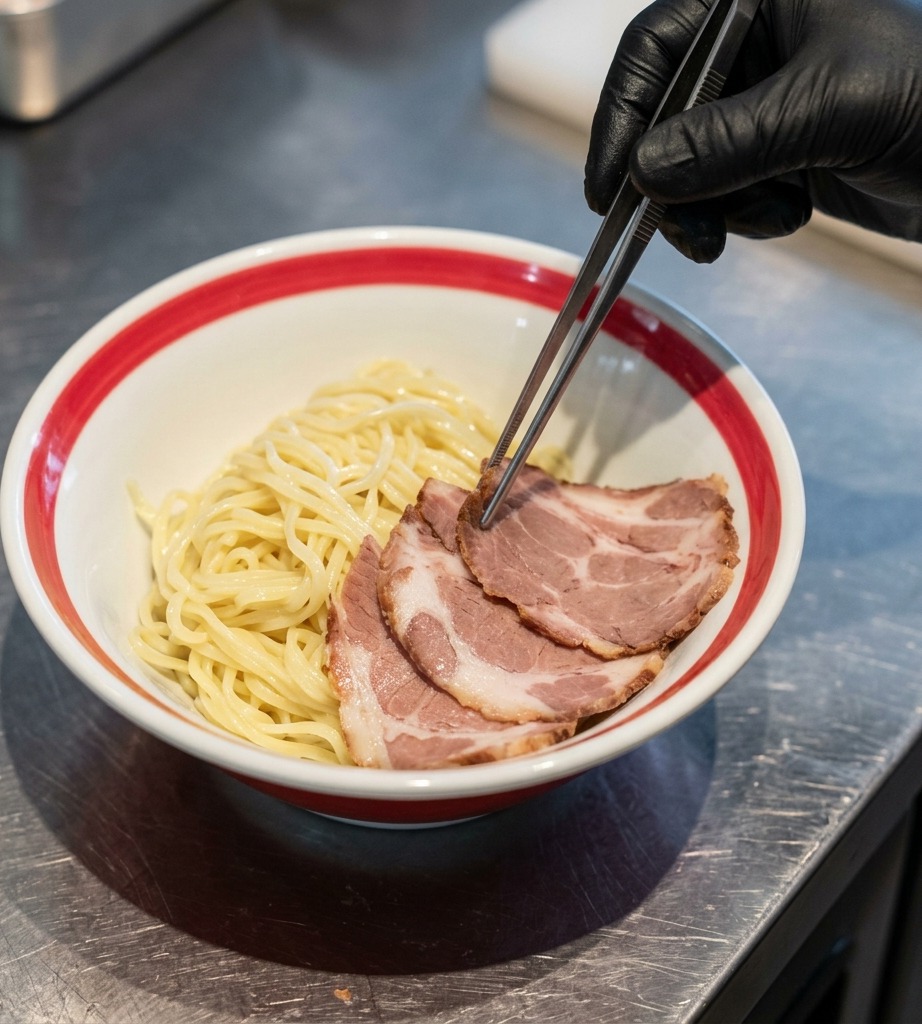
Using a pair of culinary tweezers or chopsticks, carefully arrange three tender slices of Chashu pork on the side of the bowl over the noodles. The fat on the pork should be slightly glistening to ensure a melt in your mouth texture.
Tip: If the Chashu is cold, you can lightly torch the surface or dip it briefly in the hot soup to soften the fats before serving. - 12Garnish with a soft-boiled egg
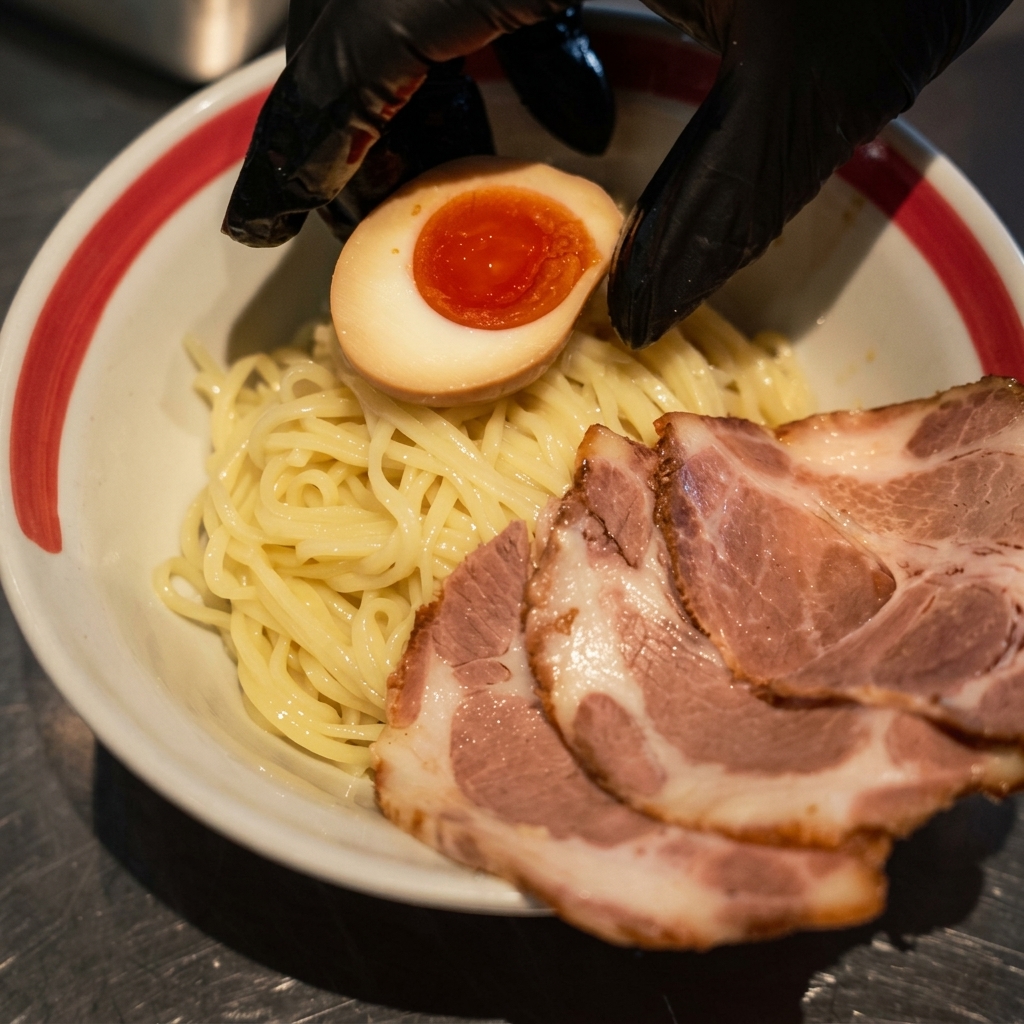
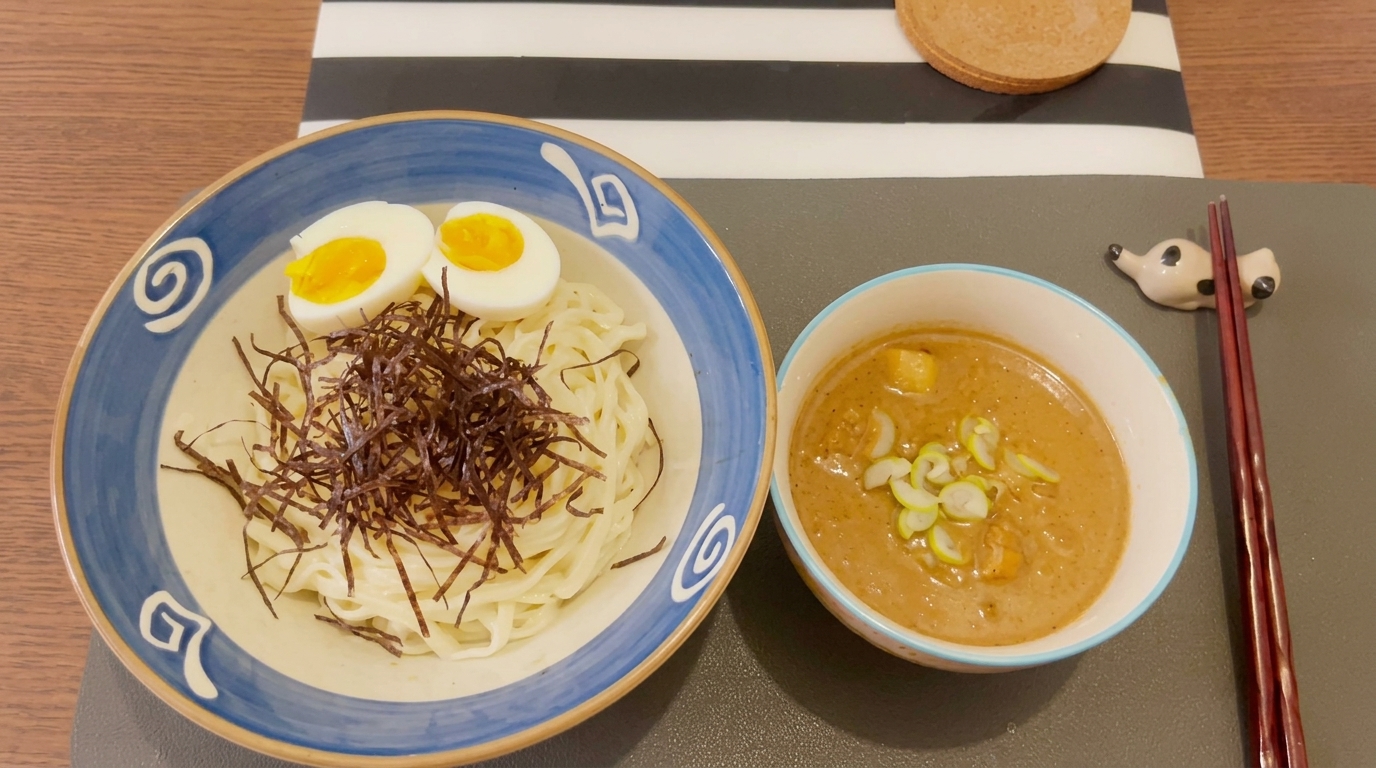
Place half of a marinated soft-boiled egg onto the noodles next to the pork slices. The yolk should be jammy and vibrant, adding a rich, creamy element that complements the thick dipping sauce.
Tip: To get a perfectly centered yolk, gently stir the eggs in the boiling water for the first minute of cooking. - 13Finish with final garnishes
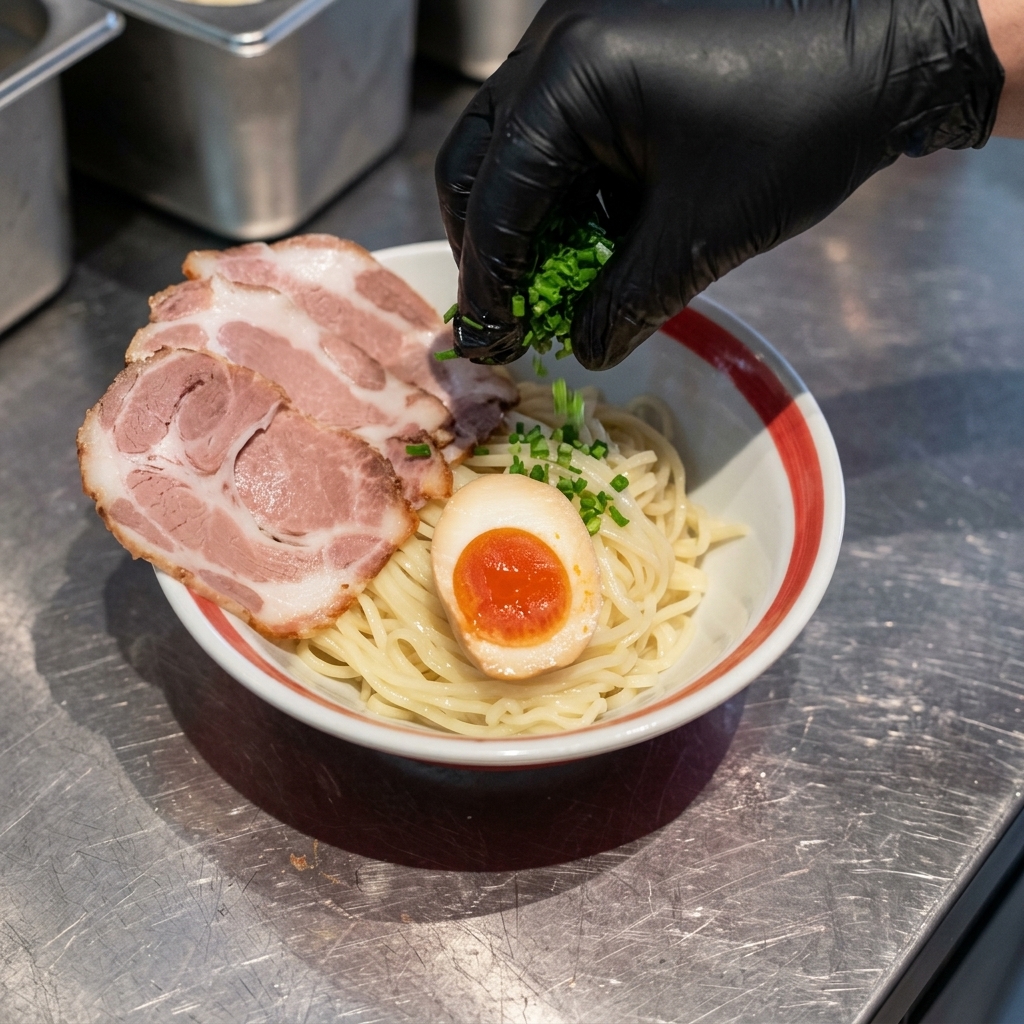
Complete the presentation by sprinkling a generous amount of finely chopped green onions over the egg and noodles. Add a small pile of shredded nori seaweed to provide a hit of umami and a classic Japanese finish.
Tip: Soak the chopped green onions in ice water for 5 minutes and pat dry to remove the harsh bite and make them extra crunchy.