Traditional Northeast-Style Braised Pork Trotters
Meat
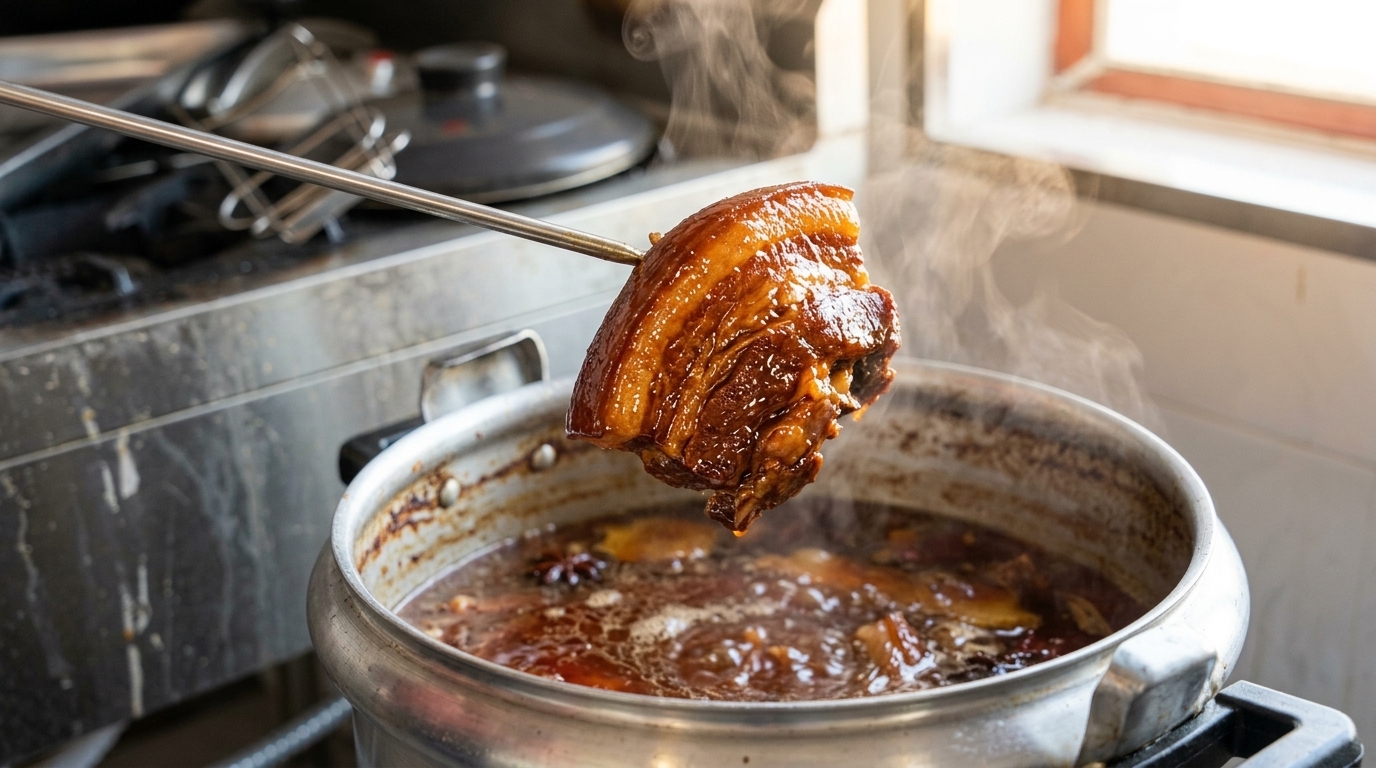
Experience the rich, savory depth of traditional Northeast braising. This dish features succulent pig trotters and diaphragm meat slow-cooked in a dark, aromatic soy glaze.
Northeast-style braising is a masterclass in patience and bold flavors. By caramelizing rock sugar to create a rich, deep red-brown base before adding aromatic spices and tender cuts of meat, this recipe achieves a signature glossy finish and melt-in-the-mouth texture. It is a hearty, comforting staple that reflects the robust culinary heritage of the region.
Ingredients
- 1 kg pig trotters
- 500 g beef diaphragm meat
- 50 g rock sugar
- 30 g scallions
- 30 g ginger
- 2 whole star anise
- 1 pouch braising spice mix
- 2 tbsp salt
- 1 tsp MSG powder
- 2 tbsp cooking oil
Instructions
- 1Prepare the meat and aromatics
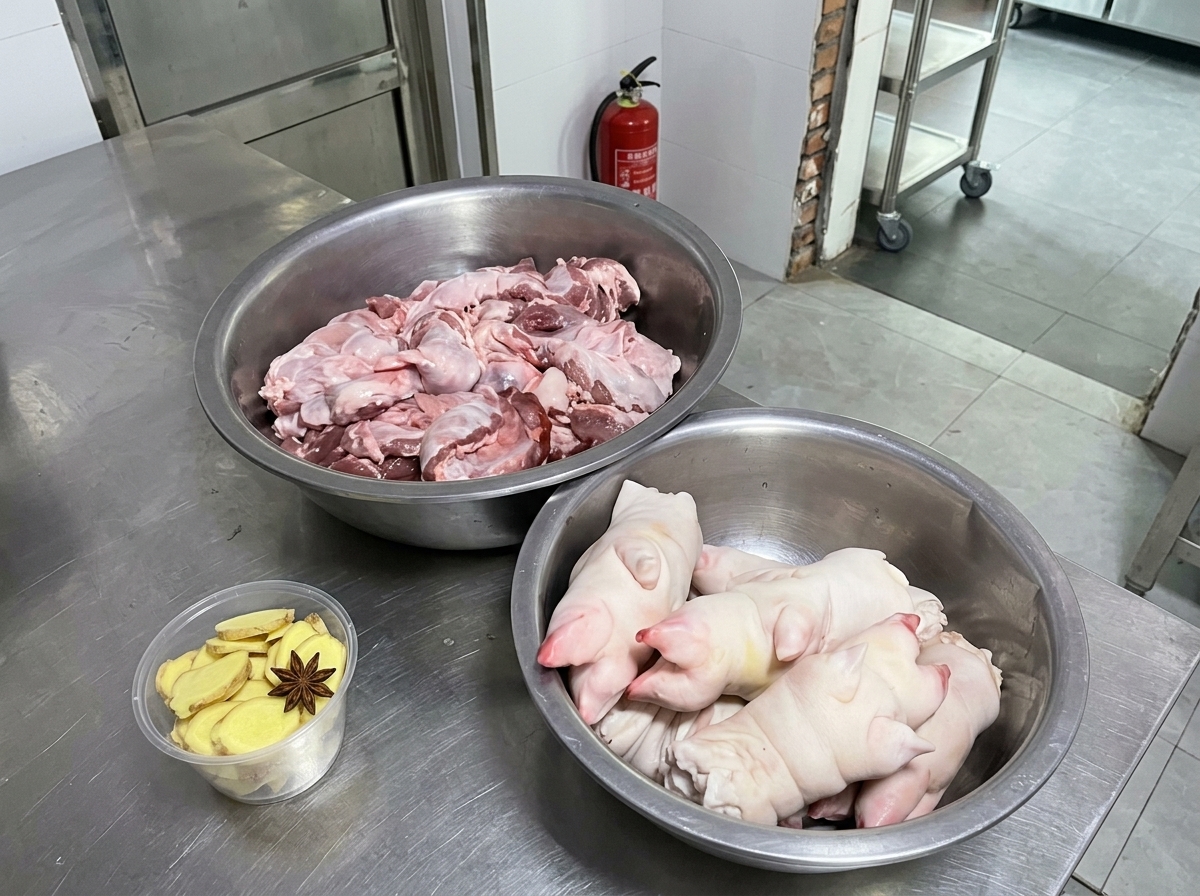
Place the raw pig trotters and fresh diaphragm meat into separate large stainless steel bowls. Prepare the fresh aromatics by slicing the ginger and keeping it together with the whole star anise in a small container, ensuring everything is clean and ready for cooking.
Tip: Thoroughly wash and drain the meat before braising to ensure a clean flavor and remove any residual blood. - 2Gather the fresh aromatics
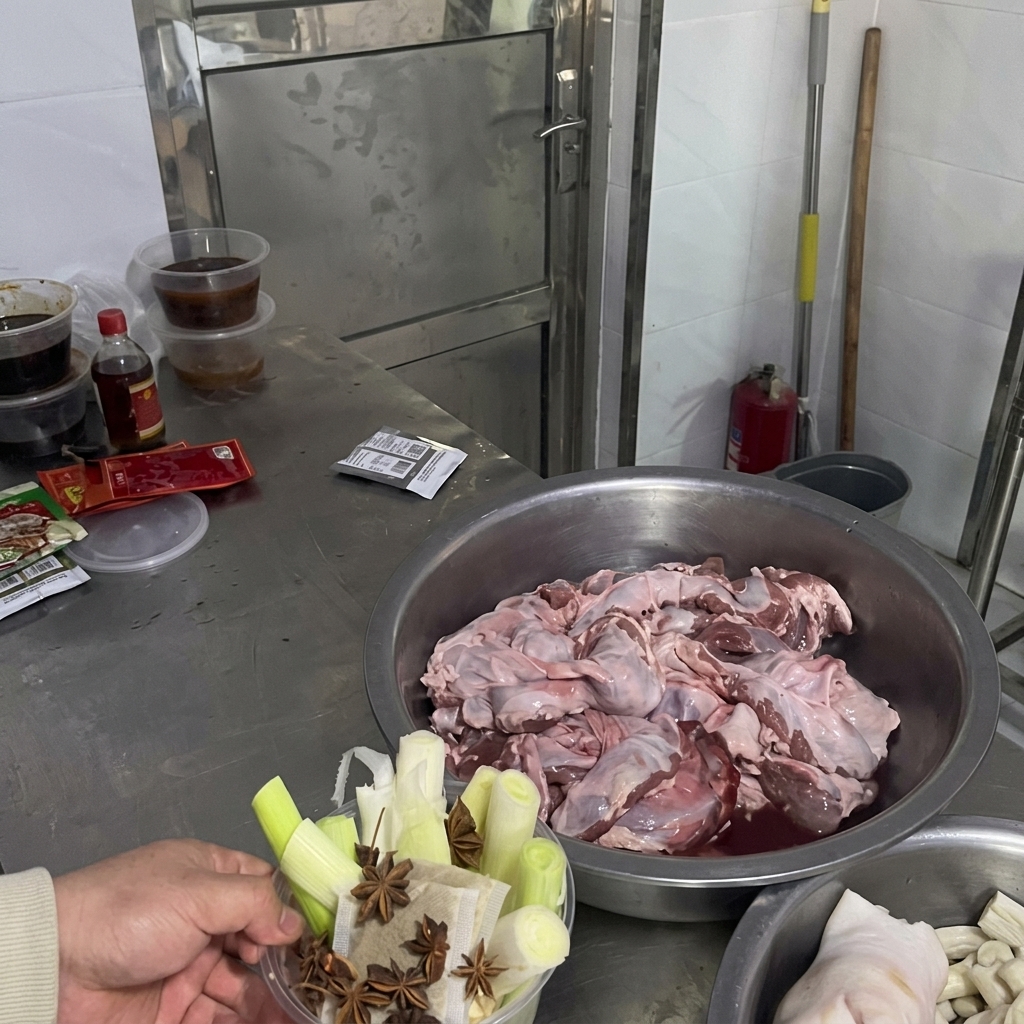
Combine the prepared green scallions, sliced ginger, and whole star anise pods in a clear container. These fresh aromatics will form the essential flavor foundation for the savory braising liquid.
Tip: Cut the green scallions into long, large segments so they do not disintegrate during the long simmering process. - 3Prepare the braising spice pouch
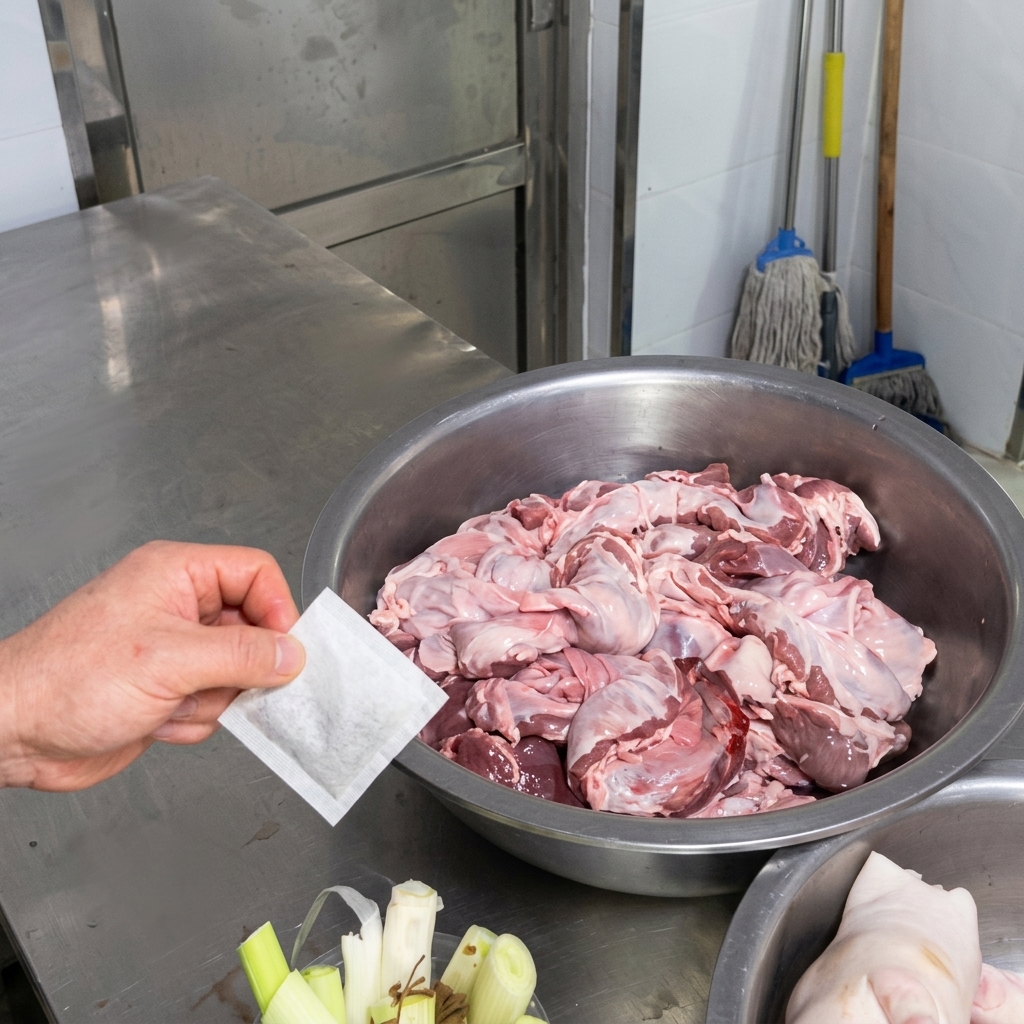
Hold up the pre-packaged white fabric spice pouch containing a blend of dried aromatic spices and bay leaves. Using a pre-assembled pouch eliminates the need to measure individual spices while ensuring a rich, traditional herbal profile.
Tip: Make sure the spice pouch is completely intact before adding it to the pot to prevent loose herbs from clouding the broth. - 4Add rock sugar to the wok
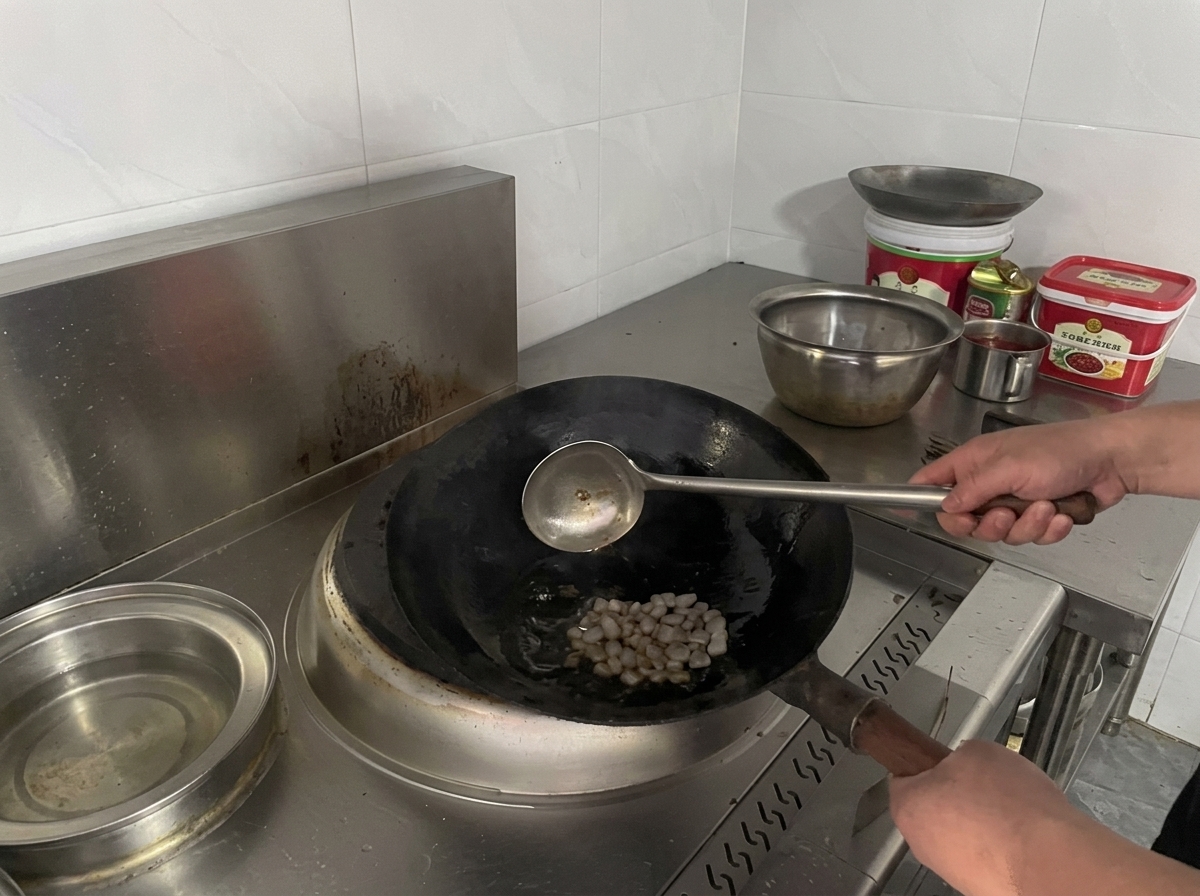
Heat a small amount of cooking oil in a wok over a gas flame, then add the white rock sugar pieces into the center. Stirring the sugar in oil helps distribute heat evenly to begin the caramelization process.
Tip: Maintain a low heat setting from the start to prevent the sugar from scorching and turning bitter. - 5Caramelize the rock sugar
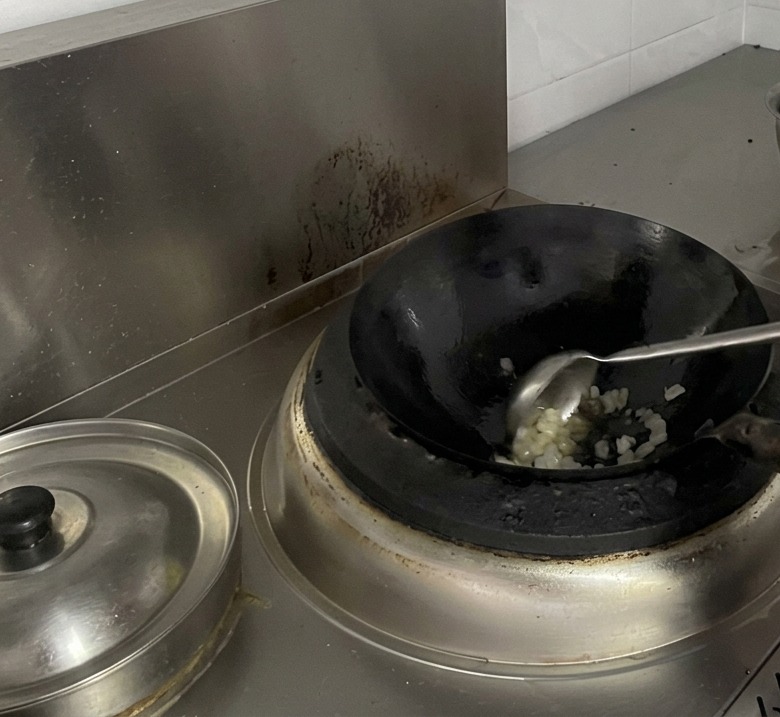
Heat up a wok with a little oil and add the rock sugar pieces. Keep the heat low and use a large metal ladle to constantly stir and break down the sugar as it melts. Continue stirring until it fully dissolves and caramelizes into a vibrant, foaming deep orange-yellow and jujube-red color.
Tip: Keep the heat strictly on low and stir constantly to prevent the sugar from burning, which would make the entire broth bitter. - 6Caramelize the sugar completely
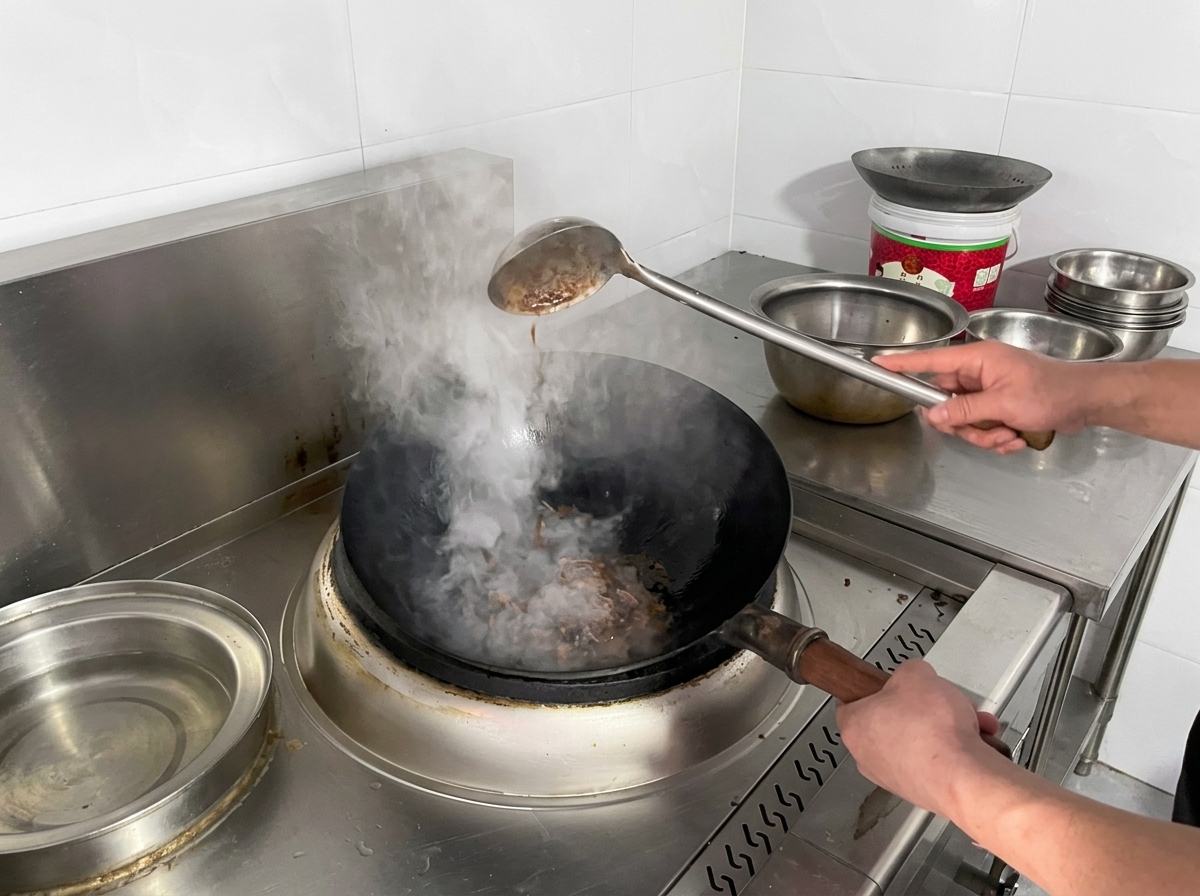
Stir-fry the melting rock sugar continuously until it completely liquefies into a bubbling, deep orange-red caramelized syrup. This caramel color base is crucial for giving the braised meat its rich, signature color and balanced sweetness.
Tip: Work quickly once the syrup turns a deep jujube-red, as it can burn within seconds if left unattended before adding water. - 7Create the braising base
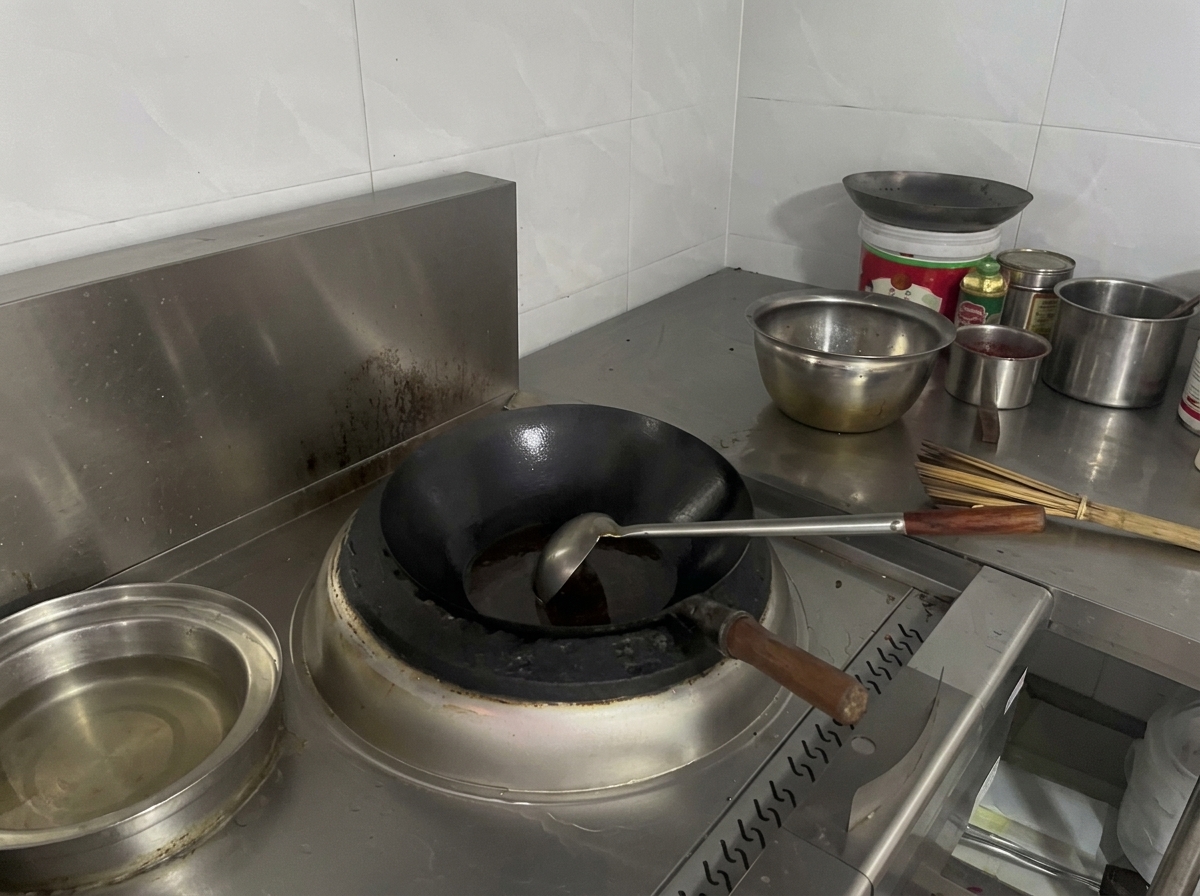
Carefully combine water with the fully melted and caramelized rock sugar in the wok. Stir over low heat until the sugar completely dissolves, yielding a vibrant, dark red-brown liquid that forms the essential color and flavor base for the braise.
Tip: Add water slowly and carefully, as hot caramelized sugar can bubble up and splatter vigorously. - 8Add the aromatics
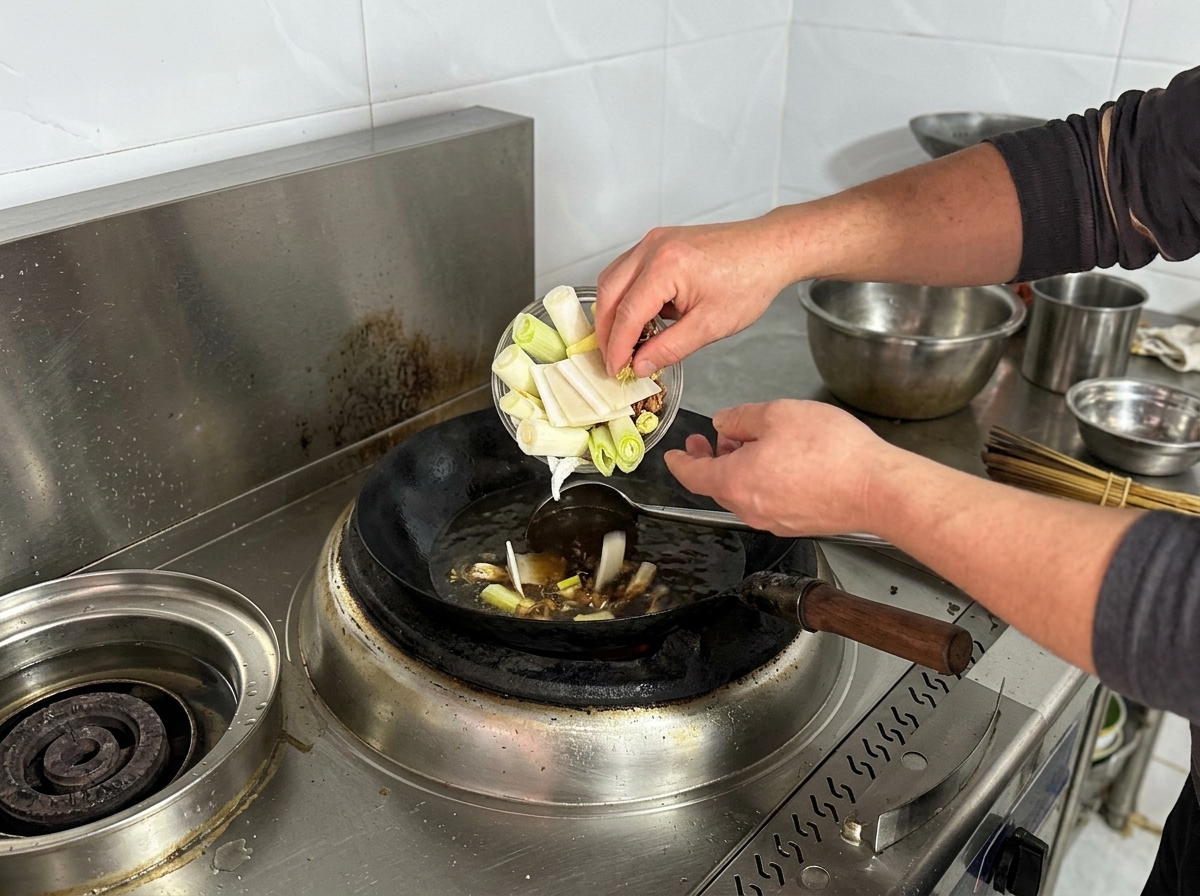
Once the caramelized sugar base is boiling, carefully add the prepared fresh scallions, ginger slices, and whole star anise directly into the wok. Allow them to simmer briefly to release their essential oils into the broth.
Tip: Adding aromatics to a boiling base helps extract their natural oils quickly, creating a more fragrant foundation for the braise. - 9Season with salt
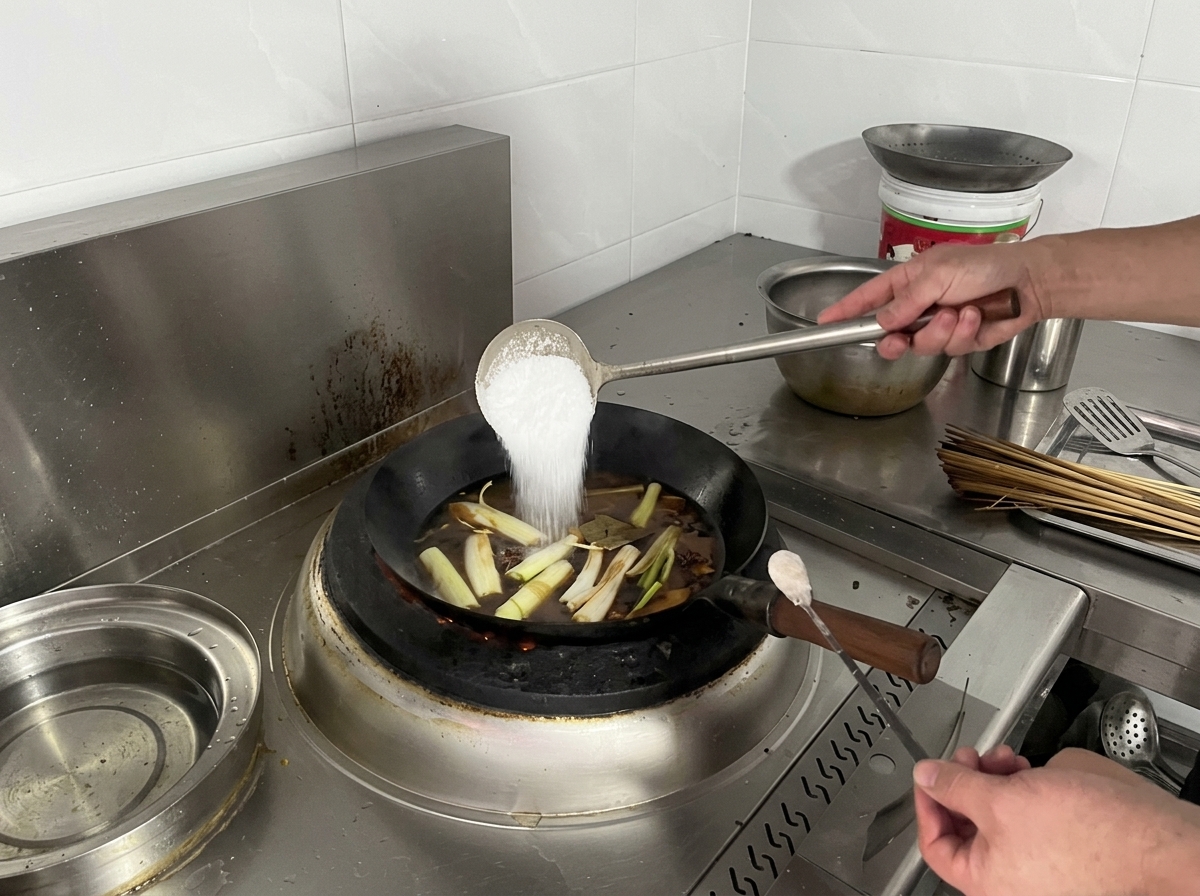
Season the simmering braising liquid by adding a generous ladle full of salt. Stir the mixture well with the ladle to ensure the salt fully dissolves into the broth.
Tip: Braising liquids should generally be slightly saltier than a regular soup, as the meats will absorb a significant amount of the seasoning over the long cooking process. - 10Season the braising liquid
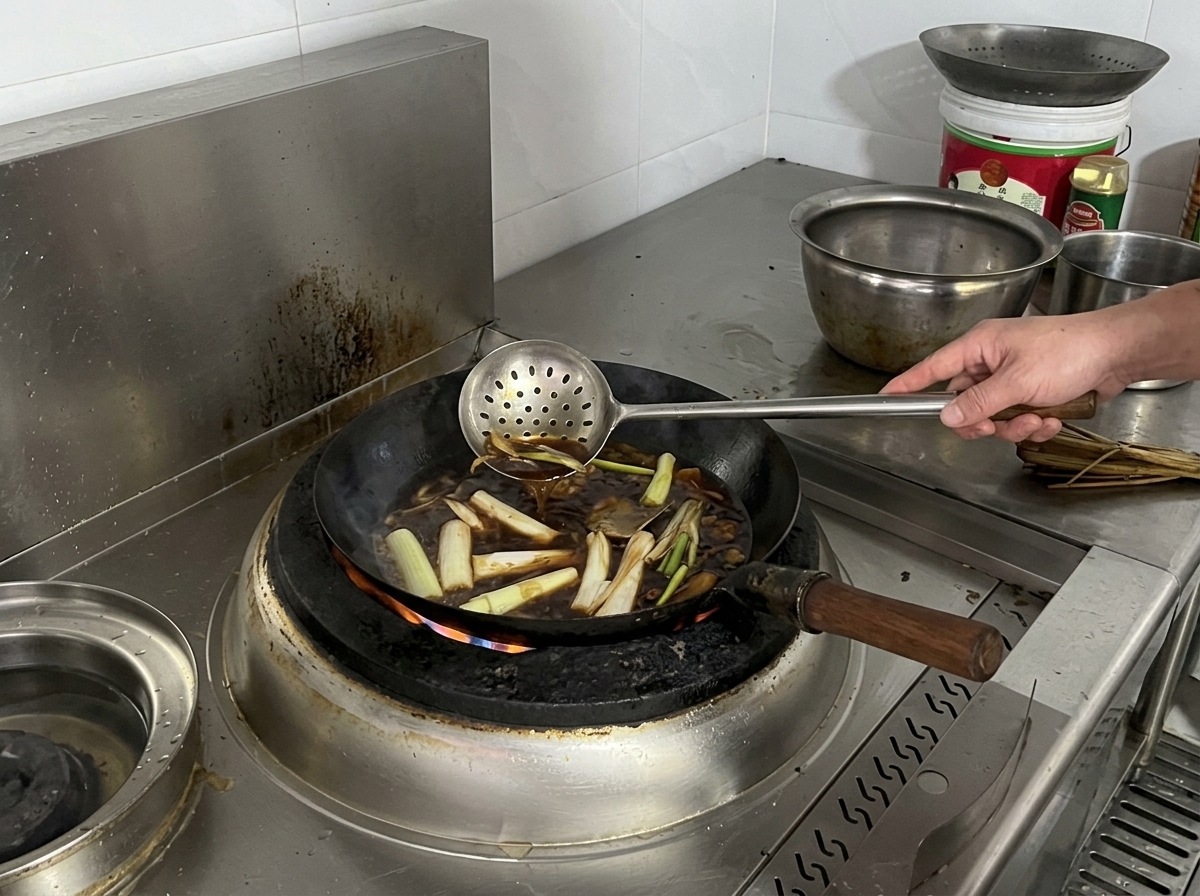
With the scallions, ginger, and star anise simmering in the caramelized sugar base, add a generous amount of salt and MSG powder to the broth. Stir thoroughly to ensure the seasonings are completely dissolved and integrated into the liquid to build a savory flavor profile.
Tip: Be careful when adding MSG and salt; adjust the amount according to the total volume of your braising liquid to maintain a balanced savory taste. - 11Submerge the pig trotters
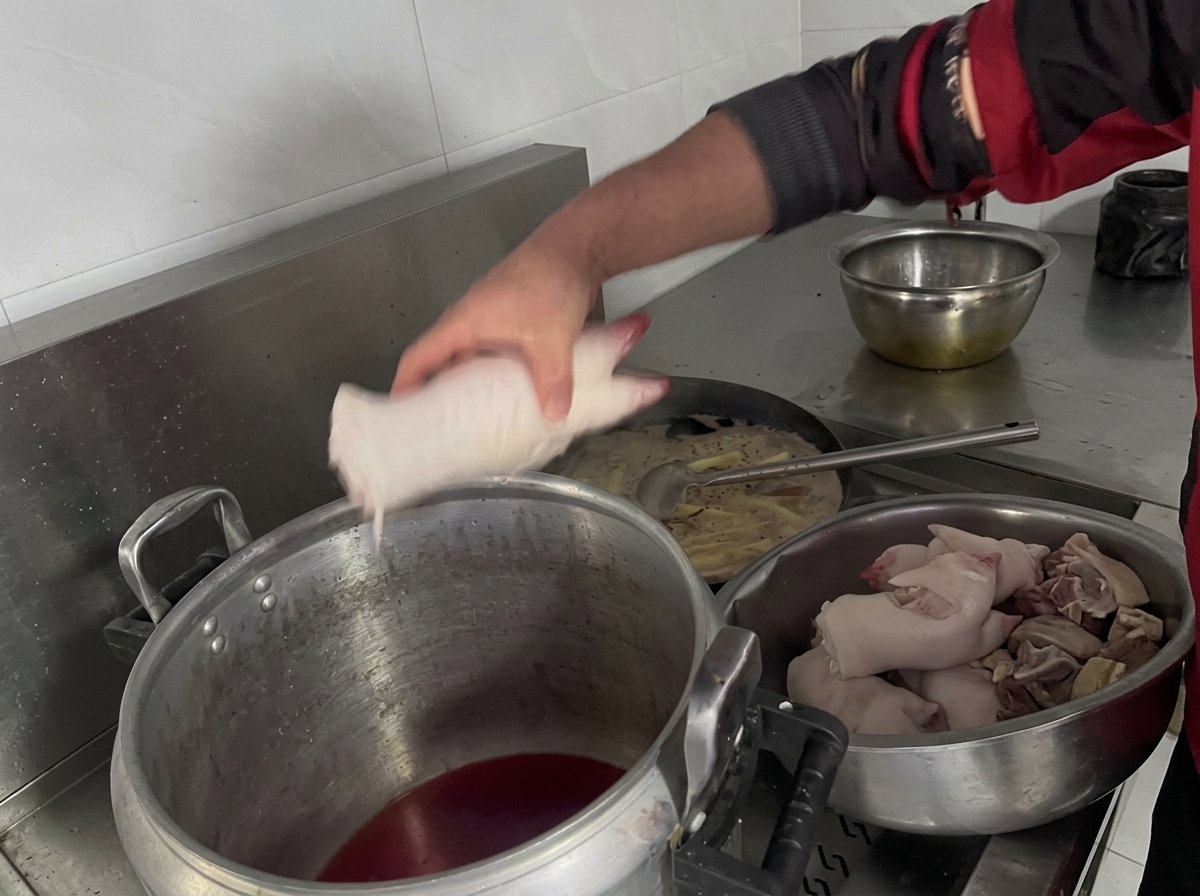
Transfer the prepared braising broth into a large, deep stockpot. Carefully place the cleaned pig trotters into the pot one by one, ensuring they are fully submerged in the seasoned red-brown liquid.
Tip: Using a tall, deep stockpot ensures that large cuts of meat stay submerged for even coloring and flavor absorption during the braise. - 12Add the diaphragm meat
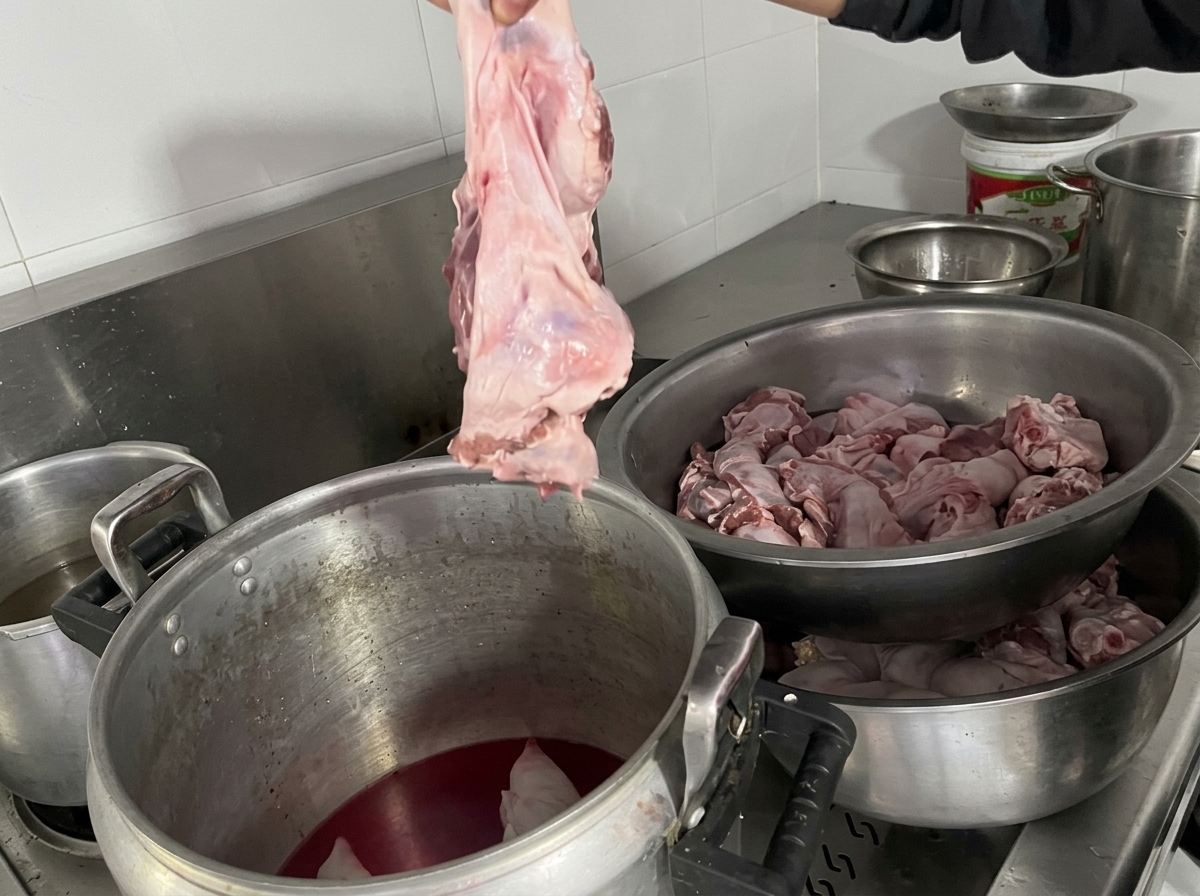
Lower the large pieces of raw diaphragm meat, or Luoji meat, directly into the stockpot alongside the pig trotters. Push them down slightly to make sure all the meat is fully covered by the savory braising liquid.
Tip: Braising the diaphragm meat in large, whole slabs helps it retain its moisture and satisfying meaty texture over the long cooking process. - 13Simmer to perfection
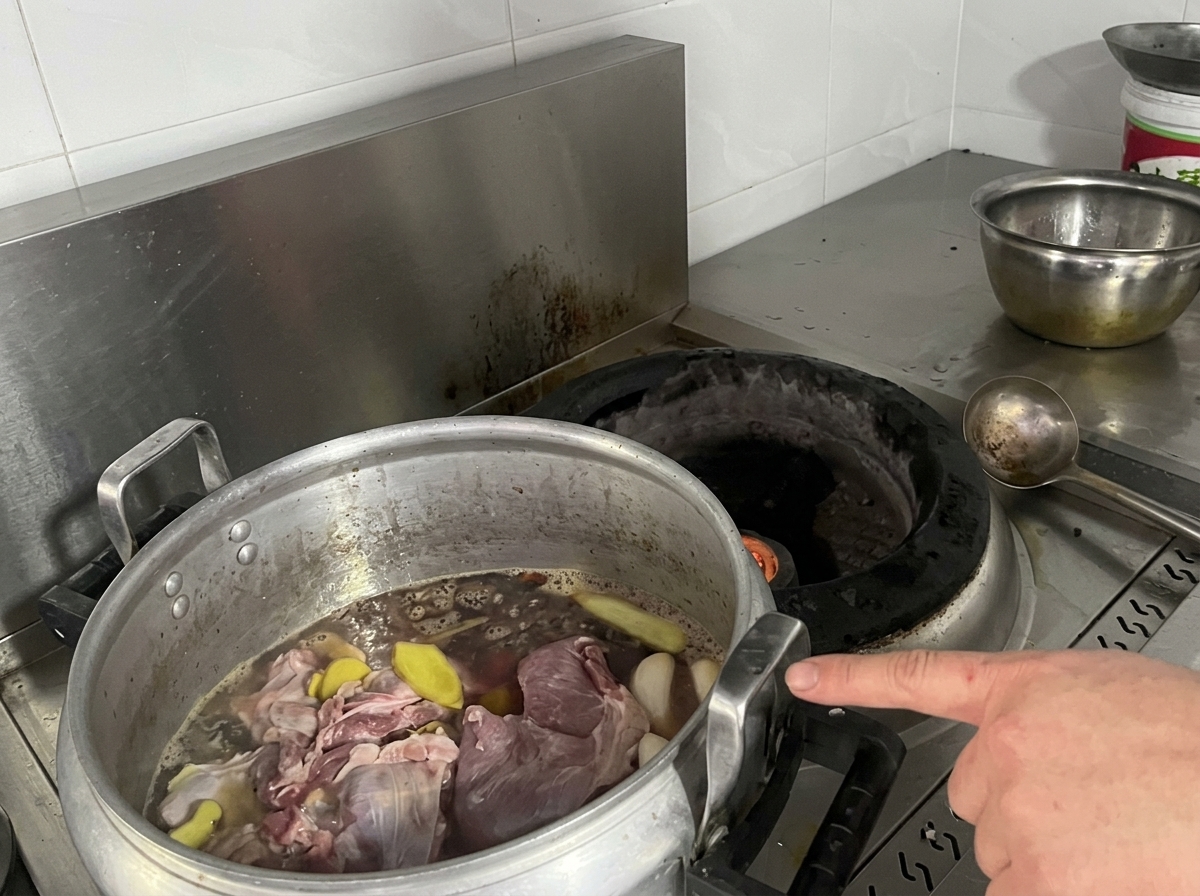
Place the stockpot over high heat until the braising liquid comes to a rolling boil. Once boiling, reduce to a low heat, cover the pot, and let everything simmer gently for about 50 minutes until the meats are perfectly tender and infused with flavor.
Tip: A gentle, low simmer is crucial; boiling the meat too vigorously will cause it to seize up and become tough.