Authentic Korean Beef Soybean Paste Soup (Doenjang Jjigae)
Comforting Korean classic featuring tender beef, tofu, and zucchini simmered in a rich, deeply savory fermented soybean paste broth.
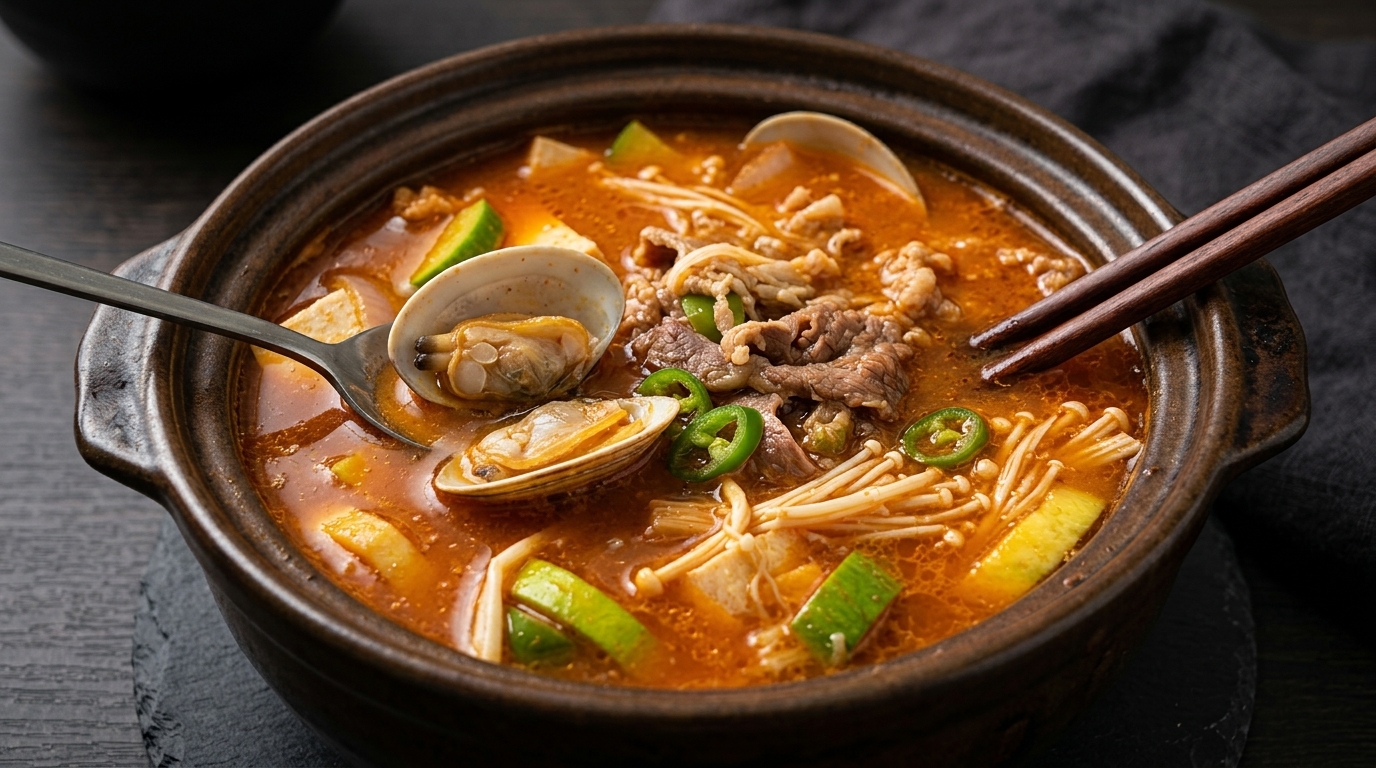
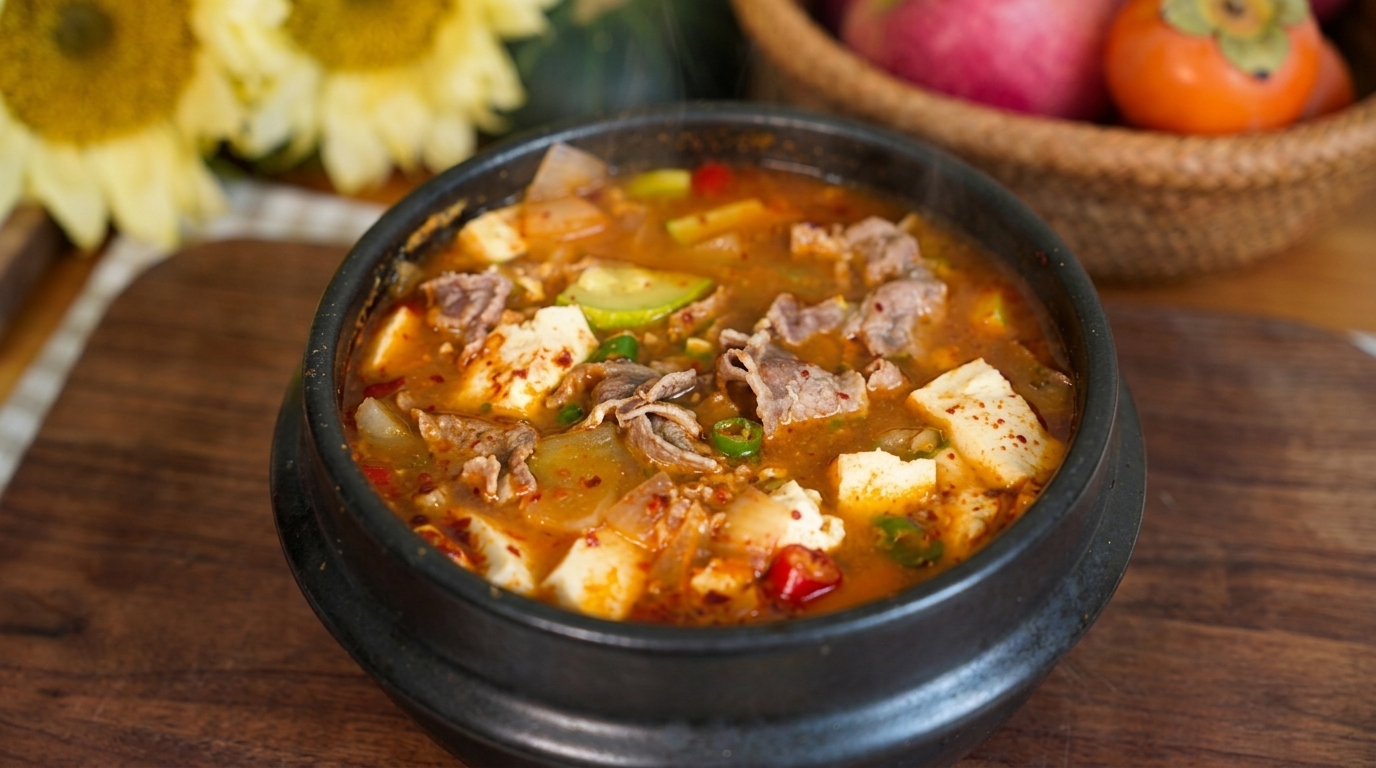
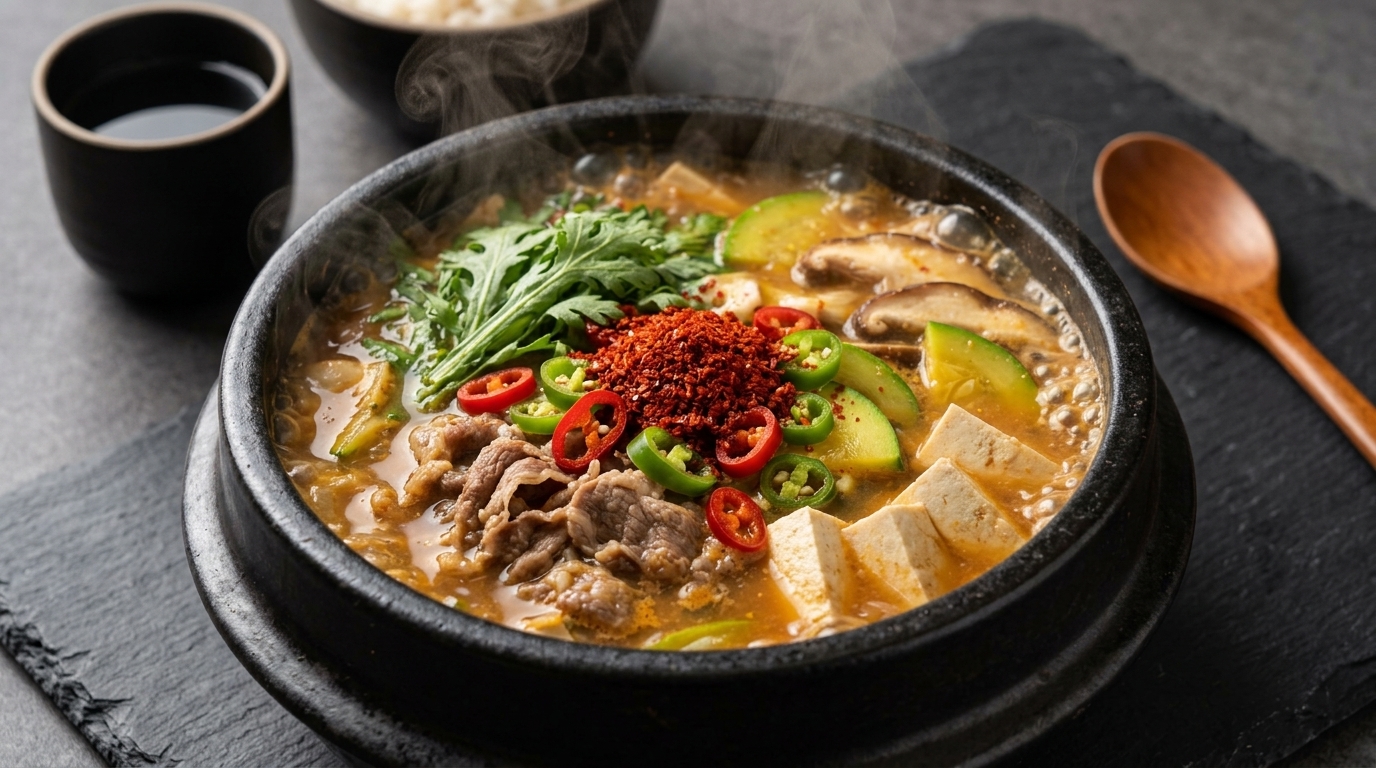
Doenjang Jjigae, or soybean paste stew, is a quintessential Korean comfort food found on nearly every family dinner table. Unlike the more fiery kimchi jjigae, this dish relies on the deep, earthy, complex umami of fermented soybean paste (doenjang). Traditionally enhanced by using starchy rice water as a base, it serves as a hearty, nourishing centerpiece that perfectly balances savory beef with fresh seasonal vegetables.
Ingredients
- 150 g beef slices
- 1 small onion
- 1/2 zucchini
- 4 shiitake mushrooms
- 200 g firm tofu
- 1 tbsp cooking oil
- 500 ml rice water (third rinse)
- 1.5 tbsp Korean soybean paste (doenjang)
- 1 tsp beef seasoning powder (dasida)
- 1 tbsp minced garlic
- 1 green chili pepper
- 1 red chili pepper
- 2 scallions
- 1 tbsp Korean chili powder (gochugaru)
Instructions
- 1Slice the zucchini
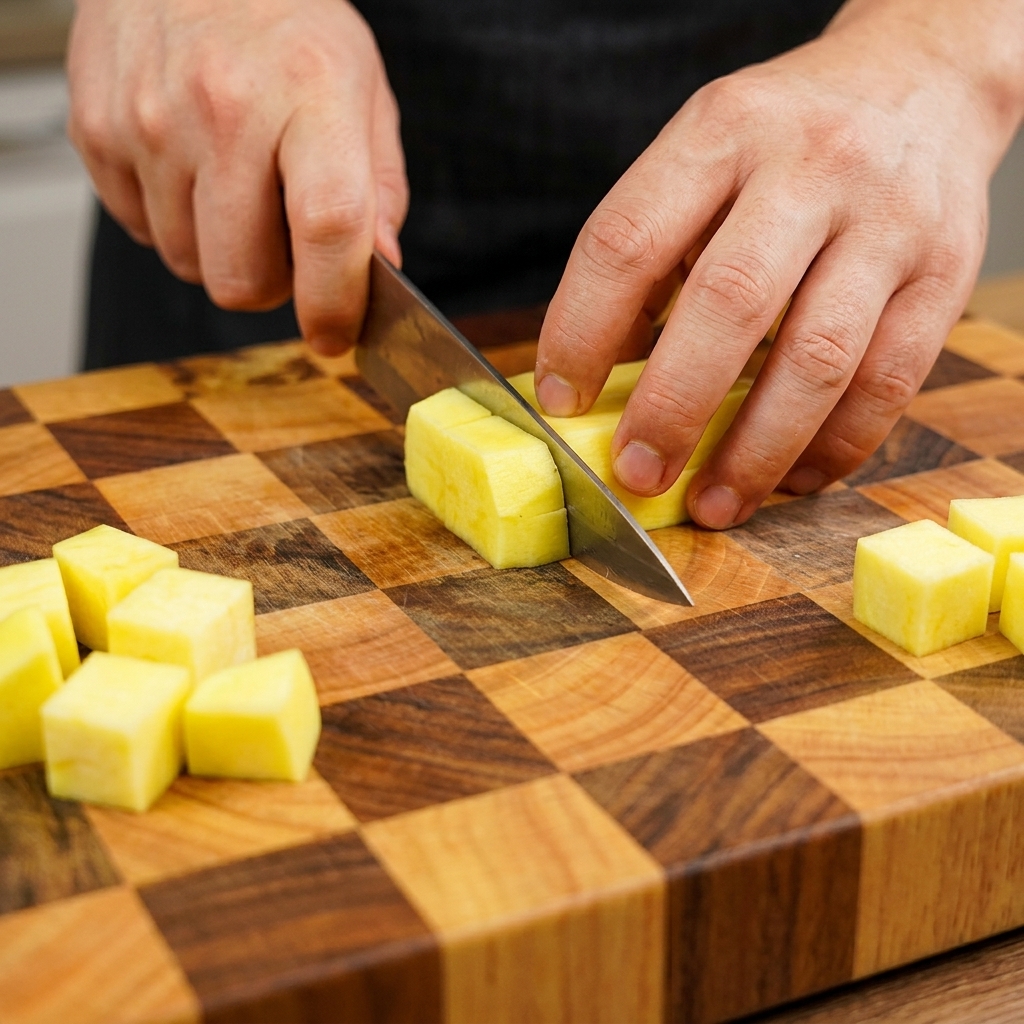
Carefully slice the yellow zucchini into small, uniform blocks on your cutting board. Keeping the pieces even in size ensures they will cook at the same rate when added to the soup later.
Tip: Cut the zucchini into relatively thick blocks so that they maintain a pleasant, firm texture and do not become mushy during simmering. - 2Slice the tofu
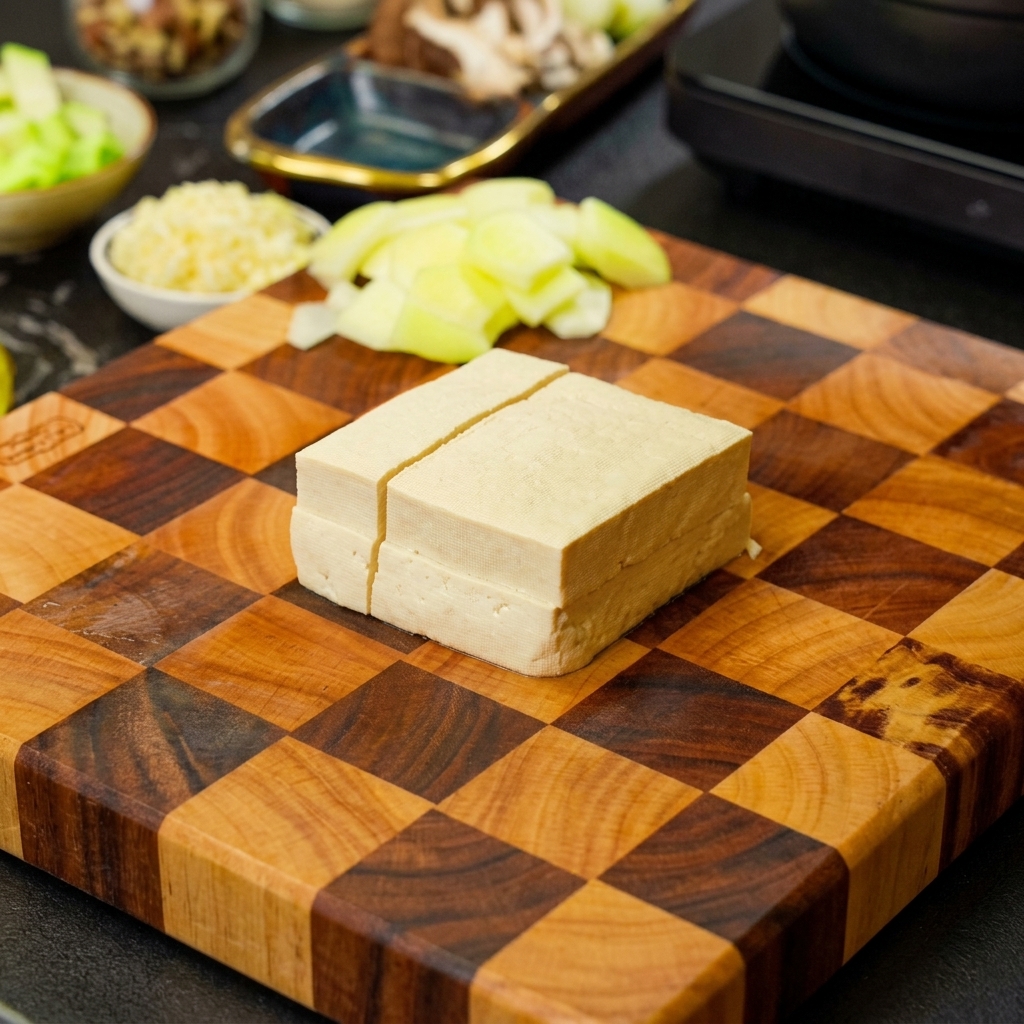
Slice the block of white tofu evenly on a cutting board. Preparing the tofu into uniform pieces ensures it cooks evenly and absorbs the rich flavors of the soybean paste broth later on.
Tip: Use firm or extra-firm tofu so the pieces hold their shape well when simmered in the soup. - 3Add the beef slices
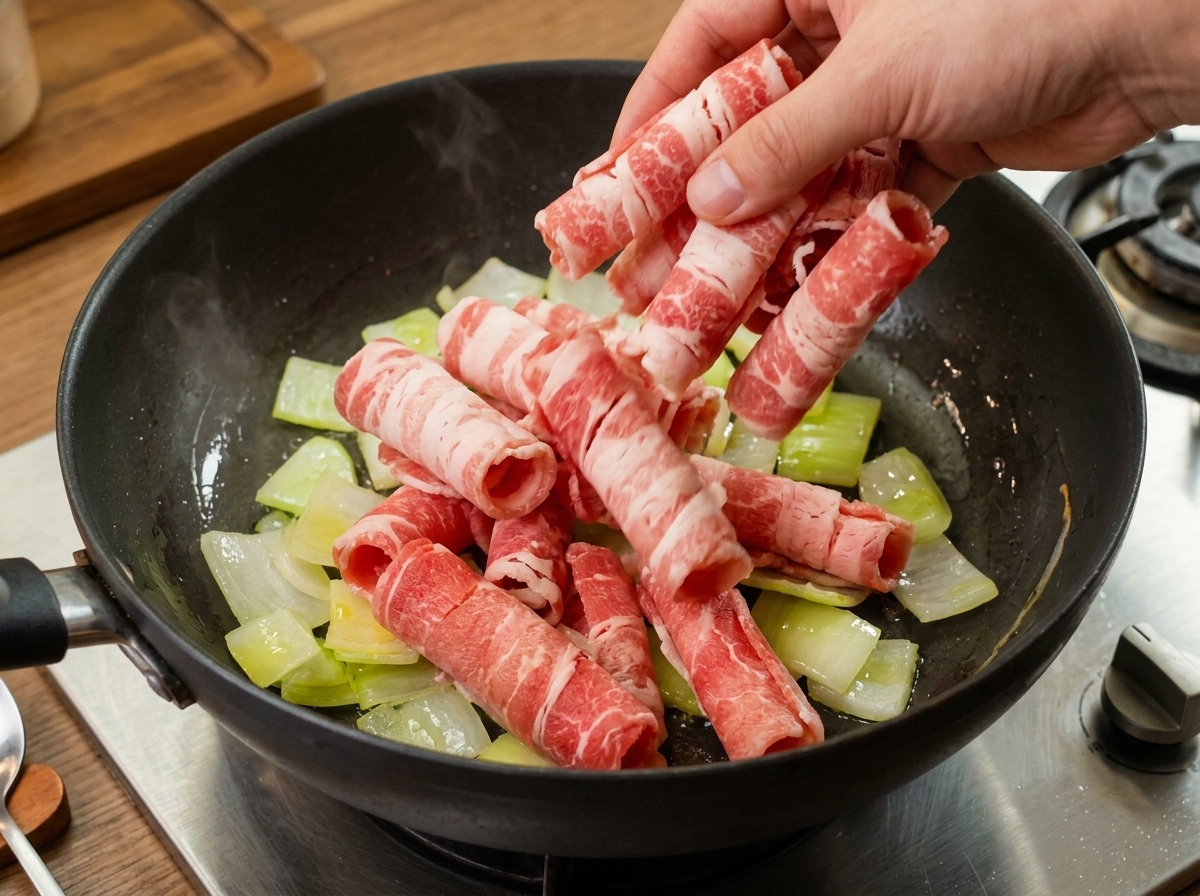
Add the thin slices of raw beef directly into the pot with the sautéed onions. Stir-fry the mixture gently over low heat until the meat begins to change color and become fragrant.
Tip: Stir-frying the beef briefly before adding water helps render the fat and locks in the savory flavor. - 4Add the rice water
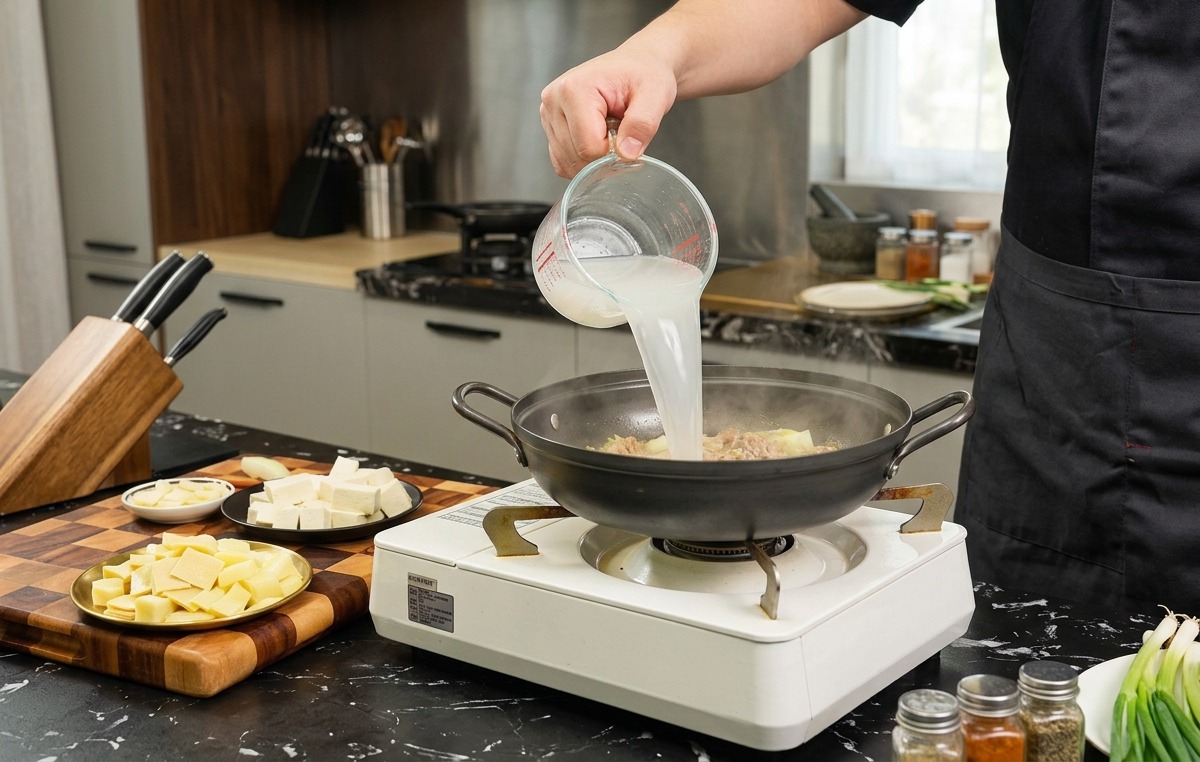
Pour the cloudy rice water from a measuring cup directly into the pot with the sautéed onions and beef. Using starchy rice water instead of plain water adds a subtle depth and helps thicken the soup base beautifully.
Tip: For the best flavor and cleanliness, use the starch-rich water collected from the third rinse of your rice preparation. - 5Dissolve the soybean paste
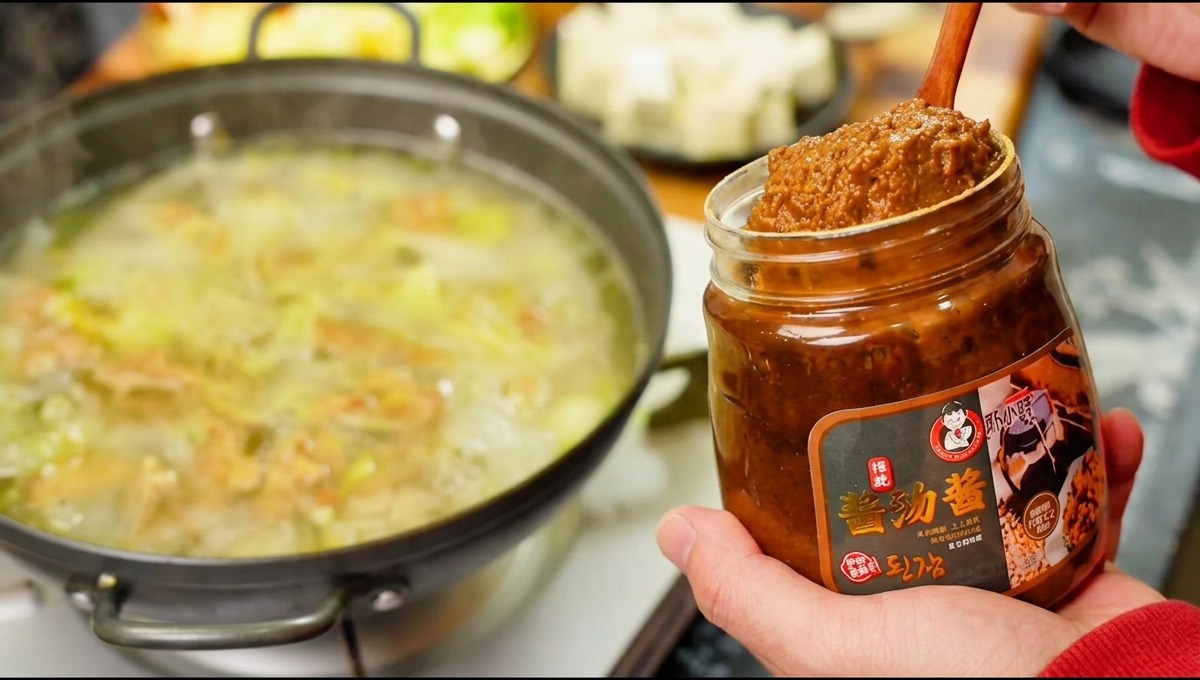
Scoop a generous spoonful of thick Korean soybean paste from the jar and add it into the simmering broth. Stir the liquid thoroughly to ensure the paste dissolves completely into the soup base.
Tip: Using the third rinse of rice water adds a subtle starchiness that helps bind the flavors of the fermented paste perfectly. - 6Add vegetables and tofu
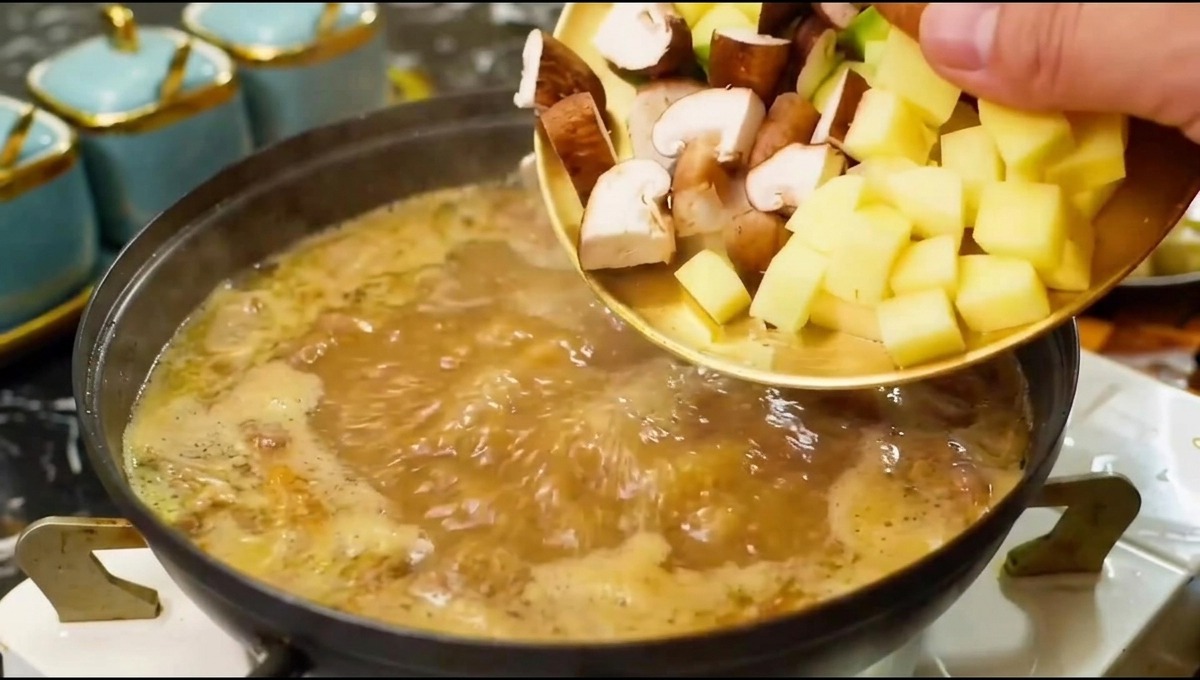
Carefully transfer the chopped zucchini, shiitake mushrooms, and tofu cubes into the boiling soybean broth. Ensure all ingredients are submerged so they can simmer and release their flavors into the soup.
Tip: Be gentle when adding the tofu cubes to prevent them from breaking apart in the hot liquid. - 7Add seasoning and garlic
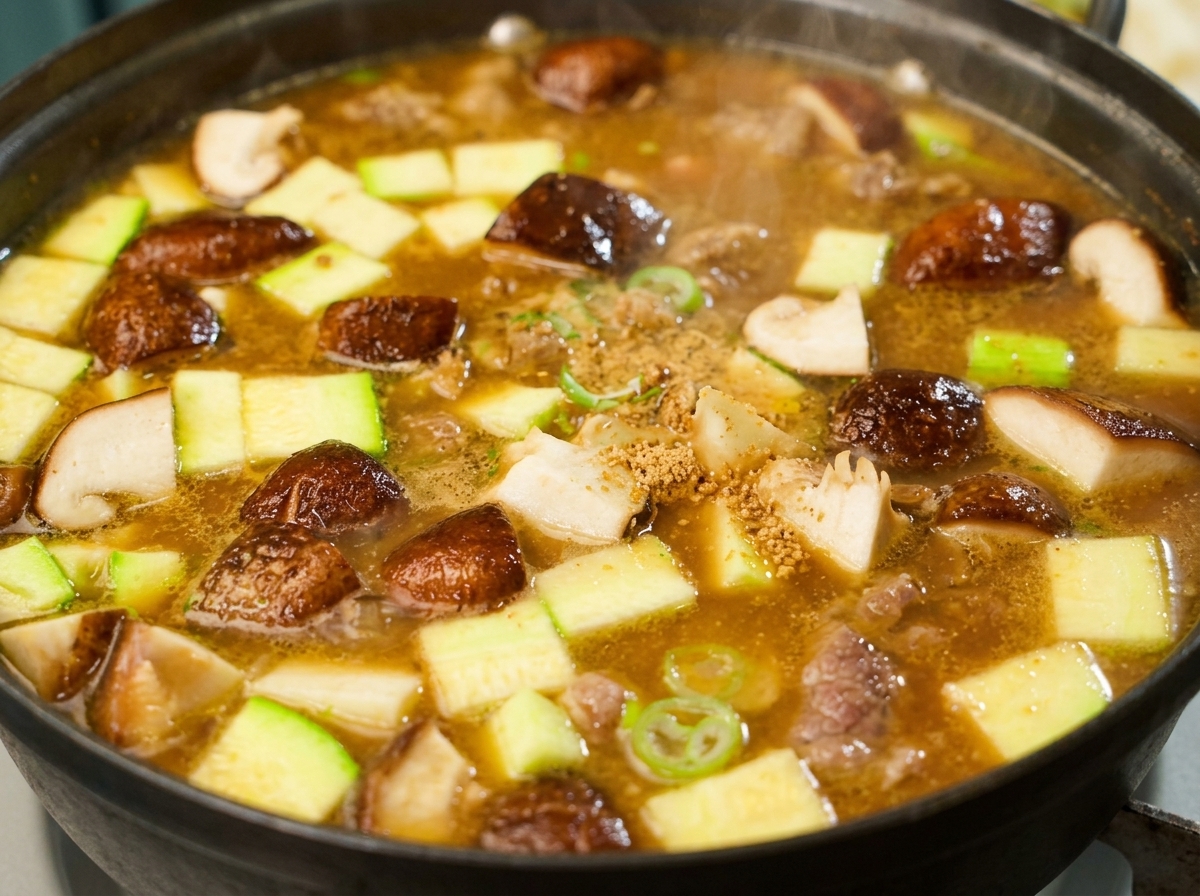
Add a spoonful of minced garlic and beef seasoning powder directly into the pot with the vegetables and mushrooms. Stir gently to dissolve the seasonings thoroughly into the soup, allowing the rich flavors to combine as it simmers.
Tip: Beef seasoning powder enhances the savory, umami flavor of the broth, perfectly balancing the deep, fermented taste of the Korean soybean paste. - 8Add chili powder and final garnishes
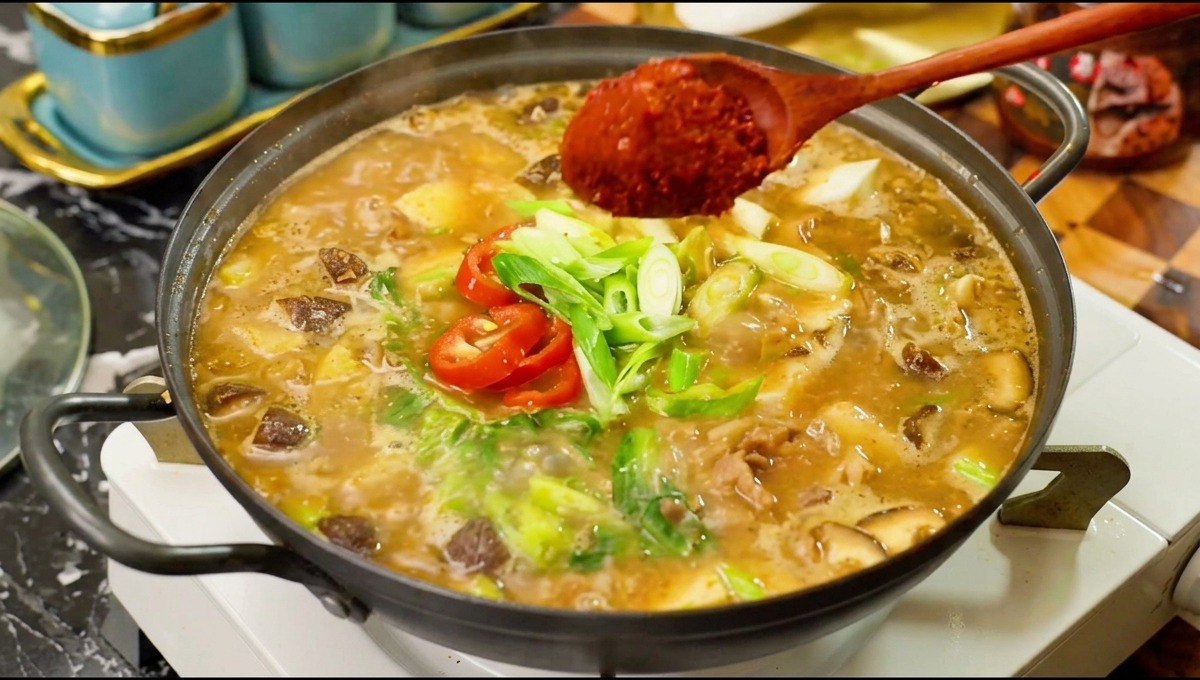
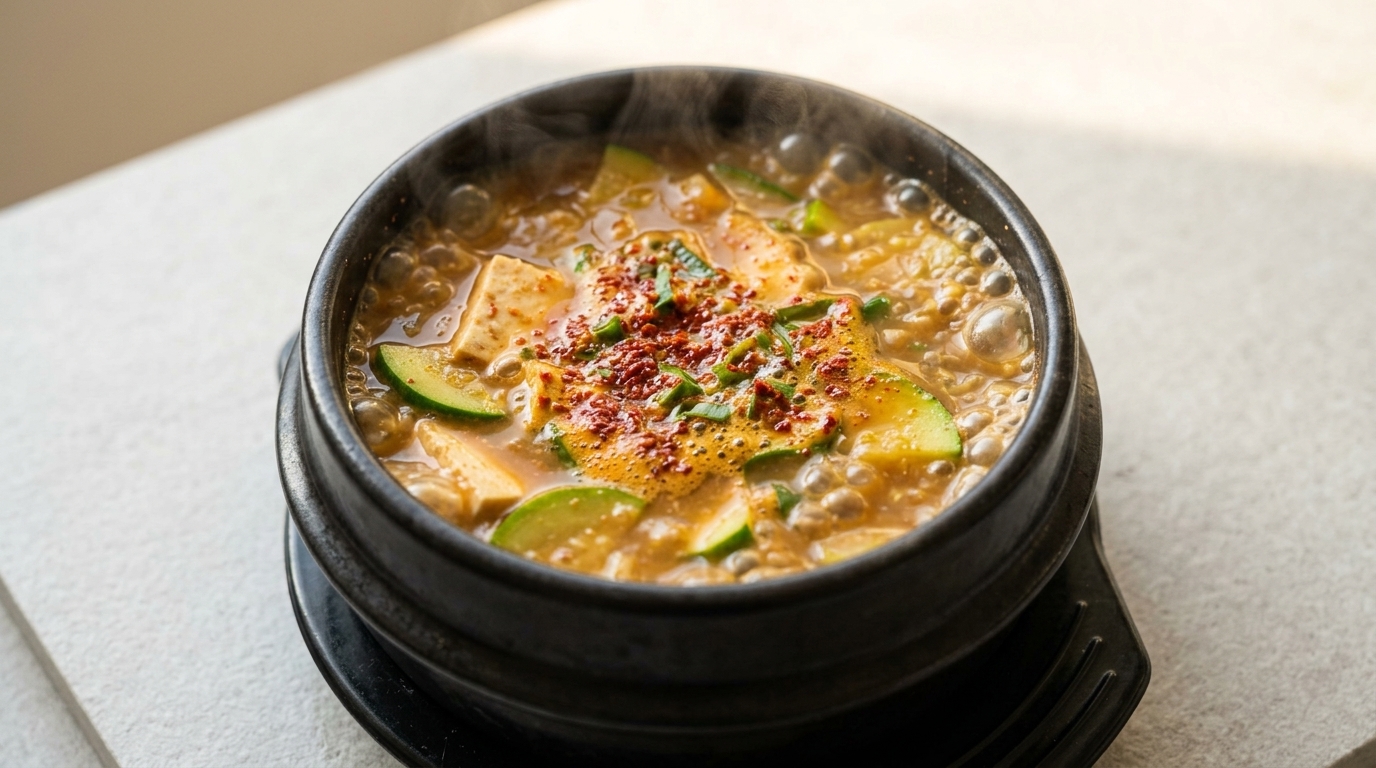
Add the sliced green and red chili peppers along with the chopped scallions into the boiling soup. Top the dish with a large spoonful of vibrant red chili powder to infuse the broth with its signature fiery kick and rich color. Allow the soup to simmer for another 5 minutes before serving.
Tip: Feel free to adjust the amount of chili powder to better match your personal heat tolerance.