Authentic Yoshinoya-Style Gyudon (Japanese Beef Bowl)
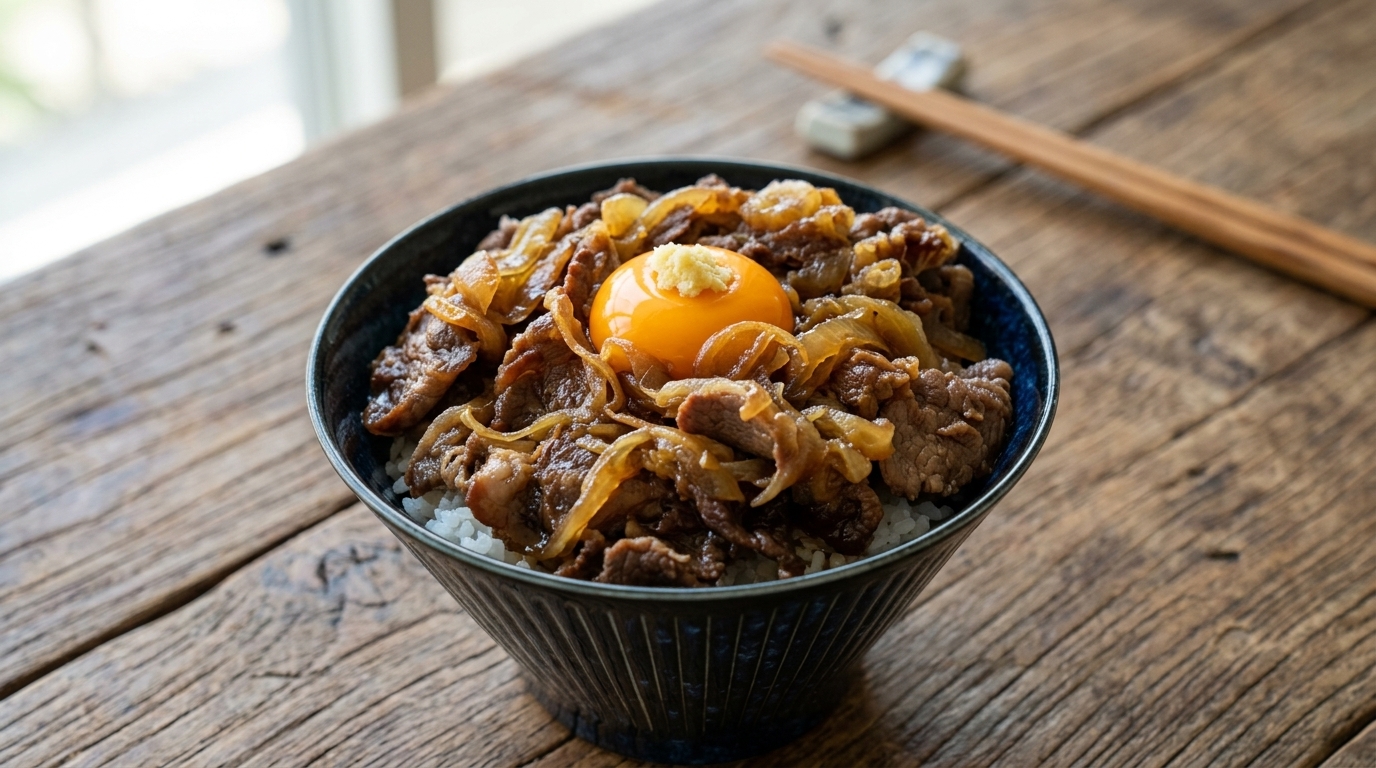
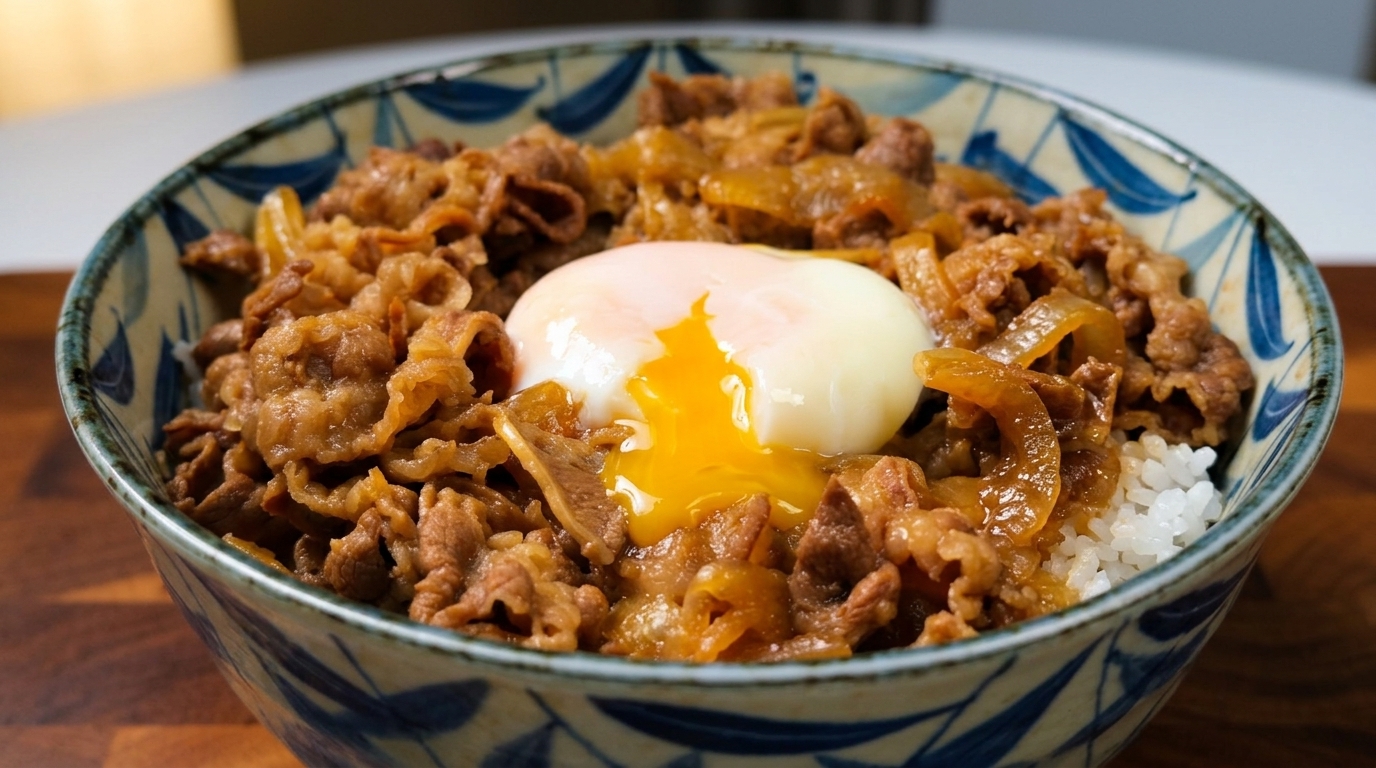
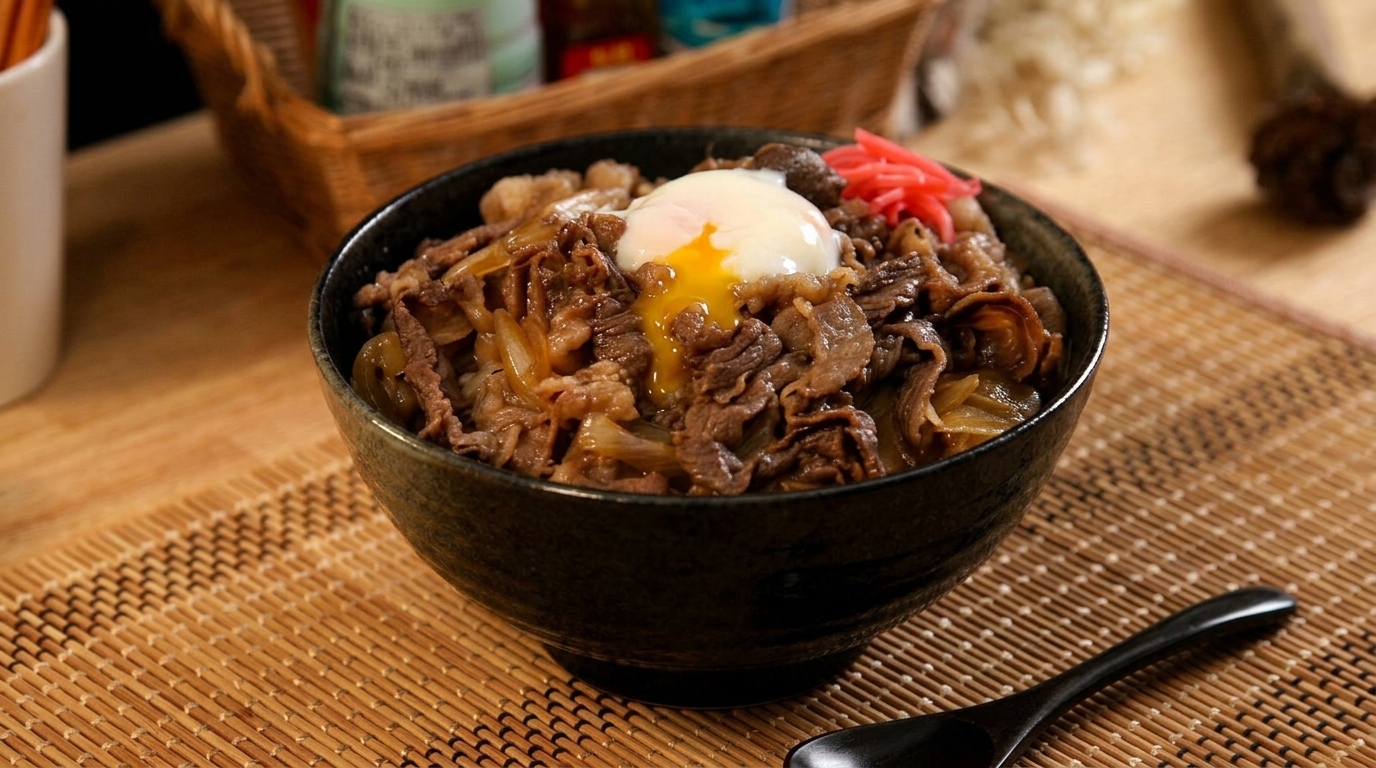
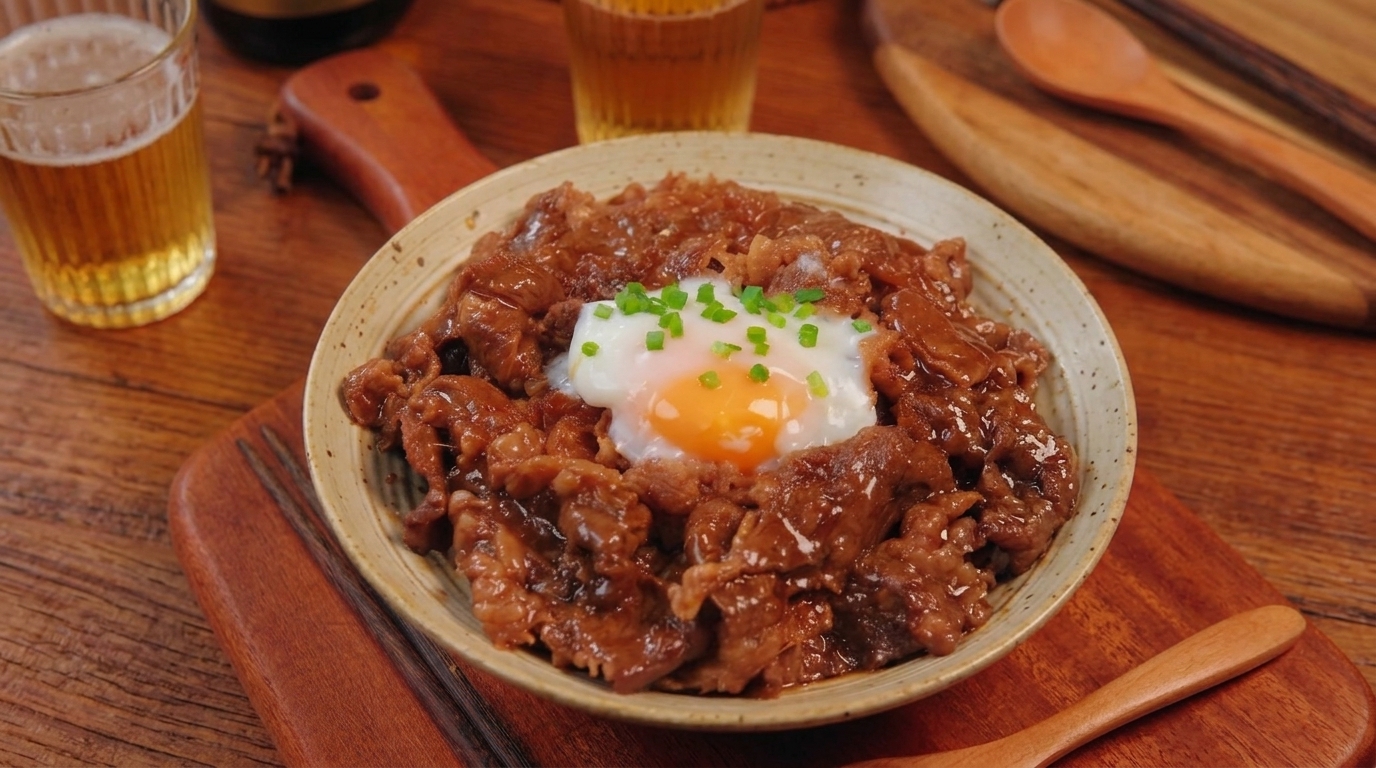
Recreate the legendary Yoshinoya experience at home with this authentic Gyudon featuring tender fatty beef simmered in a sweet-savory broth with an onsen egg.
Gyudon is the quintessential Japanese comfort food, a staple of salarymen and students alike. This version stays true to the century-old tradition of Yoshinoya, focusing on a precise balance of soy sauce, sake, and mirin to highlight the natural richness of premium fatty beef.
Ingredients
- 300 g thinly sliced fatty beef (brisket or short rib)
- 12 white onion
- 200 ml water
- 60 ml soy sauce
- 50 ml sake
- 50 ml mirin
- 3 tbsp white granulated sugar
- 1 tbsp freshly grated ginger
- 2 bowls steamed white rice
- 2 onsen eggs
- to taste chopped green onions
Instructions
- 1Slice the onion
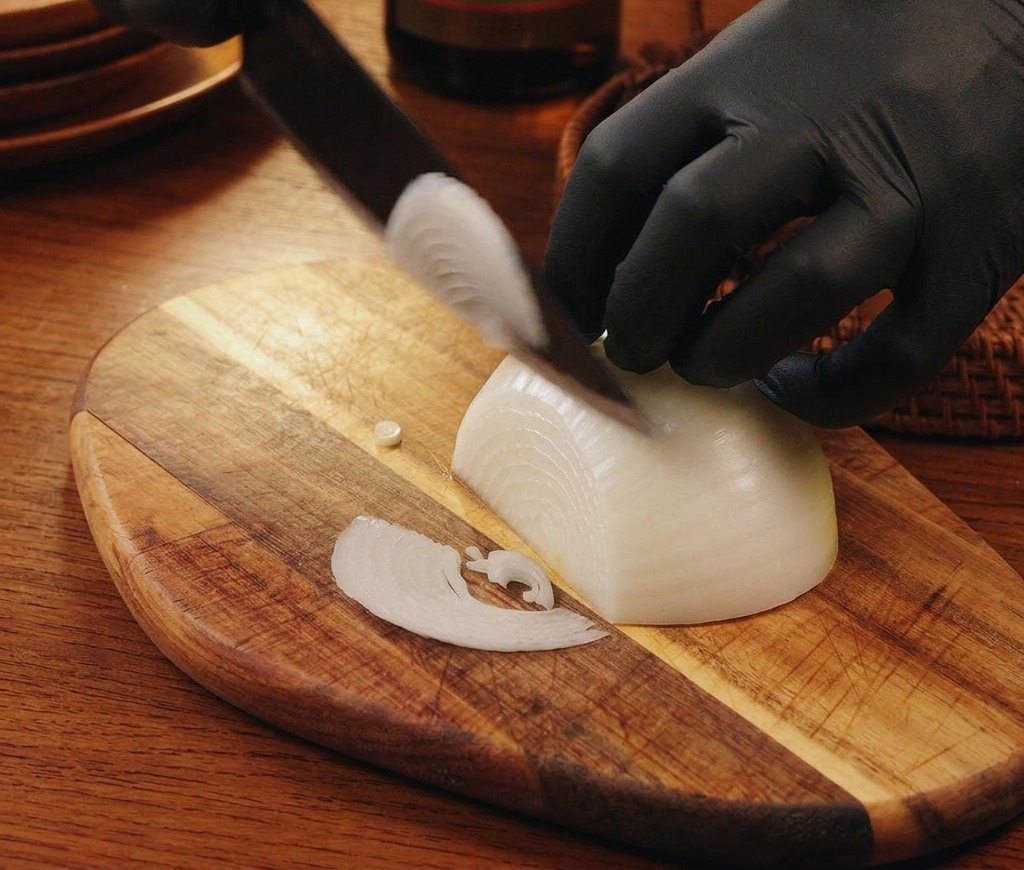
Using a sharp knife, slice half of a white onion into thin, uniform strips. Thinly sliced onions are essential for Gyudon as they soften beautifully and absorb the savory broth during the simmering process, providing a delicate sweetness that balances the beef.
Tip: Cut the onion from pole to pole (with the grain) to help the slices maintain their shape and texture even after they have been softened by the heat. - 2Combine the sauce base
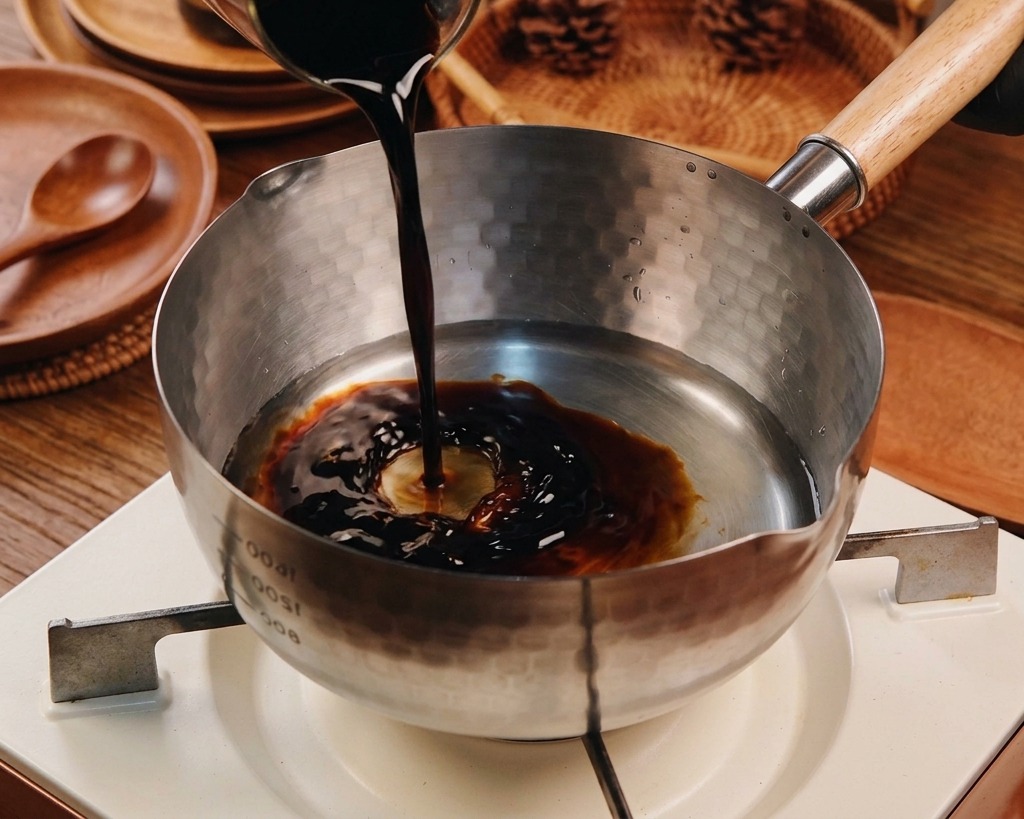
In a stainless steel Yukihira pot, combine 200ml of water, 60ml of soy sauce, 50ml of sake, and 50ml of mirin. This classic combination creates the signature sweet and savory profile of a traditional Japanese beef bowl sauce.
Tip: A Yukihira pot is ideal for this recipe because its hammered surface and narrow spout allow for precise heat control and easy serving. - 3Sweeten the sauce base
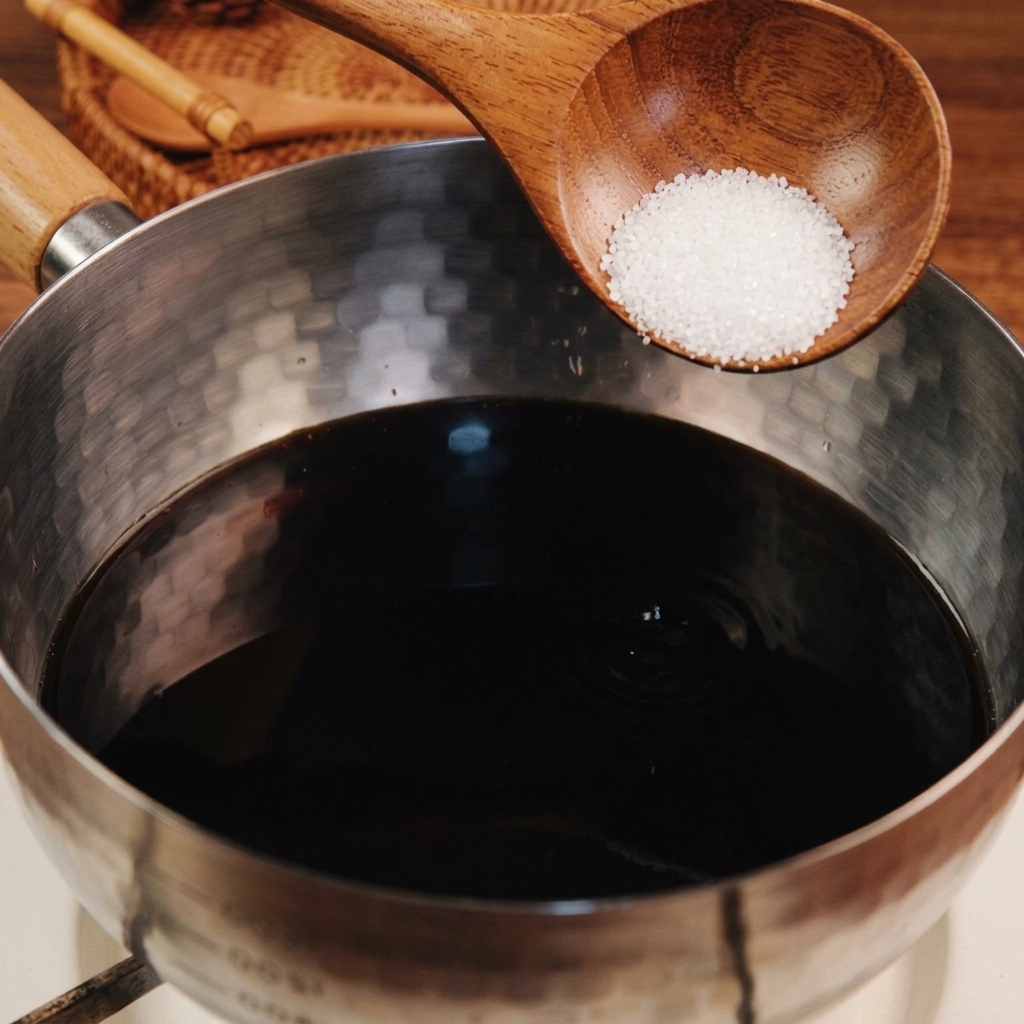
Add three spoonfuls of white granulated sugar to the dark liquid mixture in the pot. The sugar balances the saltiness of the soy sauce and the acidity of the sake and mirin, creating the classic sweet-and-savory flavor profile of a Yoshinoya-style beef bowl.
Tip: Stir the liquid gently as you add the sugar to ensure it dissolves completely before the broth reaches a boil. - 4Add aromatic ginger
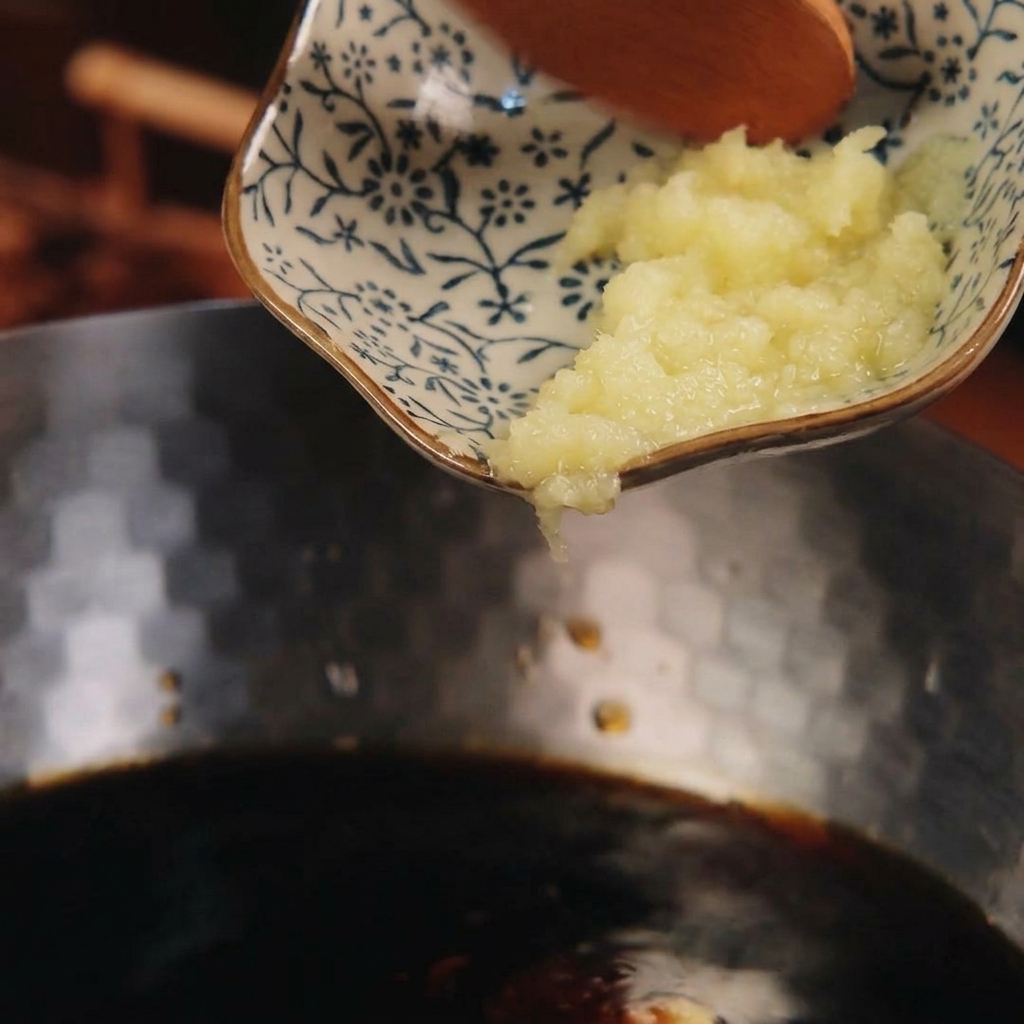
Pour the freshly grated ginger paste into the sauce. Grating the ginger instead of just slicing it allows the pungent juice and fine pulp to distribute evenly through the broth, providing a deep aromatic warmth that perfectly cuts through the richness of the fatty beef.
Tip: For the best flavor, use fresh ginger root rather than pre-packaged paste whenever possible. - 5Add the sliced onions
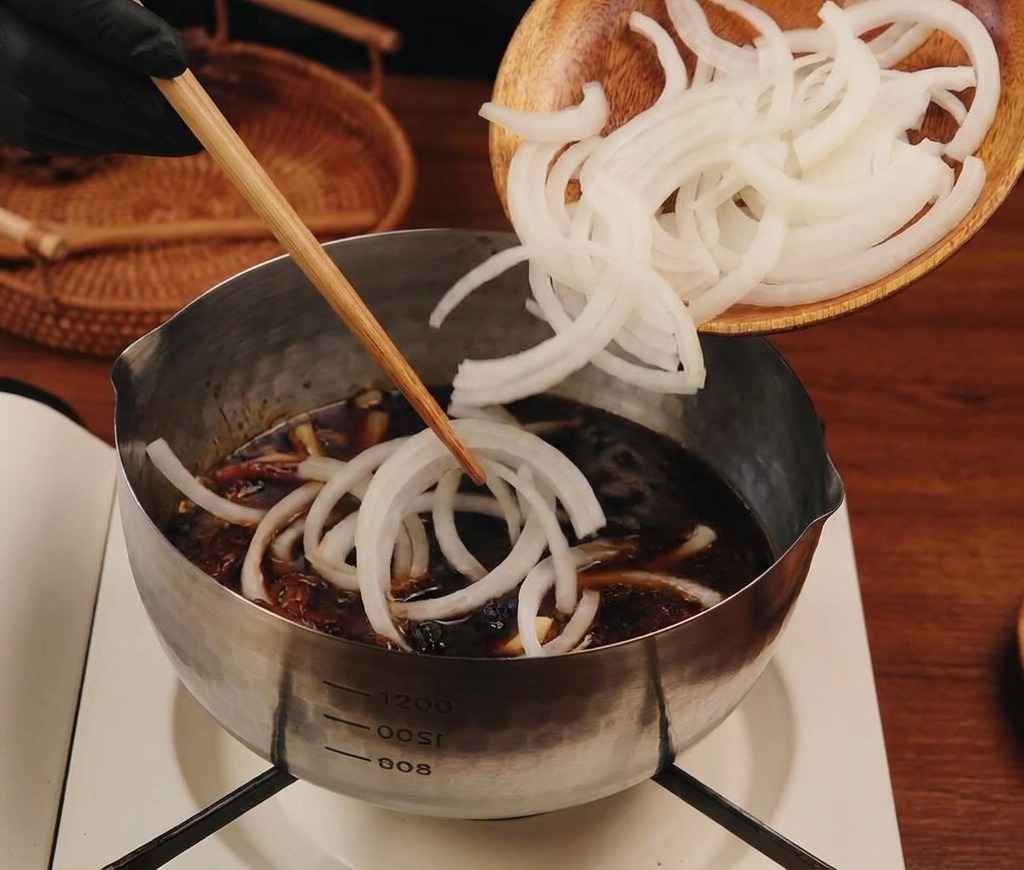
Add the prepared onion slices into the pot with the sauce mixture. Stir them slightly to ensure they are evenly distributed and begin to soak up the flavors of the soy sauce and mirin base before the heat is increased.
Tip: Dont be tempted to crowd the pot; ensure there is enough liquid to mostly cover the onions so they cook evenly and absorb the broth. - 6Bring the mixture to a boil
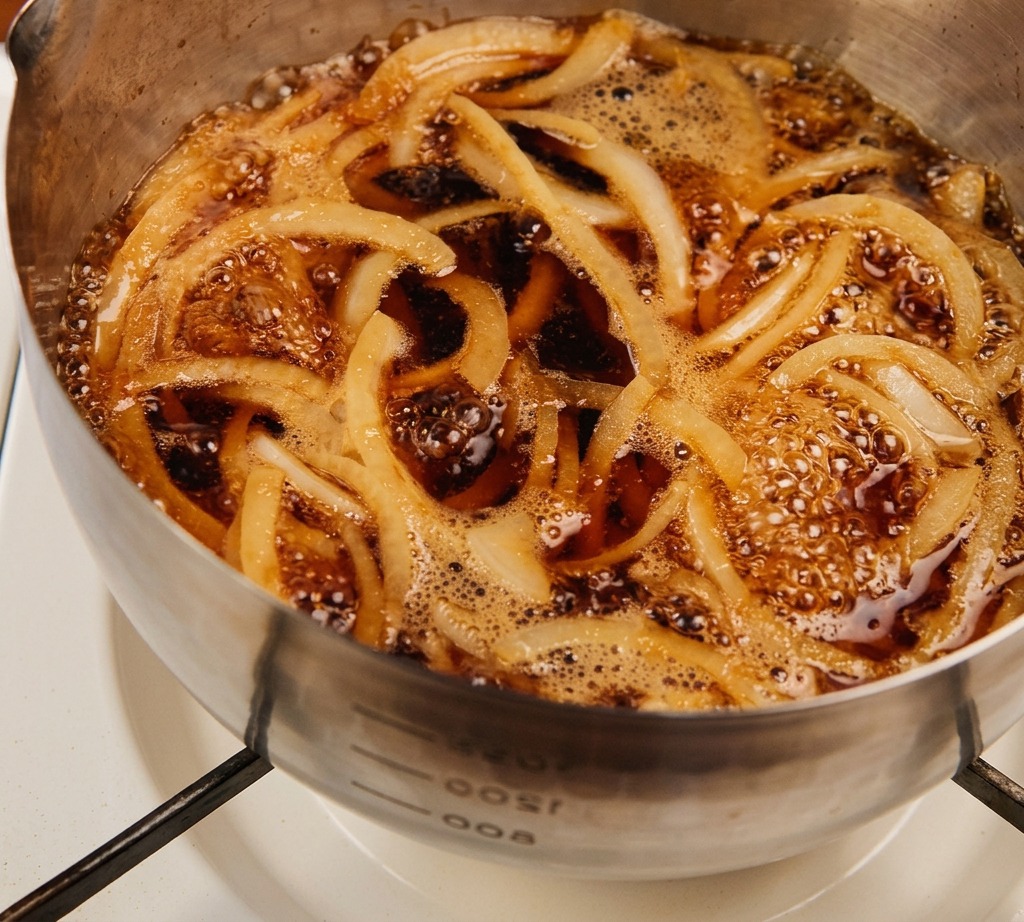
Turn the heat to high and bring the sauce and onions to a vigorous boil. This high-heat phase helps to soften the onions quickly and fully integrate the flavors of the sauce components before adding the beef.
Tip: Keep an eye on the pot once it starts bubbling to ensure it doesnt boil over, as the sugars and mirin in the sauce can cause it to foam up. - 7Cook the fatty beef
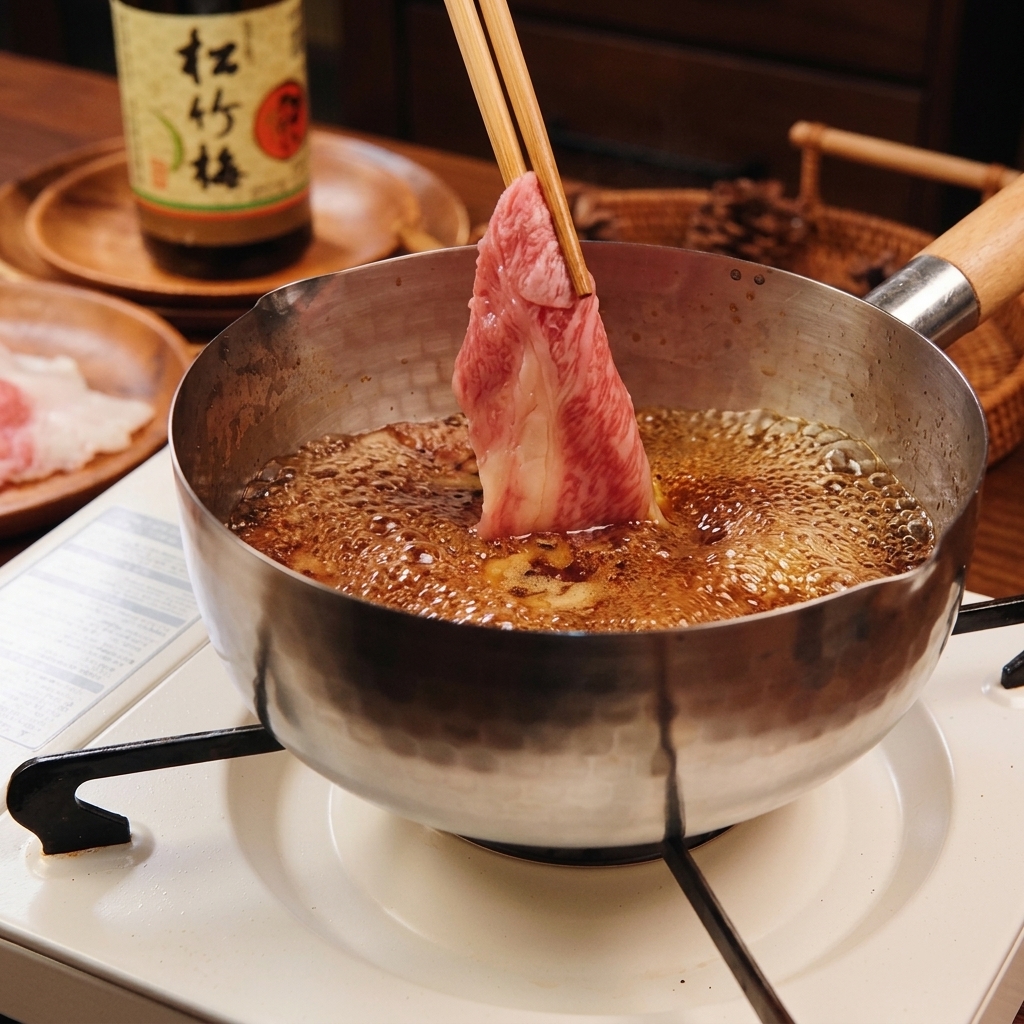
Bring the broth to a rolling boil and begin adding the thinly sliced fatty beef one by one. This individual addition is key to preventing the delicate meat from clumping, ensuring each strip is evenly cooked and thoroughly coated in the savory liquid.
Tip: Use well-marbled beef slices, such as brisket or short rib, to achieve the most tender and authentic texture. - 8Skim off the foam
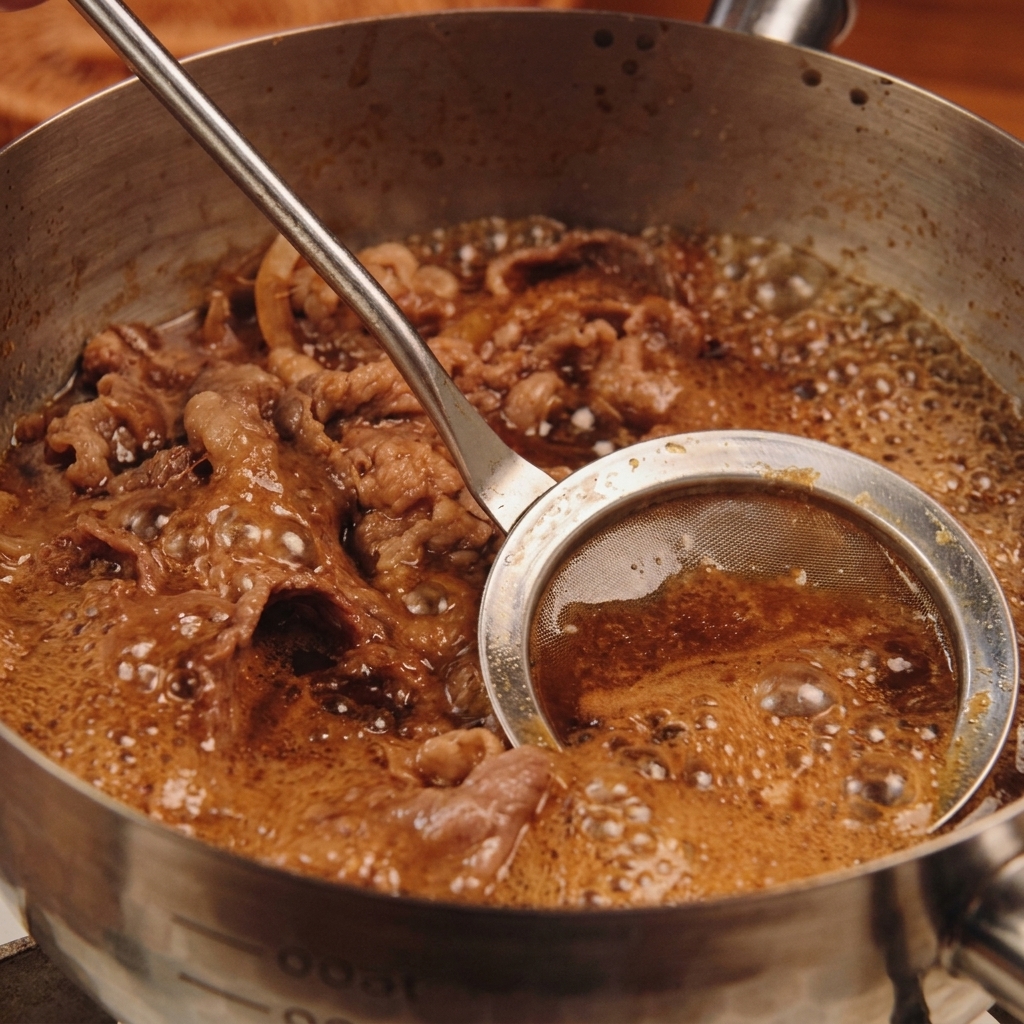
As the beef begins to boil on high heat, it will release fats and impurities that form a brown foam on the surface. Use a fine-mesh slotted spoon to carefully skim this layer off. This step is essential for creating a clean, professional-quality broth with a refined taste, free from any cloudy appearance or bitter aftertaste.
Tip: Keep a bowl of water nearby to rinse the slotted spoon frequently; this prevents the foam from clogging the mesh and ensures youre always skimming with a clean tool. - 9Simmer for deep flavor
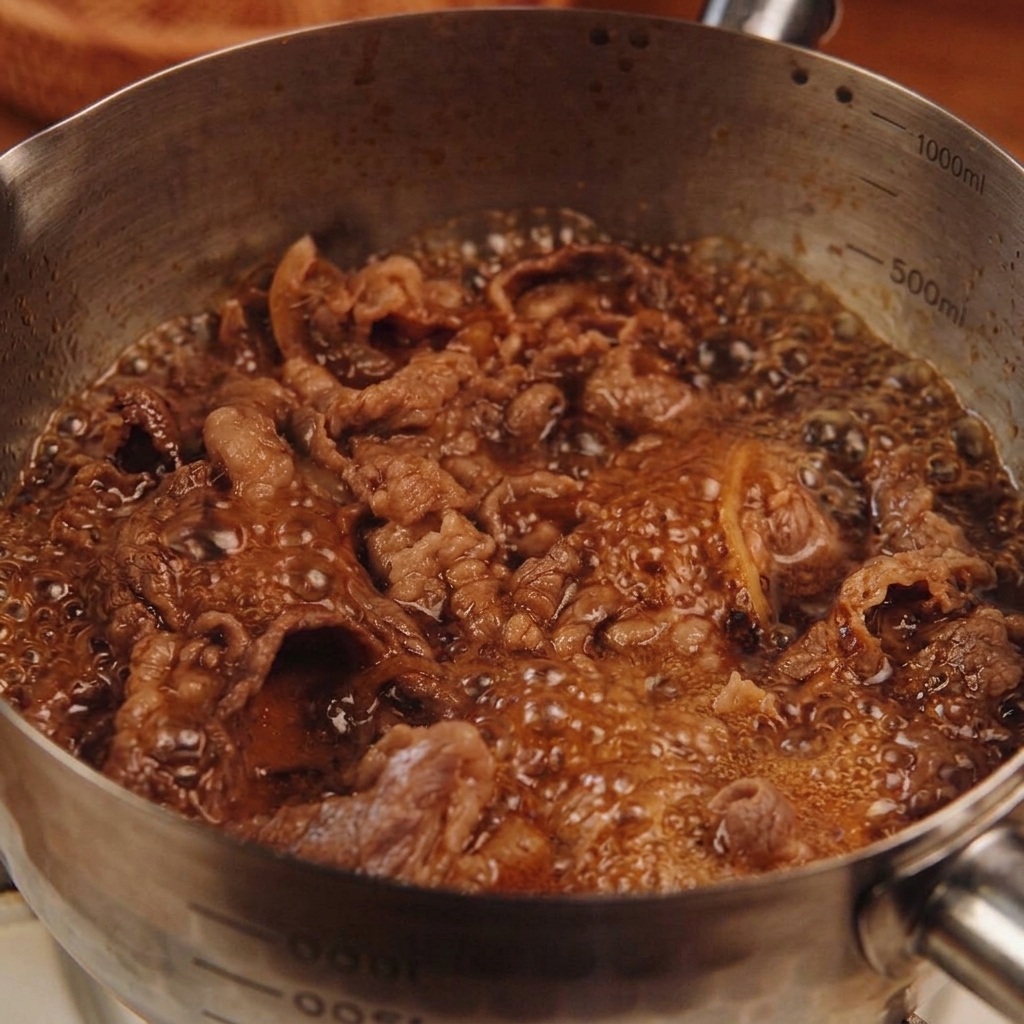
Reduce the heat to medium and allow the beef and onions to simmer gently in the broth for about 20 minutes. This slow-cooking phase is crucial for tenderizing the beef and allowing it to fully absorb the rich essence of the soy sauce, ginger, and sake.
Tip: Keep an eye on the liquid level; if it reduces too much, you can add a splash of water to keep the meat submerged. - 10Assemble the beef bowl
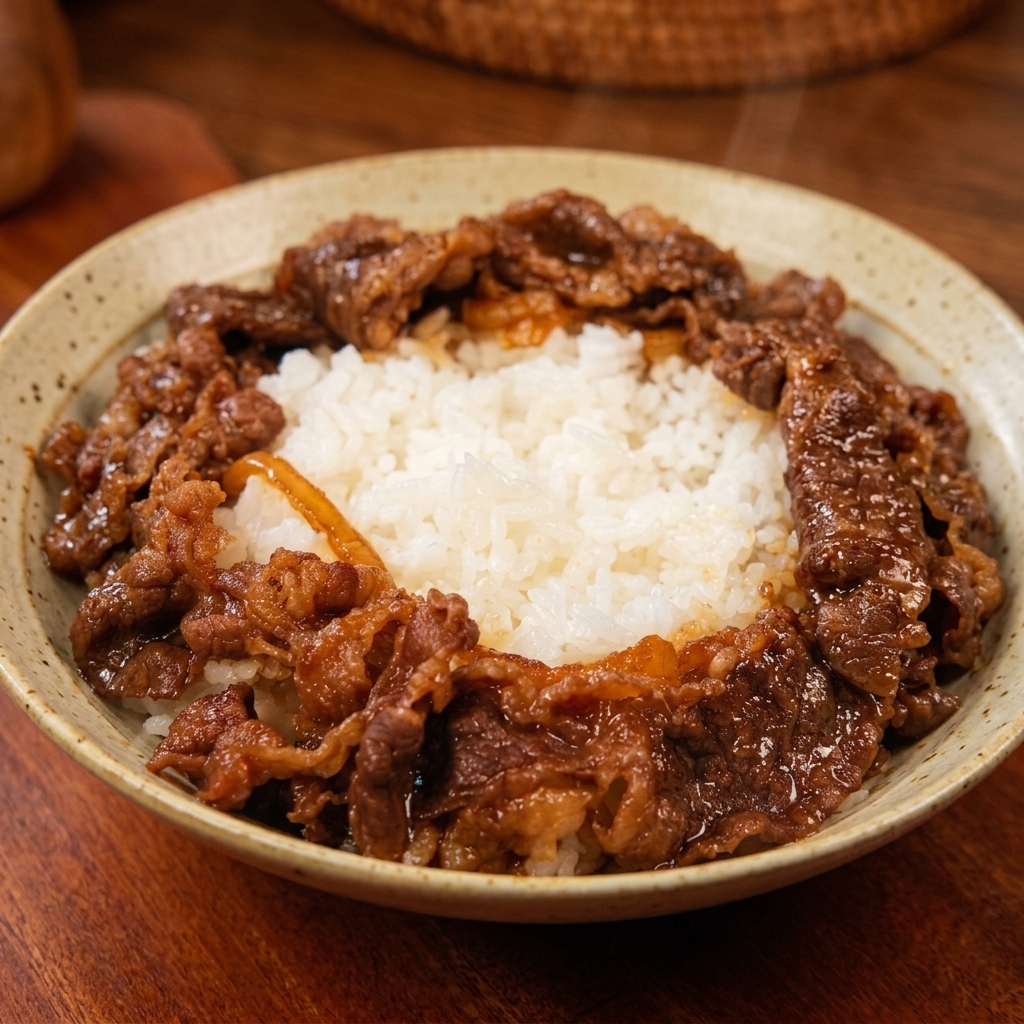
Carefully arrange the cooked beef slices around the outer edge of a warm bowl of white rice. Leave the center of the bowl open to accommodate the broth and the final garnishes, like an onsen egg, that will be added in the next steps.
Tip: Drizzle a spoonful of the hot, savory broth over the rice before adding the beef to ensure the flavor permeates the entire bowl. - 11Ladle on the broth
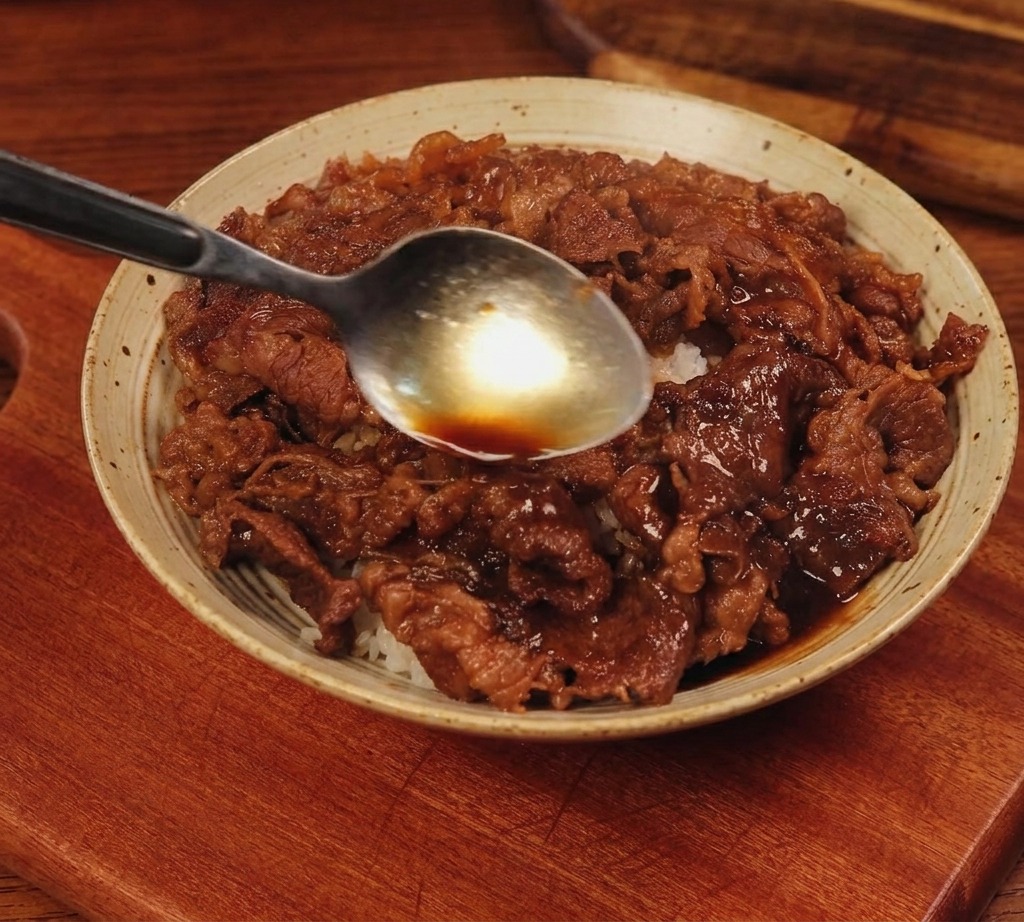
After arranging the tender beef slices over a bowl of steamed rice, use a spoon to pour the concentrated broth from the pot over the top. This flavorful liquid is the heart of the dish, containing the essence of the beef, onions, and seasonings, which will soak into the rice to provide deep flavor in every bite.
Tip: For an extra gravy style serving, add a few more spoonfuls of broth to make the rice even more moist and savory. - 12Top with an onsen egg
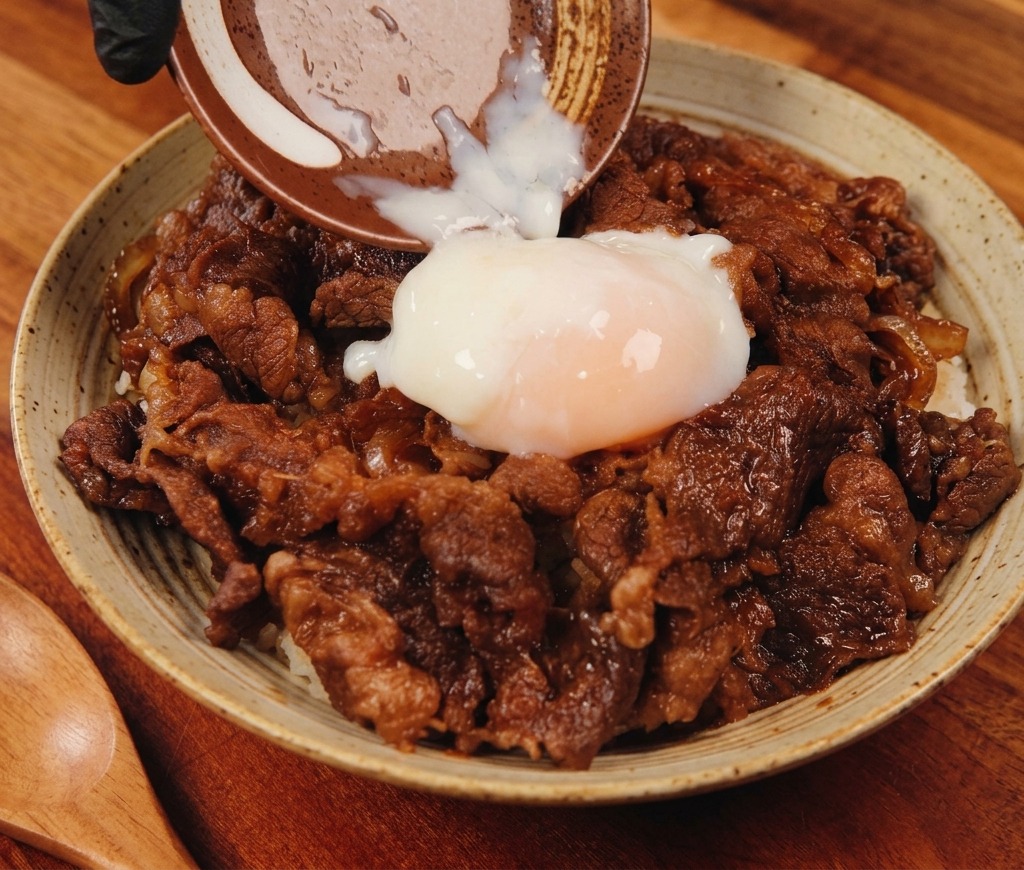
Carefully slide a soft-boiled onsen egg onto the center of the beef and garnish with finely chopped green onions. The delicate, silky egg white and creamy, runny yolk will act as a rich, natural sauce that coats the meat and rice, while the green onions provide a fresh, crisp contrast.
Tip: Slide the egg gently from a small dish rather than cracking it directly onto the bowl to ensure the yolk stays intact for a better presentation.