Classic Japanese Beef Bowl (Gyudon)
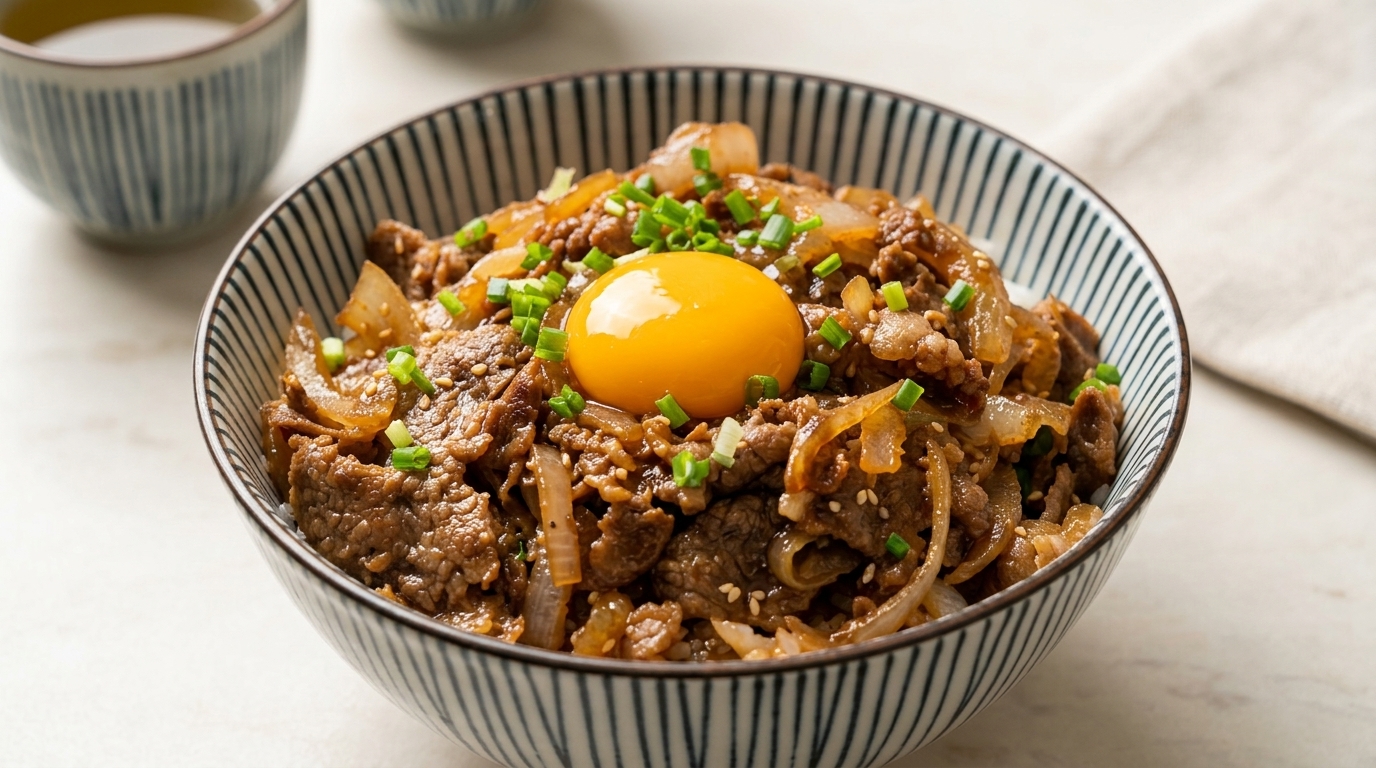
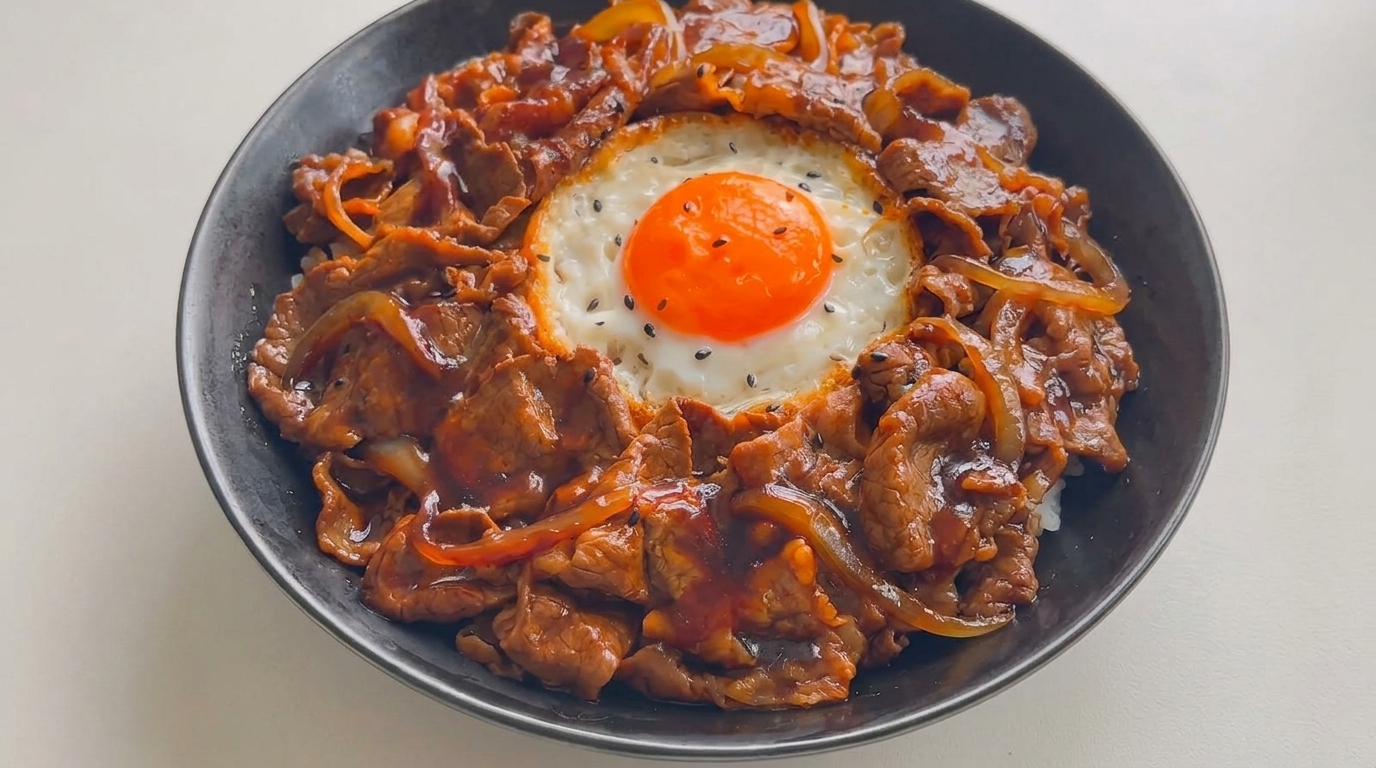
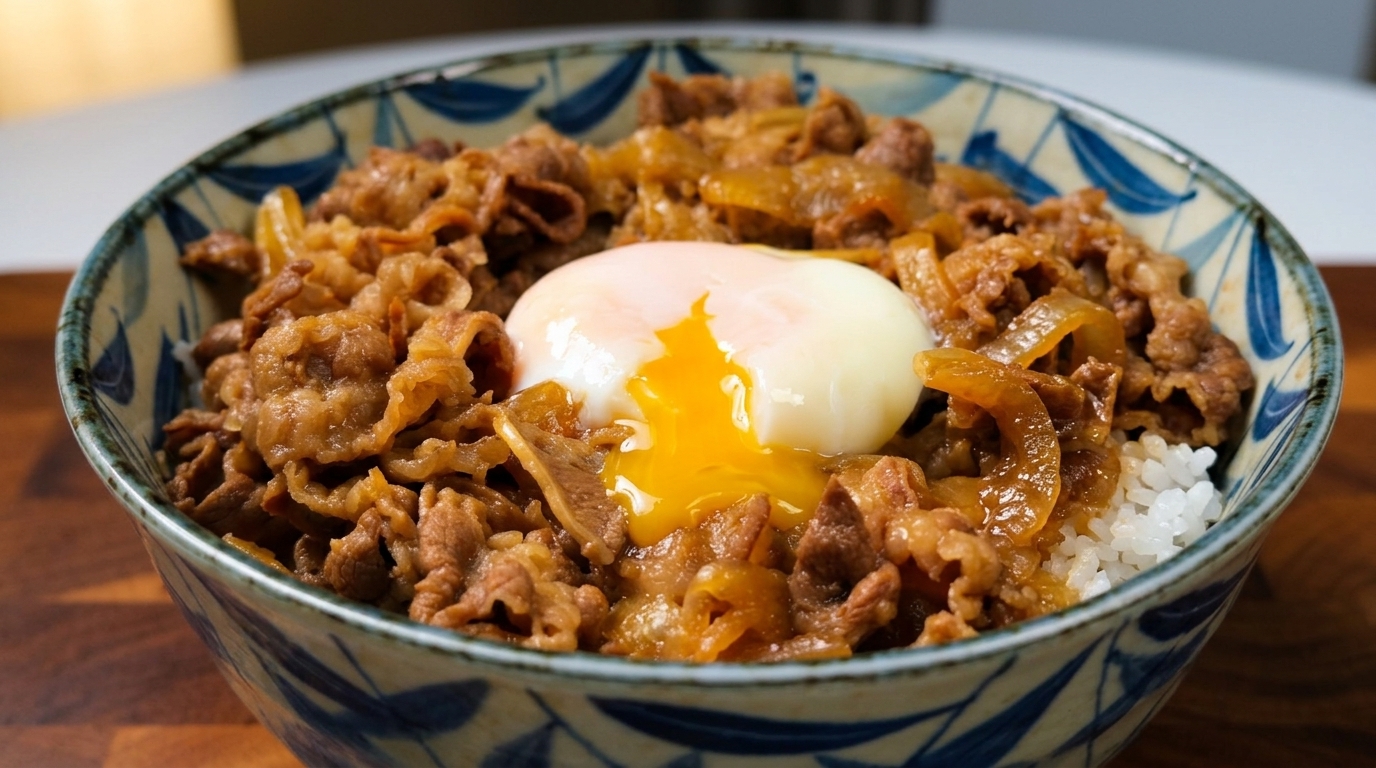
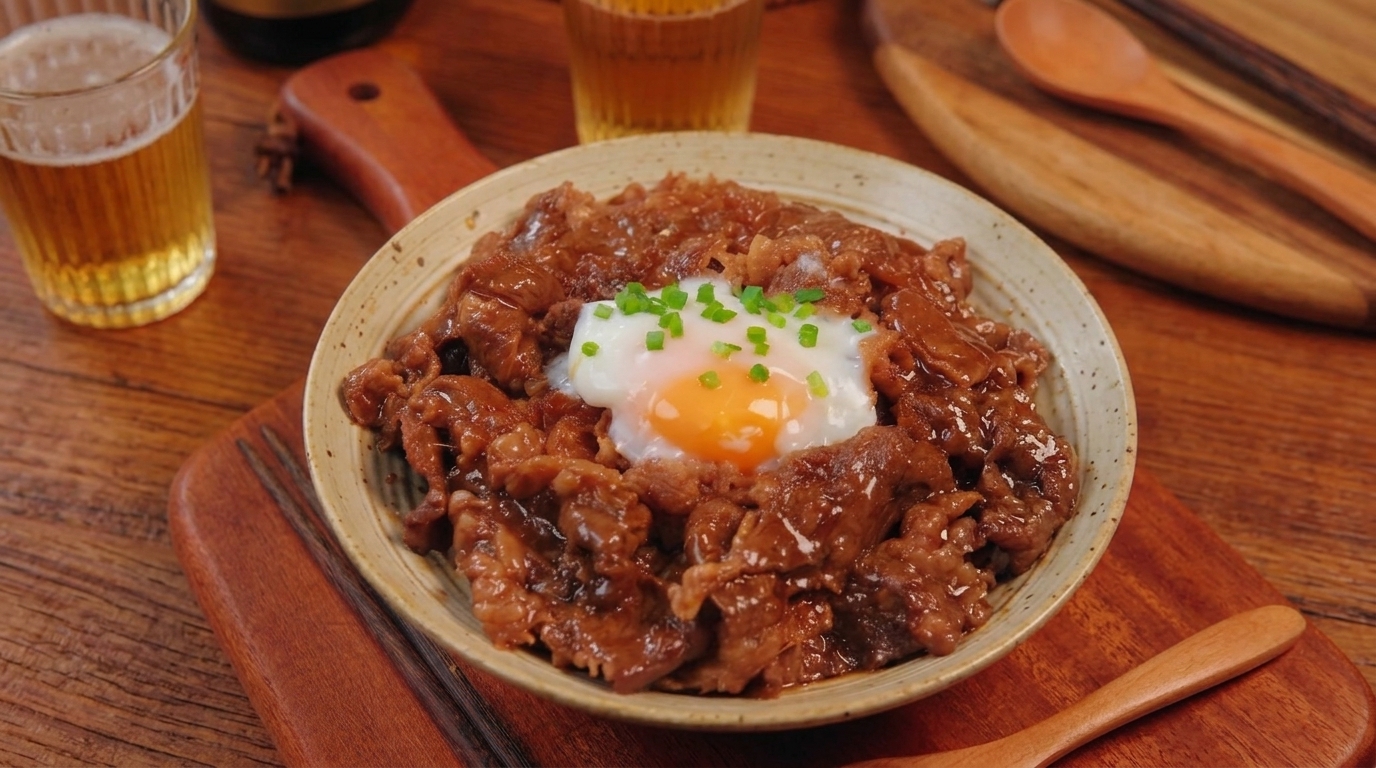
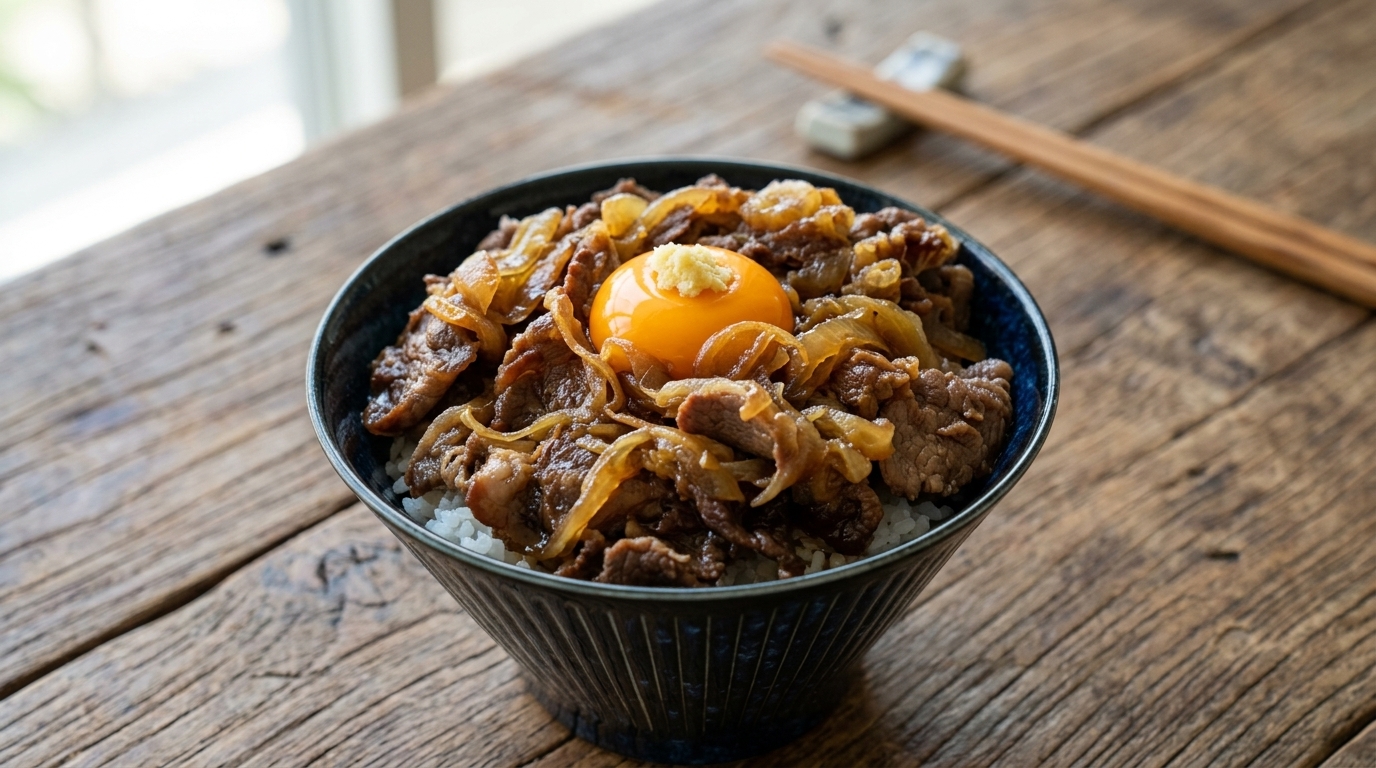
Savor the comfort of Gyudon: thinly sliced beef and caramelized onions simmered in a savory shoyu sauce, served over rice with a creamy egg yolk finish.
Gyudon is a cornerstone of Japanese soul food, offering a perfect harmony of sweet and savory flavors. Originally popularized during the Meiji era as Japan began embracing beef, it has evolved into a beloved daily staple known for its simplicity and deep satisfaction. Finishing the dish with a raw egg yolk (Tsukimi style) creates a luxurious, velvety sauce that binds the tender beef and fluffy rice together.
Ingredients
- 1 large yellow onion
- 1 inch fresh ginger
- 150 ml water
- 50 ml sake
- 50 ml mirin
- 50 ml soy sauce
- 1 tbsp granulated sugar
- 1 tbsp avocado oil
- 300 g thinly sliced beef (ribeye or brisket)
- 2 cups steamed white rice
- 1 large food-grade egg yolk
Instructions
- 1Slice the onion
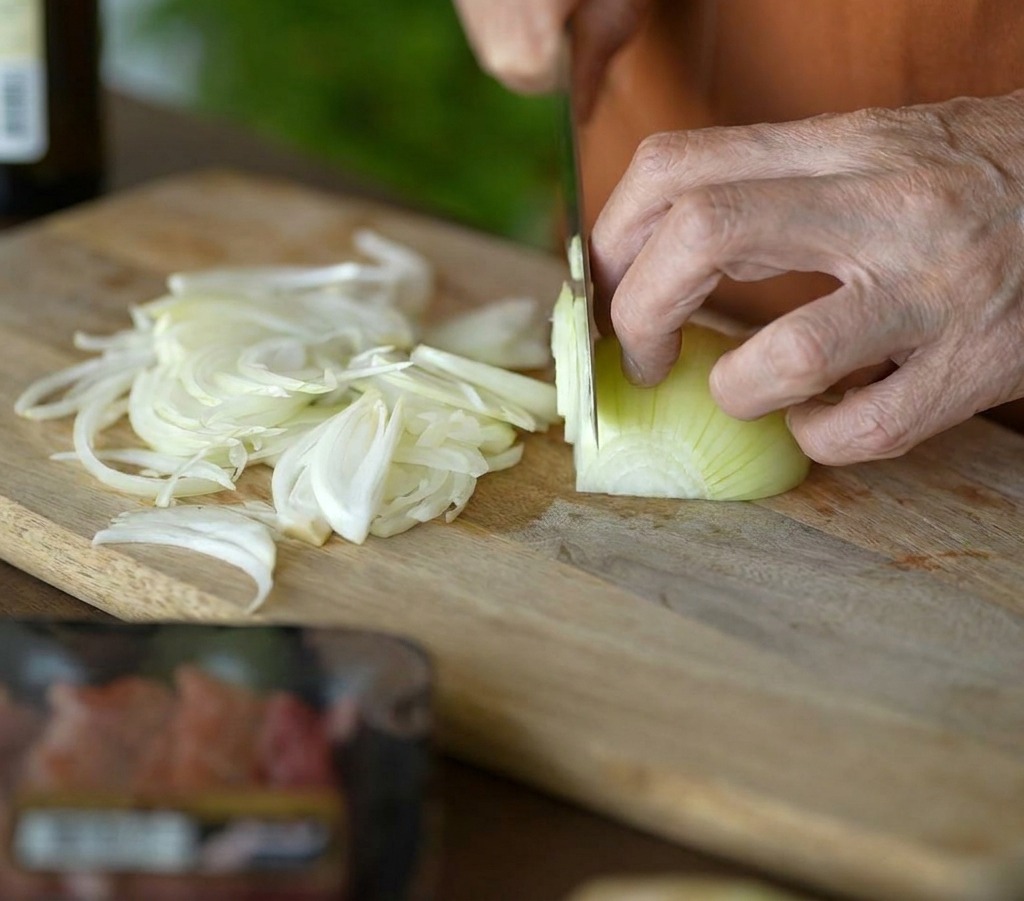
Begin by peeling a yellow onion and cutting it in half. Place the flat side down on a cutting board and slice it into thin, even strips. These thin slices will soften beautifully and absorb the savory sauce as they simmer.
Tip: Try to keep the slices uniform in thickness so they cook evenly and reach the perfect tender texture at the same time. - 2Grate the ginger
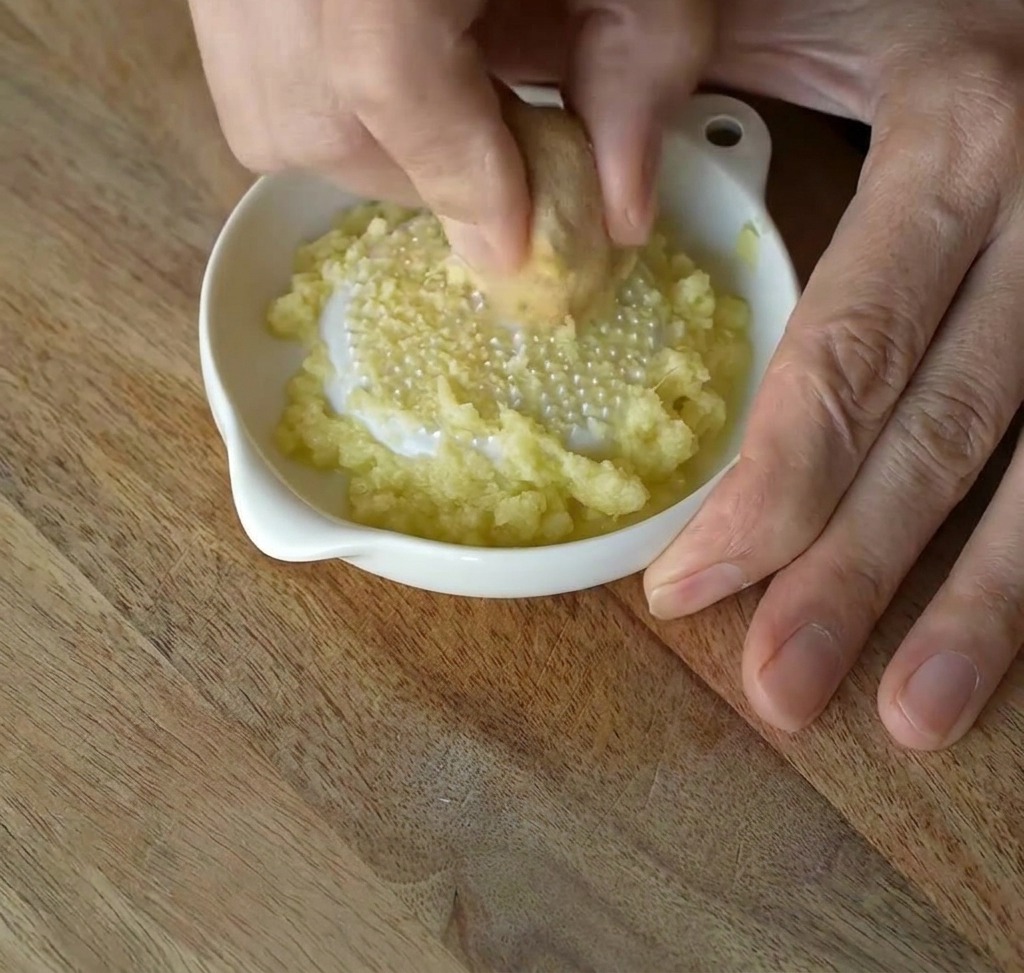
Peel a small piece of fresh ginger and grate it finely using a ceramic grater. The resulting ginger pulp and juice will be used as a fresh, aromatic garnish to brighten the rich flavors of the beef bowl at the end.
Tip: If you dont have a ceramic grater, a microplane or the finest side of a box grater works well too. - 3Add water to the pot
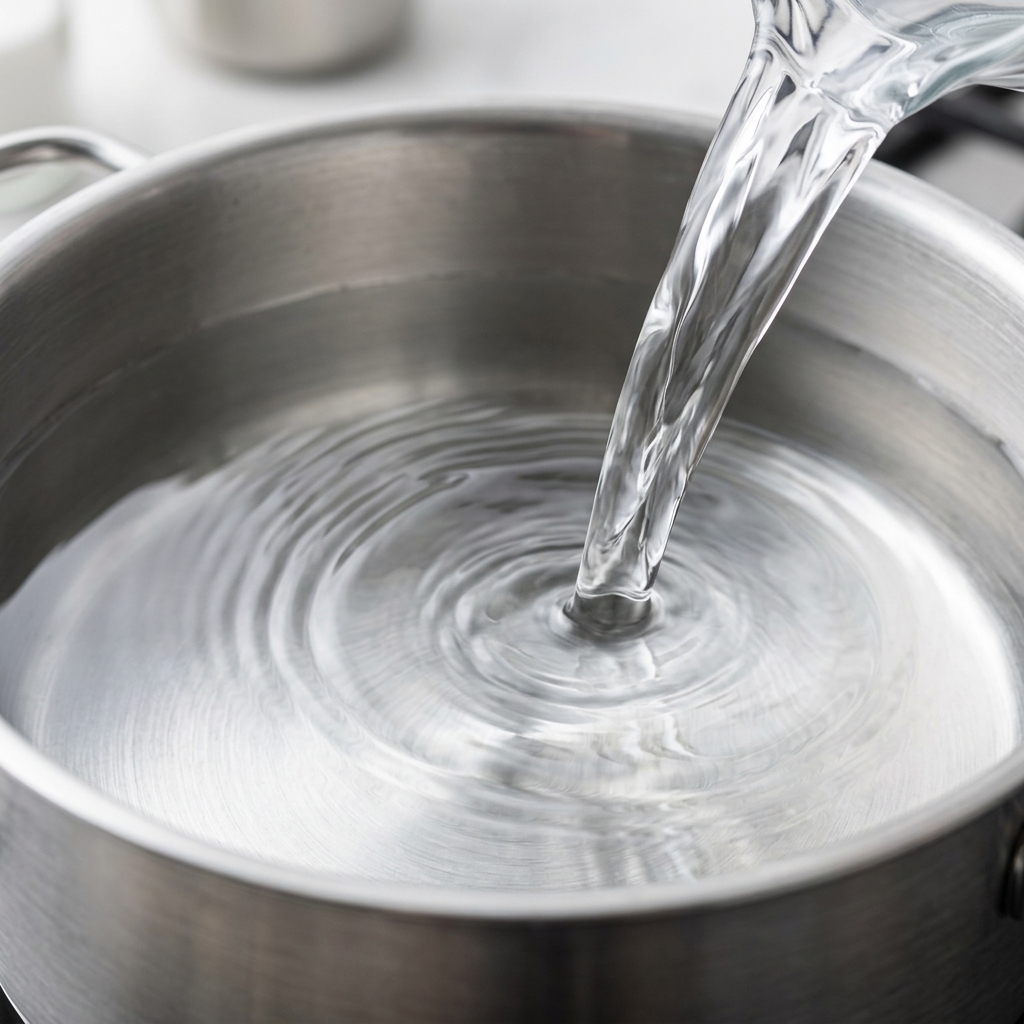
Start preparing the simmering liquid by pouring clear water into a medium-sized stainless steel pot. This serves as the liquid base that will eventually become the flavorful broth for the beef and onions.
Tip: Using filtered water ensures that the clean, subtle flavors of the sake and mirin are not masked by minerals or chlorine. - 4Pour in the sake
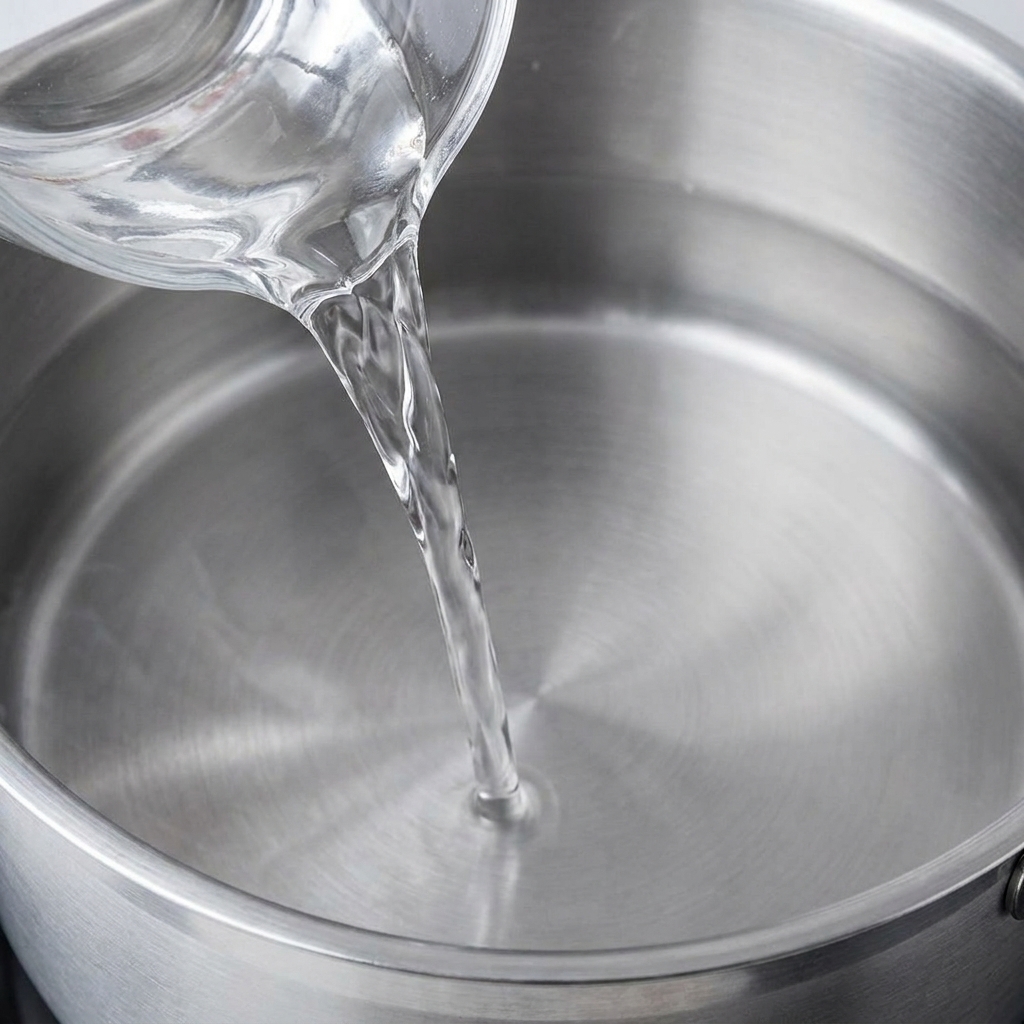
Add the sake to the water in the pot. Sake is a key ingredient in Japanese cooking that adds a subtle umami depth and helps to tenderize the meat while removing any strong odors.
Tip: Cooking sake usually contains added salt, so keep that in mind when seasoning the rest of your dish. - 5Incorporate the mirin
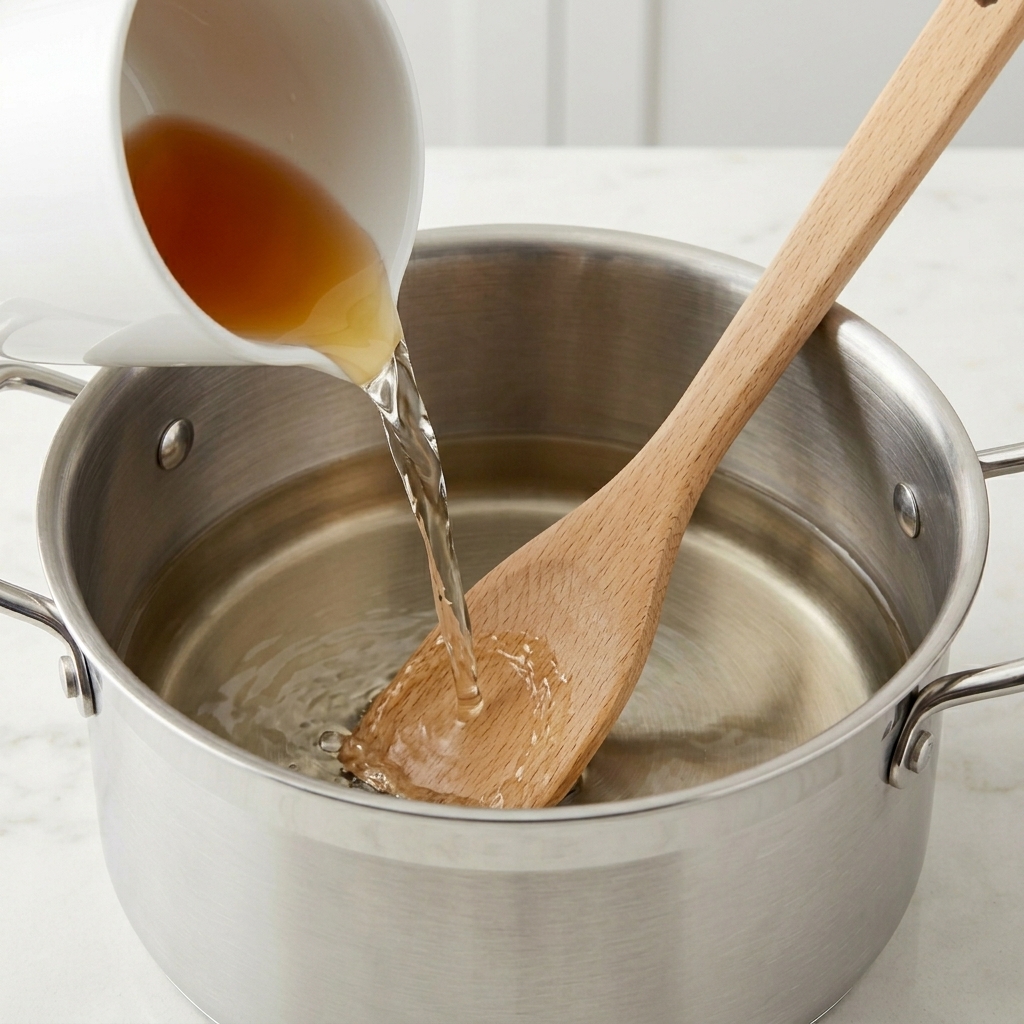
Pour the mirin into the pot. This sweet rice wine adds a mild sweetness and a distinct luster to the sauce, balancing the saltiness of the soy sauce that will be added next.
Tip: If you cannot find mirin, a mixture of sake and a little extra sugar can be used as a substitute. - 6Add the soy sauce
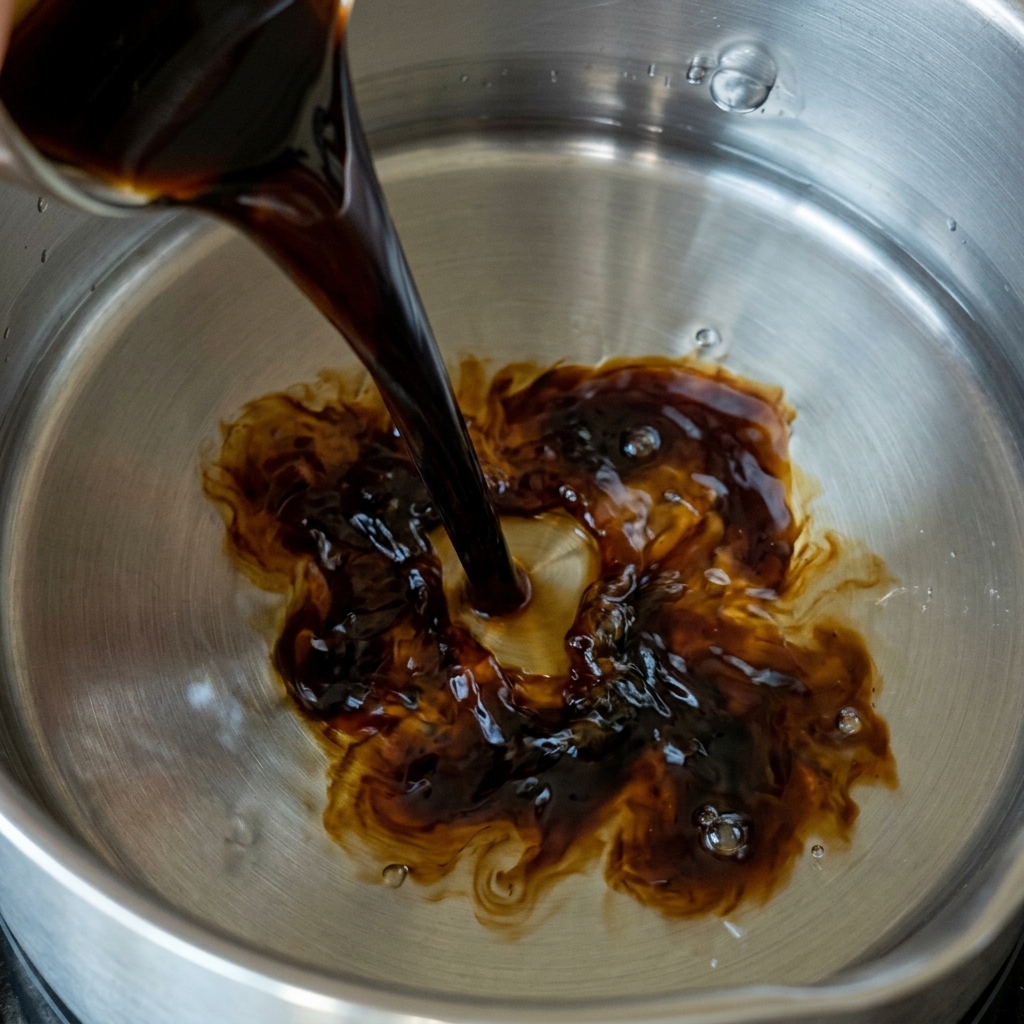
Finish the base of the simmering liquid by pouring in the dark soy sauce. This provides the essential salty and savory shoyu flavor and gives the beef its characteristic rich, brown color.
Tip: Use a high-quality Japanese soy sauce for the most authentic flavor profile. - 7Season the sauce
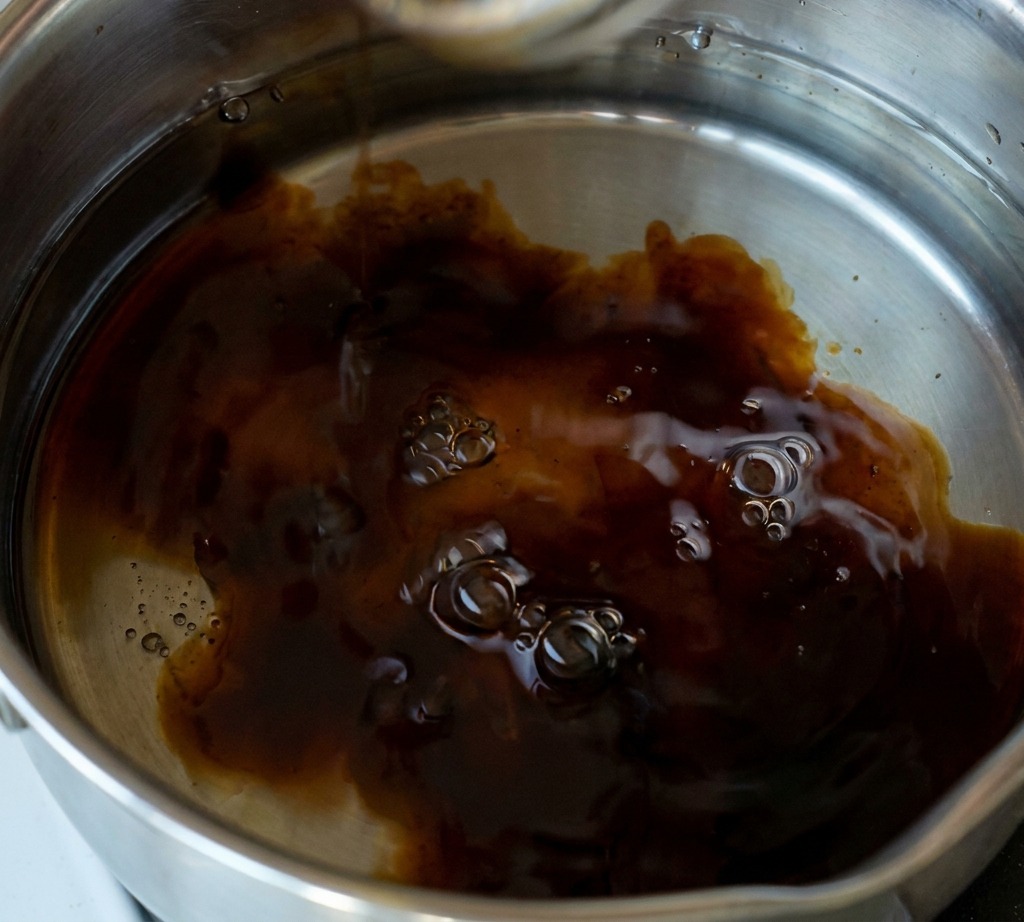
Add a spoonful of granulated sugar to the simmering mixture of soy sauce, sake, and mirin. Sugar provides the essential sweetness that balances the savory soy sauce in a traditional Gyudon base.
Tip: Stir the liquid gently after adding the sugar to ensure it dissolves completely before you add the vegetables. - 8Add the onions
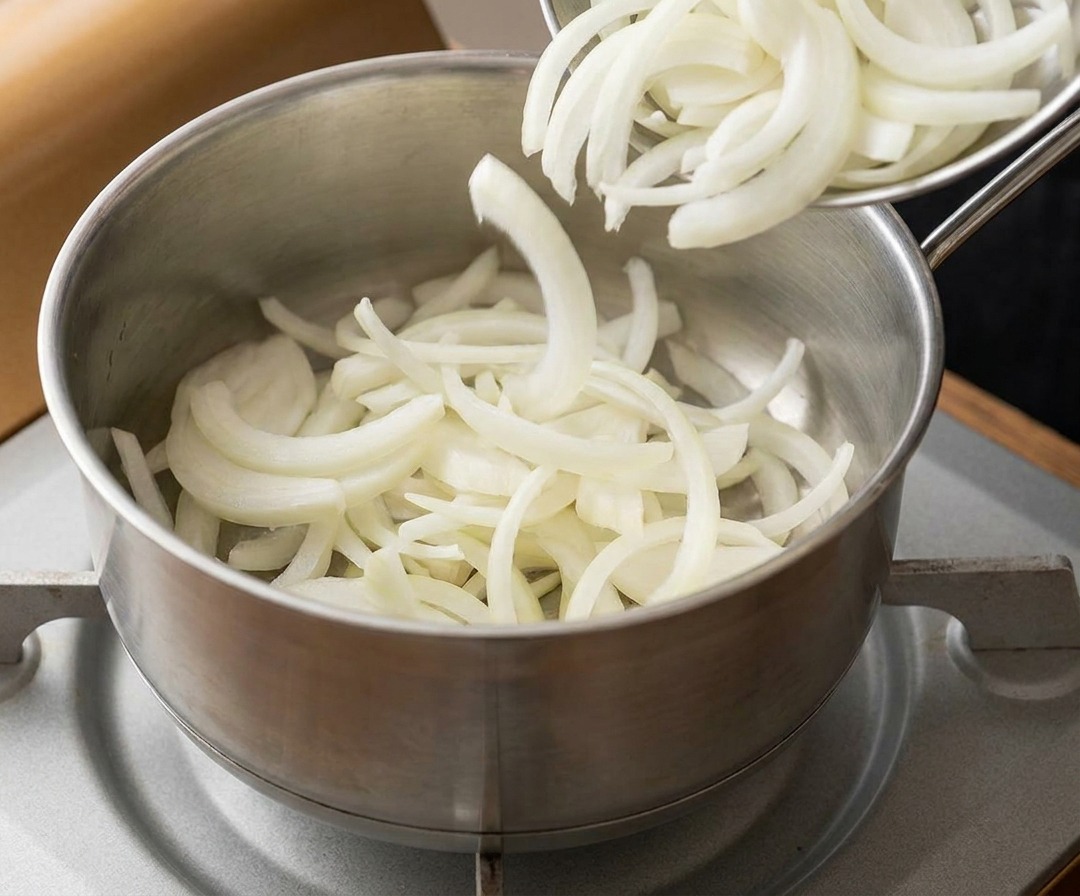
Carefully slide the thinly sliced onions into the pot of simmering sauce. The onions will soften and absorb the flavors of the sauce as they cook for approximately 10 minutes.
Tip: Submerge the onion slices fully in the liquid so they soften evenly and soak up the flavorful broth. - 9Heat the cooking oil
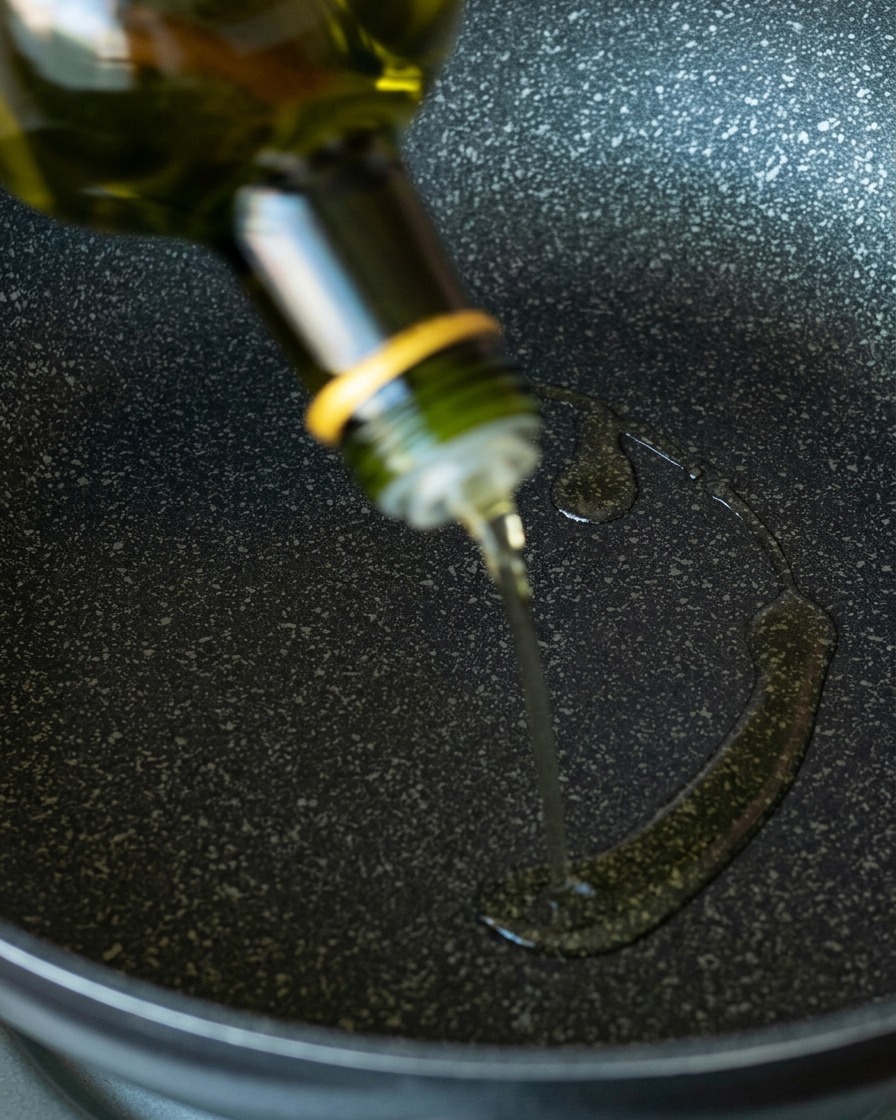
Pour a small amount of avocado oil into a separate frying pan over medium-high heat. Avocado oil is ideal for this step due to its high smoke point, allowing you to sear the beef effectively.
Tip: You only need enough oil to lightly coat the bottom of the pan to prevent the beef from sticking. - 10Sear the beef
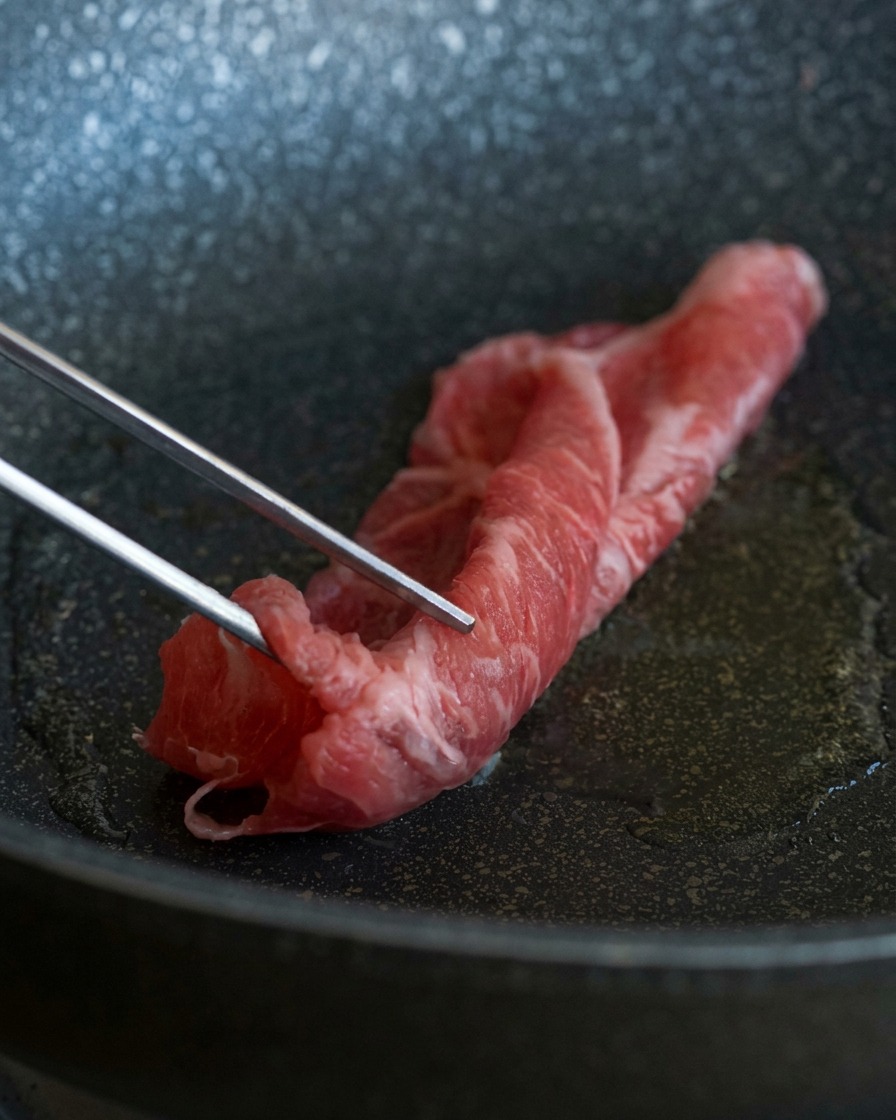
Using tweezers or tongs, place the thinly sliced raw beef into the hot pan. Searing the meat separately before adding it to the sauce develops a deeper, more fragrant flavor and better texture.
Tip: Do not overcrowd the pan; sear the beef in quick batches to ensure it browns rather than steams. - 11Combine beef and onions
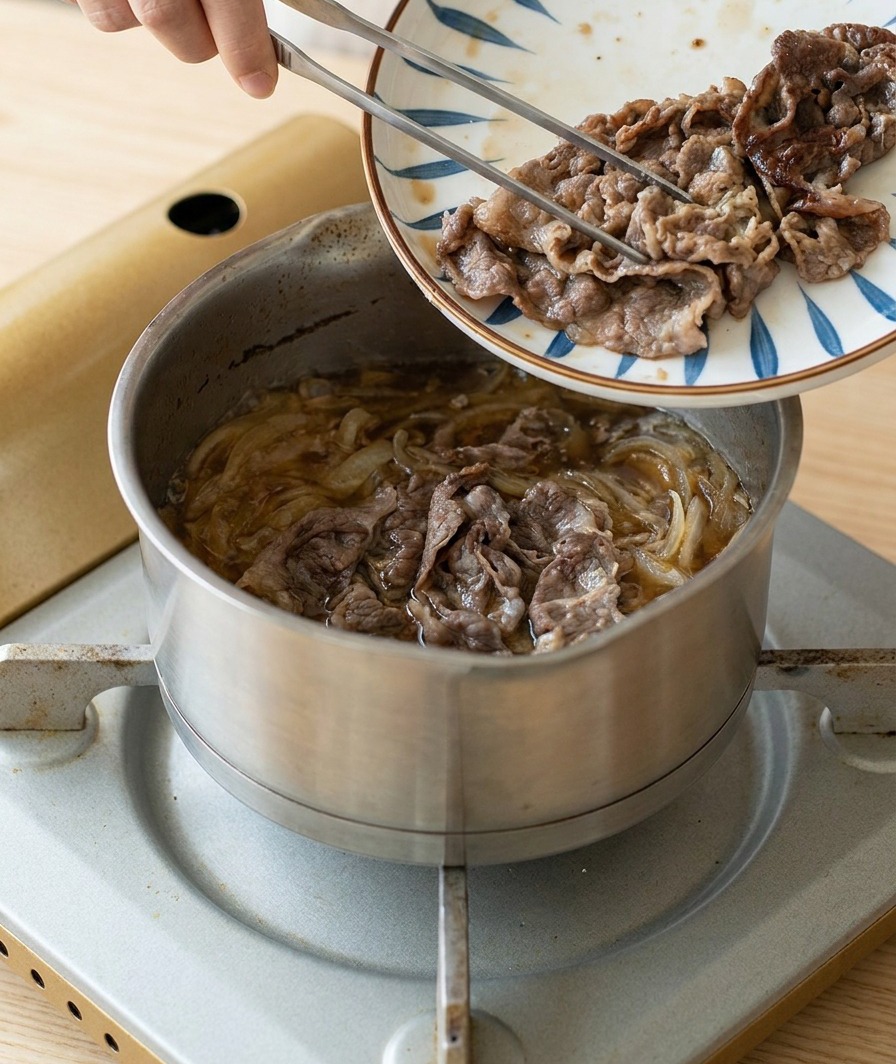
Once the beef is browned and fragrant, transfer it from the plate into the pot with the simmering onions and sauce. This allows the meat to finish cooking while soaking up the savory liquid.
Tip: Be sure to scrape any flavorful juices from the plate into the pot along with the meat. - 12Final simmer
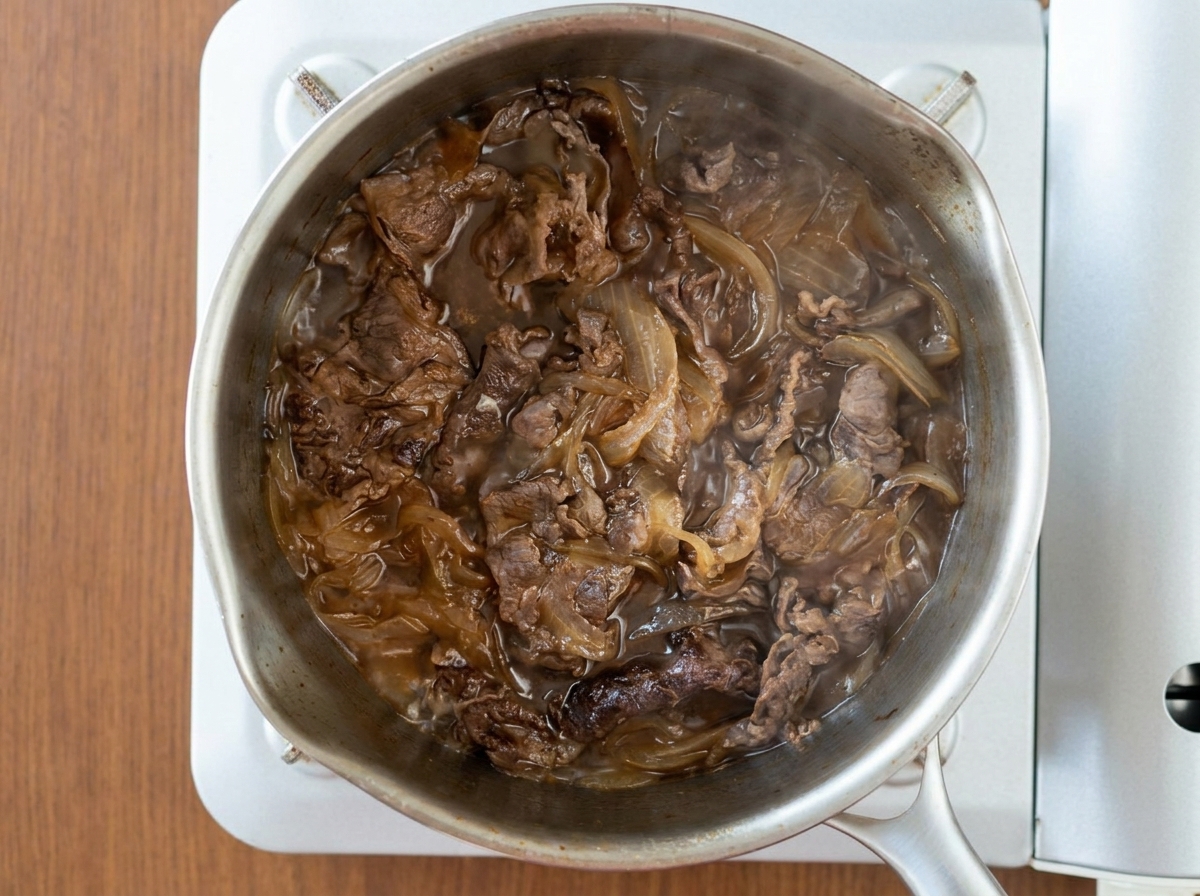
Continue simmering the beef and onions together in the dark liquid for another 10 minutes. This final step melds the flavors and ensures the beef is perfectly tender and infused with the sauce.
Tip: Keep the heat at a gentle simmer rather than a rolling boil to prevent the meat from becoming tough. - 13Layer the beef over rice
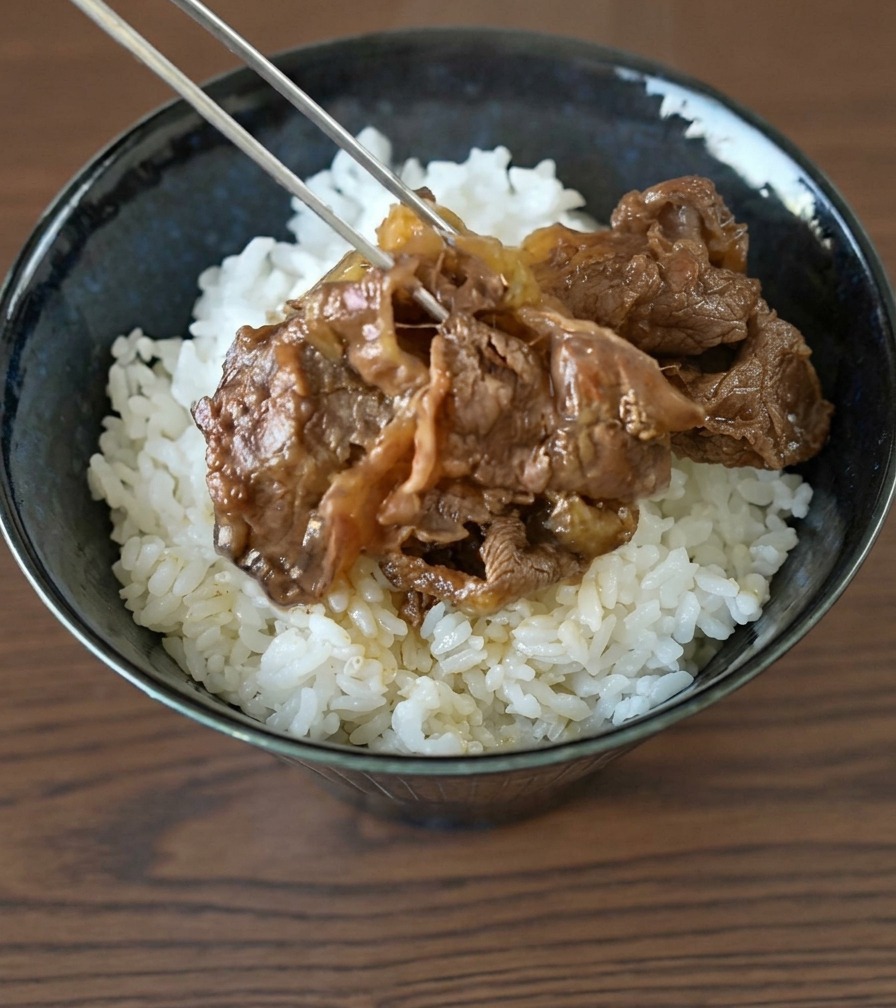
Using chopsticks, carefully transfer the simmered beef and onions onto a bowl of hot, steamed white rice. Ensure the beef is spread evenly across the surface and include a bit of the simmering liquid to flavor the rice underneath.
Tip: If you like a wetter beef bowl, add an extra spoonful of the sauce from the pot. - 14Separate the egg yolk
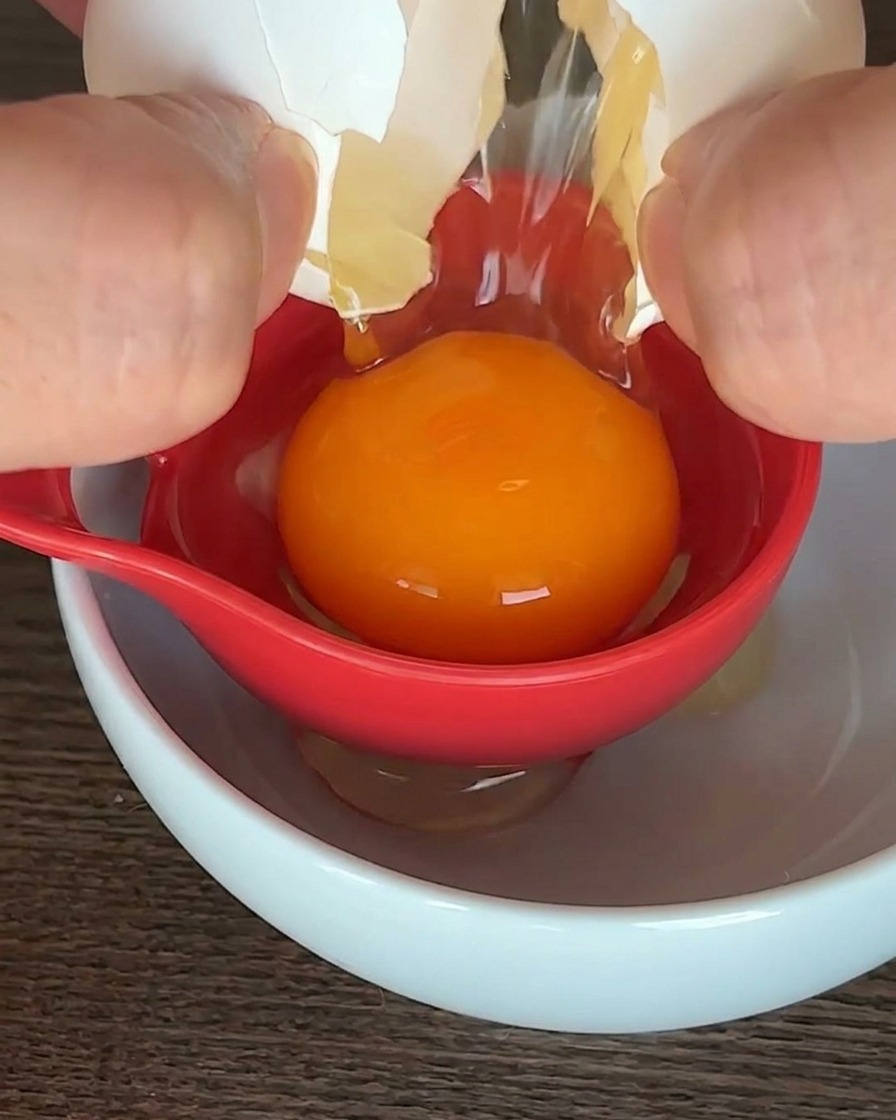
Crack a fresh, food-grade egg into an egg separator over a small bowl. Allow the whites to drain away completely until only the intact, vibrant yolk remains. This yolk will provide a rich, creamy finish to the beef bowl.
Tip: Save the leftover egg whites to use in a scramble or for baking later. - 15Add the raw egg yolk
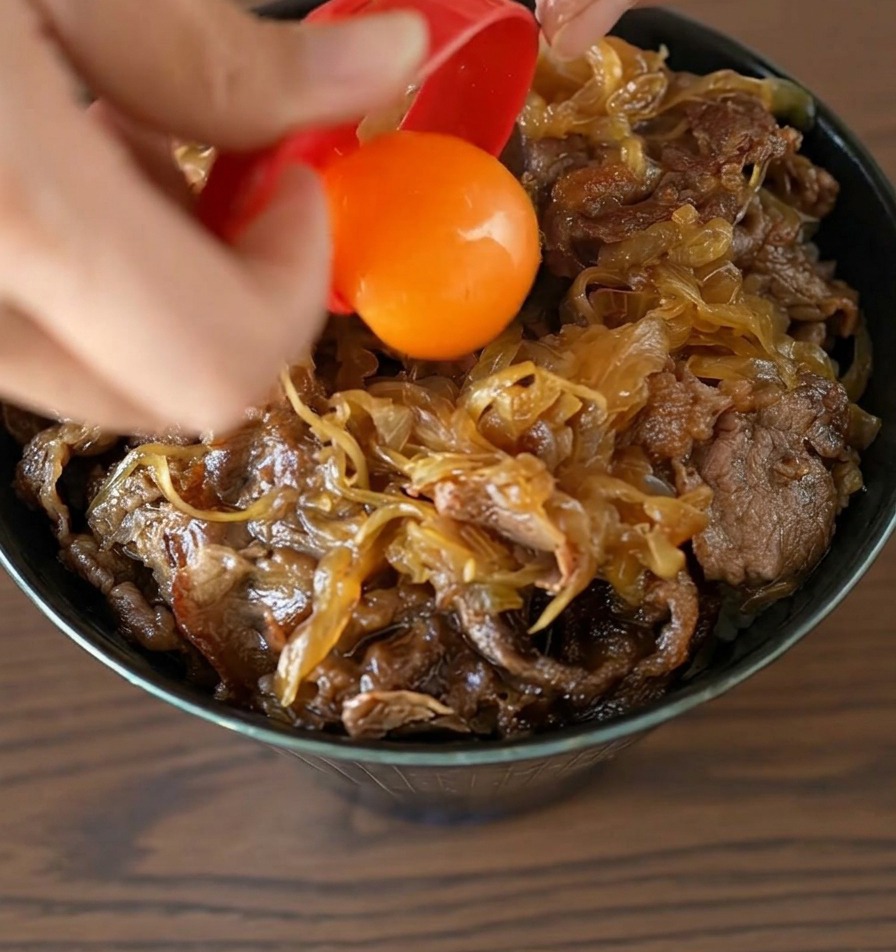
Gently place the separated egg yolk into the center of the beef and onions. The heat from the freshly cooked ingredients will slightly warm the yolk, making it a luxurious sauce when mixed into the bowl.
Tip: Press a small indentation into the center of the beef first to keep the yolk from sliding to the edge. - 16Garnish with grated ginger
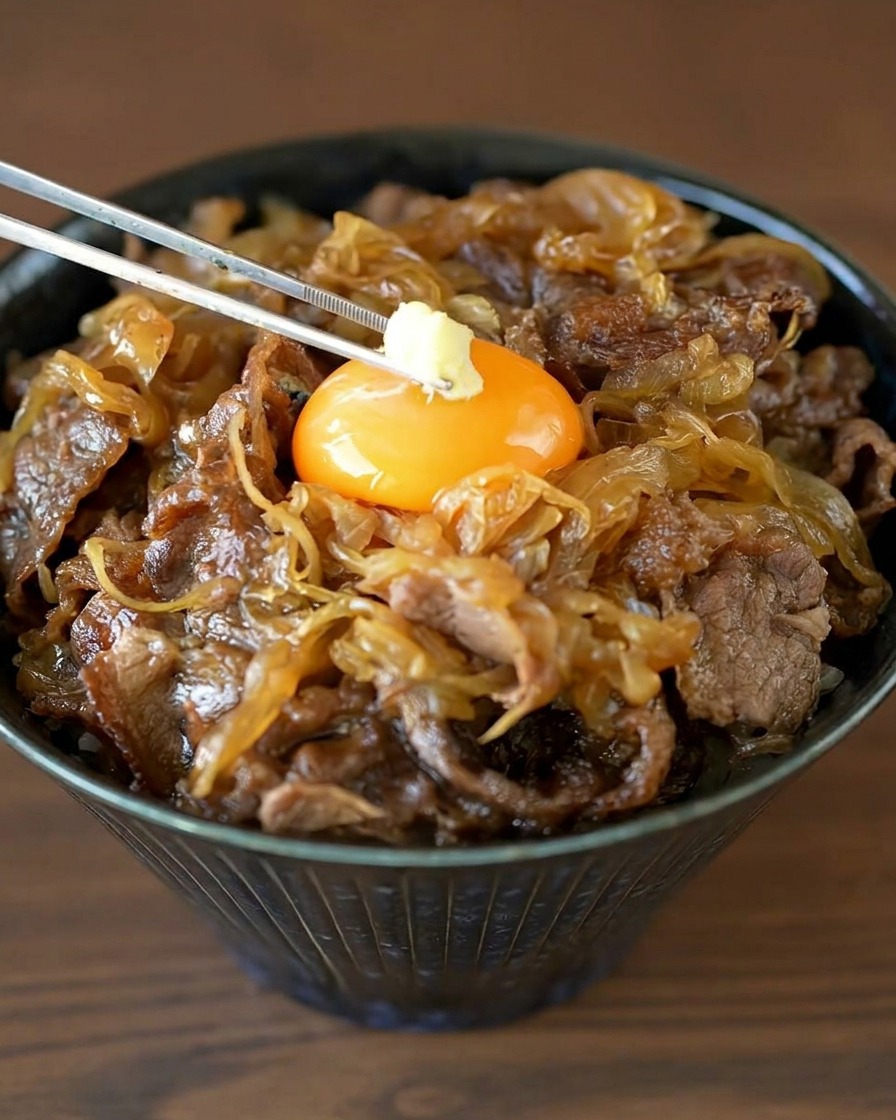
Finish the dish by placing a small dollop of the freshly grated ginger directly on top of the egg yolk. This adds a bright, spicy aroma that perfectly balances the savory-sweet profile of the Gyudon.
Tip: For an authentic touch, serve alongside some red pickled ginger (beni shoga) and a side of miso soup.