Sukiya-Style Gyudon (Japanese Beef Bowl)
Onsen Egg
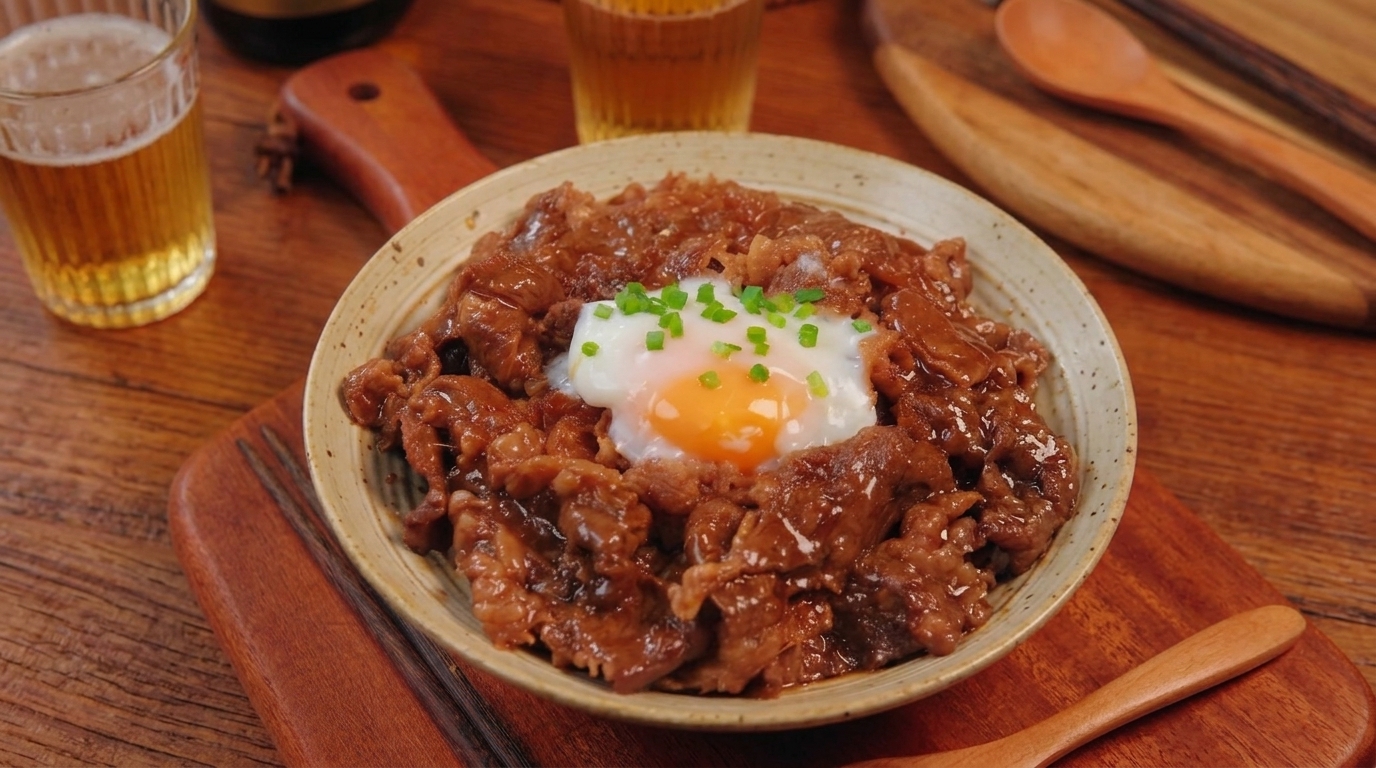
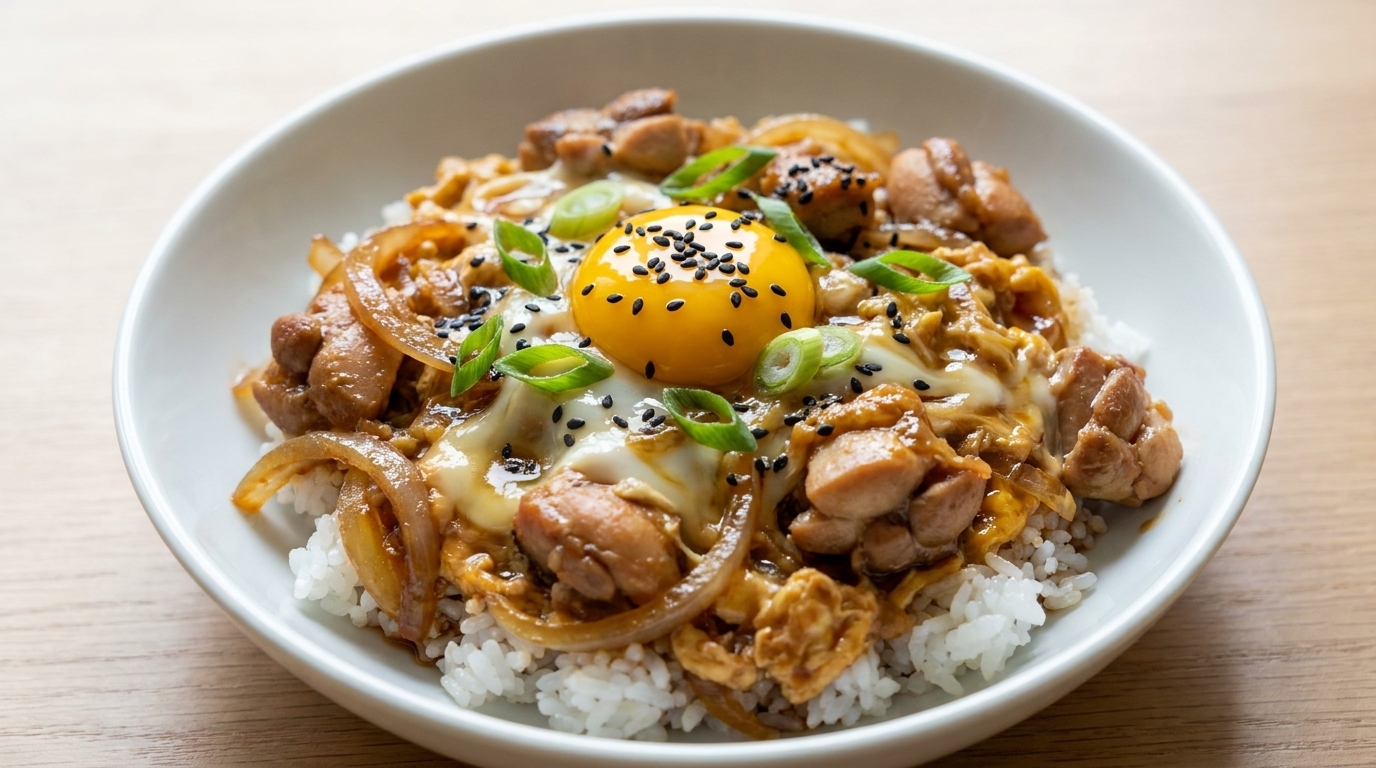
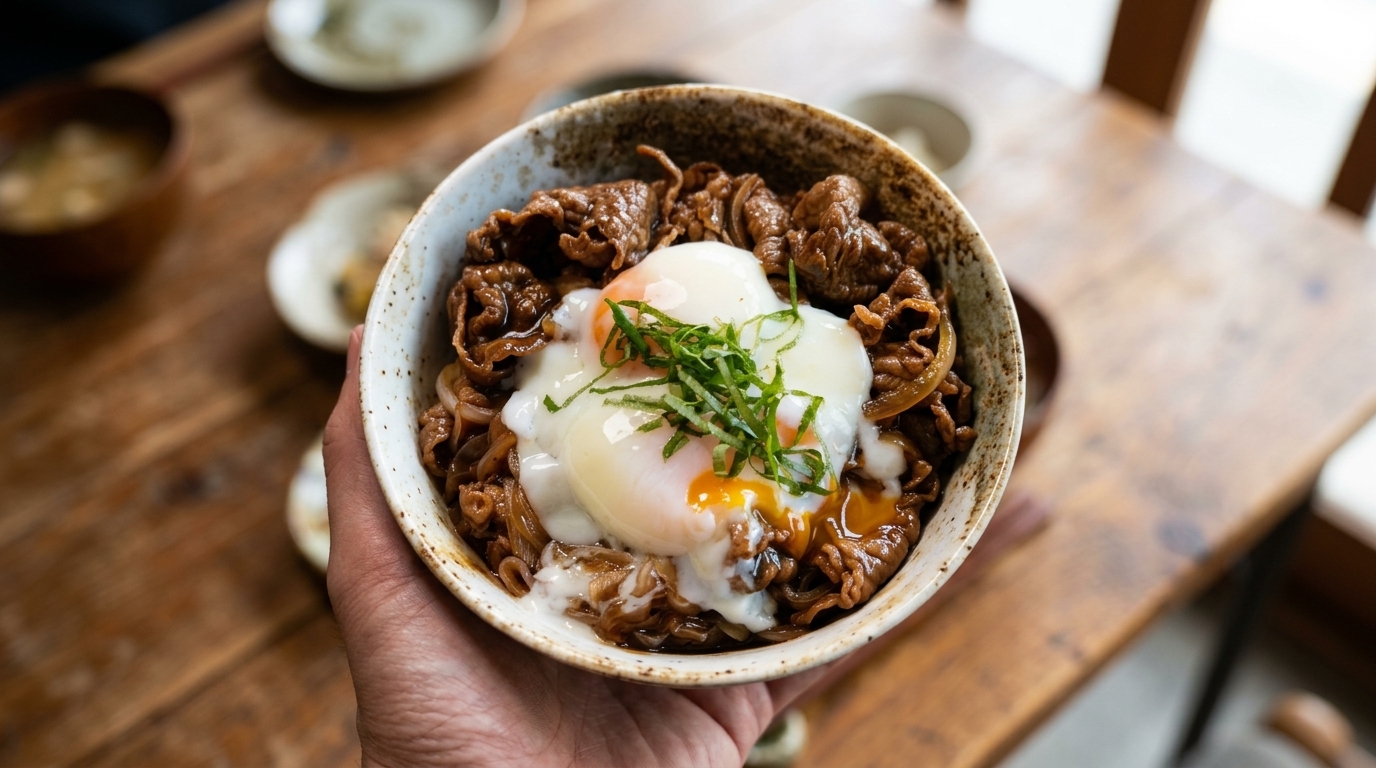
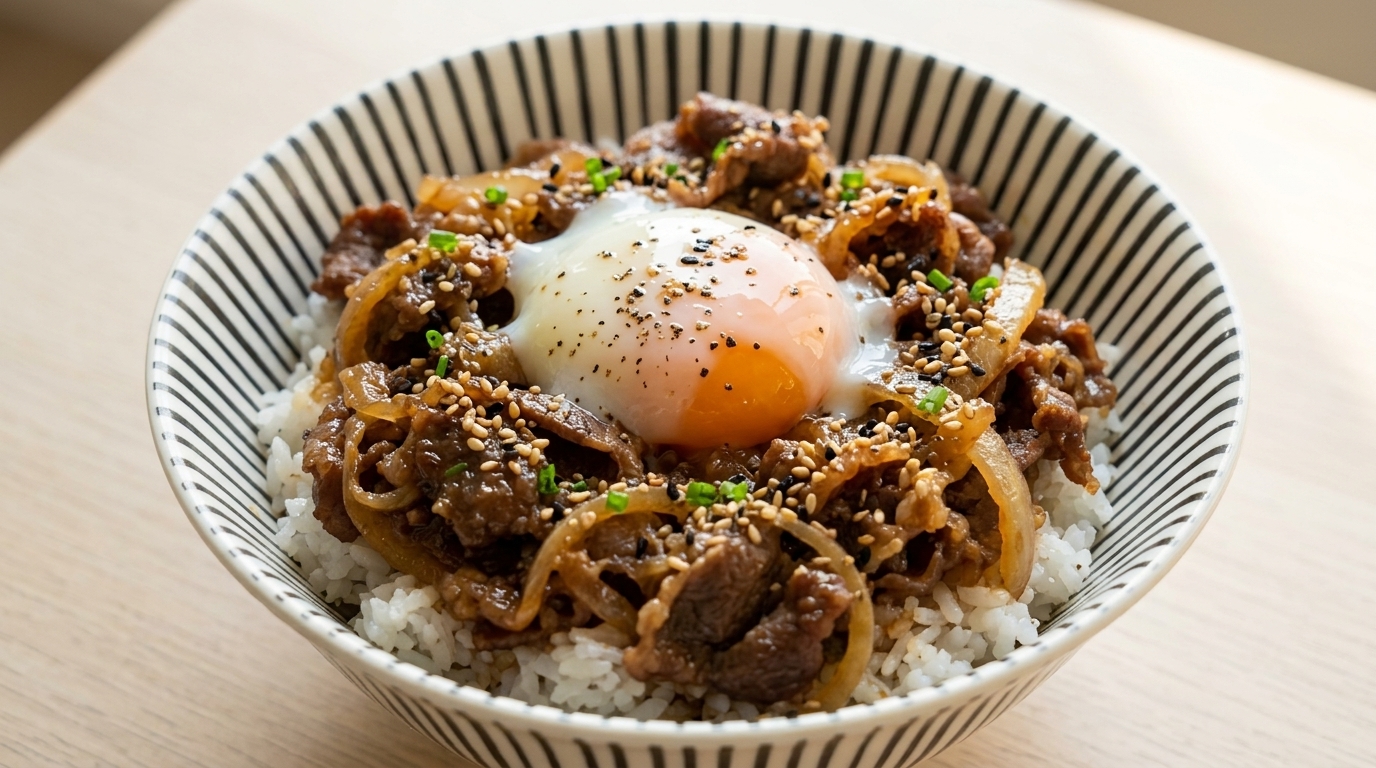
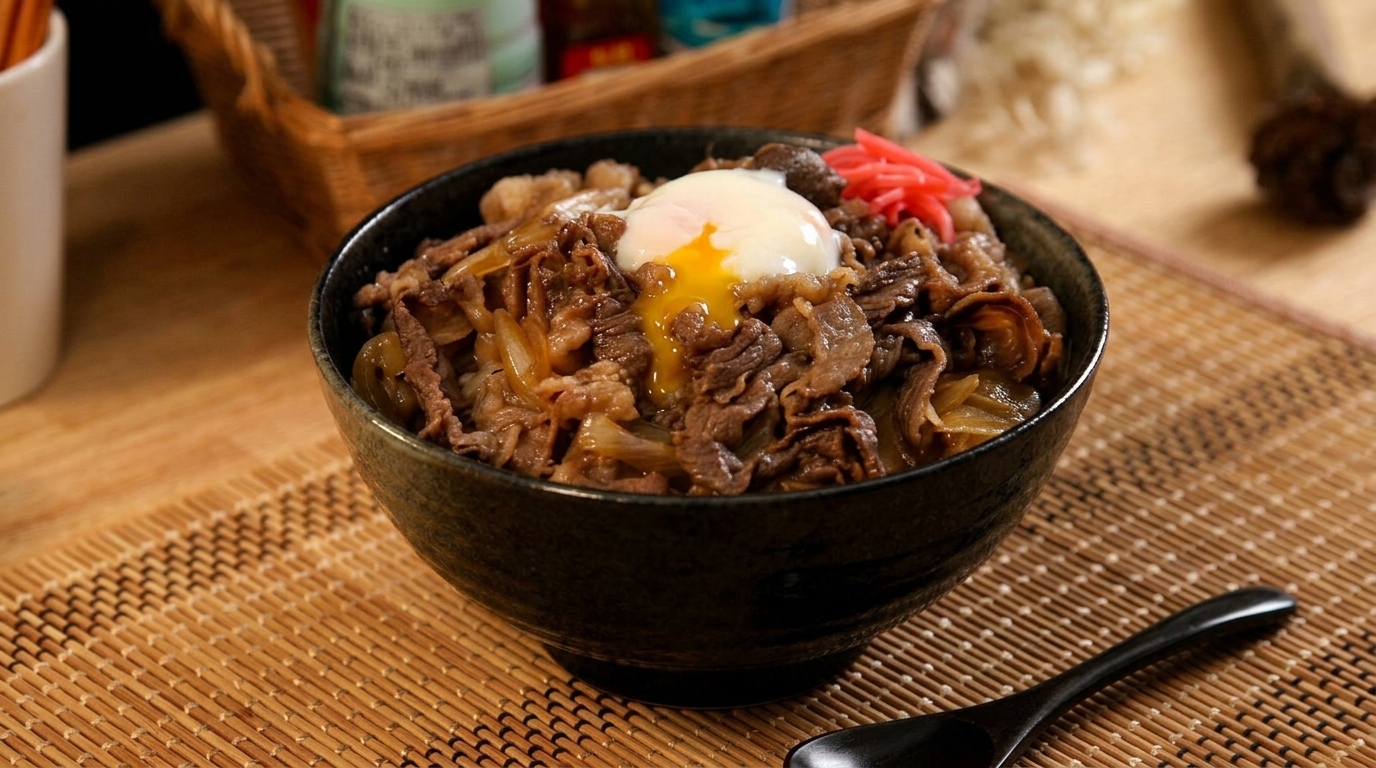
Recreate the iconic Sukiya-style beef bowl at home with tender beef belly, a punchy ginger-infused sauce, and a silky, melt-in-your-mouth onsen egg.
Gyudon is the quintessential Japanese comfort food, perfected by chains like Sukiya. This version emphasizes a bolder ginger profile, characteristic of the Sukiya style, balancing the rich umami of simmered beef with the refreshing snap of red pickled ginger.
Ingredients
- 150 g beef belly
- 12 white onion
- 1 bowl steamed white rice
- 1 onsen egg
- 100 ml water
- 2 tbsp soy sauce
- 1 tbsp mirin
- 1 tbsp sake
- 1 tsp sugar
- 12 tsp dashi granules
- 1 tbsp ginger paste
- 1 tsp salad oil
- optional red pickled ginger (beni shoga)
Instructions
- 1Slice the onion into wedges
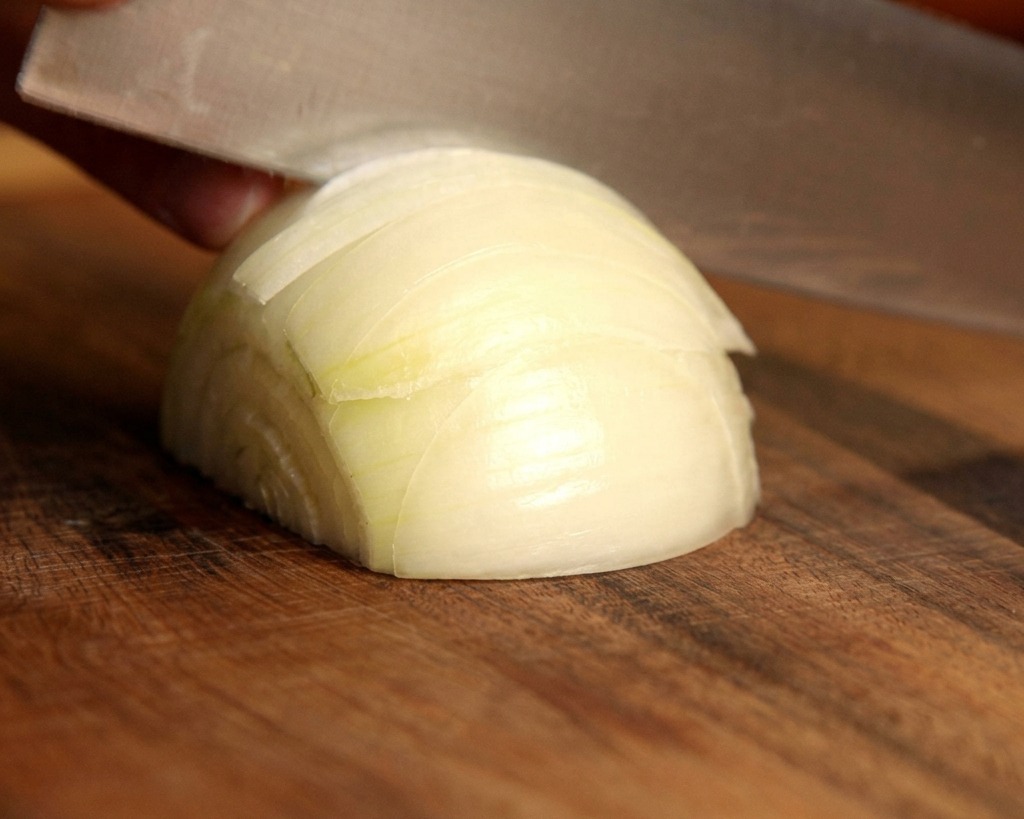
Begin by peeling a fresh white onion and placing it on a stable wooden cutting board. Using a sharp chefs knife, slice the onion into thin, uniform wedges. Consistent slicing is important so that the pieces cook evenly and release their natural sweetness during the sautéing process.
Tip: Keeping the root end of the onion intact while you slice will help hold the layers together, making it easier to get uniform wedges. - 2Prepare the sauce base

In a glass mixing bowl, combine the liquid ingredients starting with the water, then add the soy sauce, sugar, mirin, and sake. Sprinkle in the dashi granules and whisk the mixture thoroughly. Ensure the sugar and dashi are completely dissolved to create a balanced, savory-sweet base for the beef.
Tip: Using a transparent bowl makes it easy to check the bottom for any undissolved sugar or dashi granules. - 3Add the ginger paste
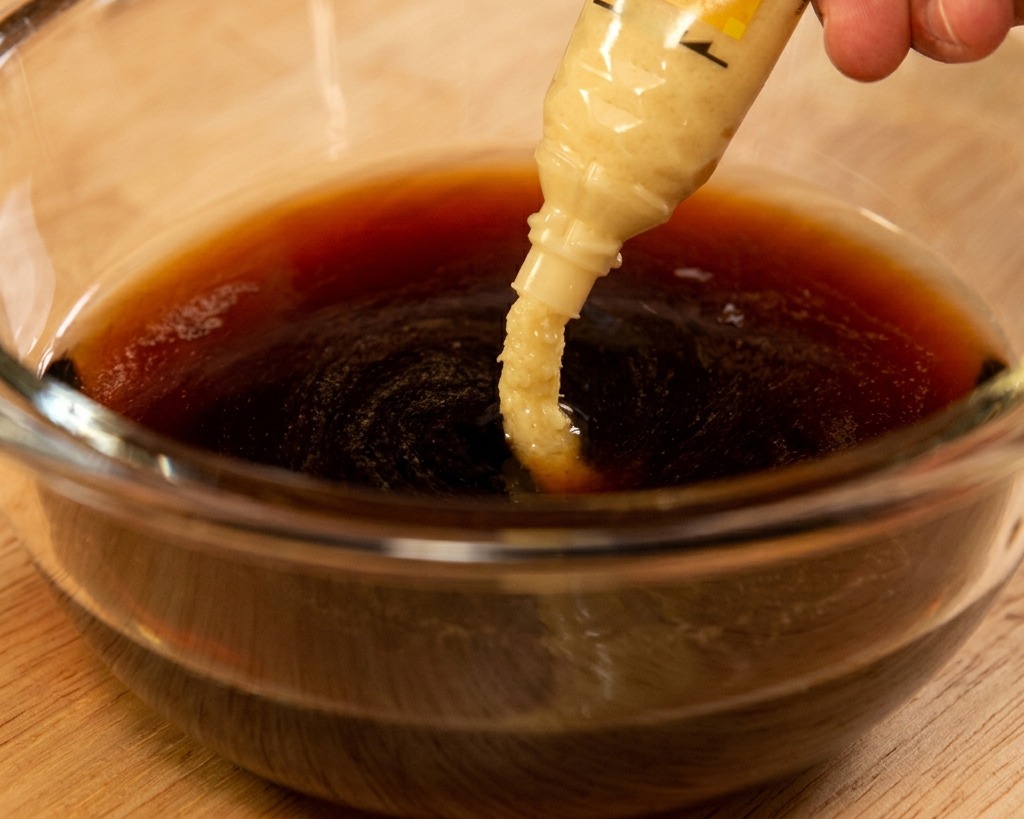
To achieve the signature Sukiya-style flavor, squeeze freshly grated ginger paste from a tube into your sauce mixture. Ginger provides a sharp, aromatic contrast to the rich soy and beef. Whisk the paste into the liquid until it is well incorporated and the aroma is evenly distributed.
Tip: If you prefer a more intense ginger flavor, feel free to add an extra squeeze; it’s the key characteristic of this style of beef bowl. - 4Heat the oil and sauté onions
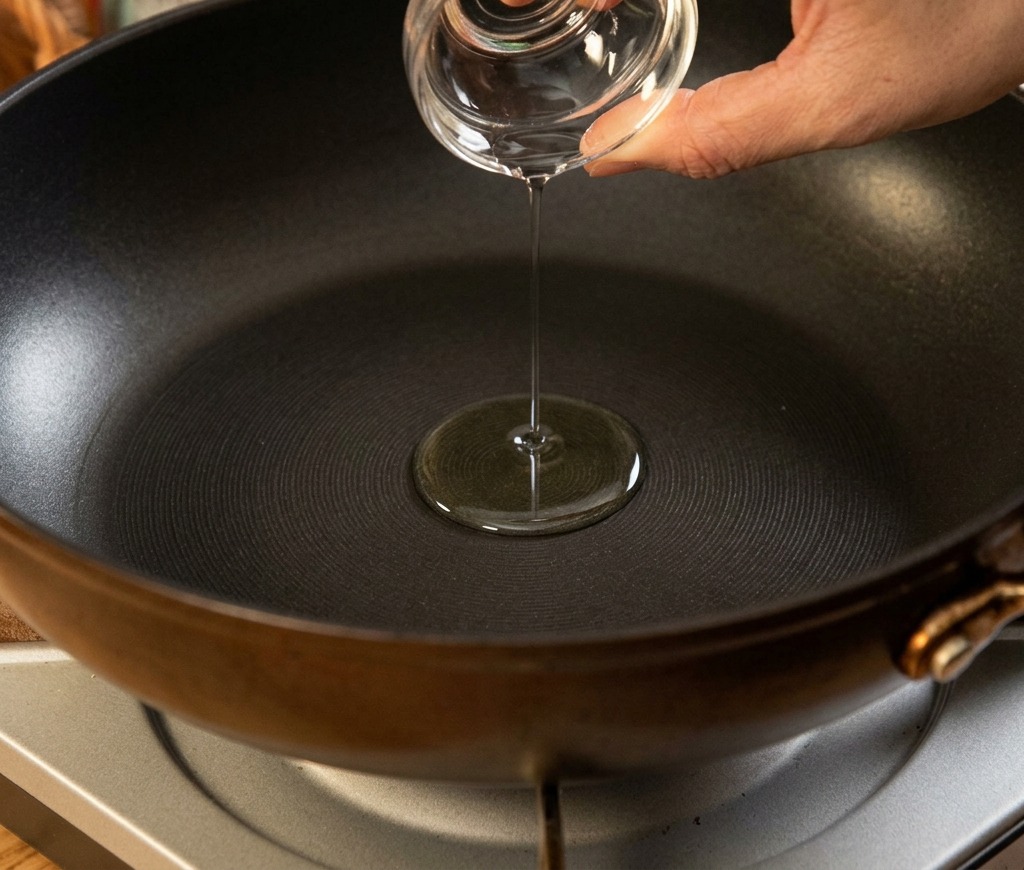
Place a frying pan over medium heat and add a small amount of salad oil. Once the oil is hot, add the sliced onions and stir-fry them until they are evenly coated and starting to soften. This initial sautéing builds a sweet and aromatic foundation for the dish.
Tip: If you prefer the distinct taste of Sukiya beef bowls, this is a great time to add some extra grated ginger to the pan. - 5Simmer the onions in sauce
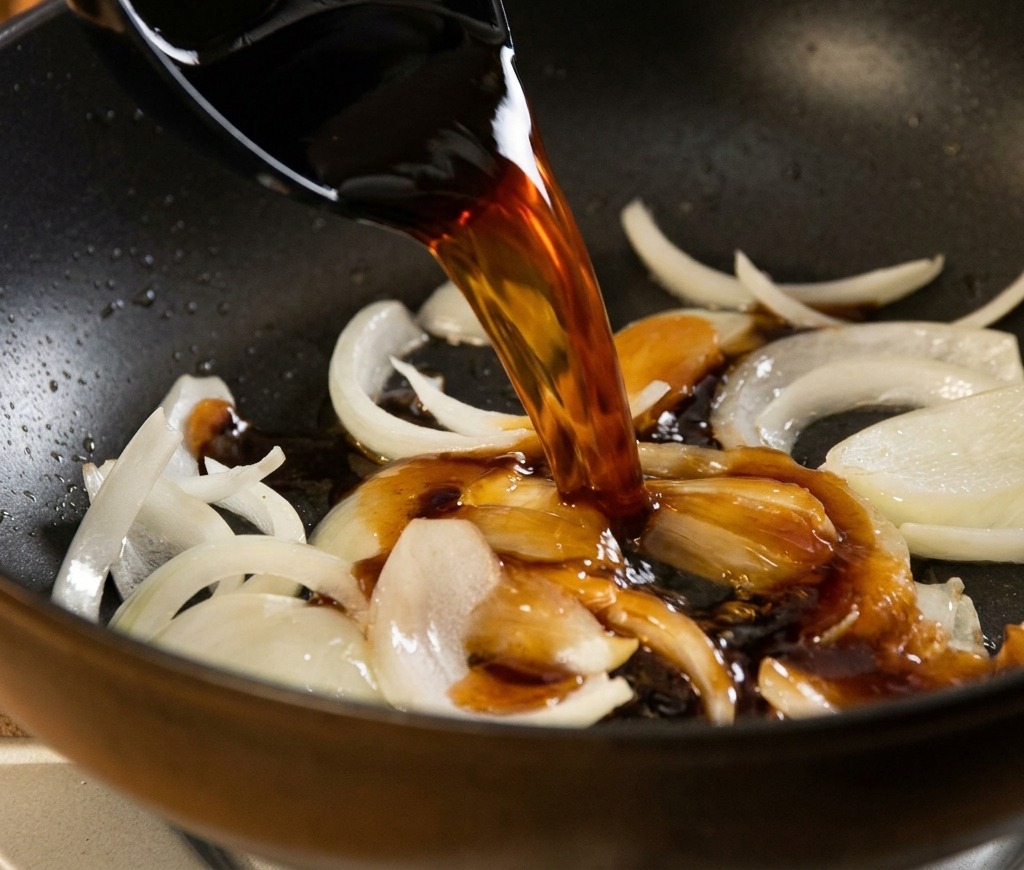
Once your onion wedges are lightly sautéed and coated in oil, pour the prepared sauce mixture into the pan. Bring the liquid to a gentle simmer over medium heat. This step softens the onions further and allows them to soak up the savory flavors of the dashi and soy broth.
Tip: Letting the onions simmer for a minute before adding the meat helps to build a more flavorful and cohesive broth. - 6Add the beef belly
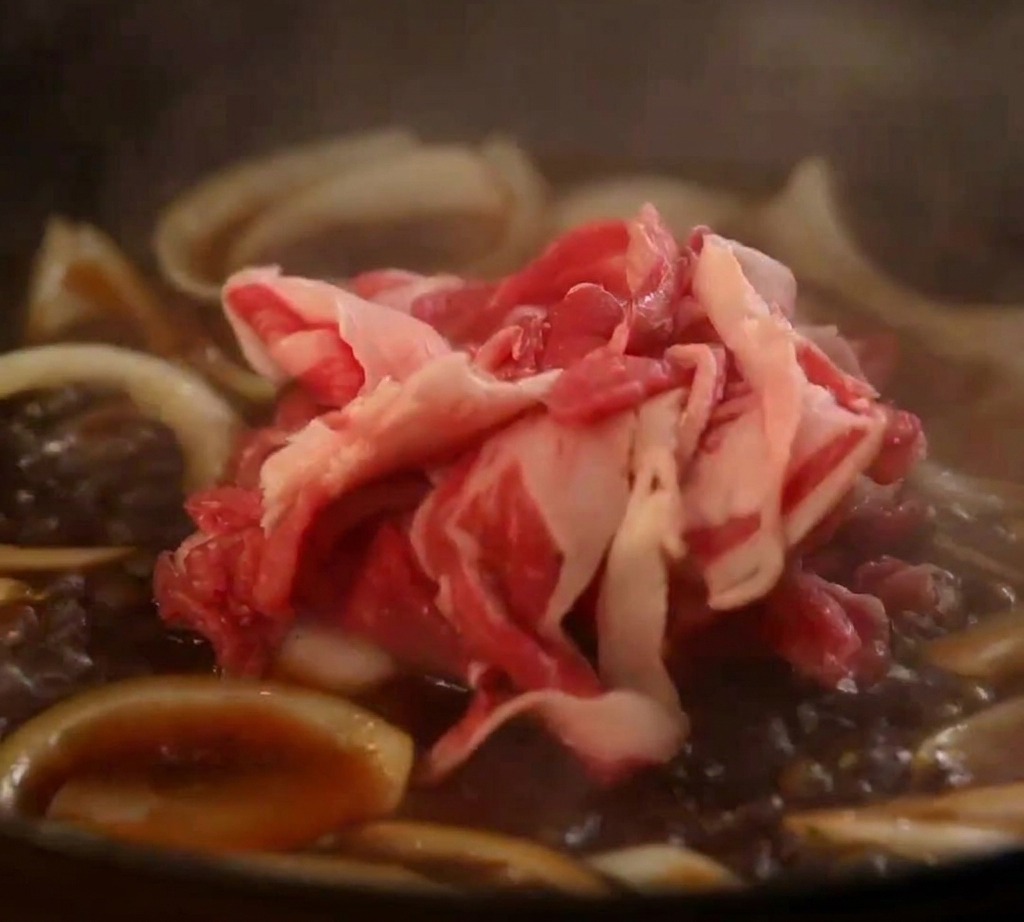
Layer the raw beef belly slices over the onions and sauce. Use chopsticks or tongs to separate the meat so it cooks through evenly without clumping together.
Tip: Thinly sliced beef belly is ideal as it absorbs the sauce quickly and stays tender during the short simmering time. - 7Finish the simmer
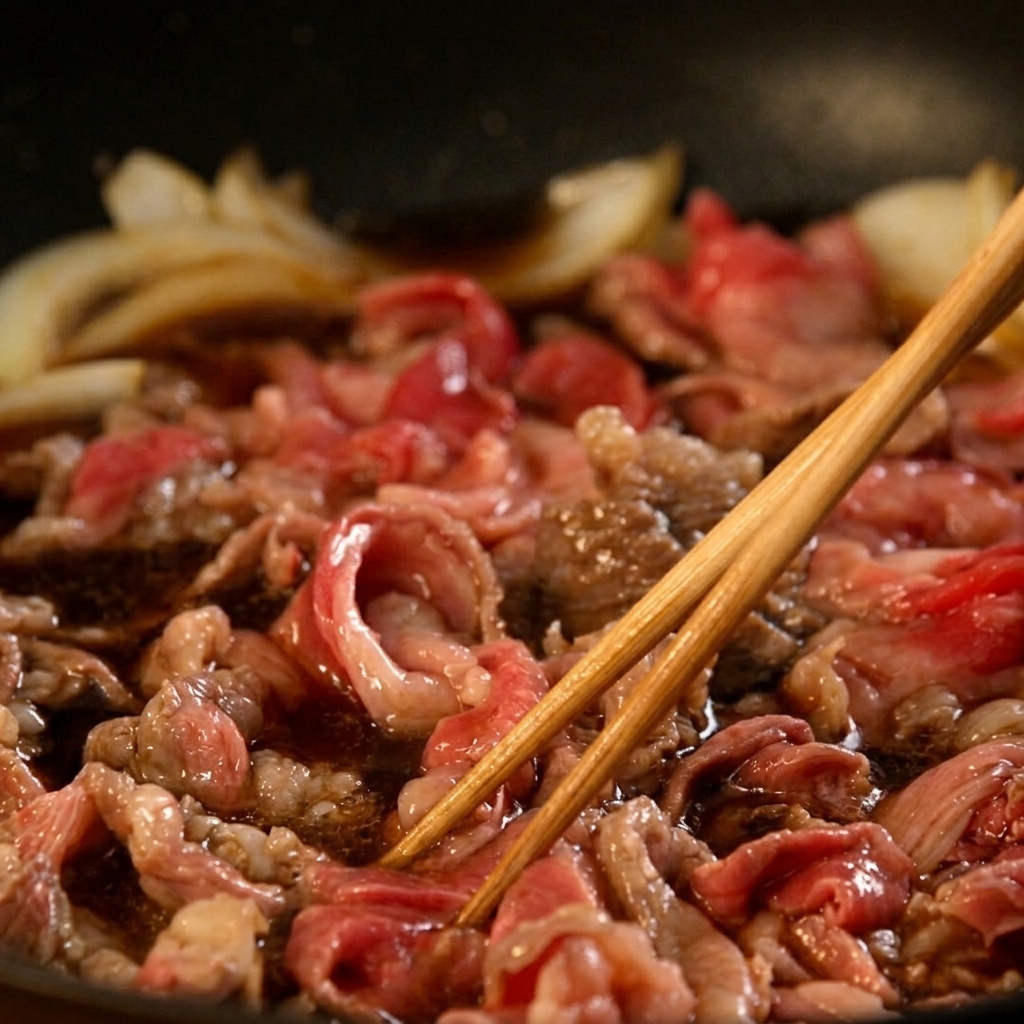
Simmer the beef and onions for another 10 minutes until the meat is fully tender and has absorbed the deep, dark color of the sauce. The liquid will reduce slightly, intensifying the umami profile.
Tip: Keep an eye on the pan and skim off any foam or scum that rises to the surface to ensure the finished sauce is clear and clean-tasting. - 8Assemble the beef bowl
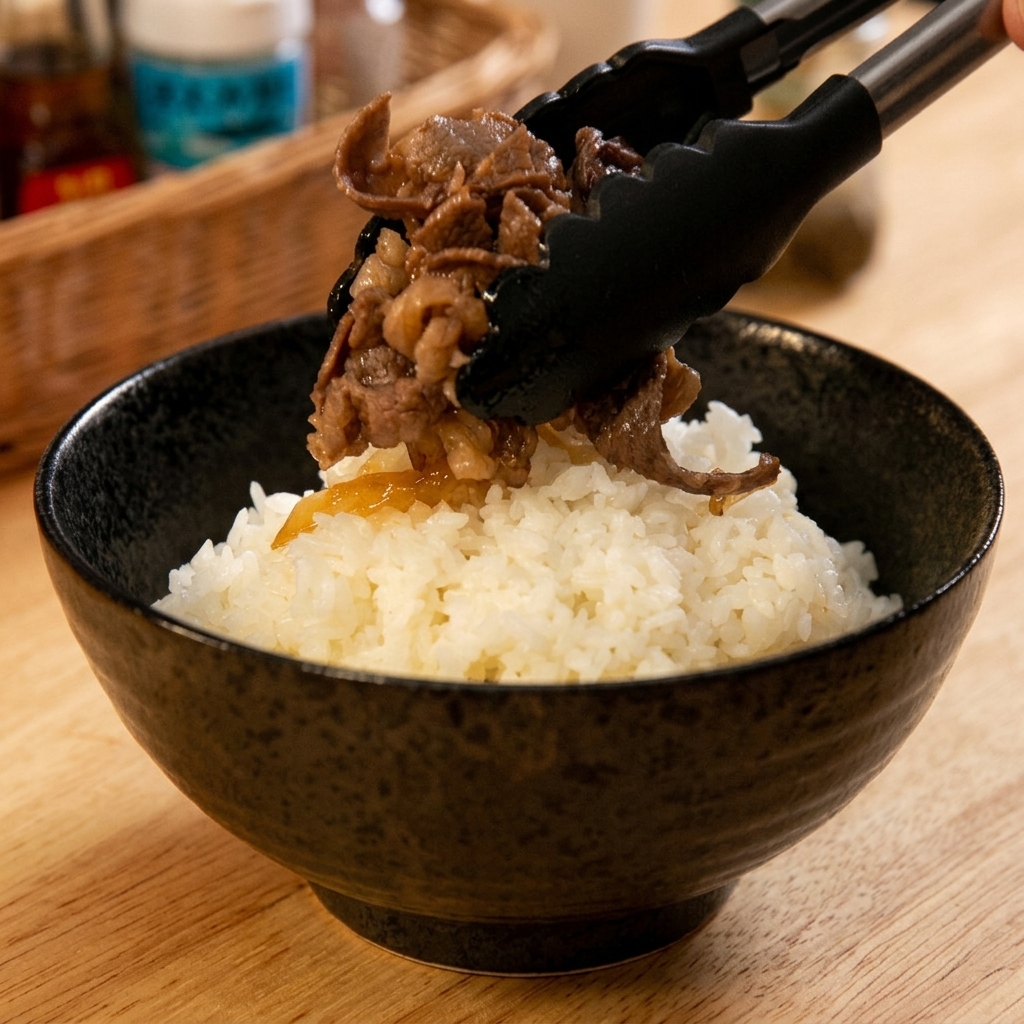
Once the beef is fully tender and cooked through, use tongs to lift the hot beef and onion mixture from the pan. Carefully arrange it directly over a freshly steamed bowl of white rice, spreading it out to cover the top evenly.
Tip: Make sure the rice is fresh and hot before plating so it absorbs the savory flavors of the sauce perfectly. - 9Pour over extra sauce
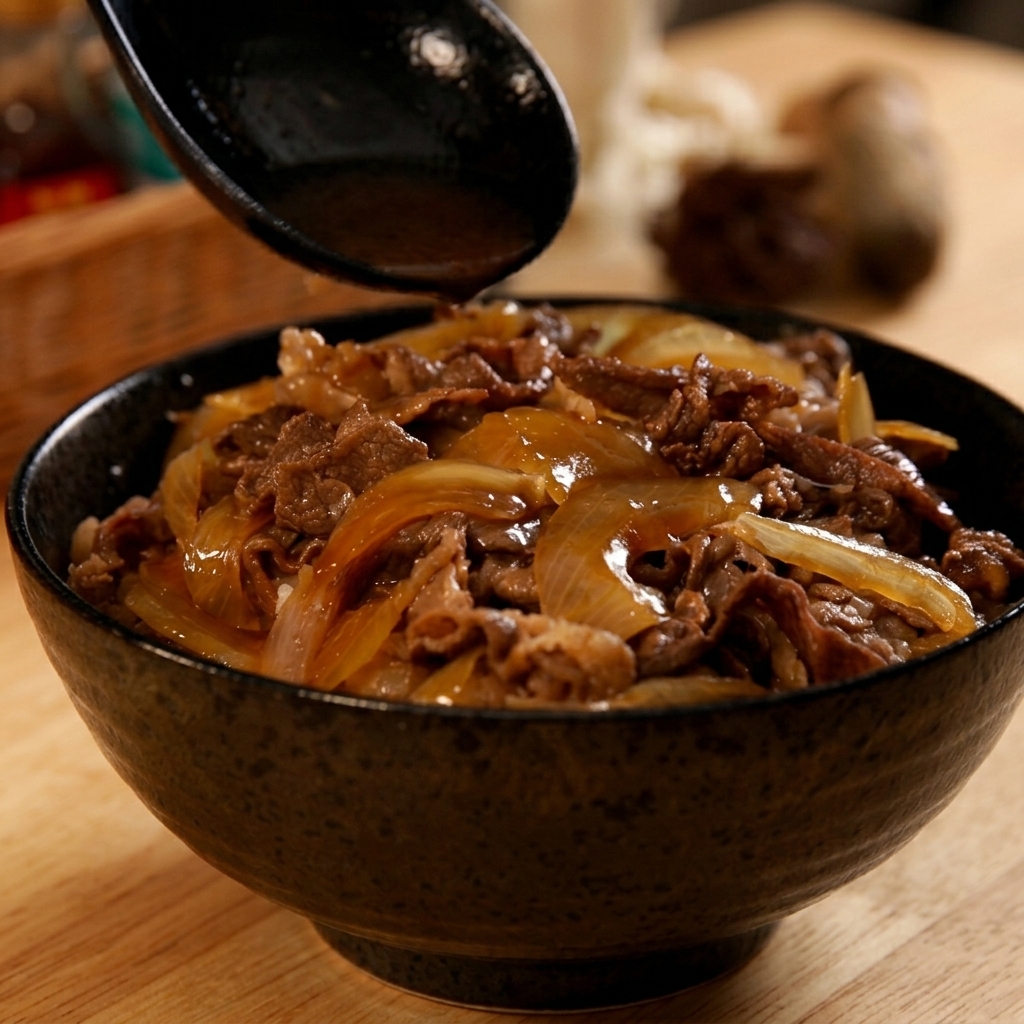
Use a small ladle to scoop up some of the rich, sweet and savory broth left in the pan. Pour it generously over the assembled beef and rice to ensure the flavor soaks completely down to the bottom of the bowl.
Tip: The authentic Sukiya-style flavor relies heavily on this deeply flavorful broth. Add as much or as little as you prefer depending on how wet you like your rice. - 10Add the onsen egg
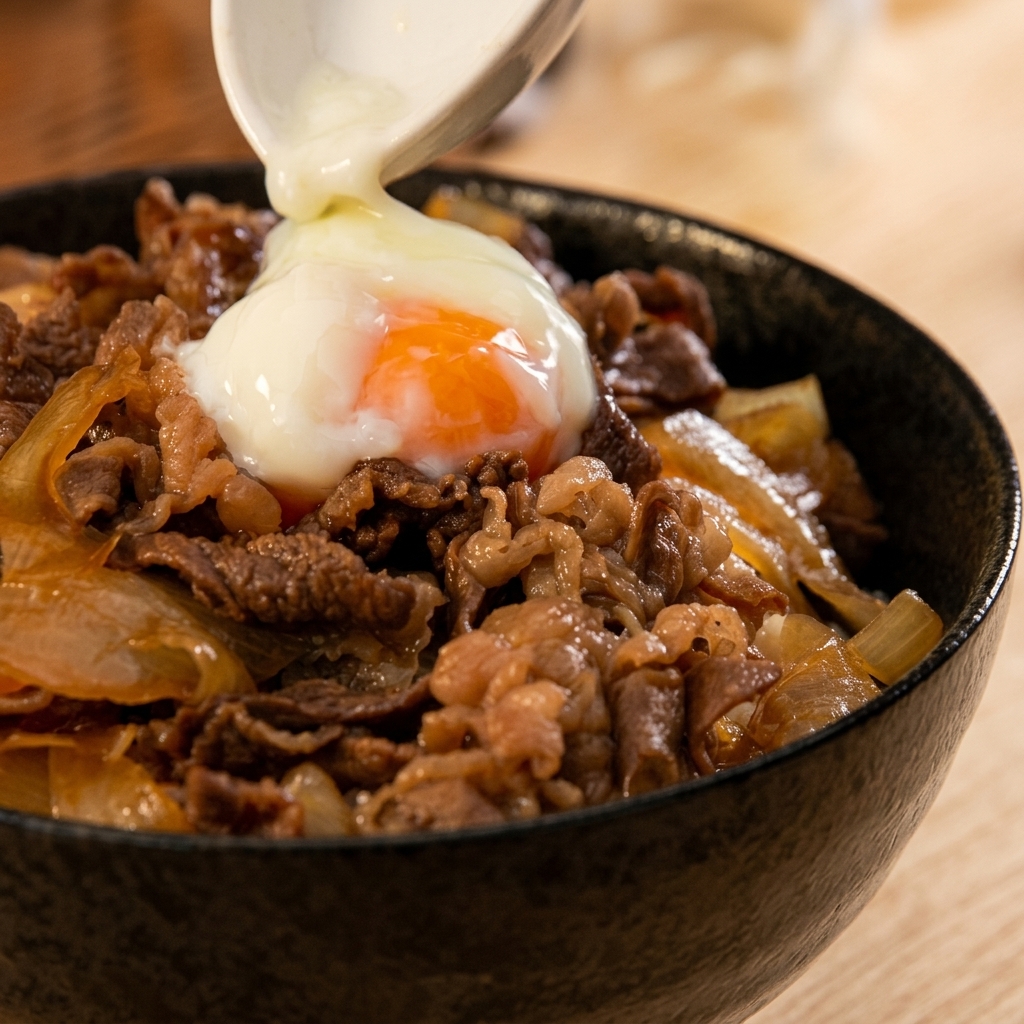
Make a slight indentation in the center of the beef to create a small nest. Gently slide a soft-boiled onsen egg out of a spoon and into the center of the bowl. The creamy yolk will act as an extra layer of sauce when broken.
Tip: A true Japanese onsen egg is cooked slowly at around 155°F (68°C) for about 20-25 minutes to achieve its signature custard-like whites and runny yolk. - 11Garnish with red pickled ginger
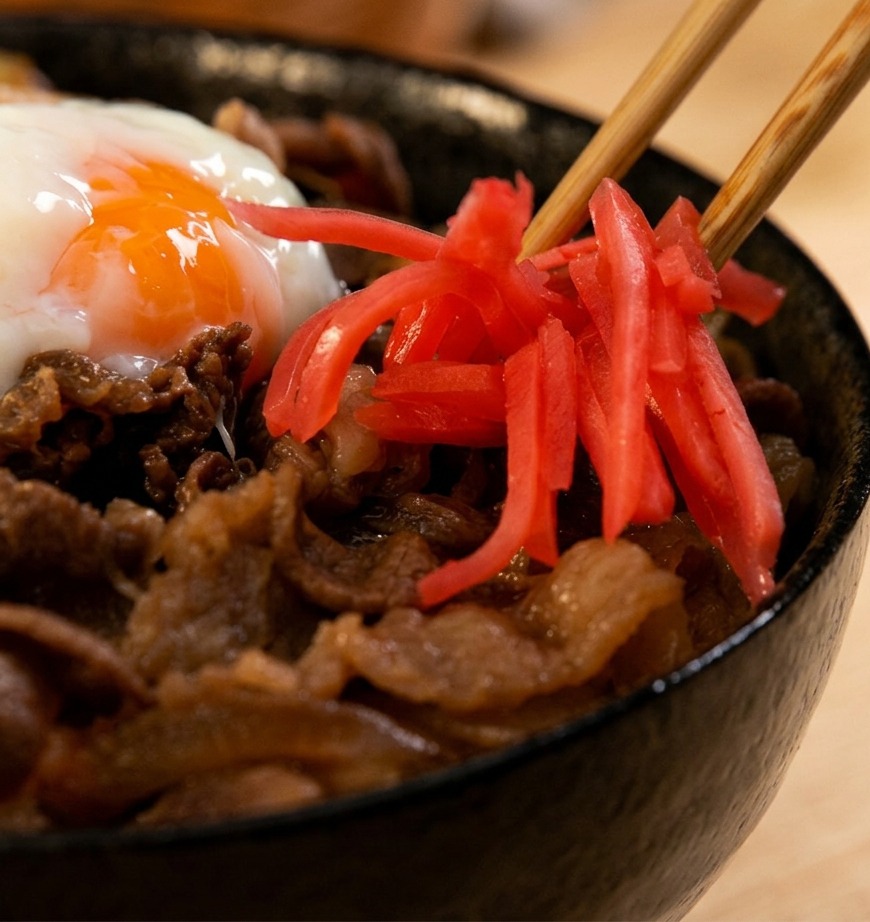
Complete the dish by placing a generous pinch of bright red pickled ginger, known as beni shoga, on the side of the bowl. This classic Japanese condiment provides a sharp, acidic contrast that cuts through the richness of the beef and the creamy onsen egg, refreshing the palate with every bite.
Tip: If you want to replicate the Sukiya style perfectly, dont be shy with the ginger; its zesty flavor is a signature element of their beef bowl recipe.