Authentic Tokyo Shoyu Ramen From Scratch
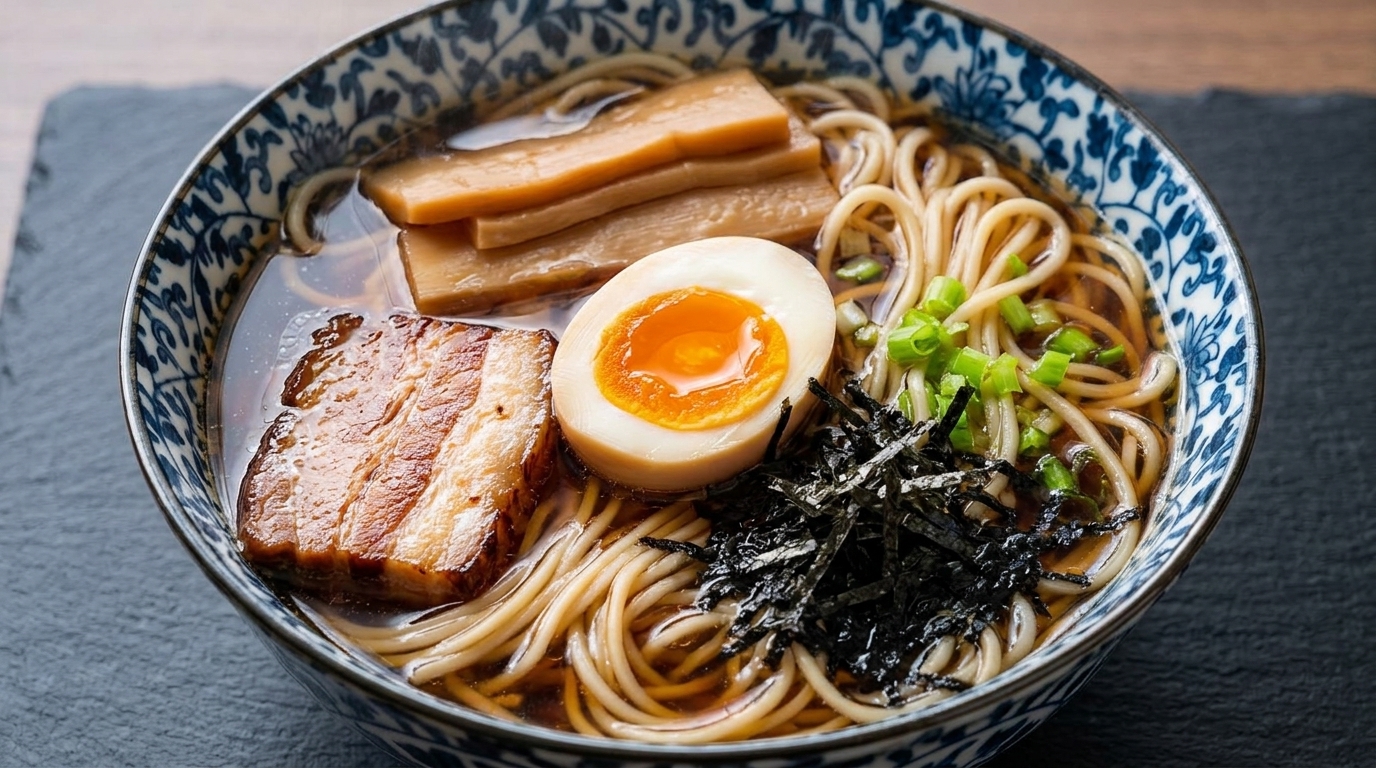
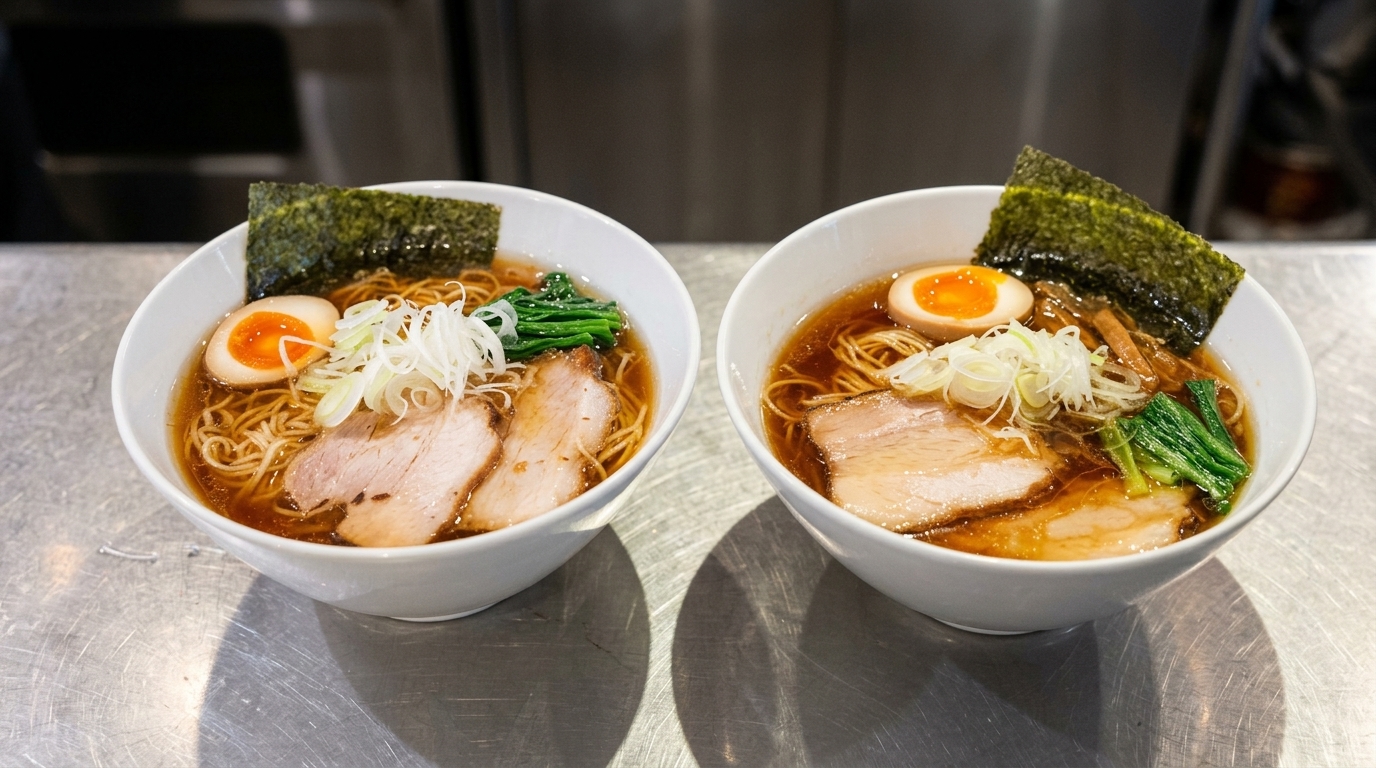
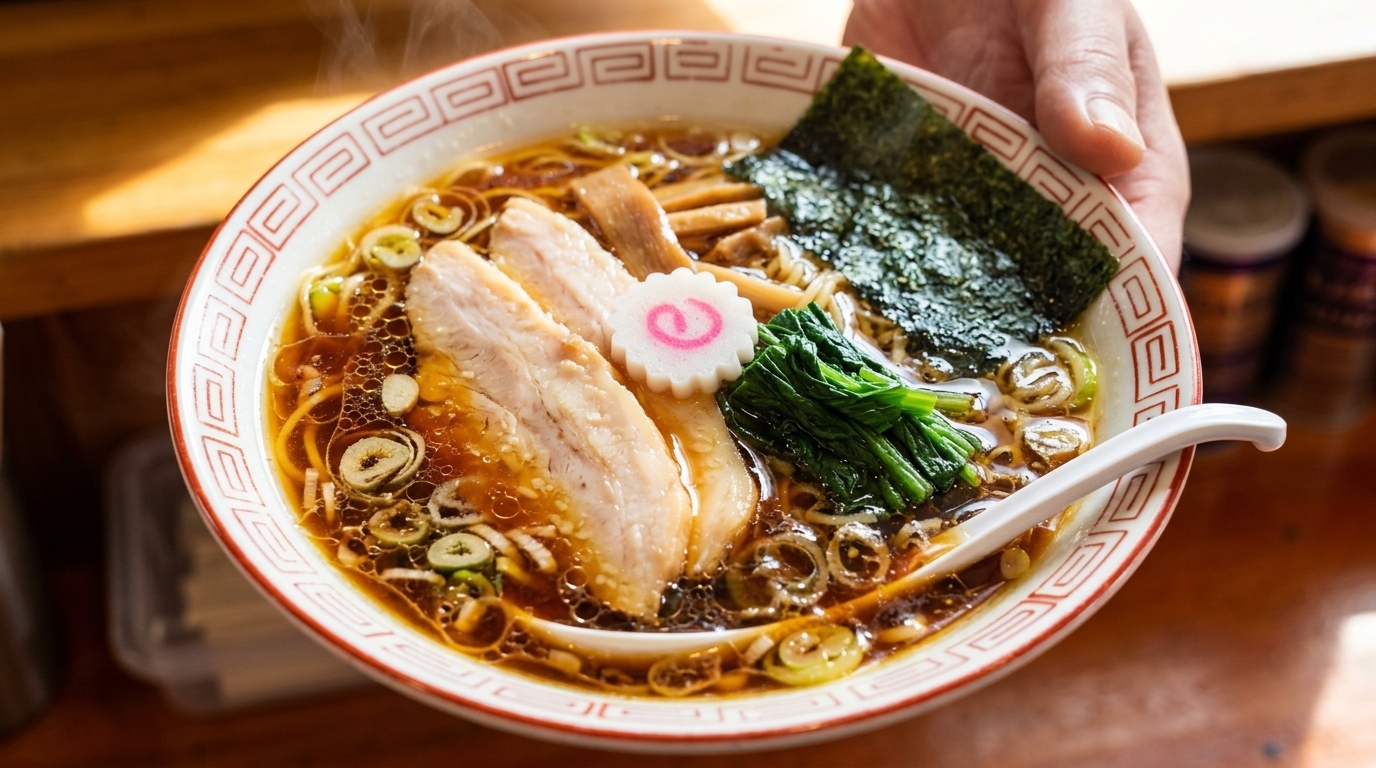
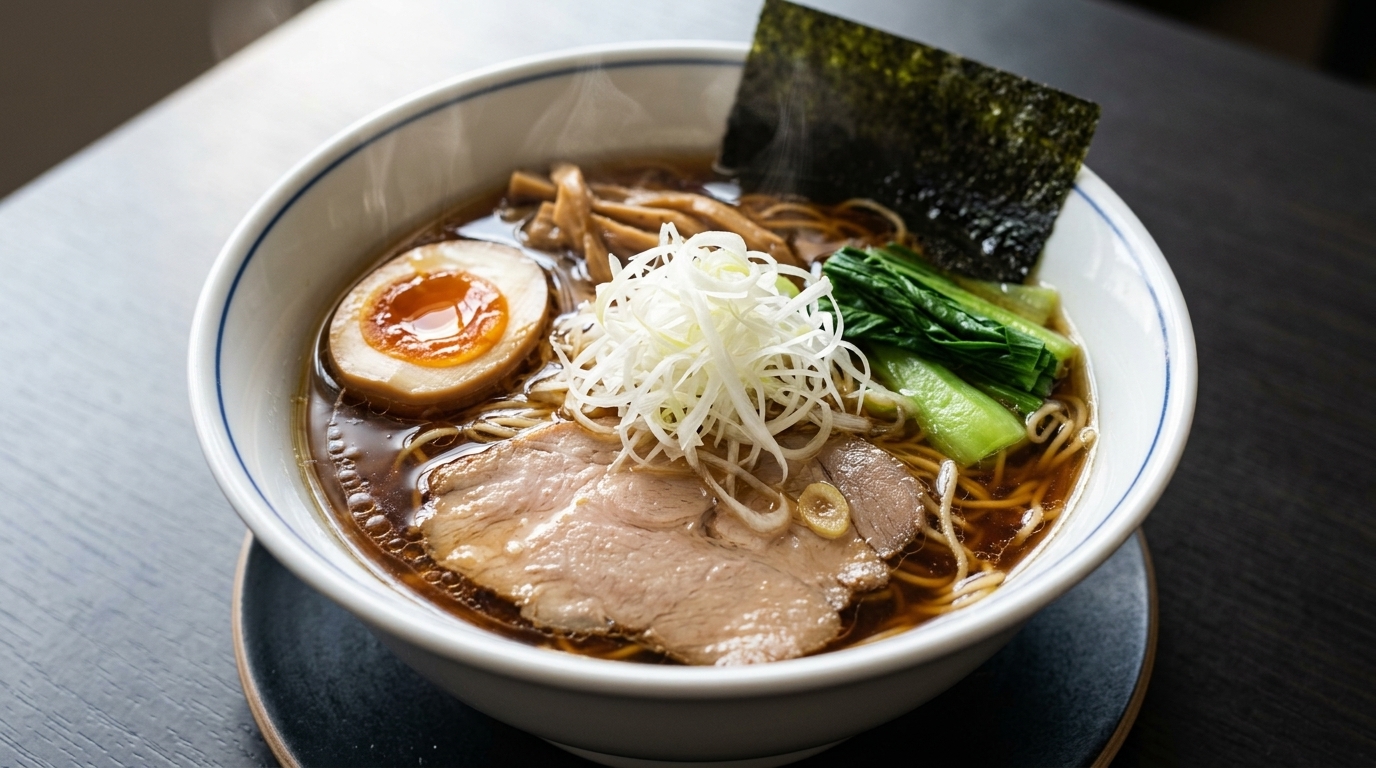
Experience the definitive Tokyo Shoyu Ramen with a crystal-clear double soup of chicken and pork, layered with a complex seafood tare and fragrant shrimp oil.
Tokyo-style ramen is celebrated for its delicate balance and clarity. Unlike the heavy, emulsified tonkotsu broths of the south, this classic preparation relies on a pristine, long-simmered chicken and pork base. The soul of the bowl lies in its Shoyu tare—a deeply savory soy sauce concentrate steeped with dried seafood—which melds perfectly with the fragrant shrimp and scallion aroma oils.
Ingredients
- 1 kg chicken bones (mix of feet, necks, and carcasses)
- 1 kg pork bones (mix of marrow and spine)
- 2 whole scallions
- 1 medium white onion
- 1 knob ginger
- 4 cloves garlic
- 1 tsp Sichuan peppercorns
- 2 whole star anise
- 1 whole apple
- 4 whole fresh shiitake mushrooms
- 200 g whole raw shrimp or Sakura shrimp
- 100 ml mirin
- 200 ml high-quality dark soy sauce (or chashu sauce)
- 1 tbsp scallop extract
- 2 tbsp salt
- 1 tbsp white sugar
- 1 tbsp kelp powder
- 30 g dried sardines (niboshi)
- 10 g dried bonito flakes (katsuobushi)
- 10 g dried mackerel flakes (sababushi)
- 2 whole dried shiitake mushrooms
- 1 piece dried kombu (kelp)
- 4 portions fresh ramen noodles
- 4 slices chashu pork
- 2 whole ajitsuke tamago (soft-boiled seasoned eggs)
- to taste menma (bamboo shoots)
- to taste baby bok choy and finely sliced scallions
Instructions
- 1Prepare the meat base
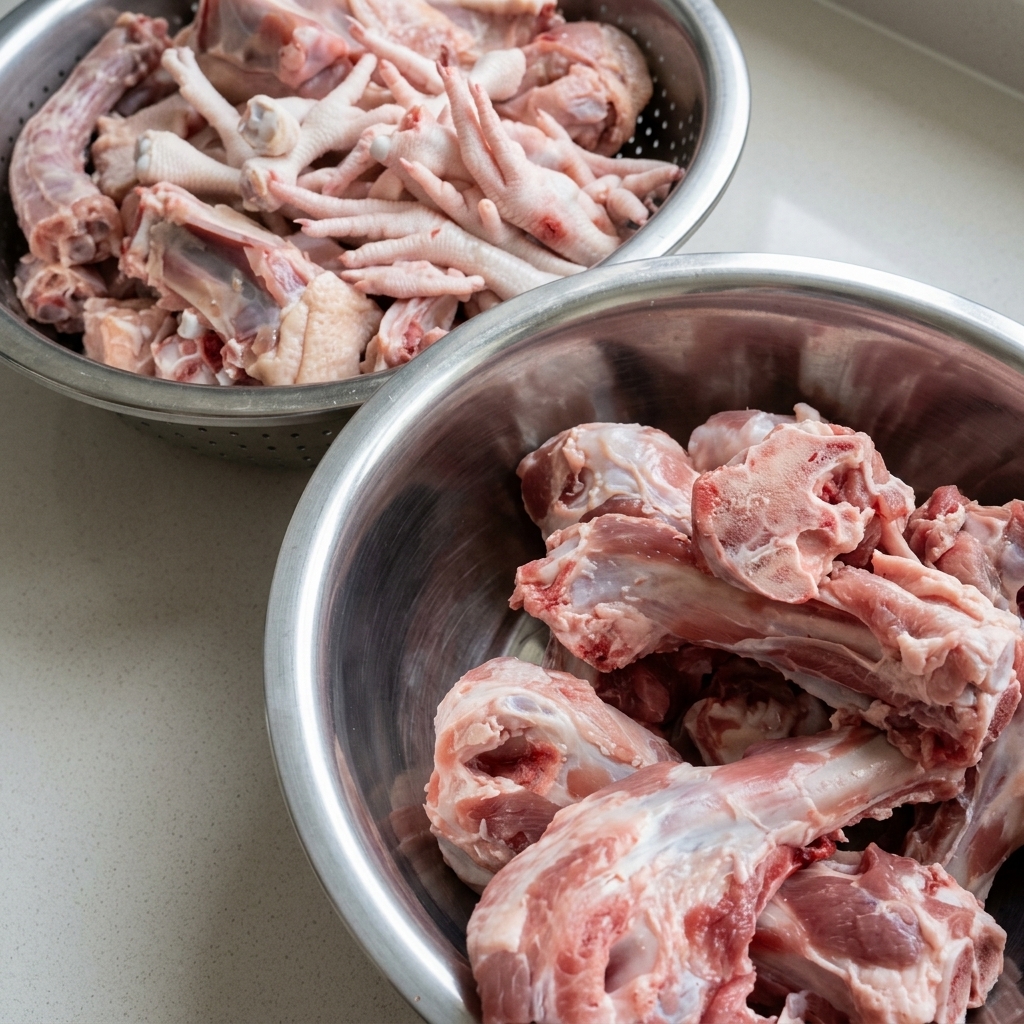
Gather the foundation of the broth by preparing a mix of chicken bones, chicken feet, chicken necks, pork marrow bones, and pork spine. Having a good ratio of chicken to pork bones will give the broth a rich, complex flavor that is essential for a traditional Tokyo Shoyu Ramen.
Tip: Wash the bones thoroughly before using them to ensure a clean-tasting final broth. - 2Simmer the bones
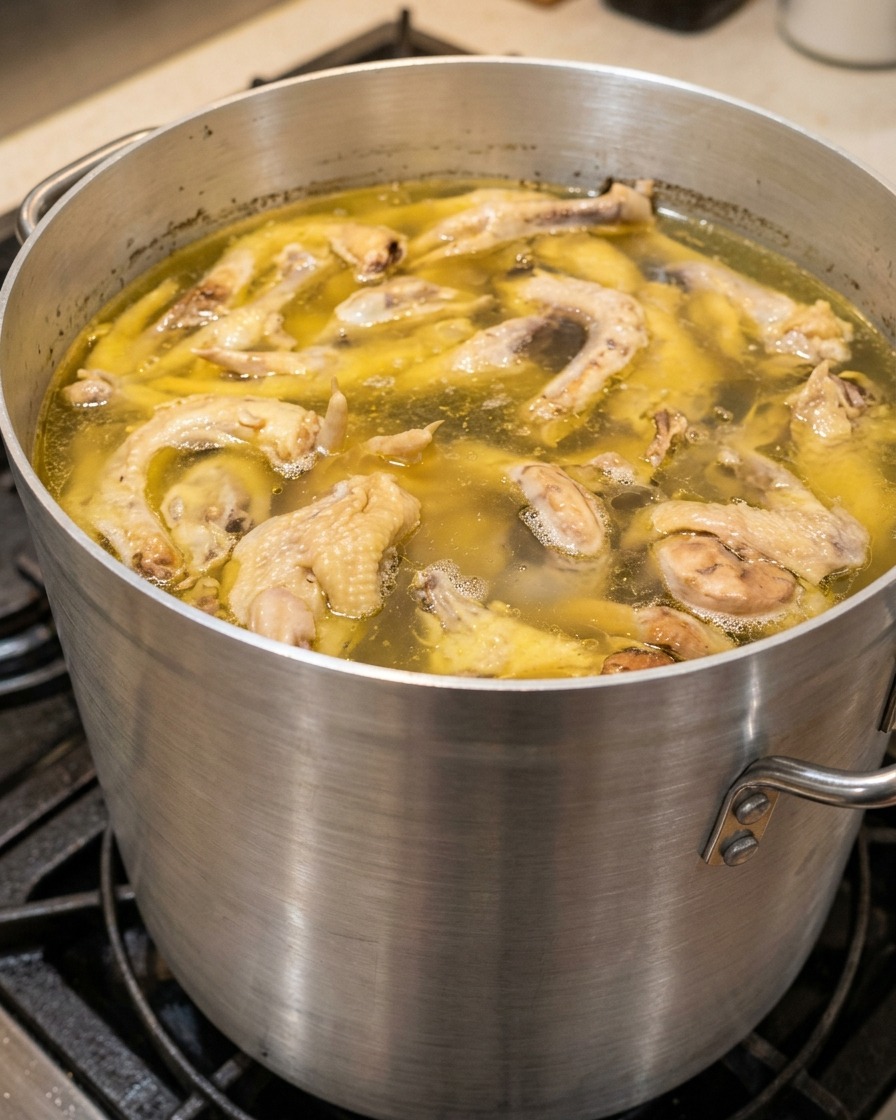
Place all the prepared bones into a large stockpot and bring it to a boil. As the water boils, impurities and scum will float to the surface. Carefully skim this off to keep the broth clear and prevent any unwanted flavors from developing.
Tip: Skimming the scum diligently during the initial boil is crucial for a clean and refined soup base. - 3Add aromatic vegetables
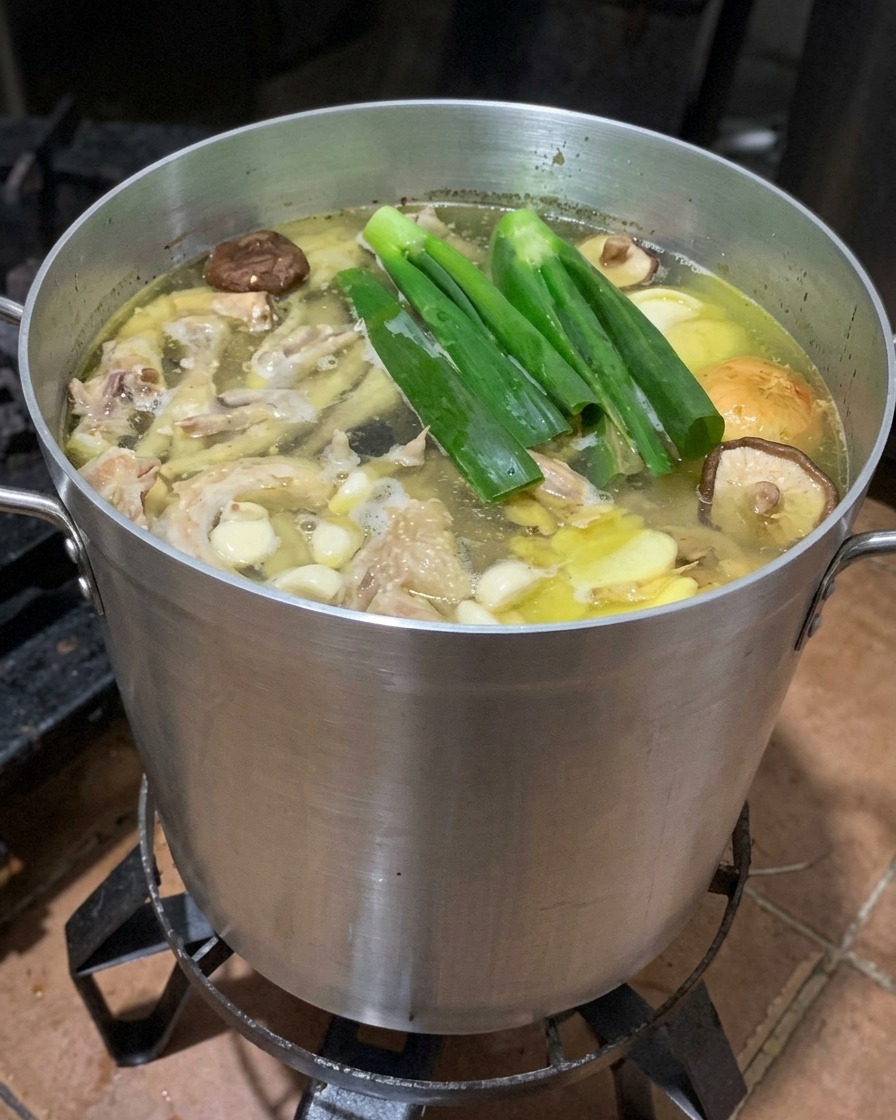
After simmering the bones for an hour, introduce the aromatic vegetables and flavor enhancers. Add whole scallions, ginger slices, apples, and shiitake mushrooms directly to the boiling broth. These ingredients will add subtle sweetness and depth to the soup.
Tip: Using fruits like apples adds a natural sweetness that perfectly balances the rich meatiness of the pork and chicken broth. - 4Strain the aromatic oil
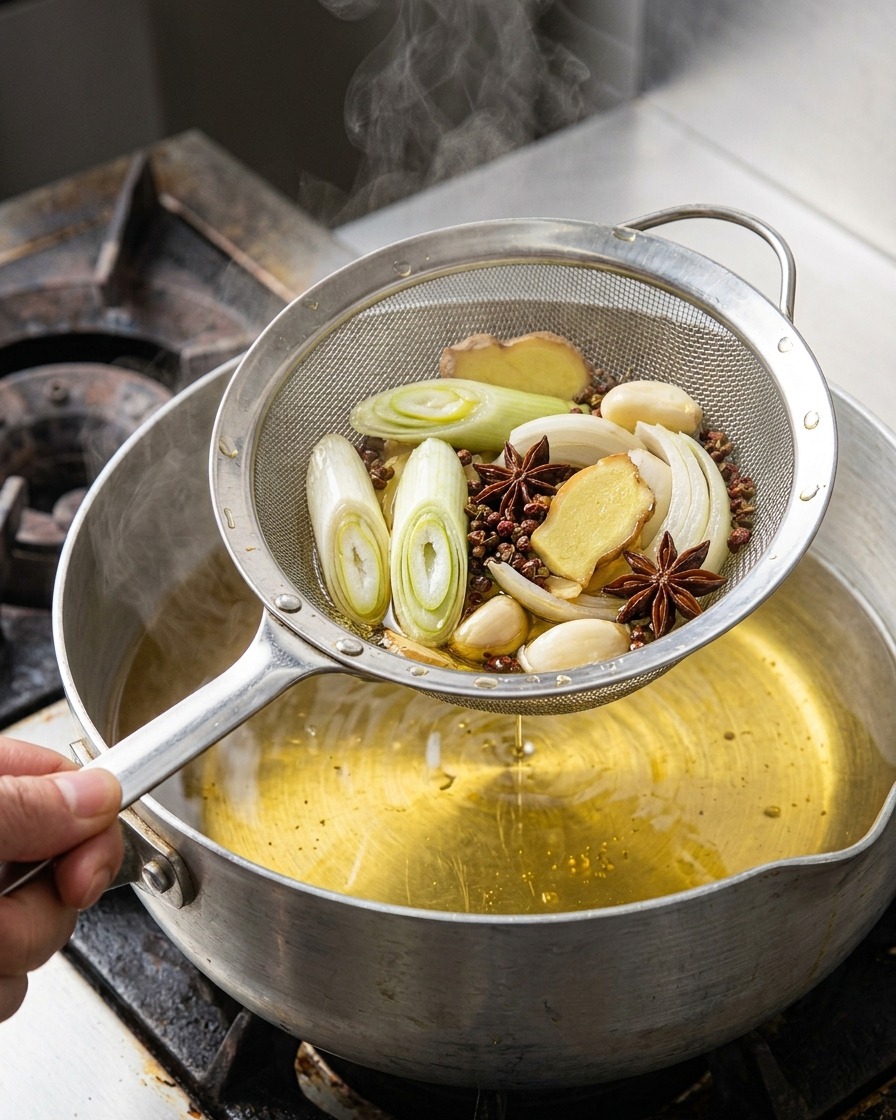
Prepare the aromatic oil by frying scallions, onions, ginger, garlic, Sichuan peppercorns, and star anise. Once the aromatics have released their flavors and lightly browned, use a metal sieve to strain them out, leaving behind a fragrant, golden oil.
Tip: Keep the heat moderate while frying the aromatics so they slowly infuse the oil without burning and turning bitter. - 5Fry the shrimp
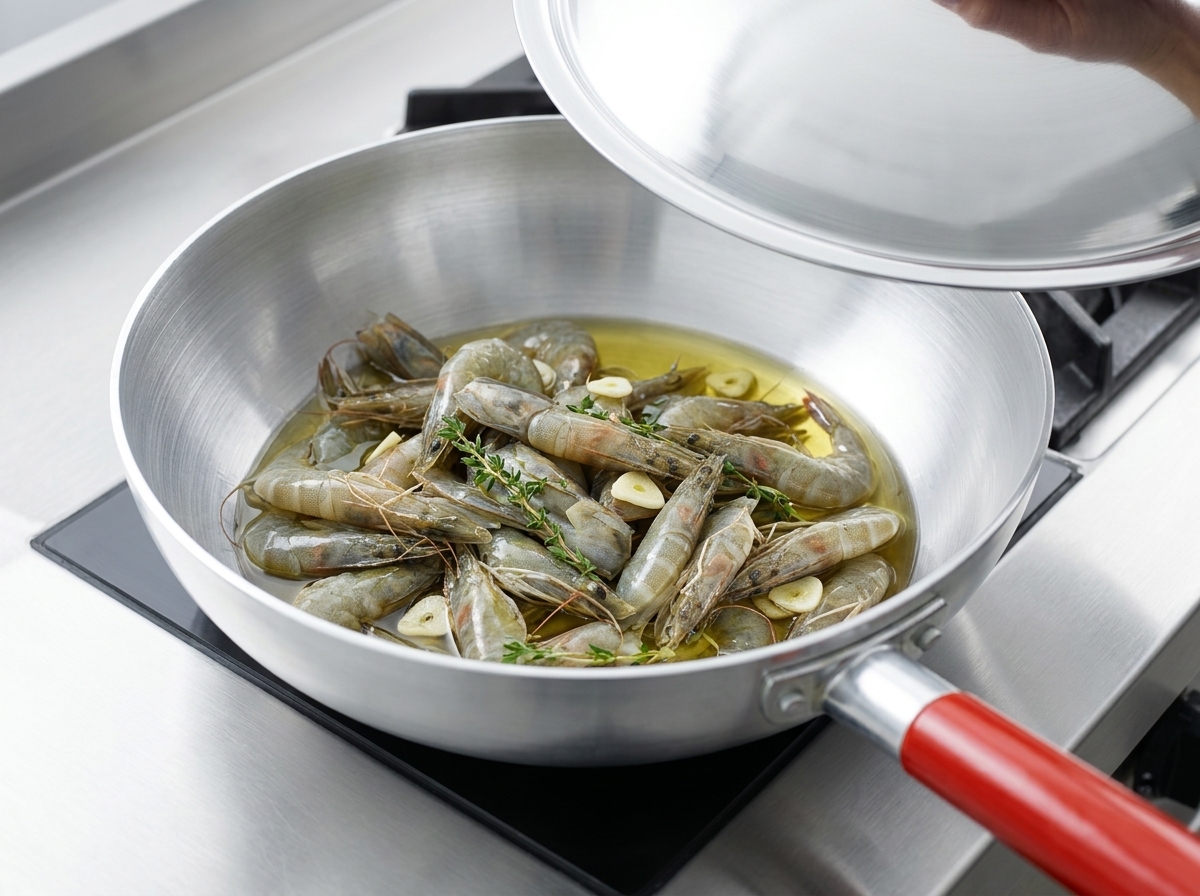
In a separate metal pan, begin frying whole raw shrimp. While Sakura shrimp heads are traditional, regular whole shrimp work well too. Fry them until their shells begin to turn red and release a deep seafood aroma.
Tip: Press down on the shrimp occasionally while frying to help extract maximum flavor from the shells and heads. - 6Infuse the shrimp oil
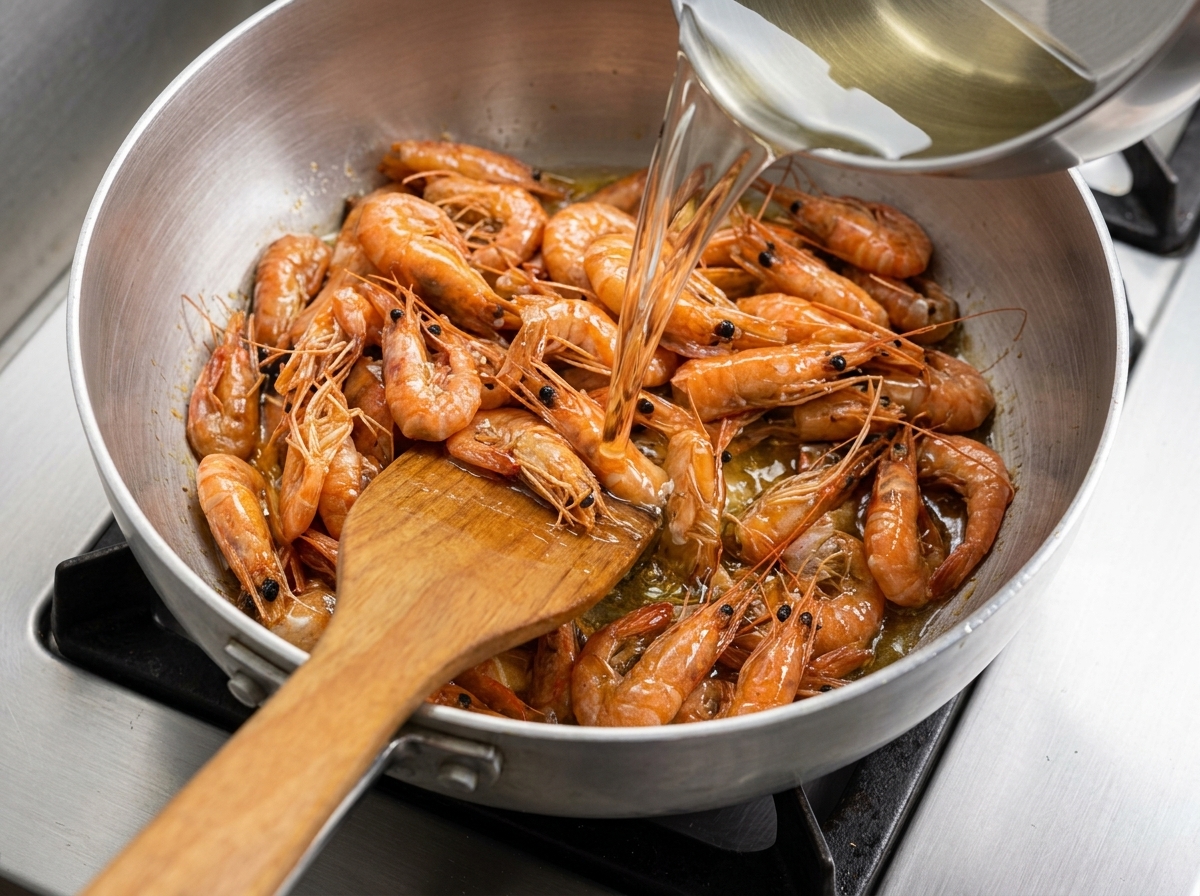
Once the shrimp have turned red and fragrant, pour the previously strained aromatic scallion oil directly over them. Continue to fry the shrimp in this oil at a temperature between 130 to 150 degrees Celsius to fully infuse the oil with the rich, savory flavor of the shrimp.
Tip: Maintaining the correct oil temperature ensures the shrimp flavor is extracted perfectly without burning the delicate scallion oil base. - 7Extract the shrimp oil
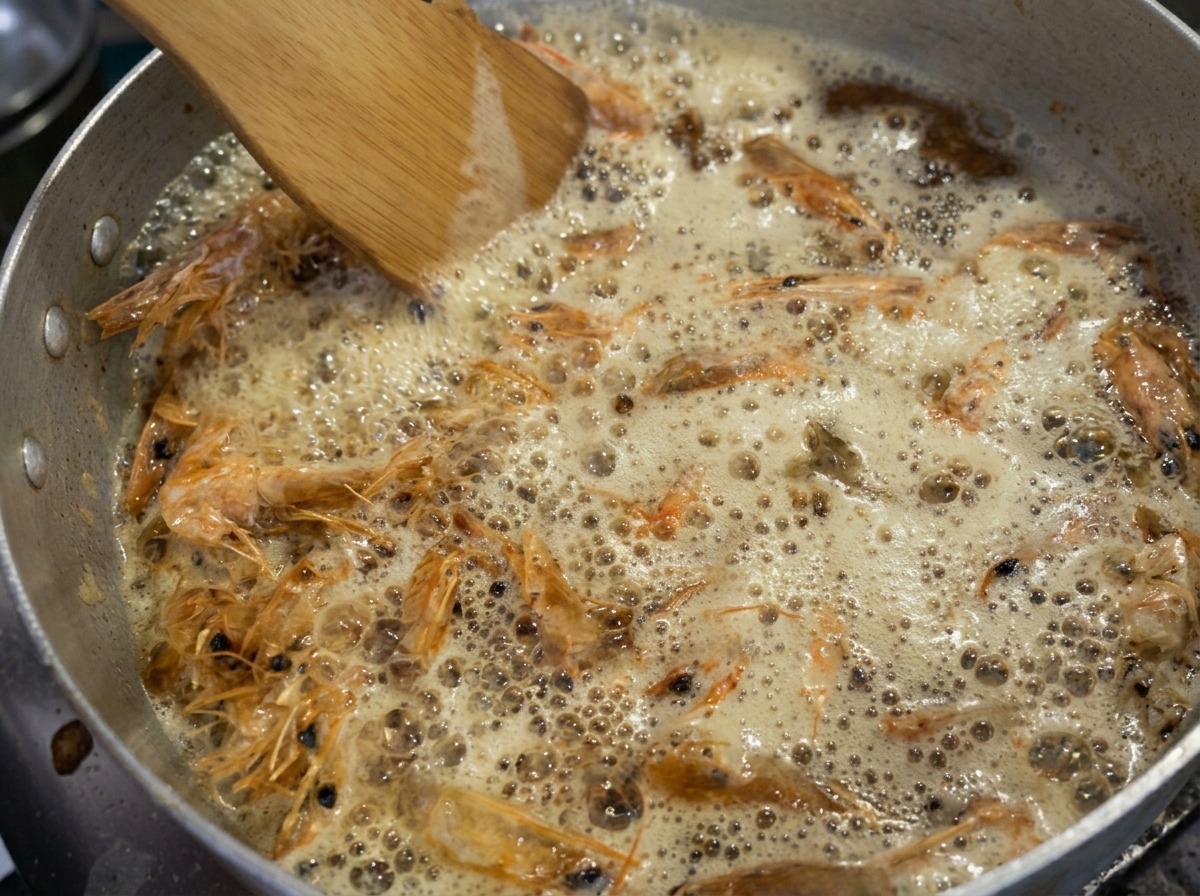
Fry the shrimp heads in hot scallion oil, maintaining a temperature between 130°C and 150°C. Use a wooden spatula to press down firmly on the shrimp as they cook, releasing their savory juices and vibrant color into the bubbling oil until it becomes deeply fragrant.
Tip: Maintain a steady temperature; if the oil is too hot, the shrimp will burn and turn bitter, but if its too cool, they wont release their full flavor. - 8Strain the fragrant shrimp oil
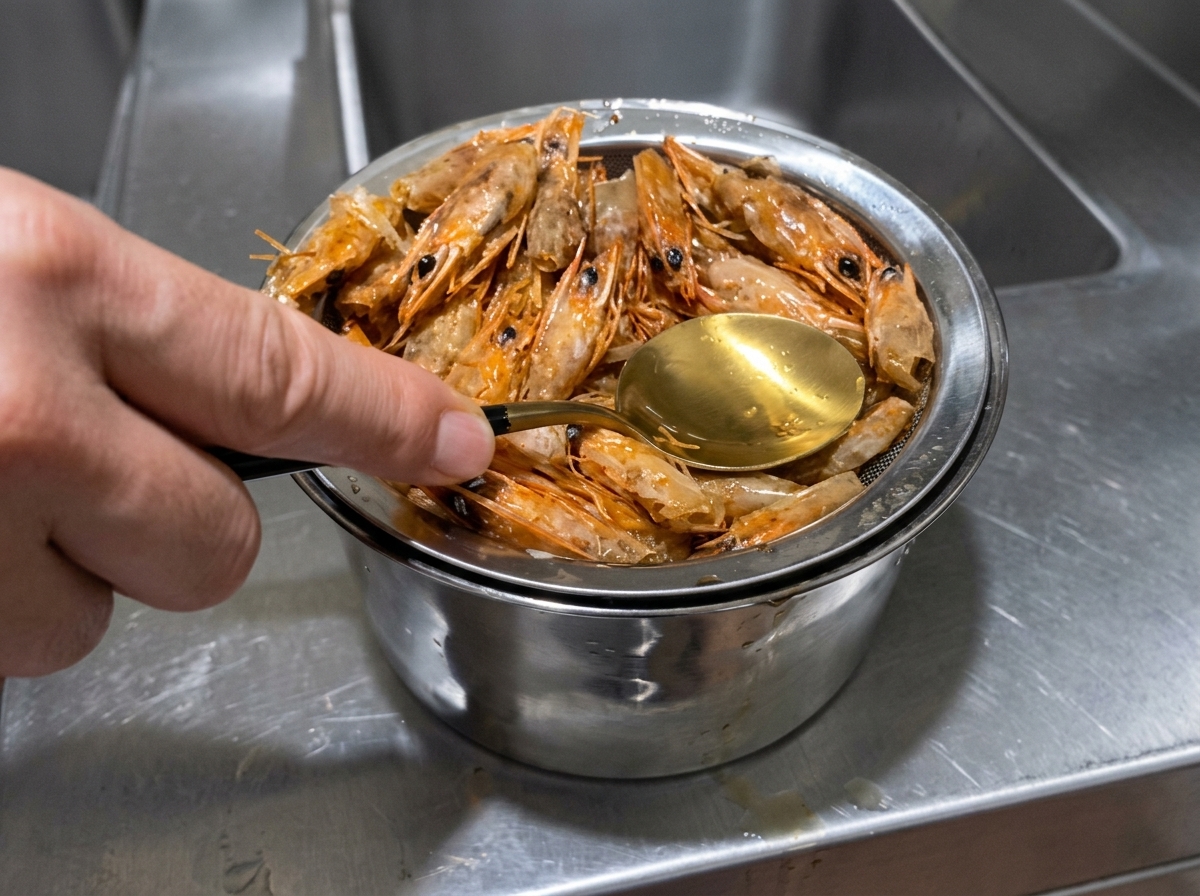
Once the shrimp are fully fried and have released their color and aroma, pour the mixture through a fine metal sieve. Press the shrimp firmly with a spoon against the mesh to extract every last drop of the rich, concentrated orange shrimp oil.
Tip: Dont discard the strained shrimp right away; press them thoroughly against the sieve to ensure you capture all the essential oils. - 9Ladle the meat broth
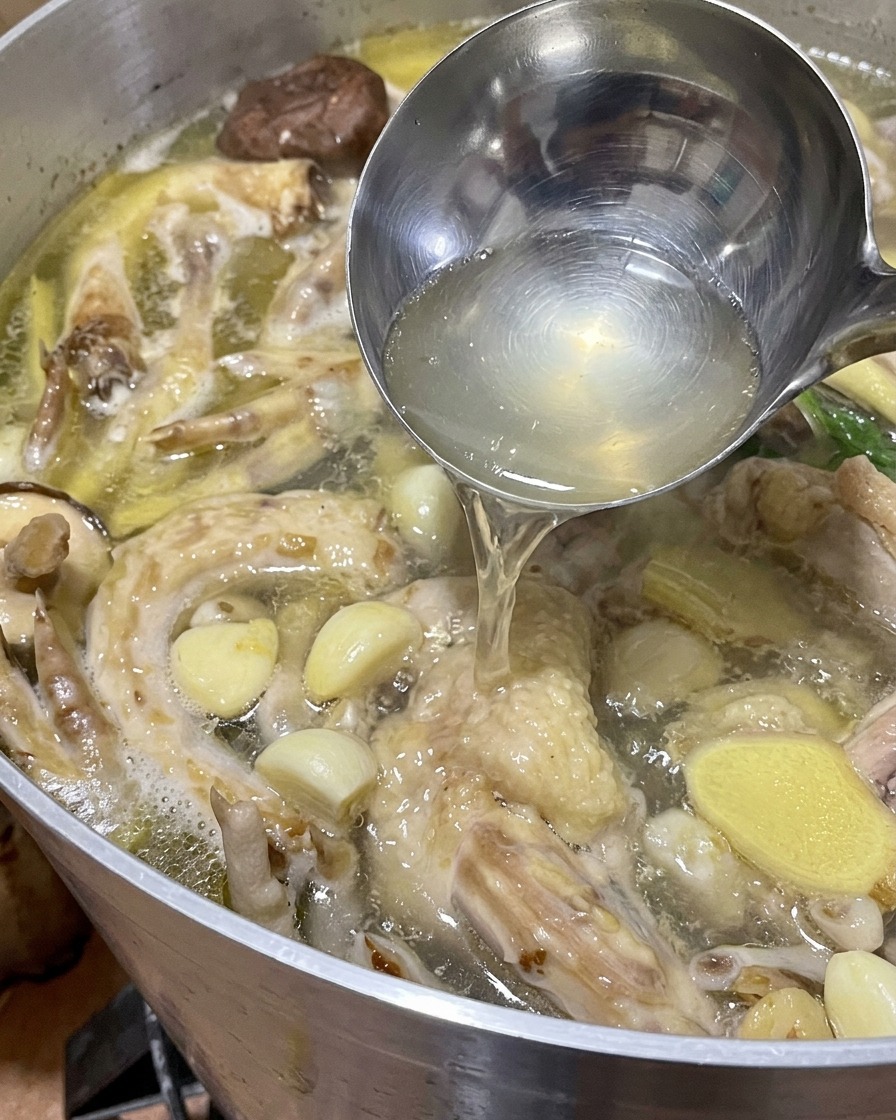
After three hours of gentle simmering, the chicken and pork bones will have released their deep, rich flavors into the pot. Carefully use a ladle to scoop the fragrant, savory broth from the surface, avoiding the settled solids and aromatics at the bottom.
Tip: Skim any excess fat or remaining scum from the surface of the broth before ladling to ensure a cleaner, more refined taste. - 10Filter the clear broth
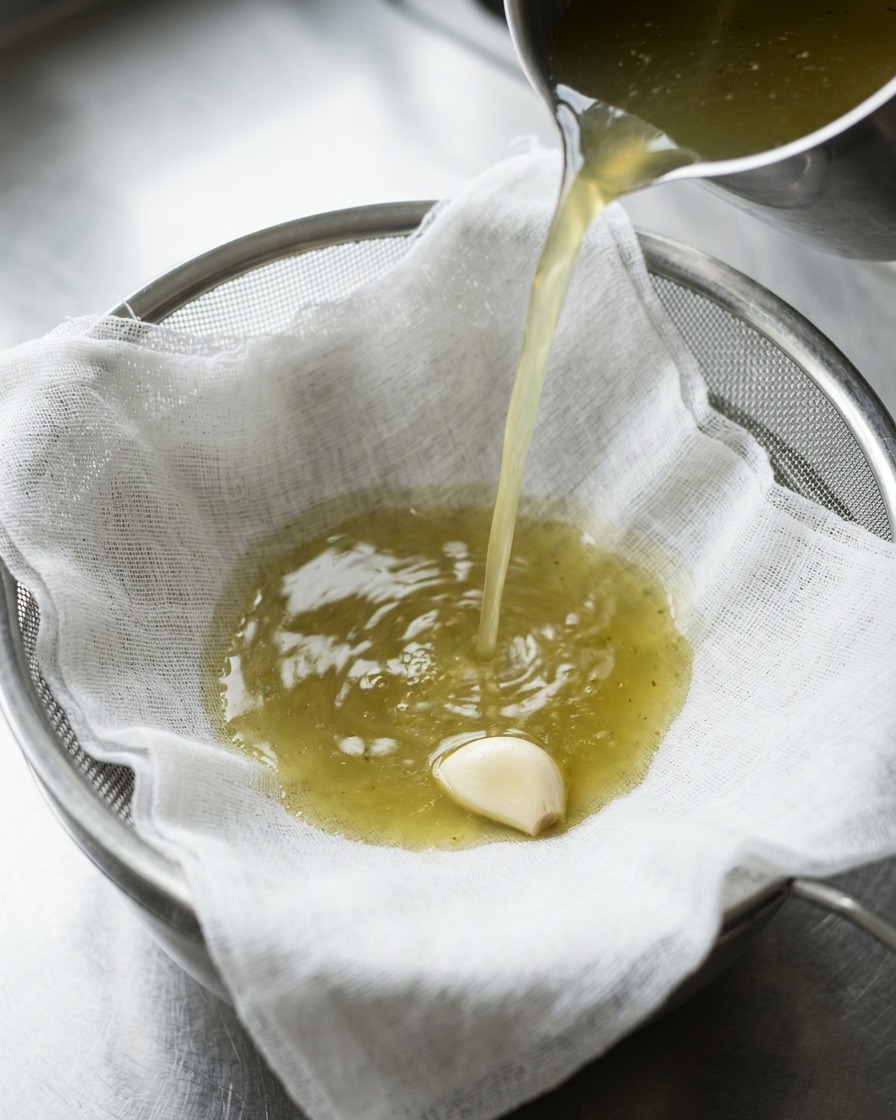
To achieve a delicate and refined ramen base, pour the ladled broth through a double-layer cheesecloth set inside a fine-mesh strainer. This double-filtration process removes all the fine impurities, resulting in a crystal-clear and intensely flavorful liquid.
Tip: Using a double-layer cheesecloth is essential for catching the finest particles that a standard wire sieve might let through. - 11Mix the Shoyu tare base
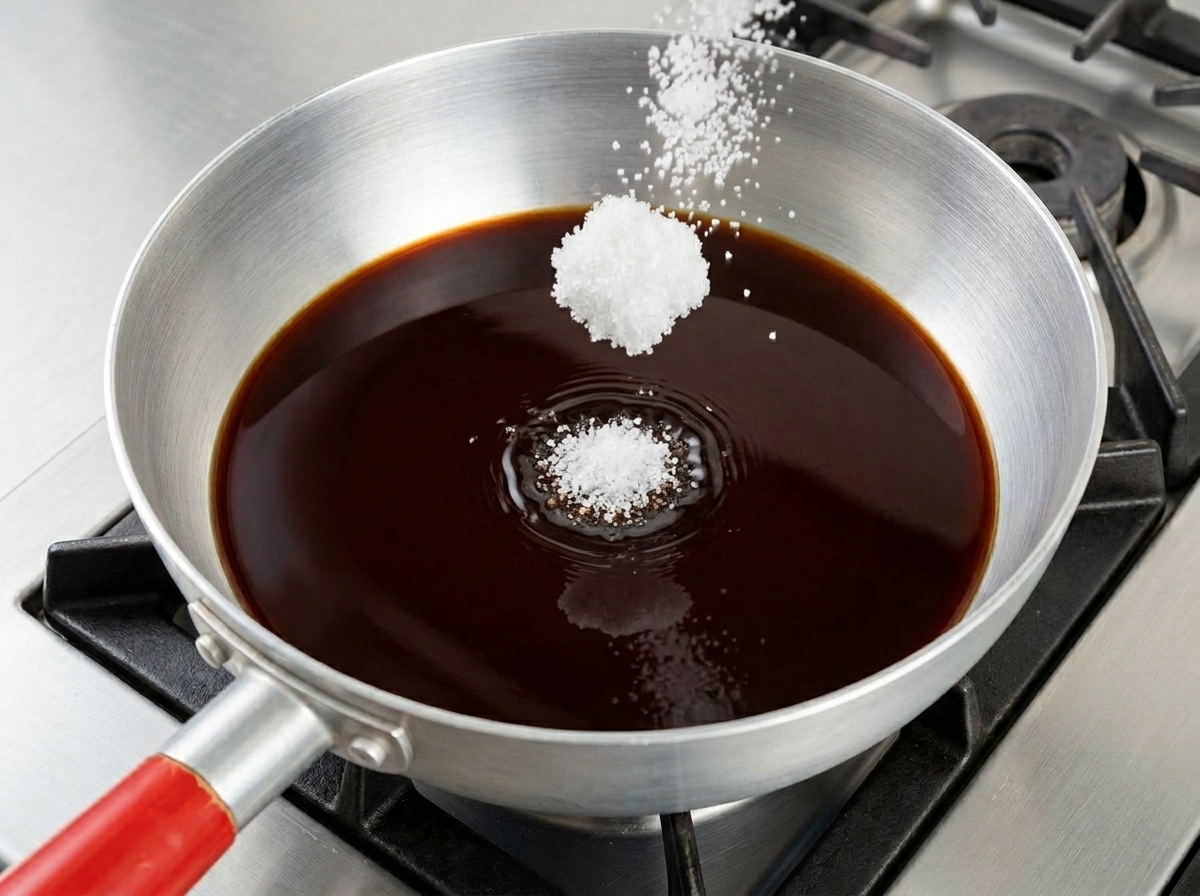
Begin making the Shoyu tare by combining mirin, chashu sauce, and scallop extract in a saucepan. Stir in the necessary seasonings, including white sugar, salt, and kelp powder, to balance the savory depth of the dark soy sauce mixture.
Tip: Ensure the sugar and salt are completely dissolved into the liquid before adding the dry seafood aromatics in the next step. - 12Simmer the tare aromatics
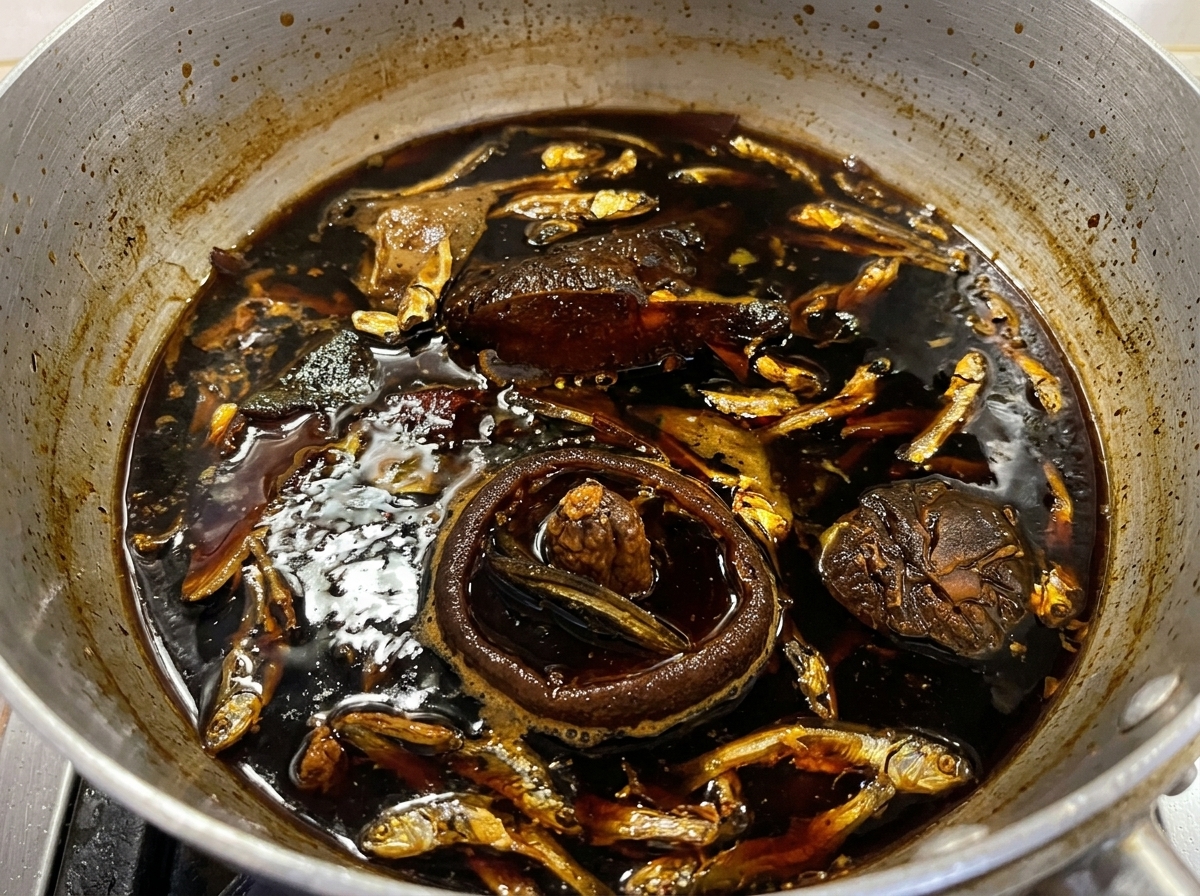
Introduce dried sardines, dried bonito, mackerel, dried shiitake mushrooms, and kelp into the seasoned soy sauce base. After letting the mixture steep at room temperature for six hours, simmer it gently over low heat to fully extract the umami from the dried ingredients.
Tip: Keep the heat very low while simmering to avoid burning the delicate dried seafood, which can introduce an unwanted bitter taste to the tare. - 13Strain the Shoyu tare
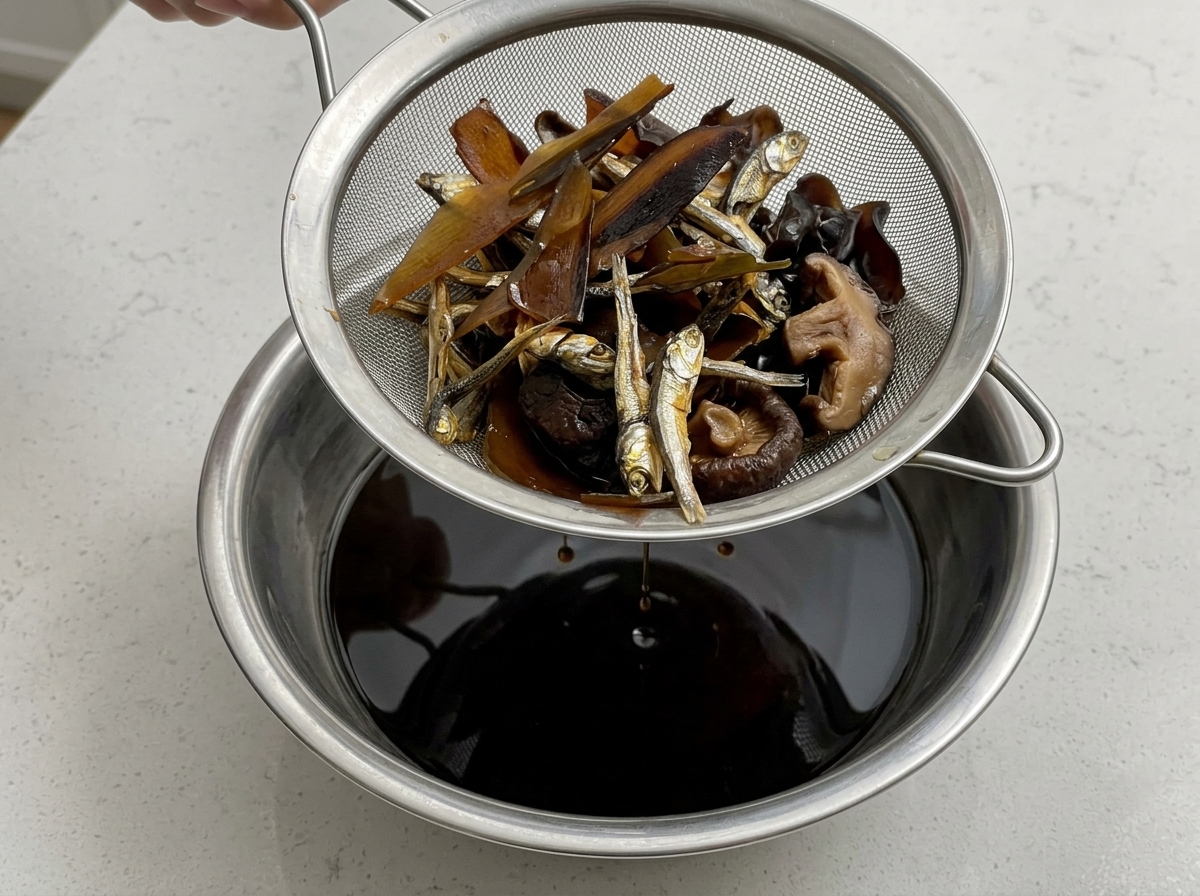
Once the Shoyu tare has finished simmering, carefully strain the liquid through a fine mesh sieve into a clean bowl. This process removes the dried sardines, bonito flakes, kelp, and shiitake mushrooms, leaving behind a smooth, deeply concentrated umami base for your ramen.
Tip: A fine mesh sieve is crucial here to catch all the small flakes and impurities, ensuring your final tare is perfectly smooth. - 14Assemble the soup base
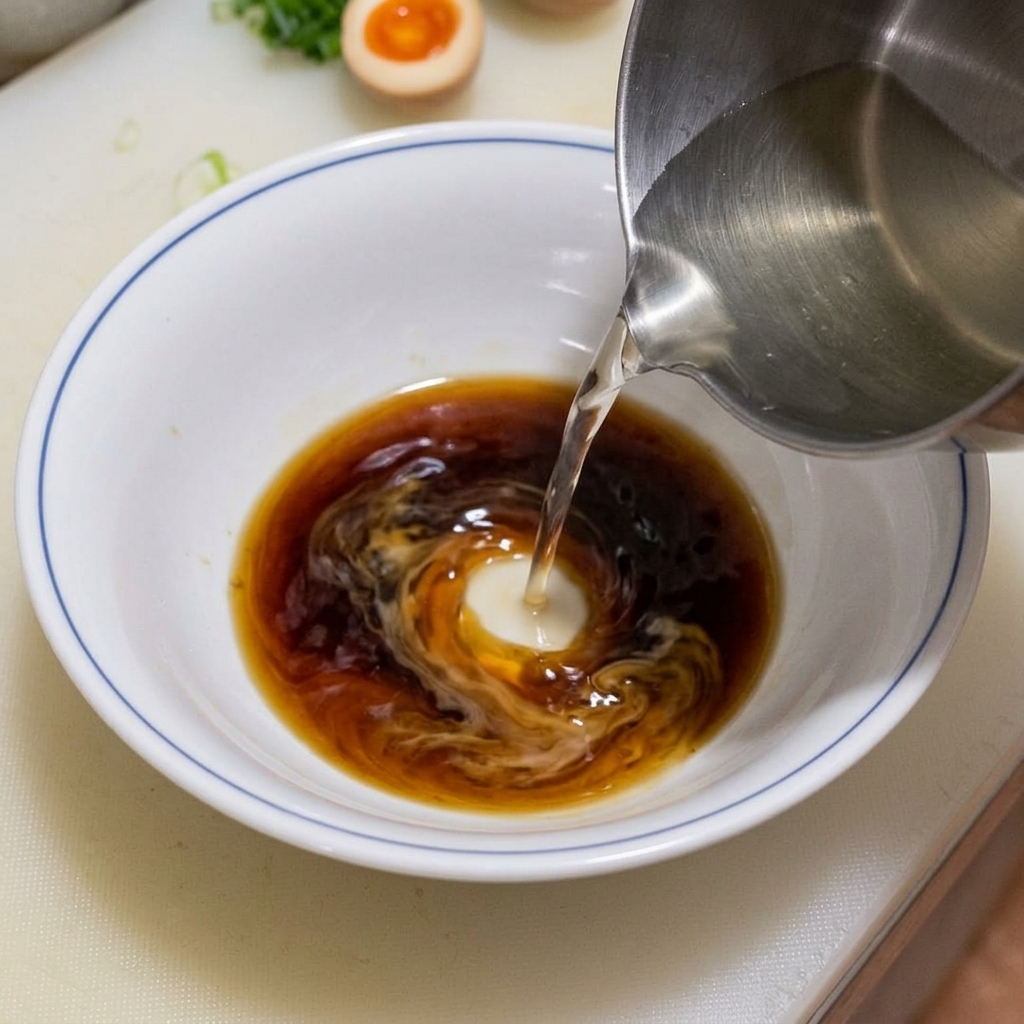
Into a serving bowl, add the prepared Shoyu tare along with a measure of chicken oil and shrimp oil. Carefully pour the hot, clear meat broth over the tare and oils. The hot broth will instantly meld with the concentrated tare, creating a fragrant and perfectly balanced Tokyo Shoyu soup base.
Tip: Preheat the ramen bowl with hot water before adding the tare and oils so that the final bowl of ramen stays piping hot from the first bite to the last.