Classic Japanese Shoyu Ramen
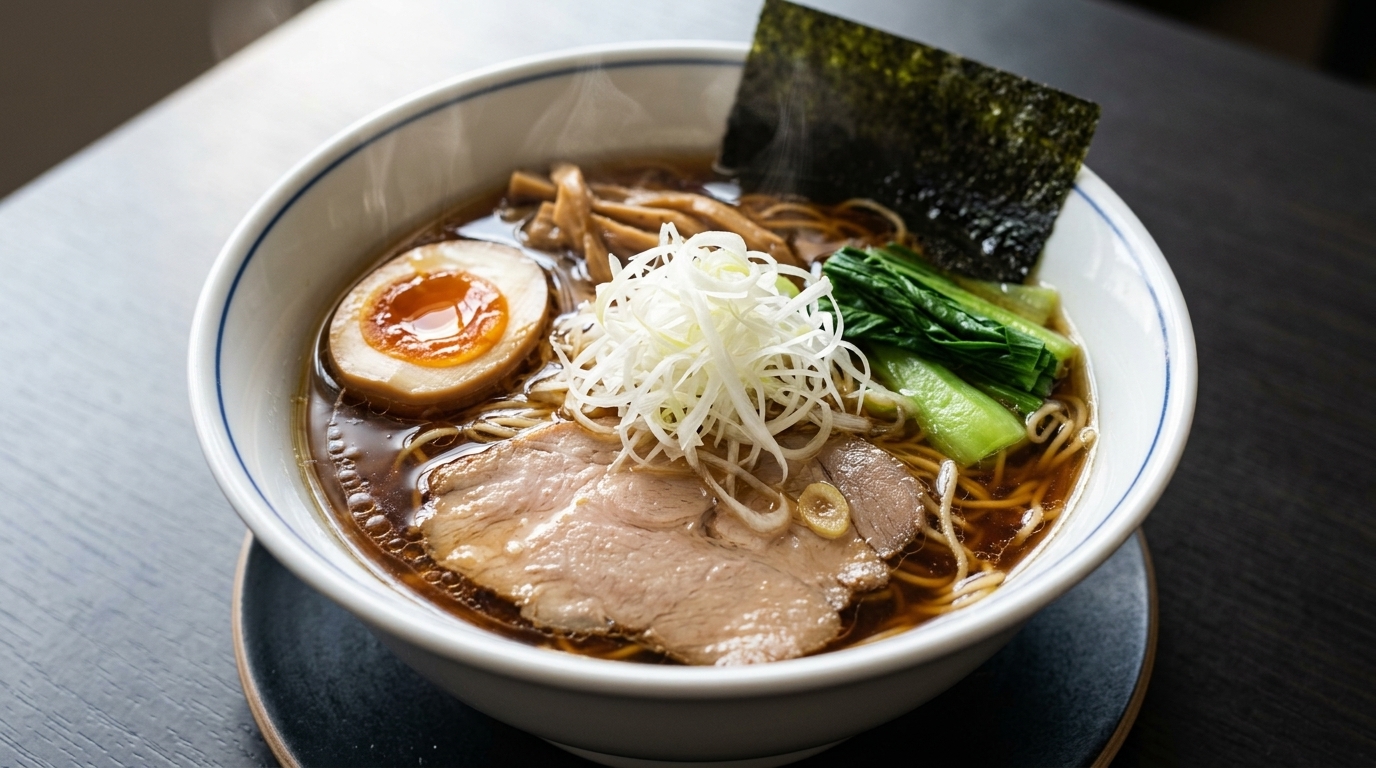
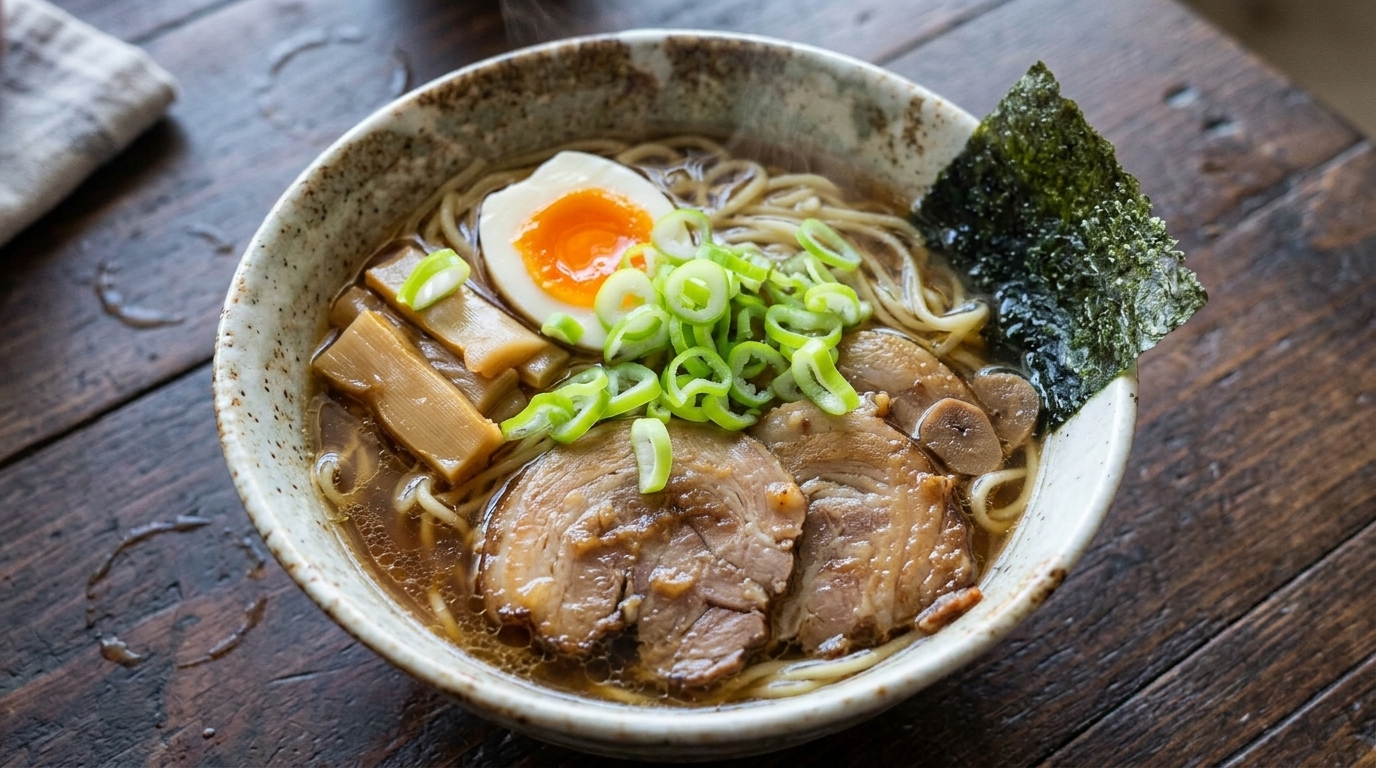
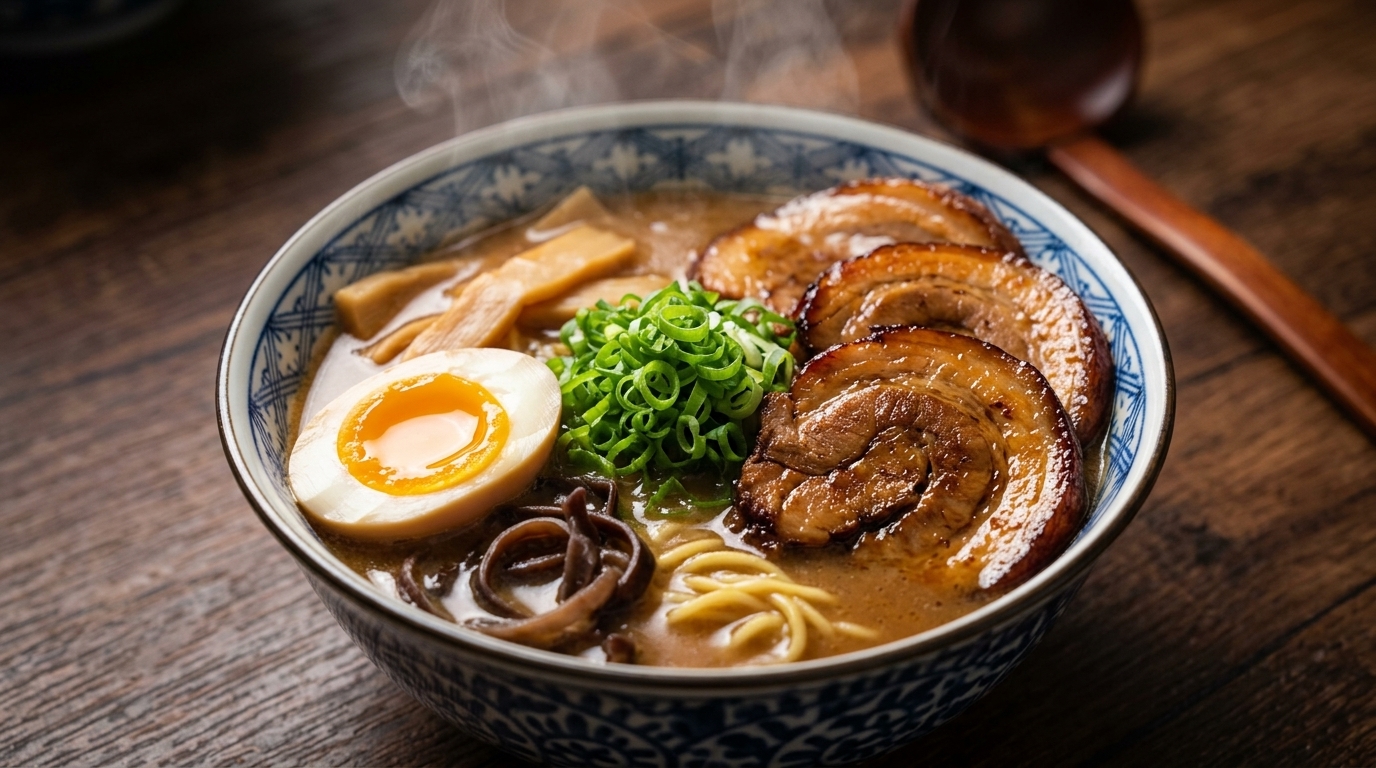
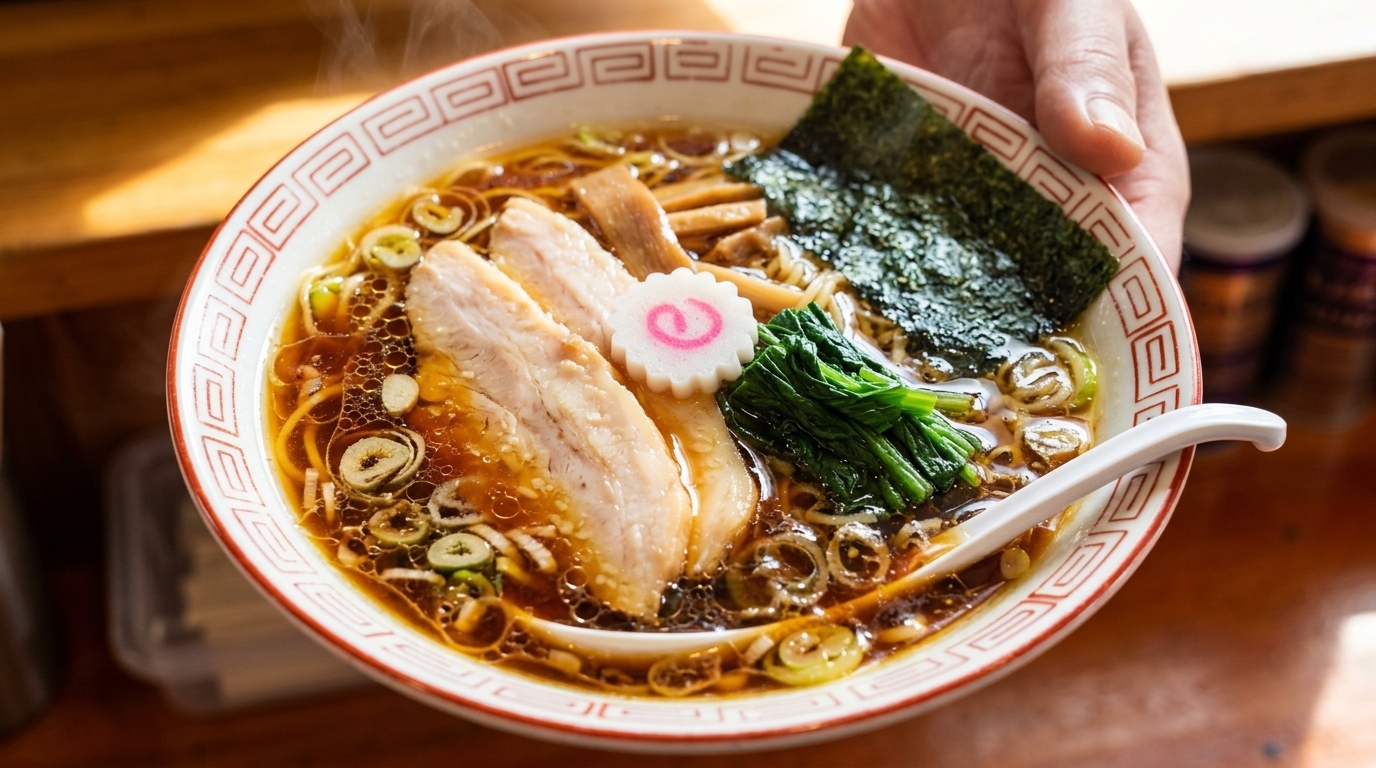
Experience the comforting depths of authentic Japanese Shoyu ramen. This classic bowl features a rich soy sauce broth, perfectly chewy noodles, and tender chashu pork.
Shoyu ramen is one of Japans most beloved and traditional noodle soups, defined by its clear, brown broth and deep umami flavor. Originating in Tokyo, it perfectly balances a light chicken or pork stock with a complex soy sauce tare. The beauty of this dish lies in its harmony, where every topping and drop of oil contributes to a perfectly balanced bowl.
Ingredients
- 2 tbsp shoyu tare (seasoned soy sauce base)
- 1 tsp ginger or garlic paste
- 400 ml clear chicken soup stock
- 1 portion fresh ramen noodles
- 2 slices cooked pork chashu
- 2 tbsp braised bamboo shoots (menma)
- 1 small handful blanched spinach
- 1 slice narutomaki fish cake
- 1 sheet nori seaweed
Instructions
- 1Add the flavor paste
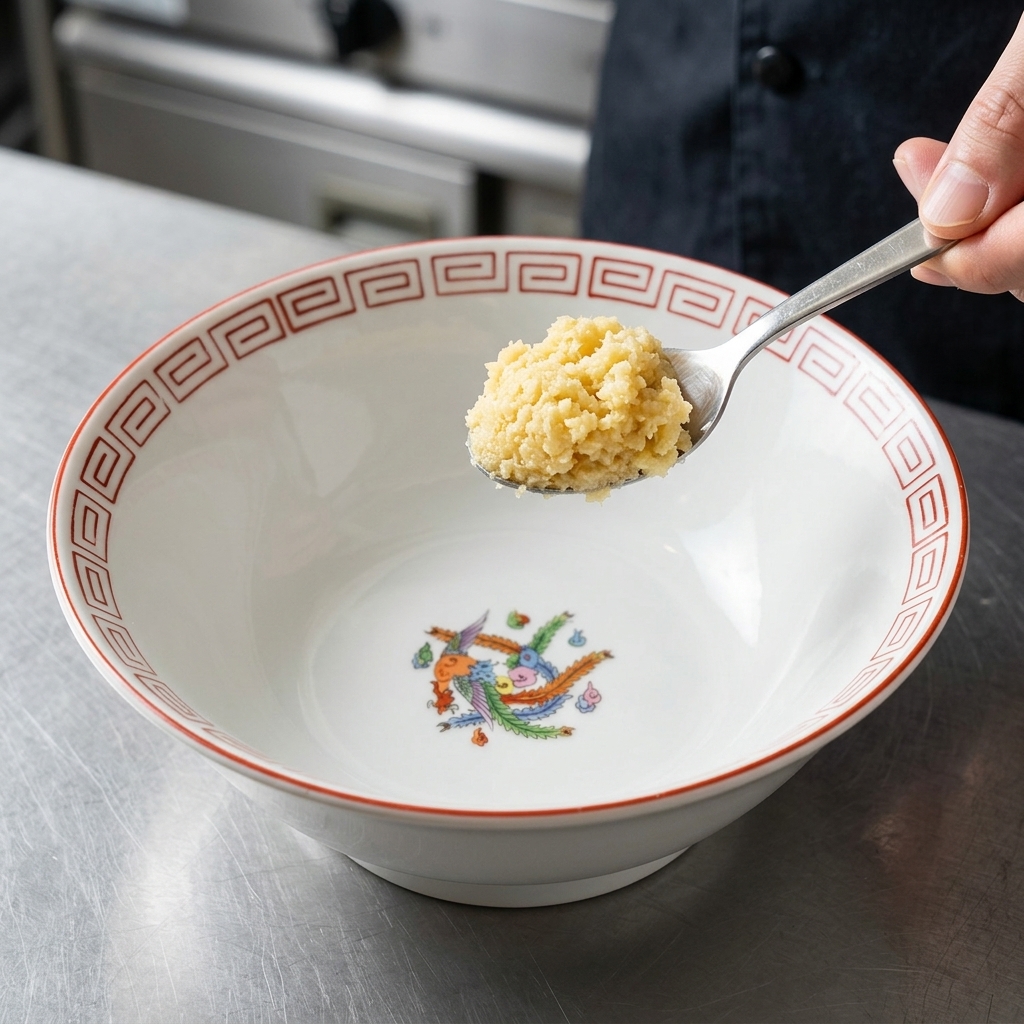
Begin building the ramens flavor foundation by placing a scoop of the special seasoning paste—typically minced ginger or garlic—directly into the bottom of an empty serving bowl.
Tip: Warming your serving bowl slightly before adding the ingredients helps keep the final bowl of ramen piping hot. - 2Pour the shoyu tare
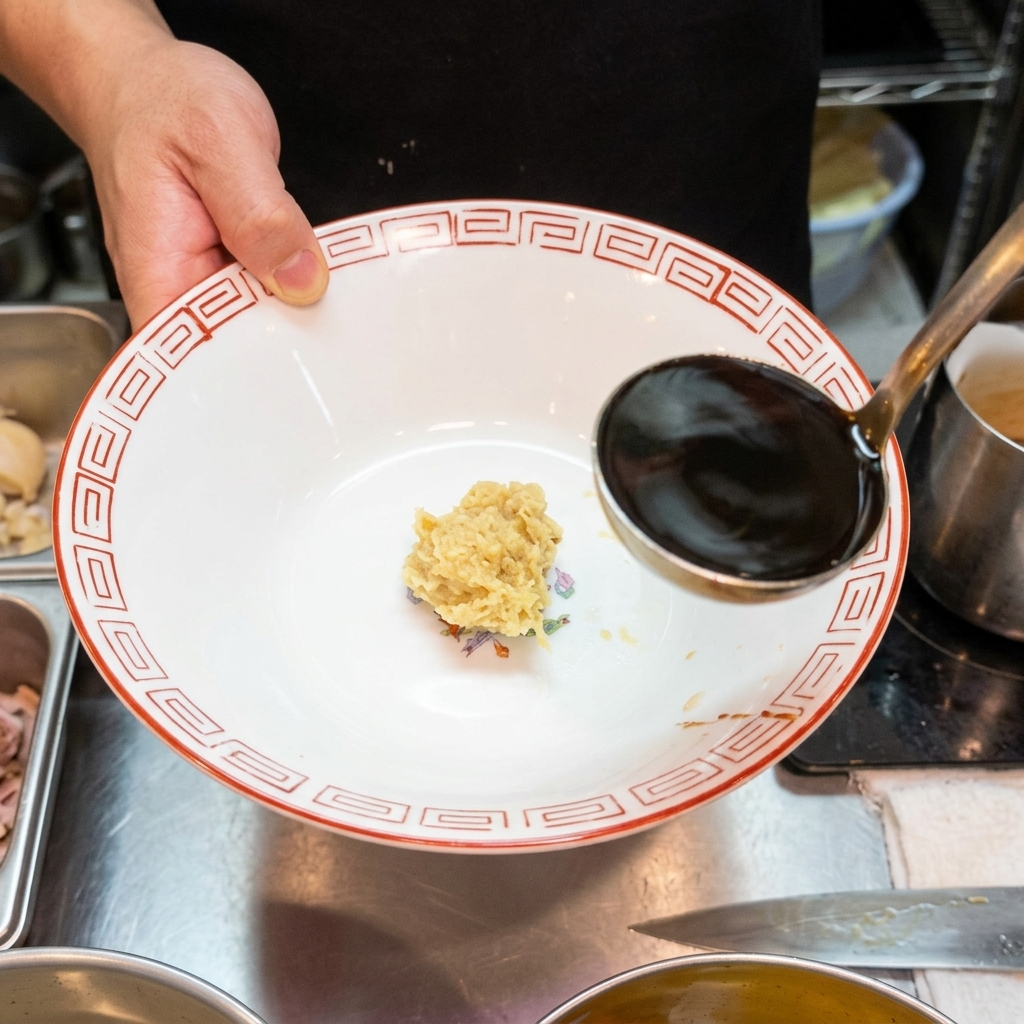
Pour the dark Japanese soy sauce mixture, known as the tare, from a ladle directly over the seasoning paste in the bowl. This concentrated sauce provides the deep umami core and the signature dark amber color of Shoyu ramen.
Tip: The tare is highly concentrated; be sure to measure your ladles accurately to avoid an overly salty broth. - 3Add the hot broth
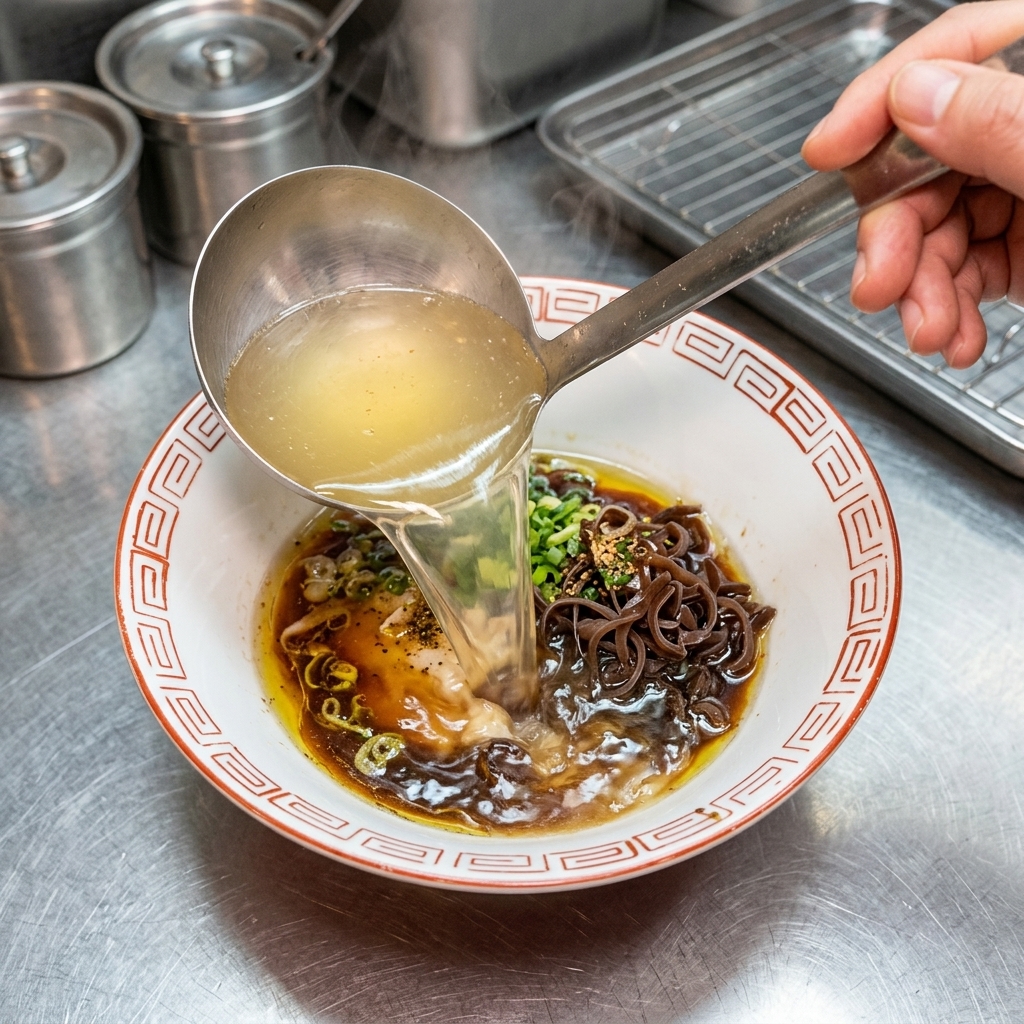
Pour the steaming hot, clear chicken soup base into the bowl to combine with the dark soy sauce and aromatics. The high heat of the broth instantly blooms the flavors of the tare, creating a rich and fragrant soup foundation.
Tip: Ensure the broth is at a rolling boil just before pouring so it perfectly emulsifies with the seasoning paste and tare. - 4Boil the fresh noodles
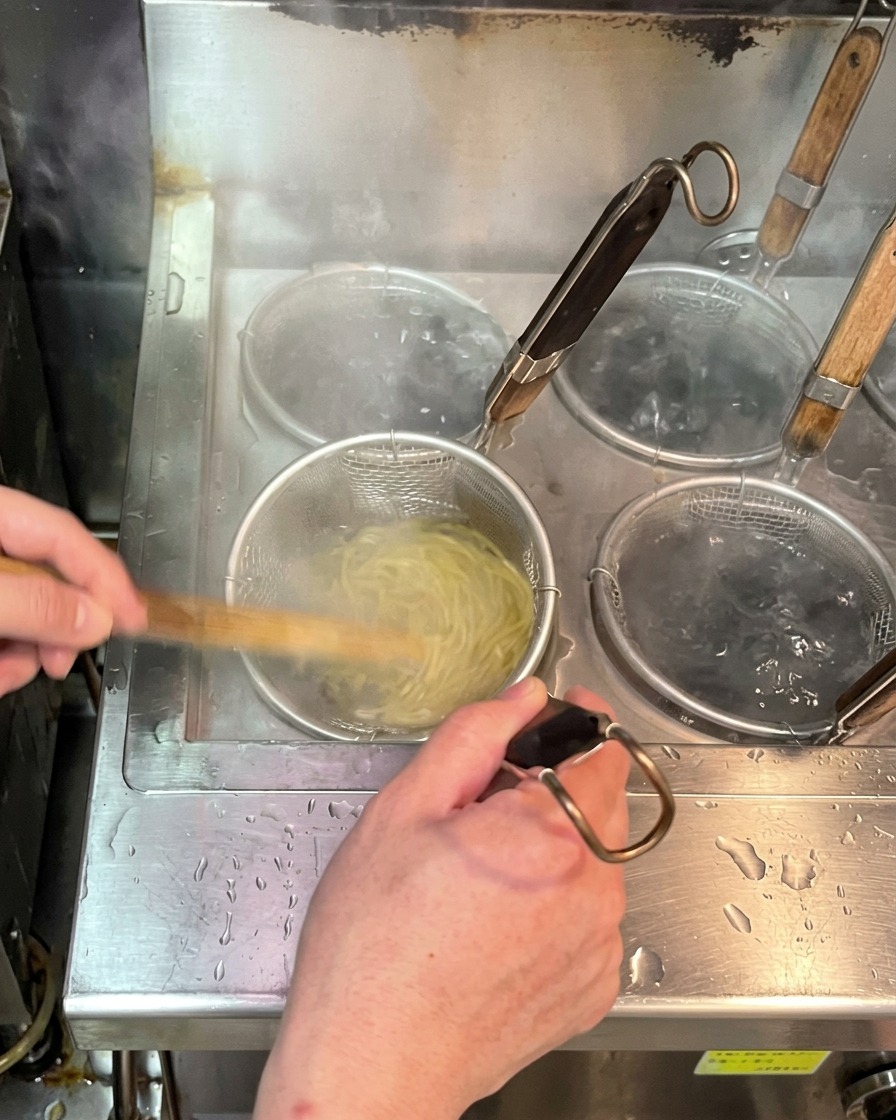
Place your fresh yellow ramen noodles into a wire noodle basket and submerge them entirely in a pot of vigorously boiling water. Use chopsticks or a bamboo stirrer to agitate the noodles immediately, preventing them from clumping together as they cook.
Tip: Cook the noodles slightly less than your desired doneness, as they will continue to soften once placed in the hot broth. - 5Drain the noodles thoroughly
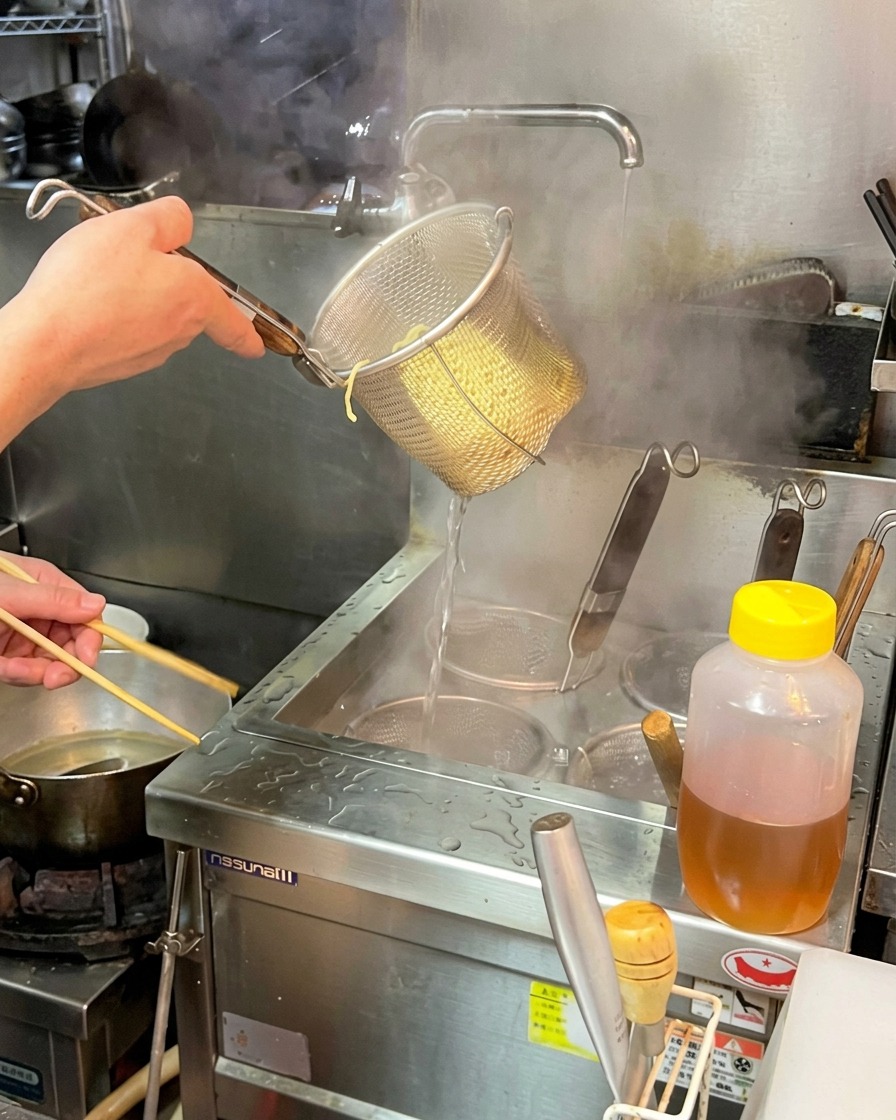
Once the noodles are perfectly cooked, promptly lift the wire basket out of the boiling water. Vigorously shake the basket several times over the sink or pot to drain off as much excess cooking water as possible.
Tip: Failing to drain the noodles completely can dilute your carefully balanced broth and alter the texture of the soup. - 6Fold in the noodles
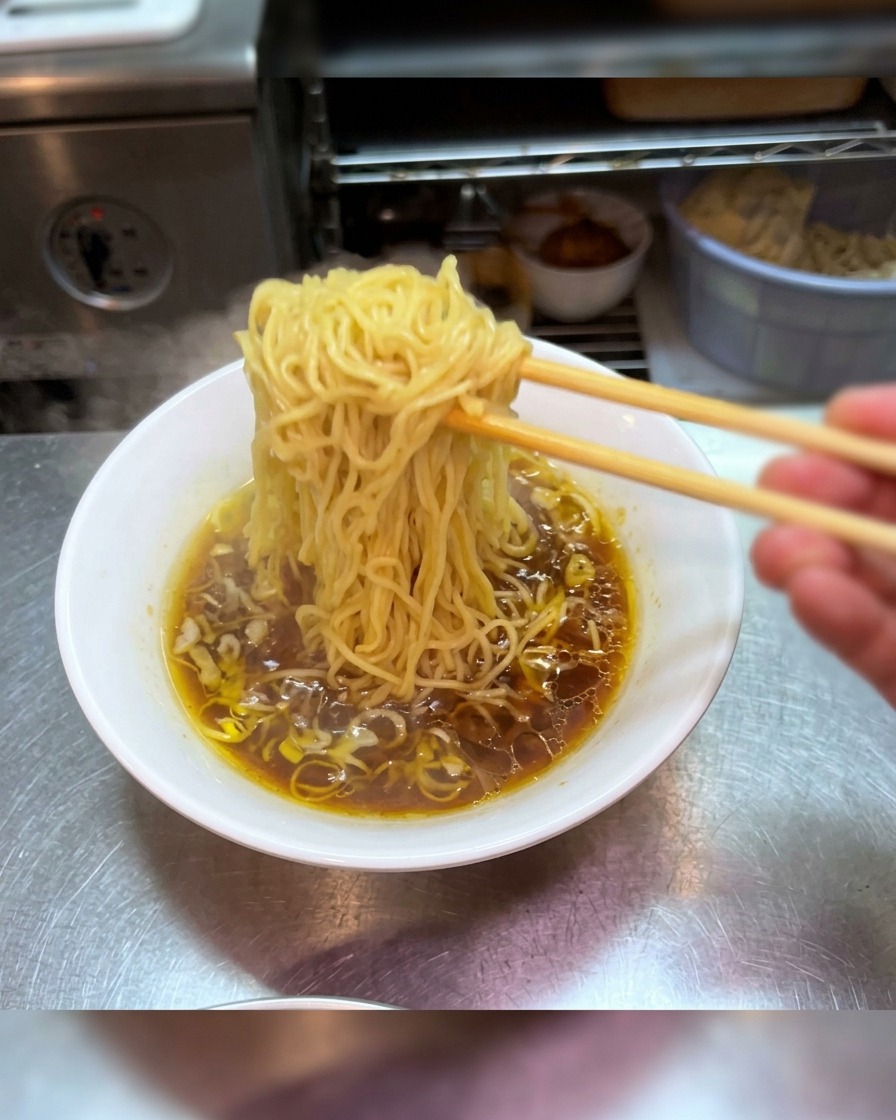
Carefully transfer the drained noodles into the hot broth. Use a pair of chopsticks to gently lift and fold them, untangling the strands to create a neat, elevated mound in the center of the bowl, allowing the toppings to sit beautifully on the surface.
Tip: Lifting and folding the noodles right after adding them prevents clumping and ensures an aesthetically pleasing presentation. - 7Slice the pork chashu
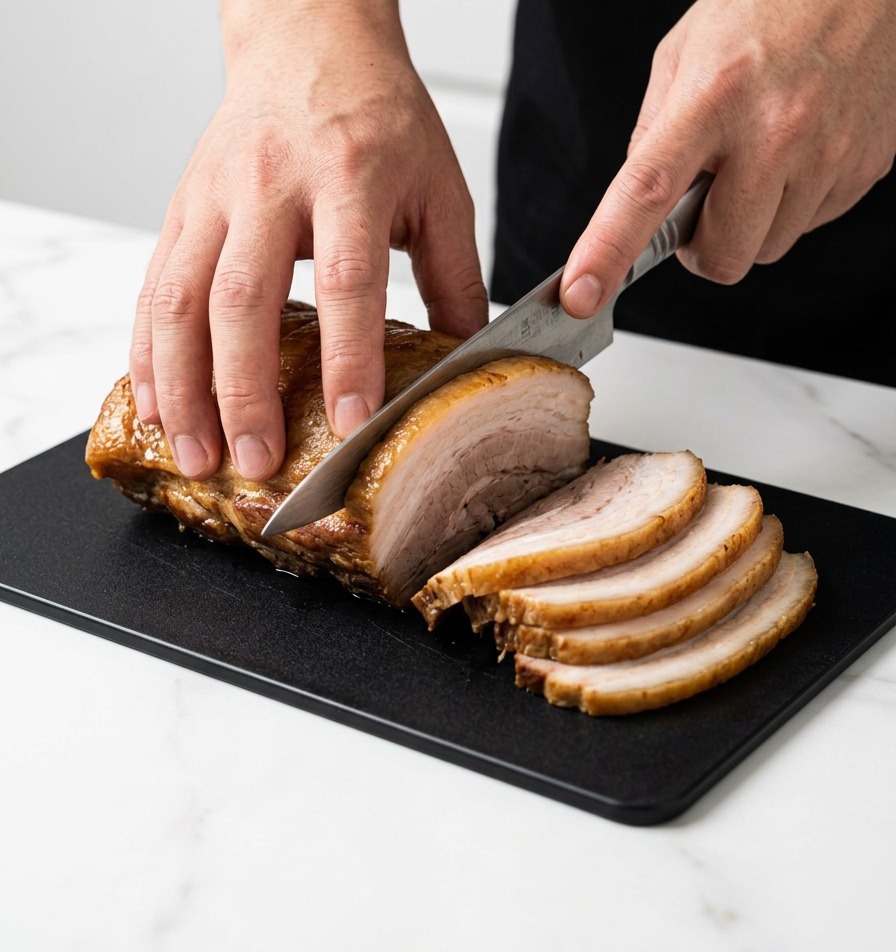
Transfer the cooked block of pork chashu to a cutting board. Using a sharp knife, carefully slice the meat into even pieces to prepare it for assembling the final ramen bowls.
Tip: Chilling the braised pork belly slightly in the refrigerator makes it much easier to slice cleanly without the tender meat falling apart. - 8Add the chashu
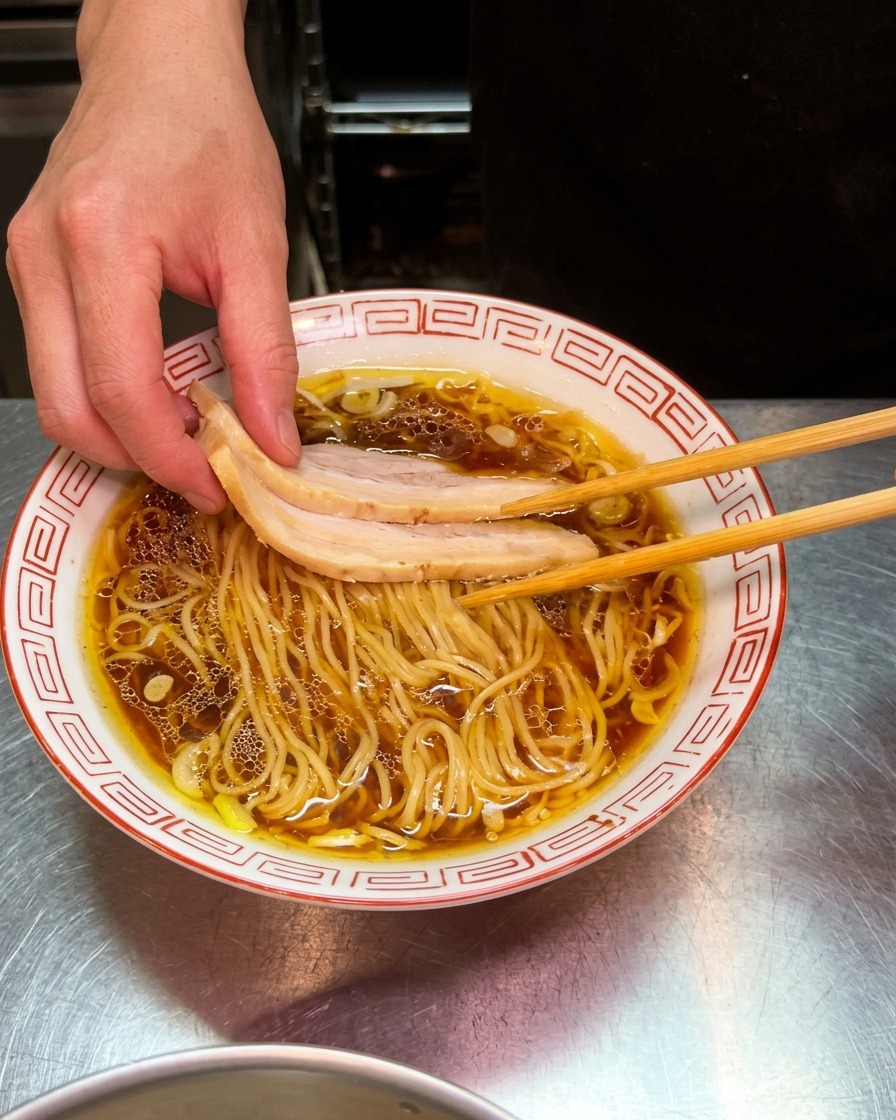
Carefully pick up the freshly sliced pork belly chashu and lay it gently over the neatly folded noodles. The heat from the hot broth will slightly warm the pork, melting its tender fat and integrating its rich flavors into the soup.
Tip: For an extra layer of flavor and aroma, you can briefly sear the chashu slices with a kitchen blowtorch before adding them to the bowl. - 9Finish with toppings
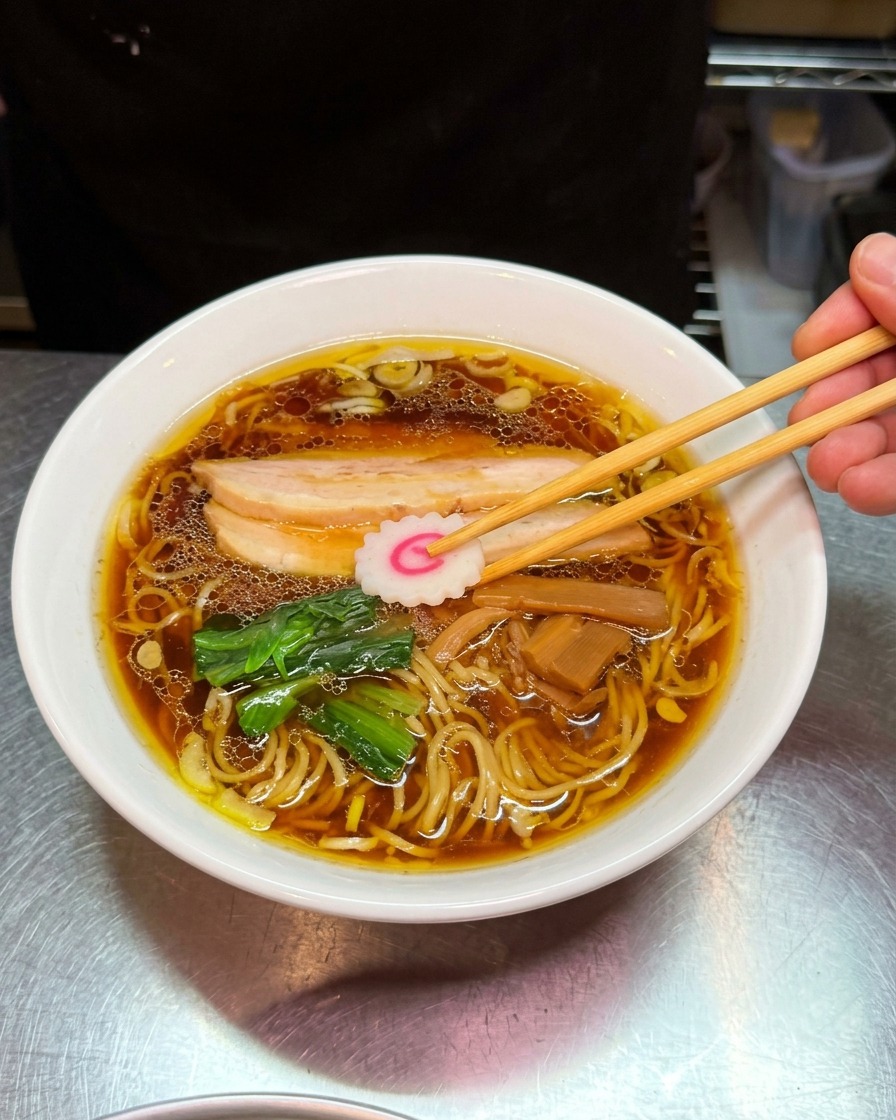
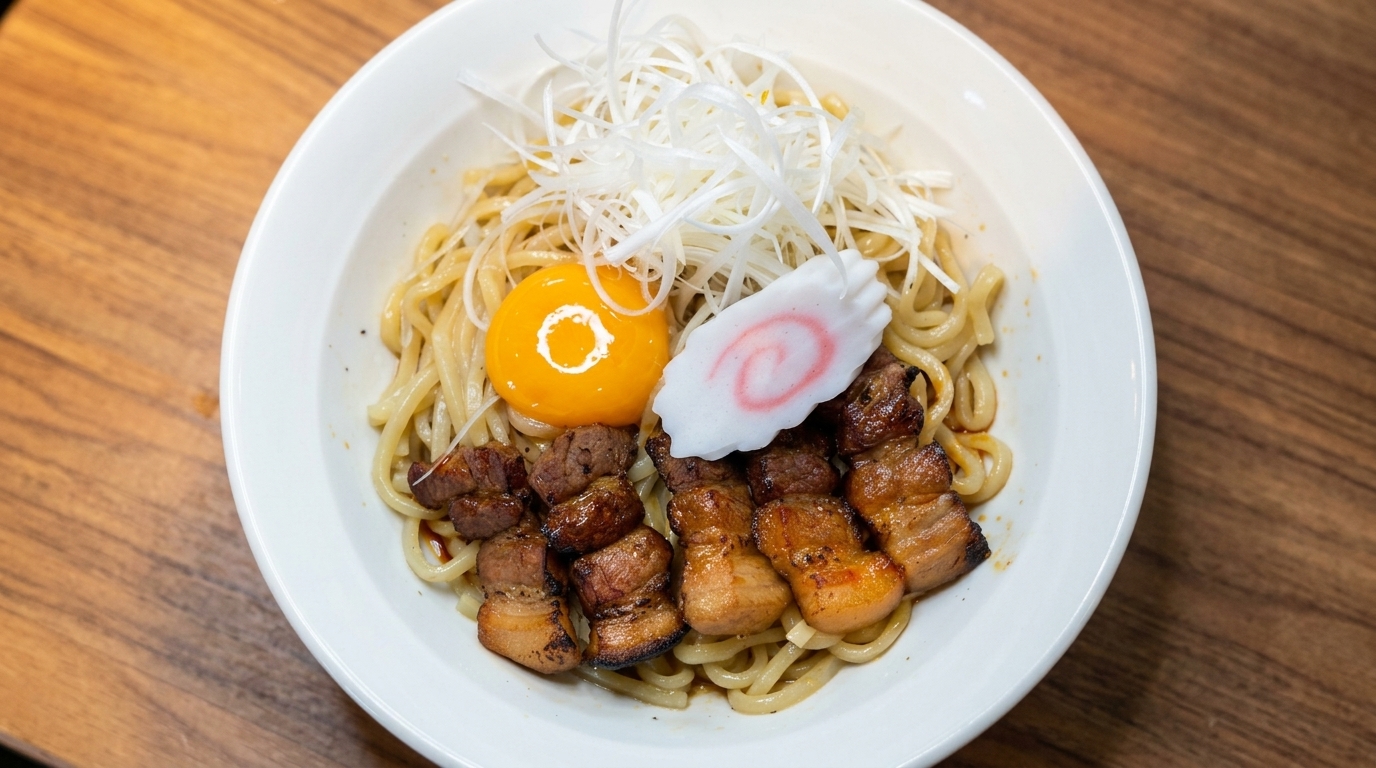
Complete the presentation by adding your blanched spinach, braised bamboo shoots, and nori seaweed, then placing a slice of narutomaki in the center of the bowl. The vibrant white and pink swirl adds a classic visual pop to the dish.
Tip: Prepare all your toppings in advance so you can assemble the bowl quickly while the noodles and broth are still piping hot.