Japanese Soy Milk Miso Dipping Noodles (Tsukemen)
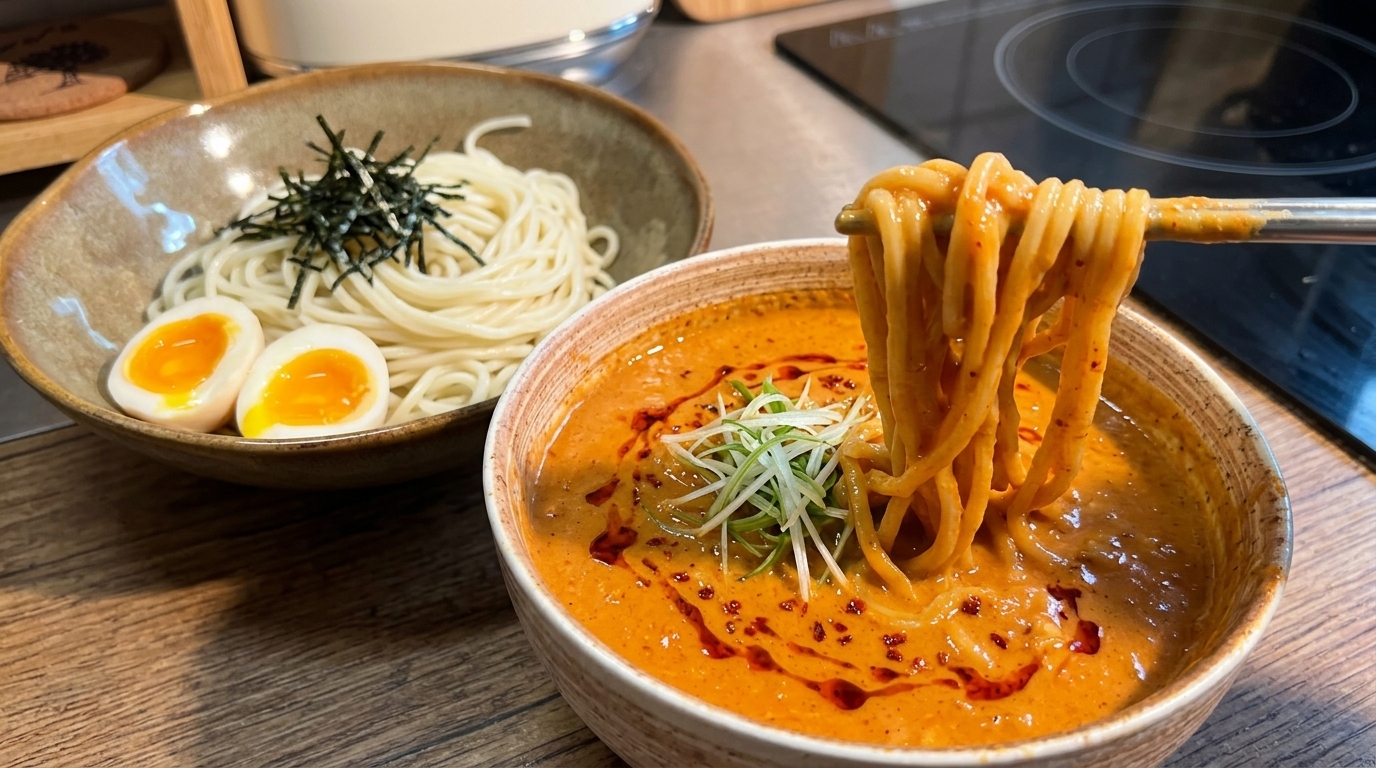
Experience the ultimate comfort in a bowl with this creamy, savory miso and soy milk dipping sauce paired with chilled ramen—a perfect 15-minute Japanese fusion dinner.
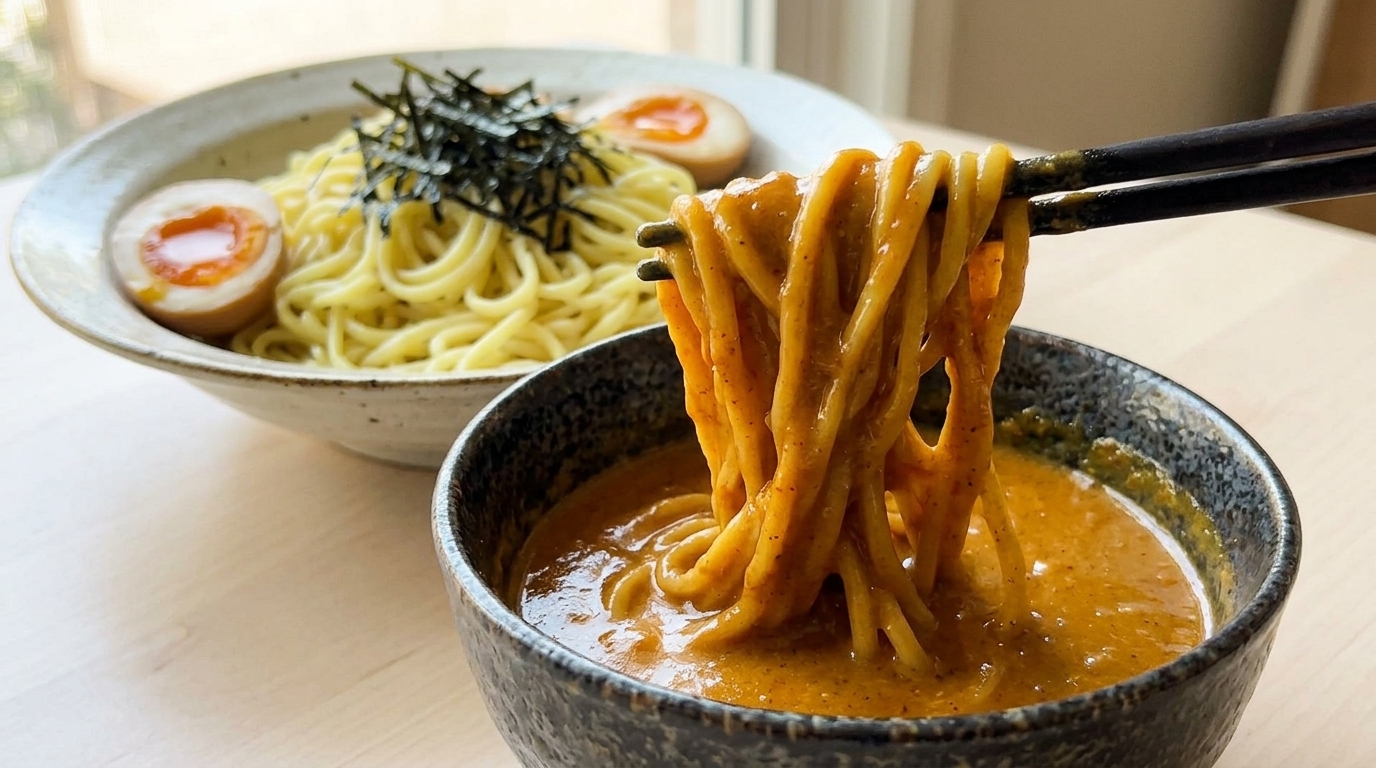
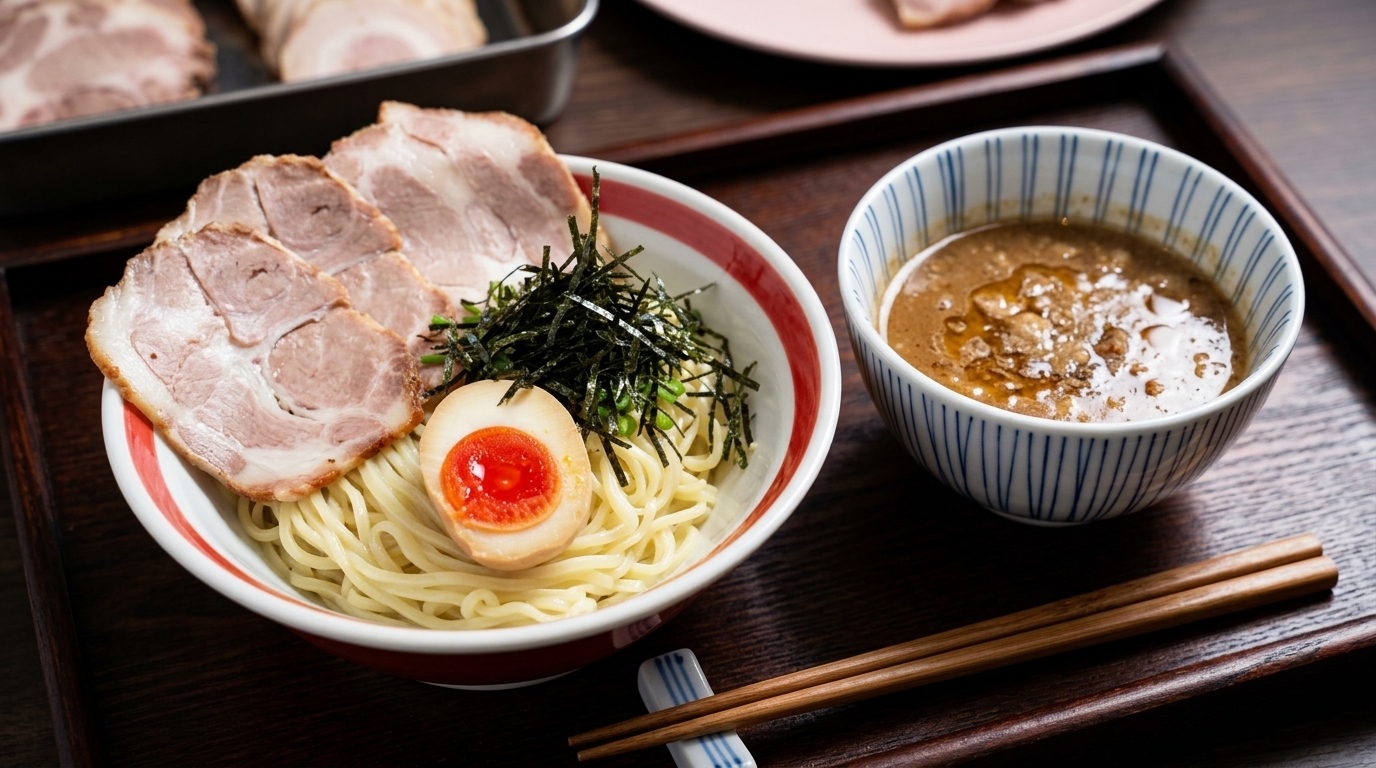
Tsukemen or dipping noodles offers a unique way to enjoy ramen by separating the cold chewy noodles from a concentrated flavor-packed broth. This version uses a base of creamy soy milk and fermented miso creating a rich velvety texture that clings to every strand. It is a modern Japanese home-cooking favorite that balances deep umami with refreshing simplicity.
Ingredients
- 1 portion Japanese ramen noodles
- 100 g minced pork
- 200 ml unsweetened soy milk
- 1 tbsp red miso paste
- 1 tbsp chili bean paste (Doubanjiang)
- 1 egg
- 2 stalks green onion
- 12 tsp white pepper
- 1 tsp chili powder
- 1 tbsp roasted peanuts
- 1 tsp roasted sesame seeds
- 1 sheet dried seaweed (nori)
- 1 tsp cooking oil
Instructions
- 1Heat the oil
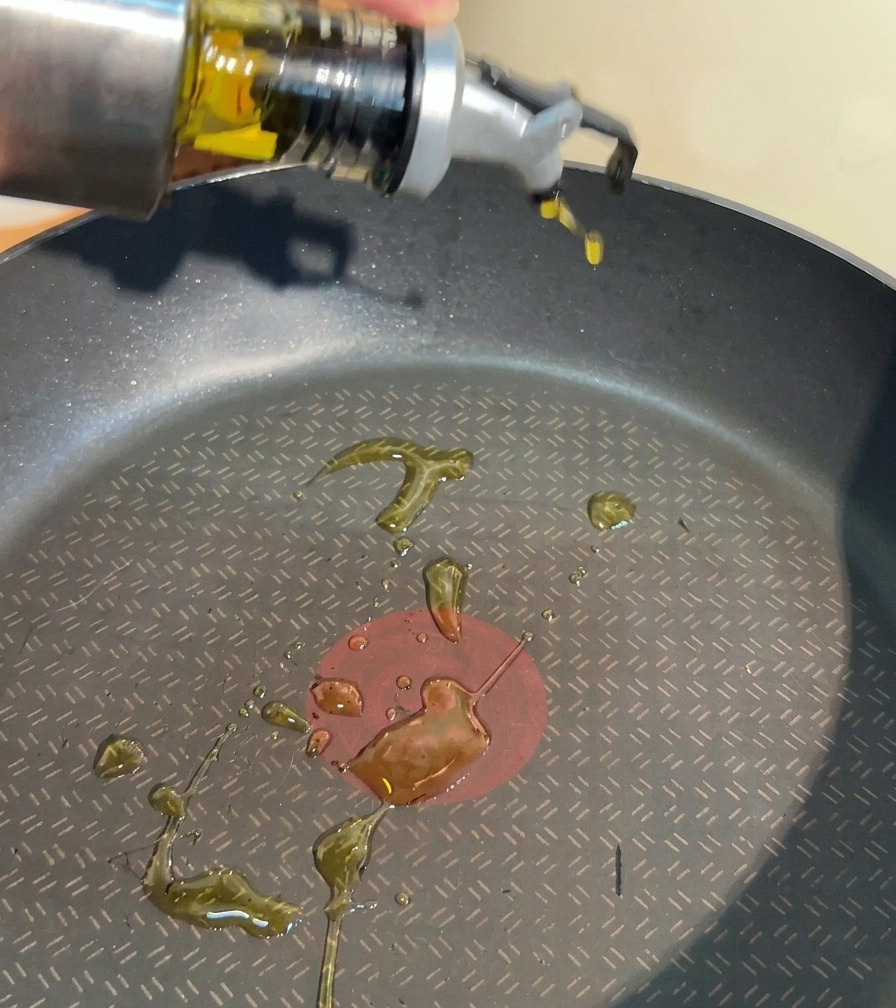
Begin by placing a clean dry frying pan over medium heat. Carefully pour in a small amount of cooking oil ensuring it coats the bottom of the pan evenly as it heats up to prepare for frying the aromatics.
Tip: Wait until the oil shimmers slightly before adding ingredients to prevent sticking and ensure a better release of flavors. - 2Fry the chili bean paste
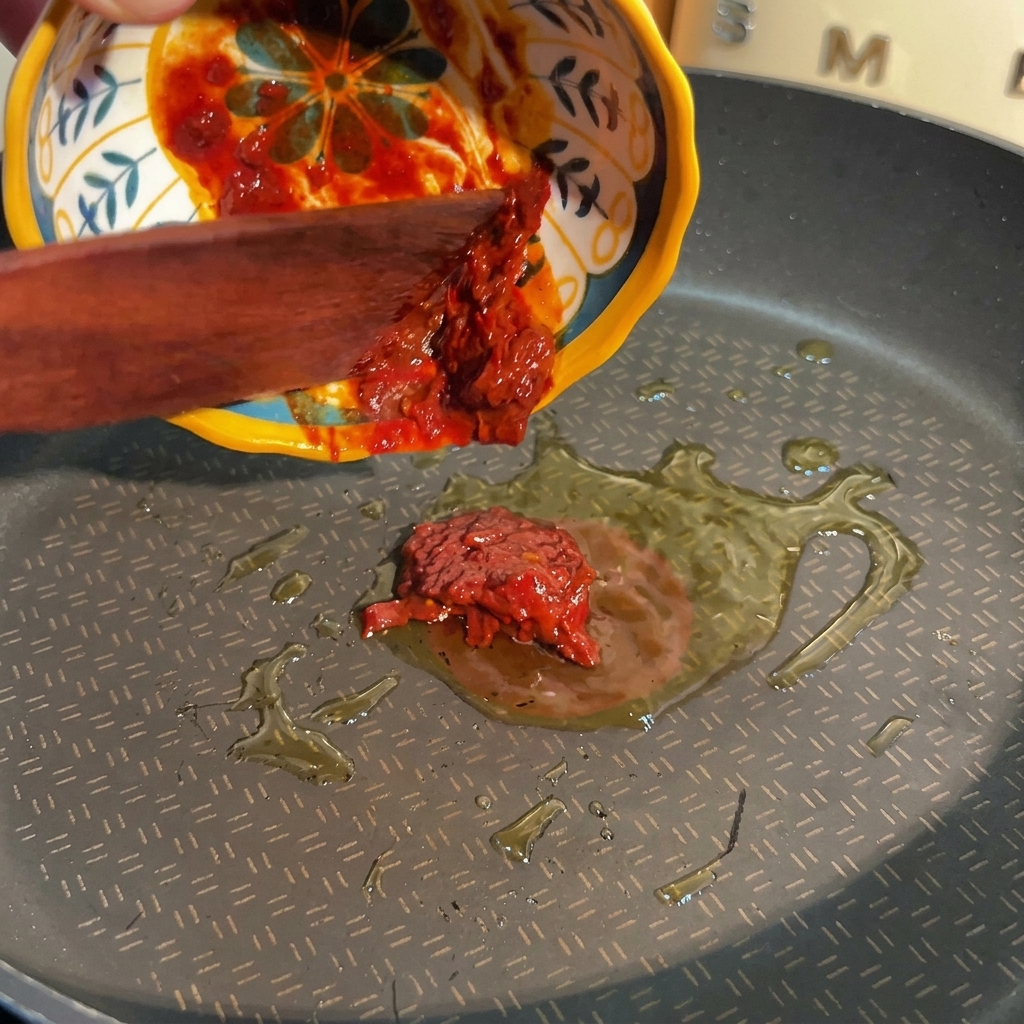
Add a generous scoop of chili bean paste into the heated oil. Stir fry the paste continuously until it becomes fragrant and the red oil begins to separate, which forms the savory and spicy base of the dipping sauce.
Tip: Keep the heat at medium to avoid burning the paste, as burnt bean paste can turn bitter very quickly. - 3Sauté the green onions
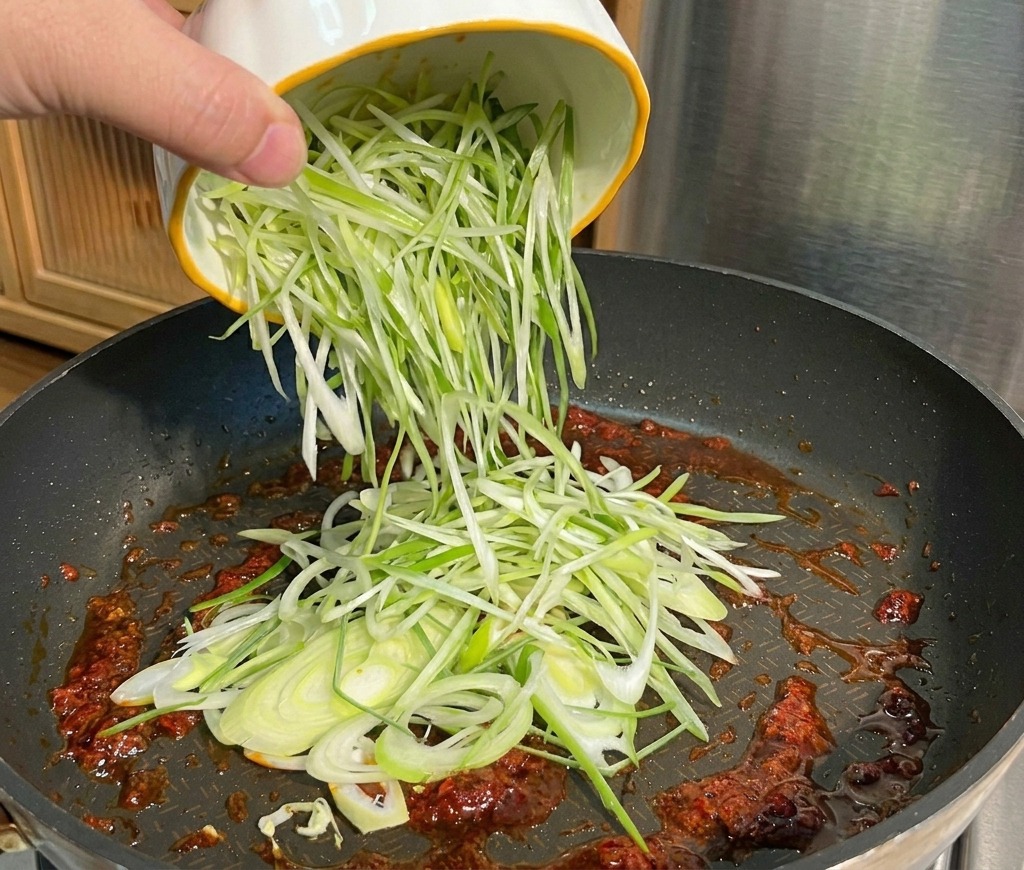
Incorporate a bowl of finely julienned green onion silk into the pan with the sizzling bean paste. Stir well to combine, allowing the onions to soften slightly and infuse their fresh aroma into the oil.
Tip: Julienne the onions as thinly as possible to ensure they blend seamlessly into the final sauce texture. - 4Add the minced pork
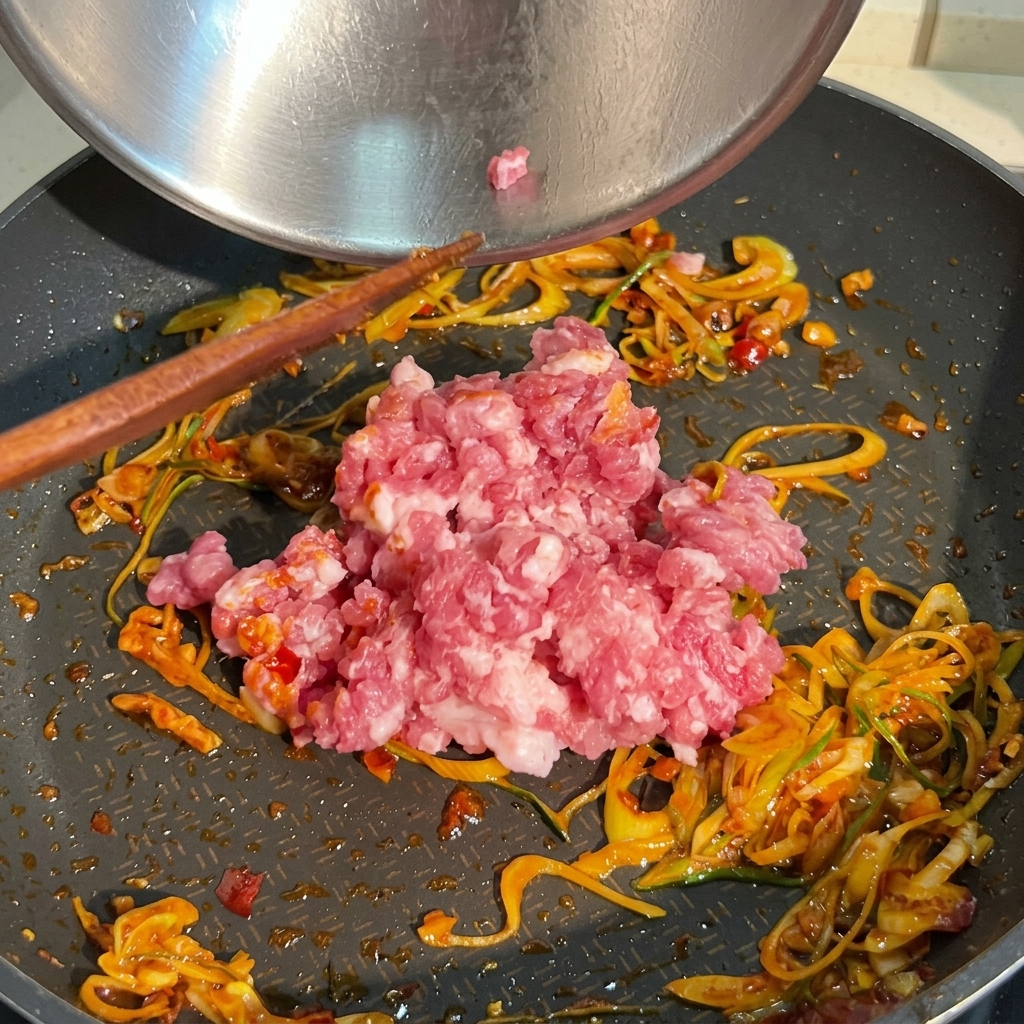
Place the raw minced pork into the pan along with the sautéed onions and sauce base. Use a spatula to break up the meat clusters, ensuring the pork is evenly distributed and fully coated in the aromatic sauce.
Tip: Breaking the meat into smaller crumbles ensures that every bite of the final dipping sauce has a consistent texture and flavor. - 5Season the meat
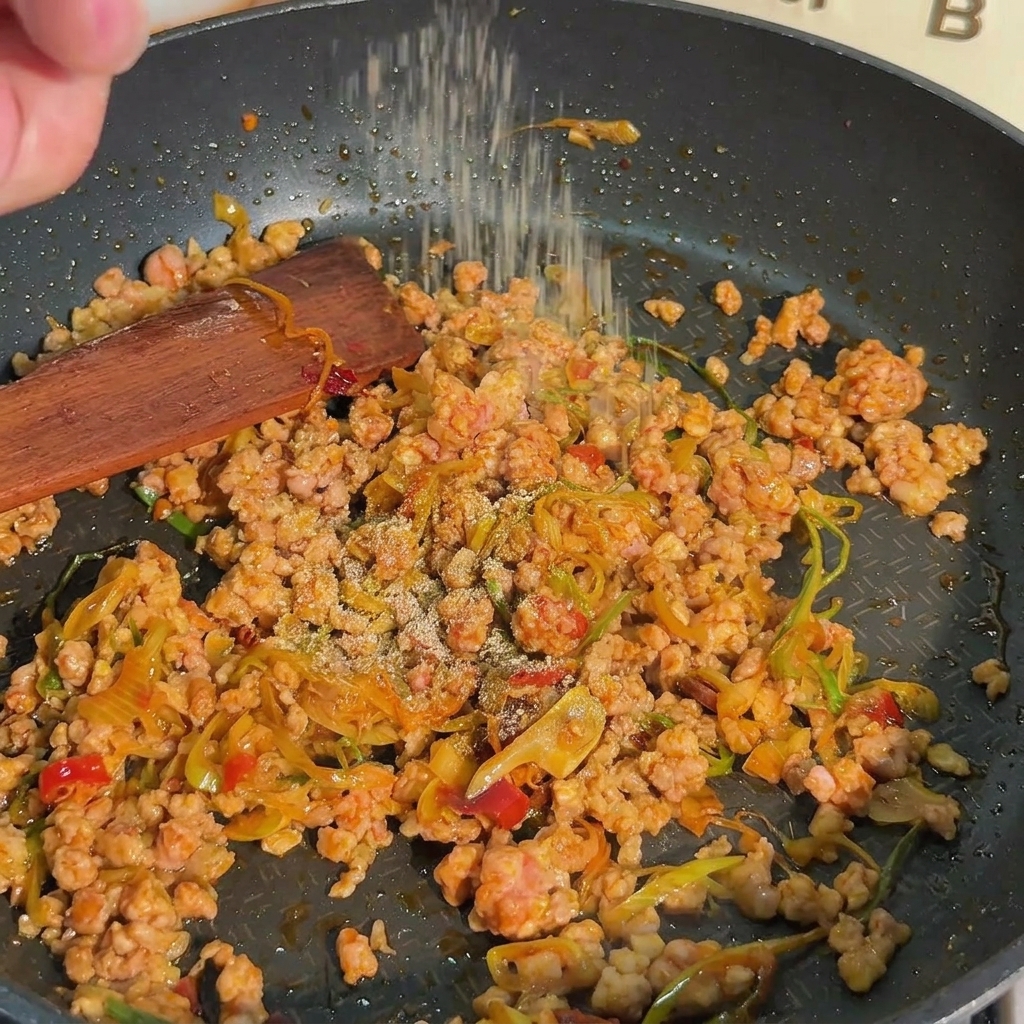
Add white pepper and a spoonful of miso sauce to the pan with the browned minced pork. Stir-fry everything together evenly so the meat is well-coated and infused with the savory, fermented depth of the miso.
Tip: If your miso is very thick, you can mash it slightly with your spatula to help it incorporate into the meat more quickly. - 6Pour in the soy milk
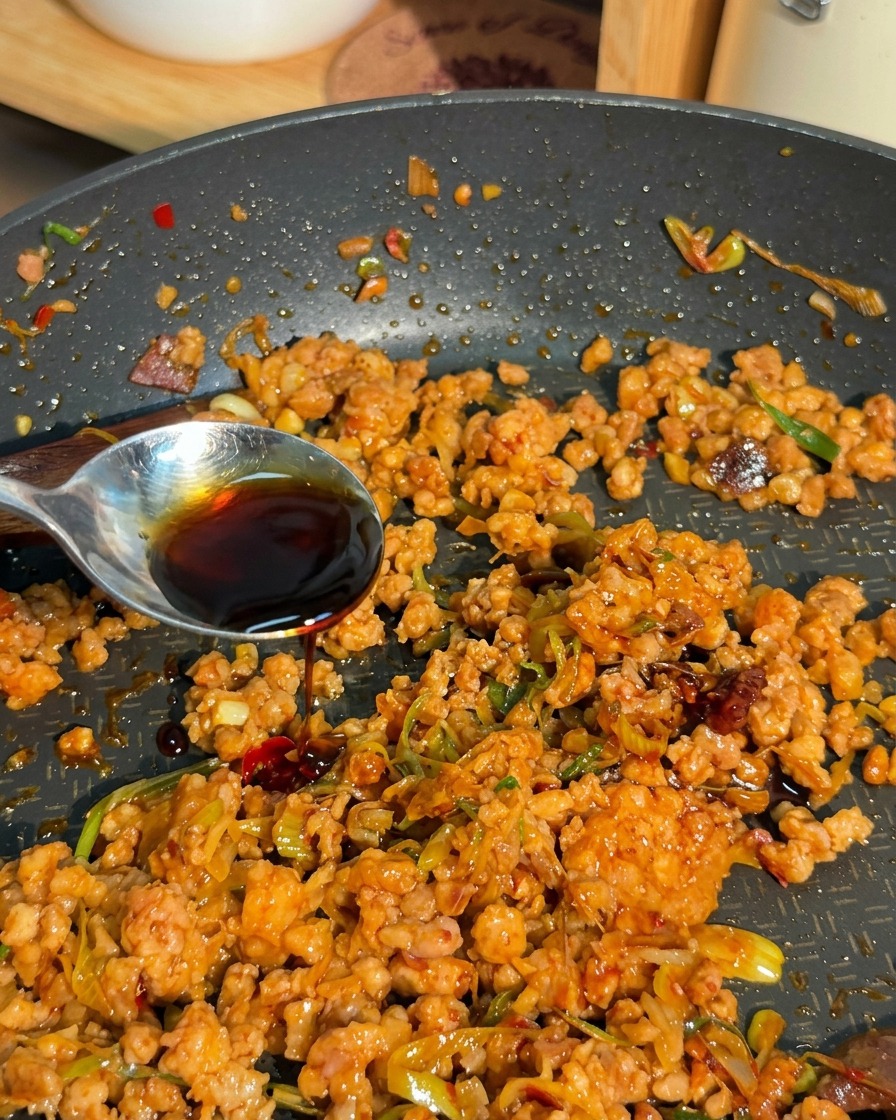
Pour fresh soy milk into the pan with the cooked meat and seasonings. This creates a rich, creamy consistency and adds a delicate bean fragrance that balances the saltiness of the miso and bean paste.
Tip: Use unsweetened soy milk for the best savory flavor; sweetened versions will alter the intended profile of the dish. - 7Simmer the dipping sauce
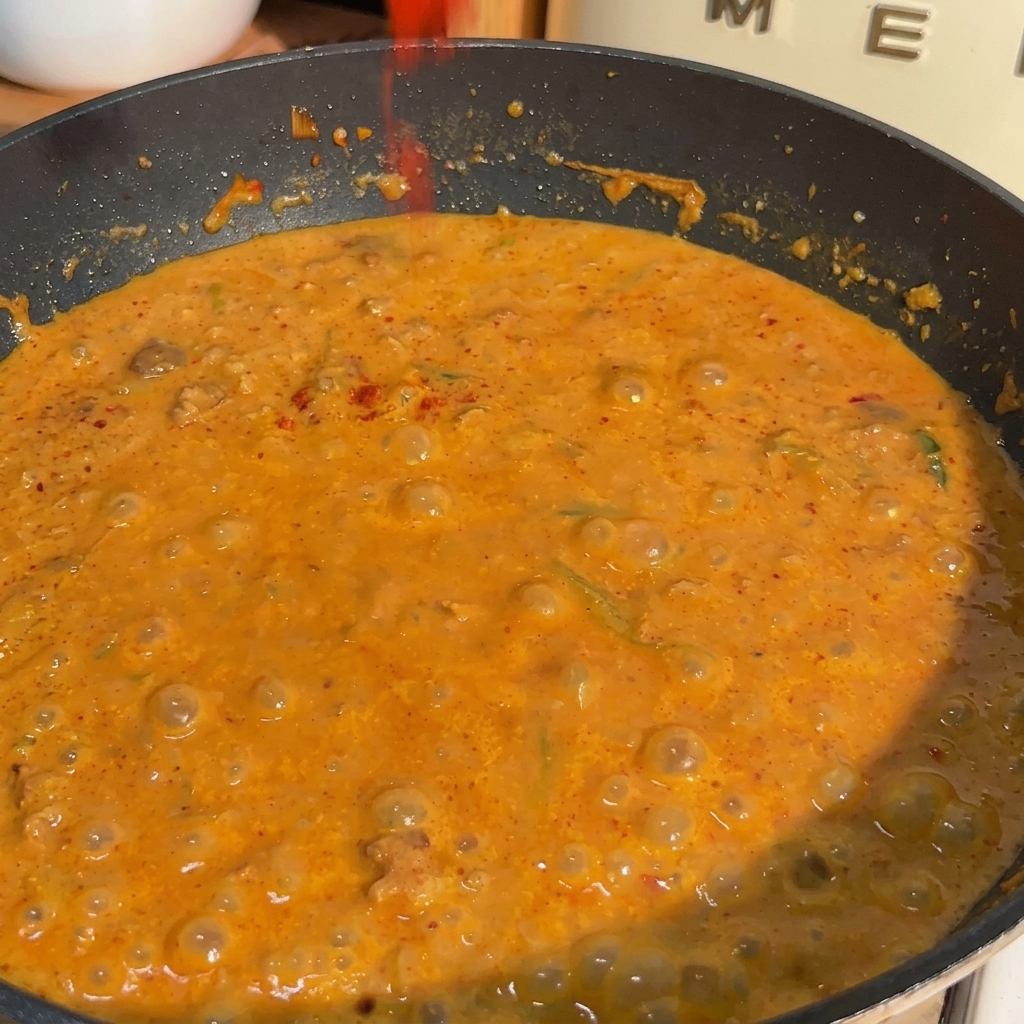
Add red chili powder to the simmering orange sauce to introduce a gentle heat and vibrant color. Continue to cook the mixture until it thickens slightly, allowing the flavors of the miso, soy milk, and spices to meld together perfectly.
Tip: Adjust the amount of chili powder to your preference; you can add more for an extra kick or keep it mild for a smoother flavor. - 8Serve the dipping sauce
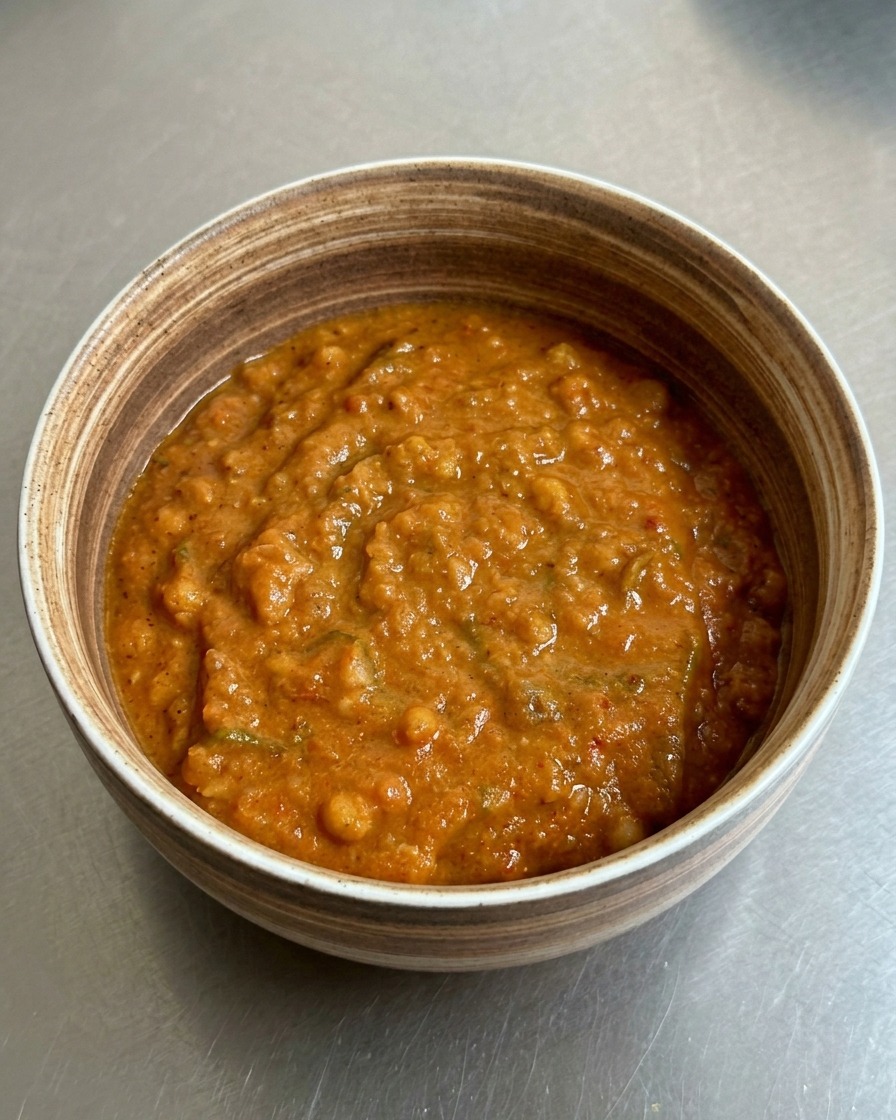
Once the sauce has reached a thick, creamy consistency, transfer it into a ceramic serving bowl. The sauce should be fragrant with the scent of soy milk, meat, and miso, ready to coat the ramen noodles.
- 9Boil the ramen
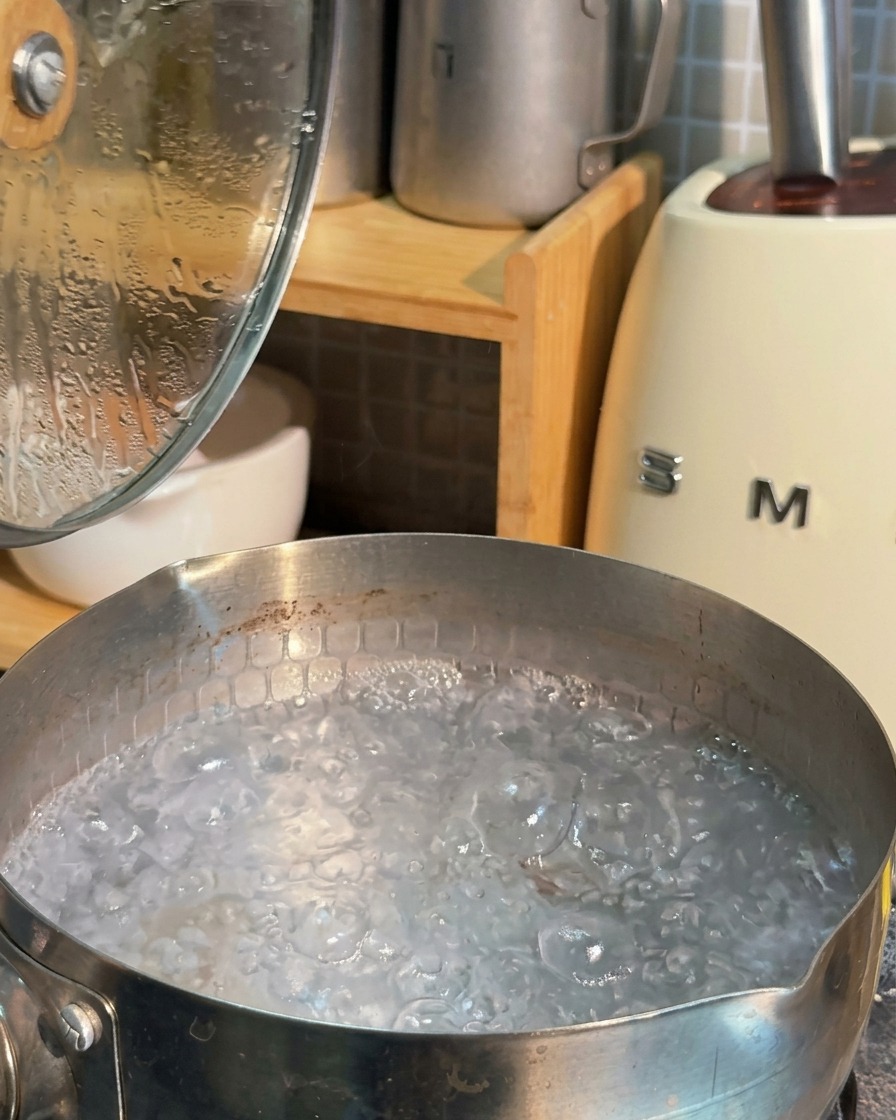
Bring a pot of water to a vigorous boil and add the Japanese ramen noodles. Cook for about 5 minutes, or until the noodles are tender but still retain a slight bite.
Tip: Keep an eye on the pot to ensure the water doesnt boil over; you can add a splash of cold water if the foam rises too high. - 10Refresh the noodles
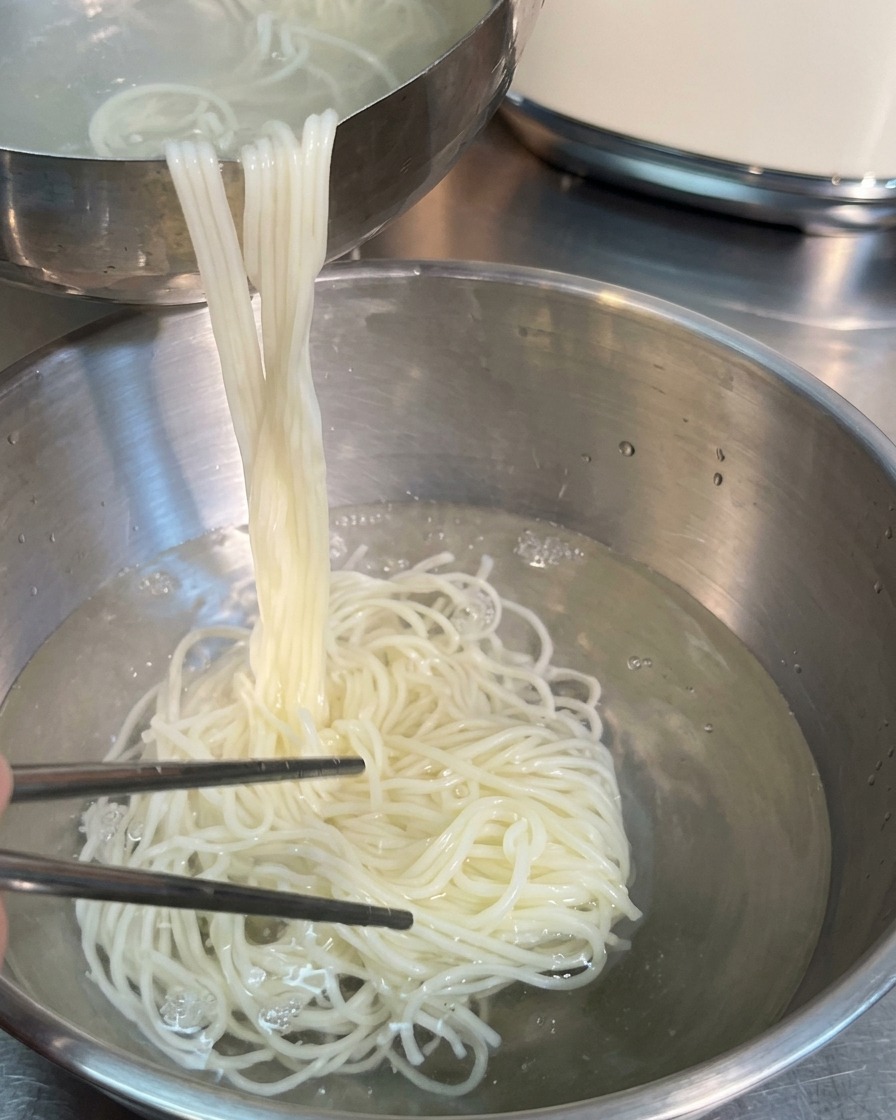
Use chopsticks to lift the cooked noodles out of the hot water and immediately plunge them into a bowl of cold water. Rinsing them in cold water stops the cooking process and gives the ramen a better, chewier texture.
Tip: Make sure the water is very cold to effectively remove the surface starch from the noodles. - 11Prepare the nutty topping
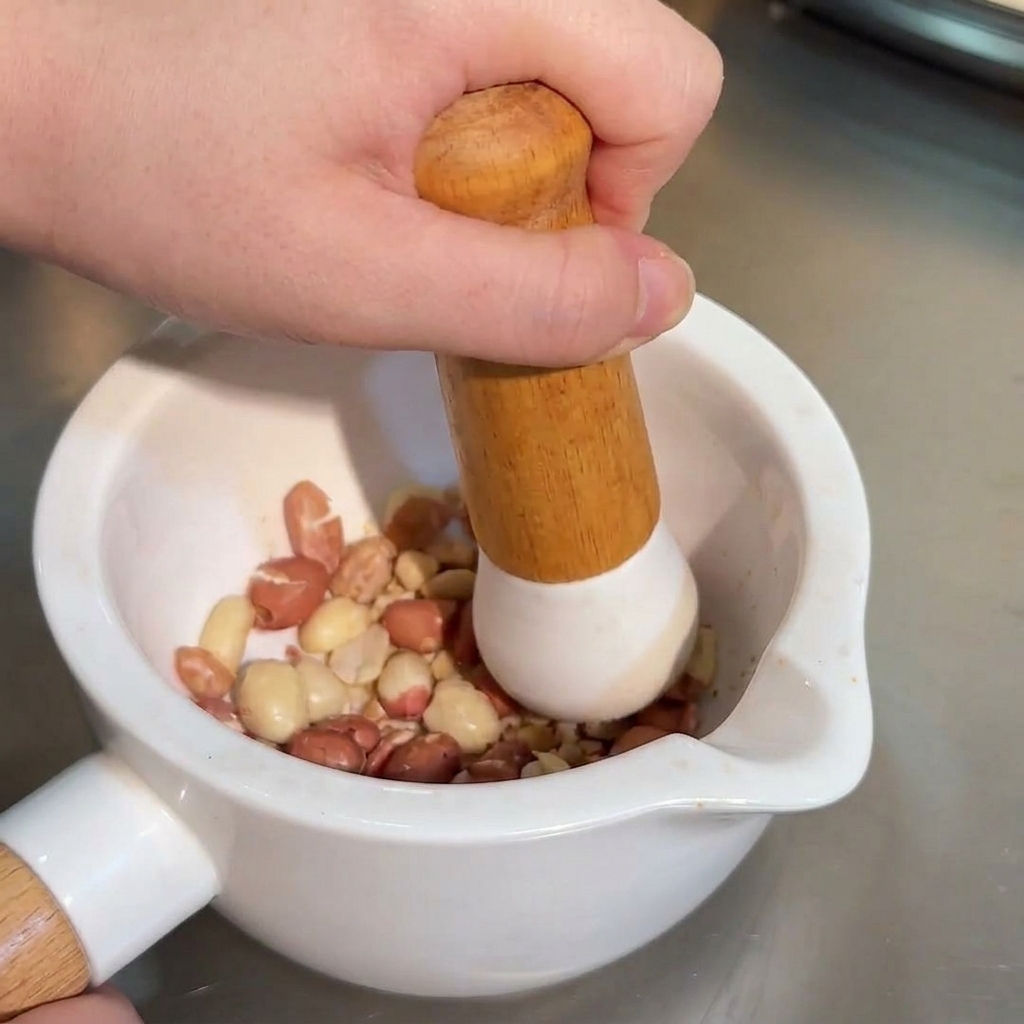
Place roasted peanuts and sesame seeds into a mortar and use a pestle to grind them into a coarse powder. This will add a crunchy texture and an extra layer of nutty fragrance to the final dish.
Tip: If you dont have a mortar and pestle, you can put the nuts in a bag and crush them with a rolling pin, or simply use peanut butter. - 12Prepare the soft-boiled egg
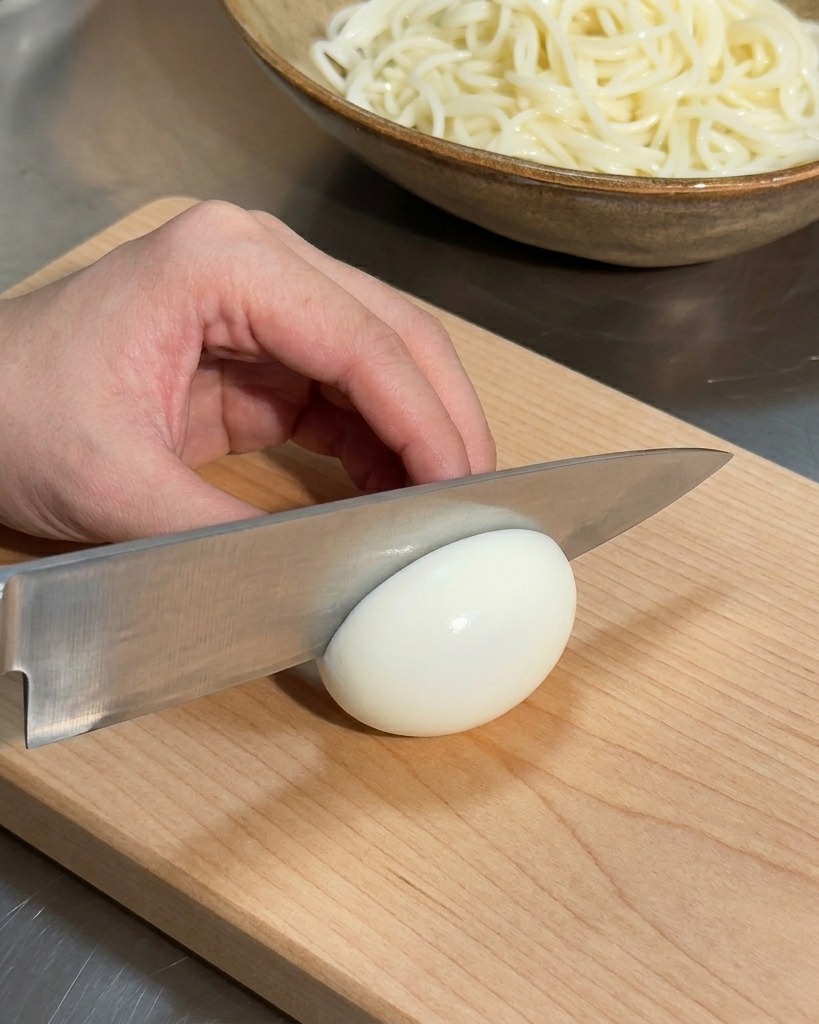
Carefully peel a soft-boiled egg, ensuring the whites remain smooth and intact. Use a sharp knife to slice the egg in half, revealing a perfectly set white and a rich, runny golden yolk that will add creaminess to your noodles.
Tip: To get a clean cut on a soft-boiled egg, you can dip your knife in warm water or use a piece of unflavored dental floss for a precise slice. - 13Assemble the noodle bowl
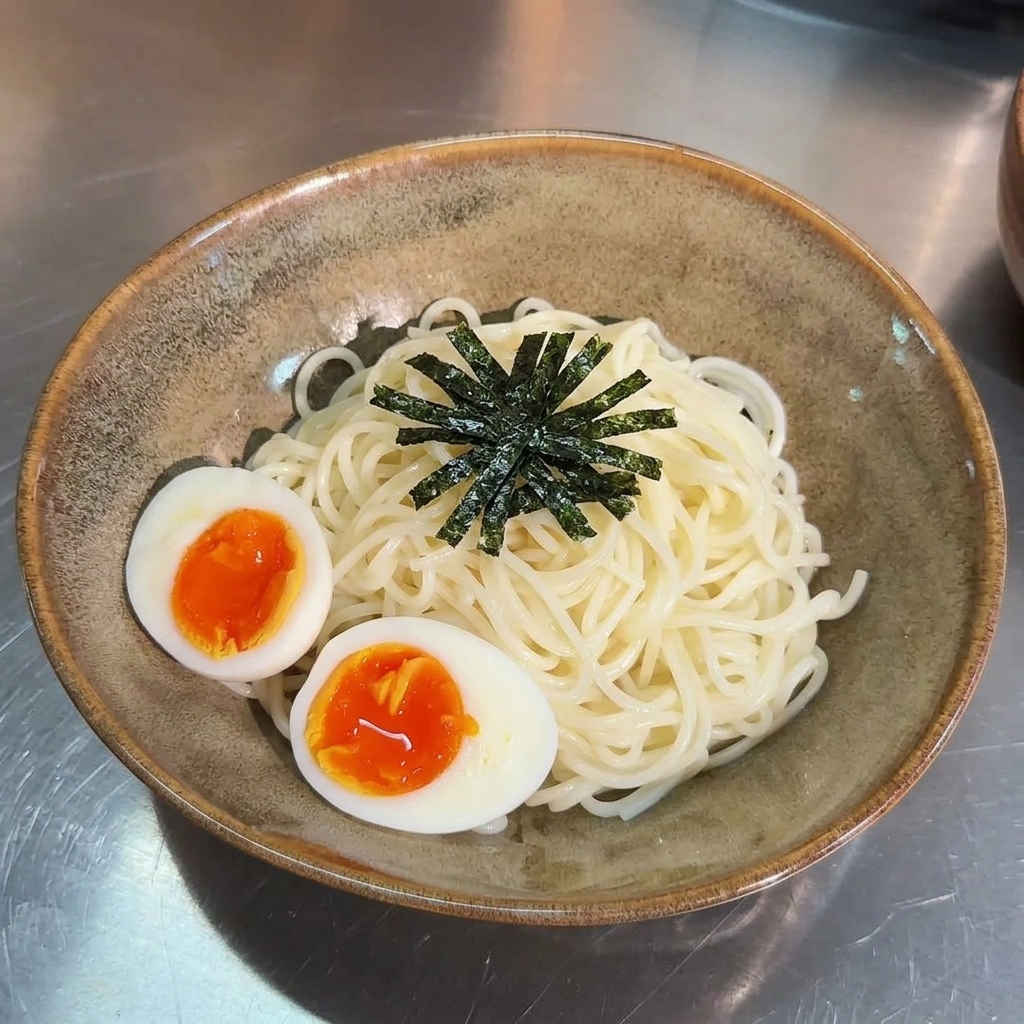
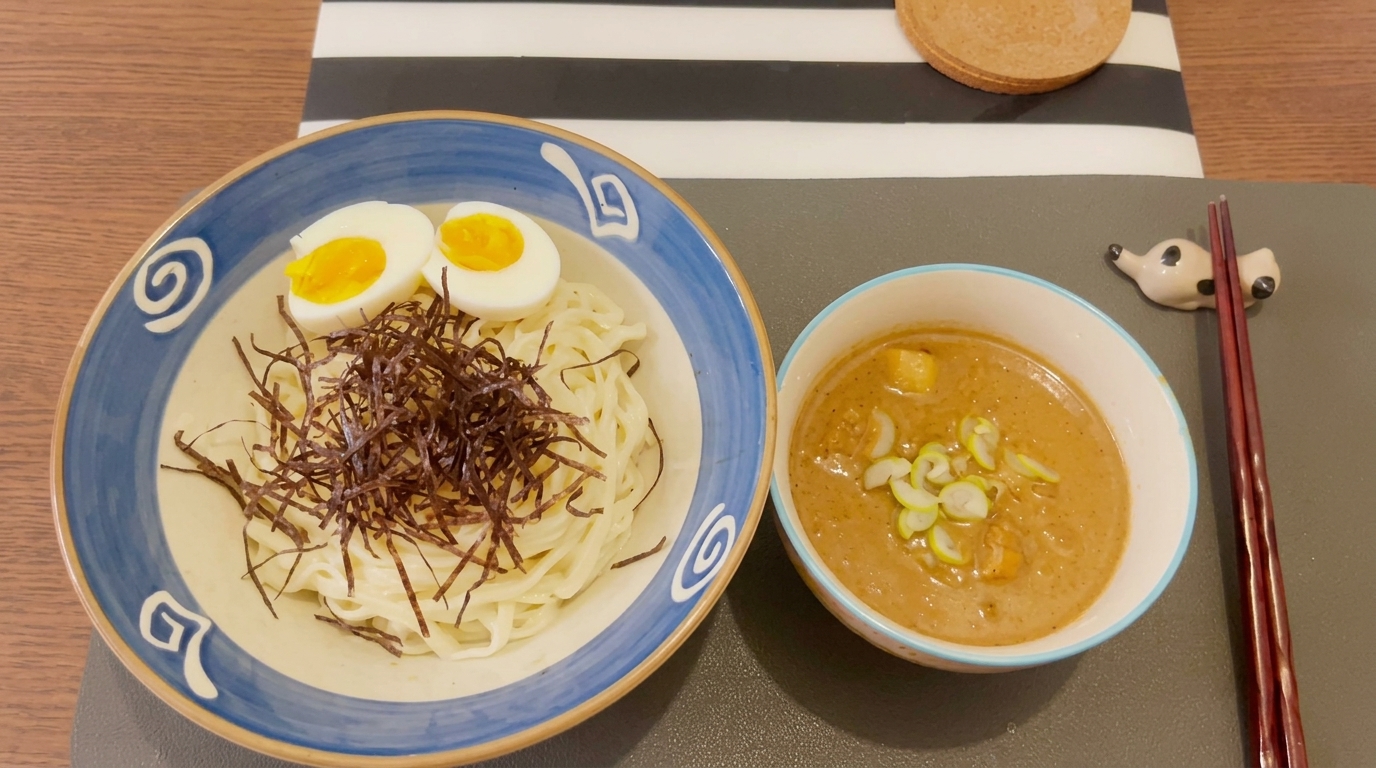
Arrange the rinsed ramen noodles in a serving bowl. Place the two soft-boiled egg halves on top to showcase the runny yolks then garnish the center of the noodles with a neat pile of shredded seaweed for an authentic Japanese touch.
Tip: Rinsing the noodles in cold water after boiling stops the cooking process and gives them a springier better texture for dipping. - 14Garnish the dipping sauce
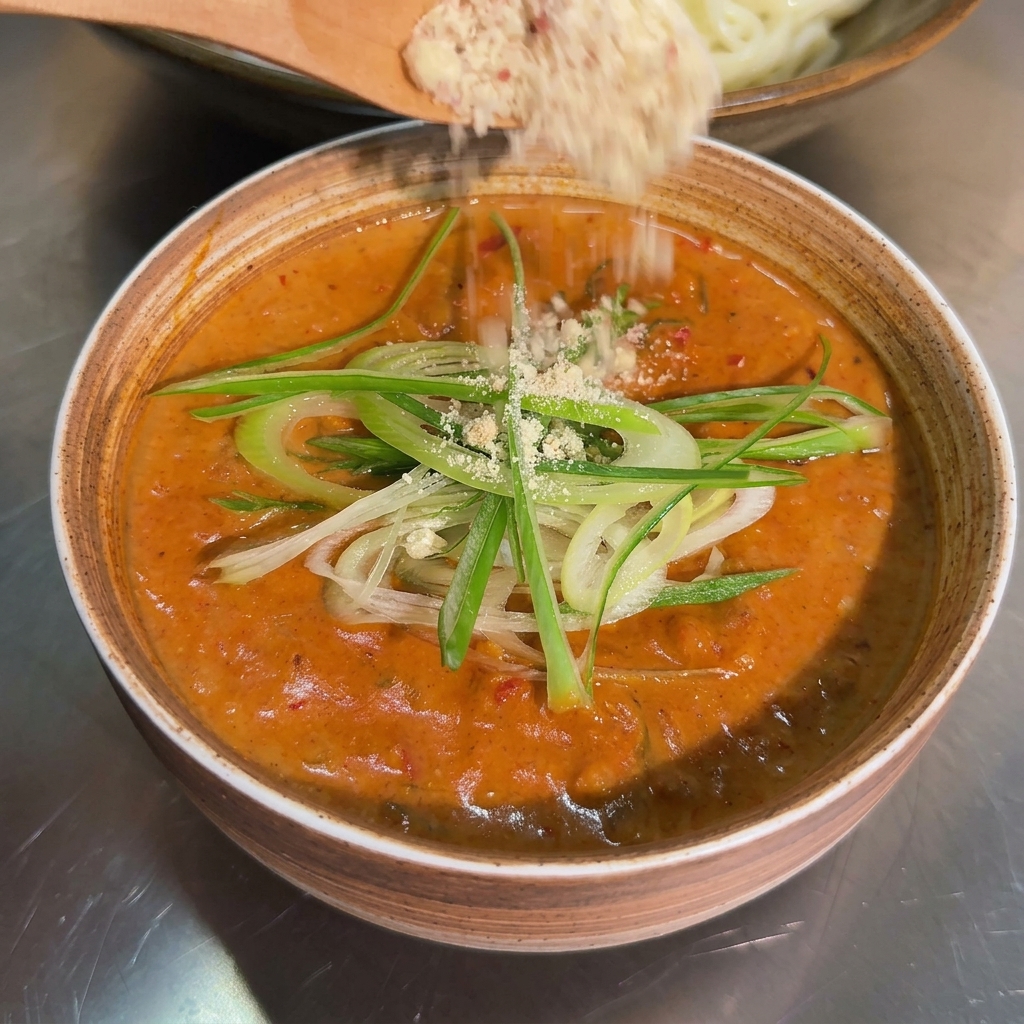
Pour the thickened miso soy milk sauce into a small dipping bowl. Top it with a generous handful of fresh green onion silk and a sprinkle of ground roasted peanuts or sesame seeds to add a nutty aroma and a satisfying crunch to every bite.
Tip: If you dont have roasted peanuts to grind, a small dollop of peanut butter can be stirred in for a similar richness.