Yan'an Zhanzhan (Shaanxi Cold Dipping Platter)
A communal Shaanxi street food classic featuring spongy gluten, silk egg pancakes, and cold noodles served with aromatic cumin and spicy garlic dipping broths.
Hailing from the Loess Plateau of northern Shaanxi, Yan an Zhanzhan is a refreshing yet intensely flavorful meal. It is defined by two distinct dipping broths, one earthy and cumin forward, the other sharp and spicy, designed to be soaked up by porous steamed gluten and hand sliced egg ribbons. Traditionally a summer staple, it balances pungency, heat, and texture in every bite.
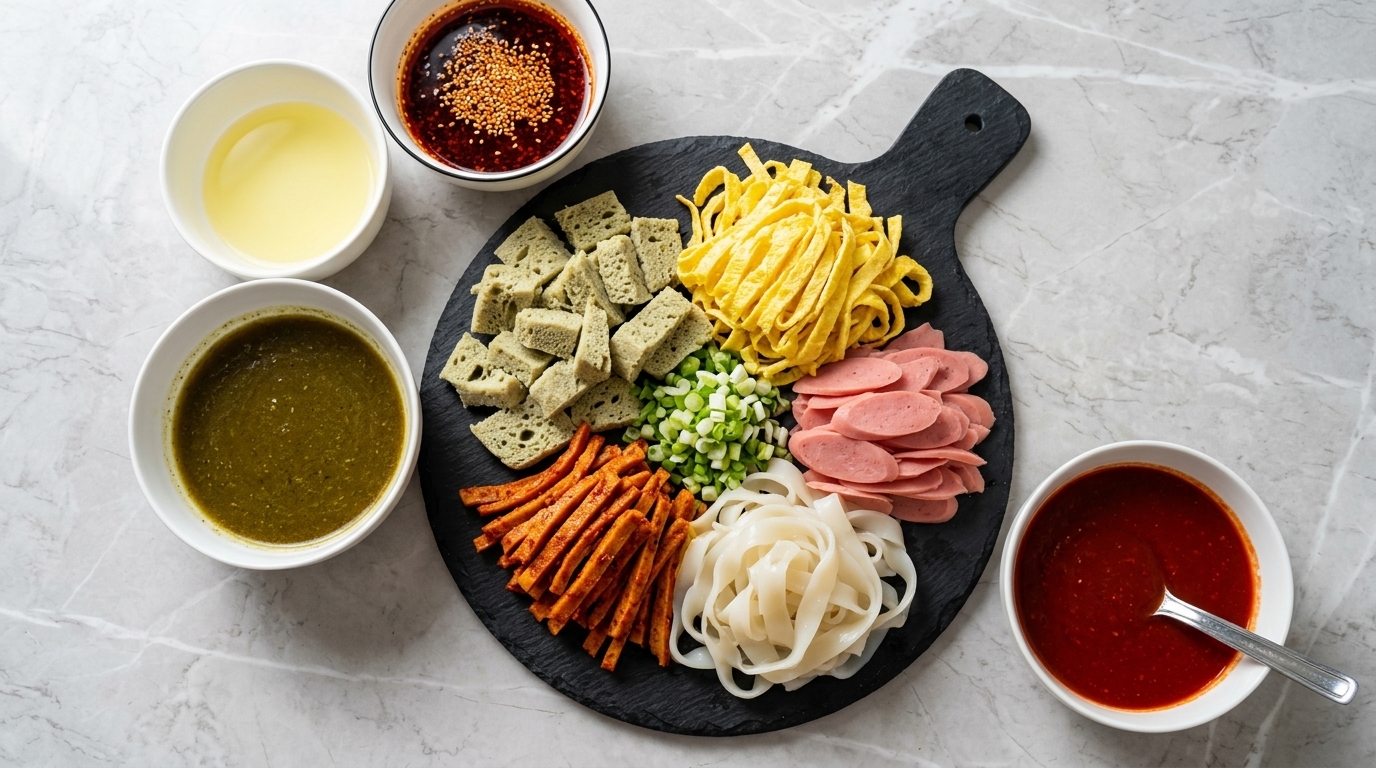
Ingredients
- 1 head fresh garlic cloves
- 3 large eggs
- 1 tbsp potato starch
- 2 millet chilies
- 3 tbsp cumin powder
- 2 tbsp red chili powder
- 250 g steamed wheat gluten (Liangpi style)
- 200 g wide cold rice noodles
- 100 g smoked bean curd or spicy latiao strips
- 2 ham sausages
- 1 tbsp toasted white sesame seeds
- to taste salt, sugar, and chicken bouillon
- optional MSG
Instructions
- 1Prep the garlic base
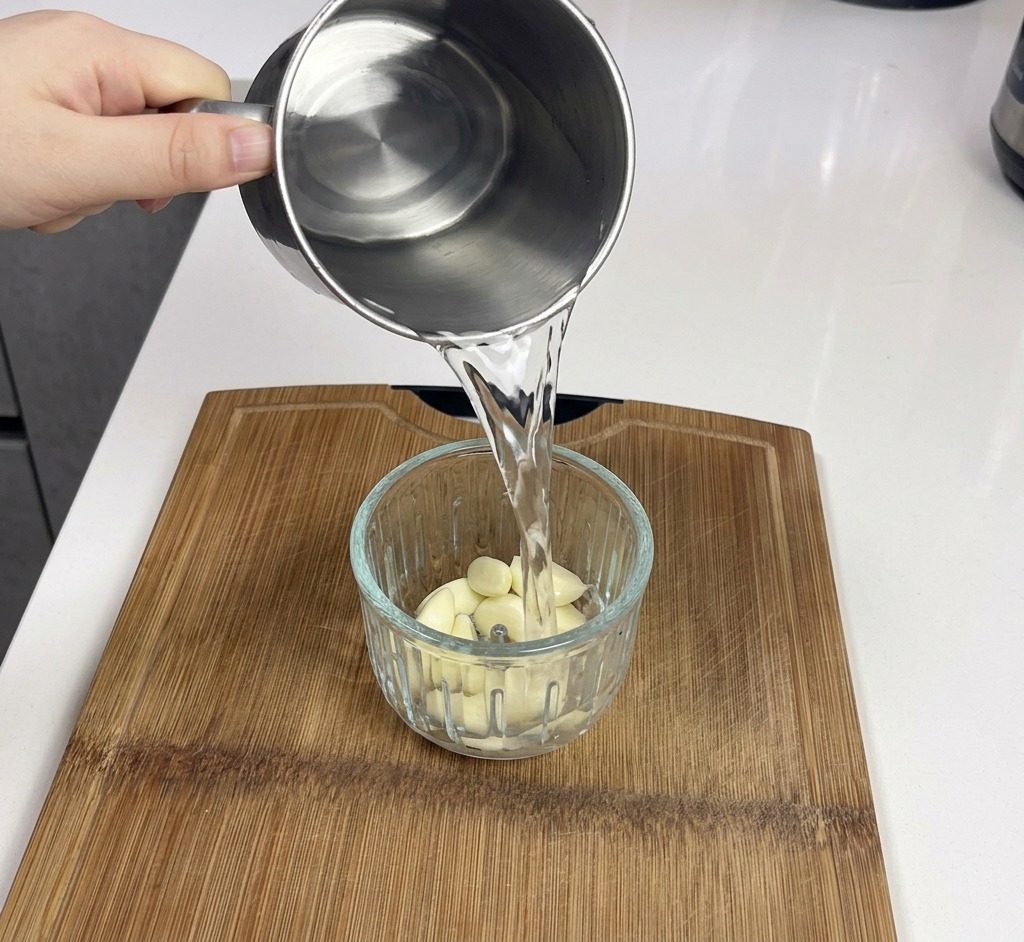
Place peeled whole garlic cloves into a small blender or food processor. Add a small amount of clean water to help the blades catch. This will be blended into a smooth garlic paste, which serves as the foundational aromatic for both the spicy and cumin-based dipping sauces.
Tip: Use fresh garlic for the best flavor; avoid pre-peeled versions as they can sometimes have a bitter aftertaste. - 2Create the spicy base
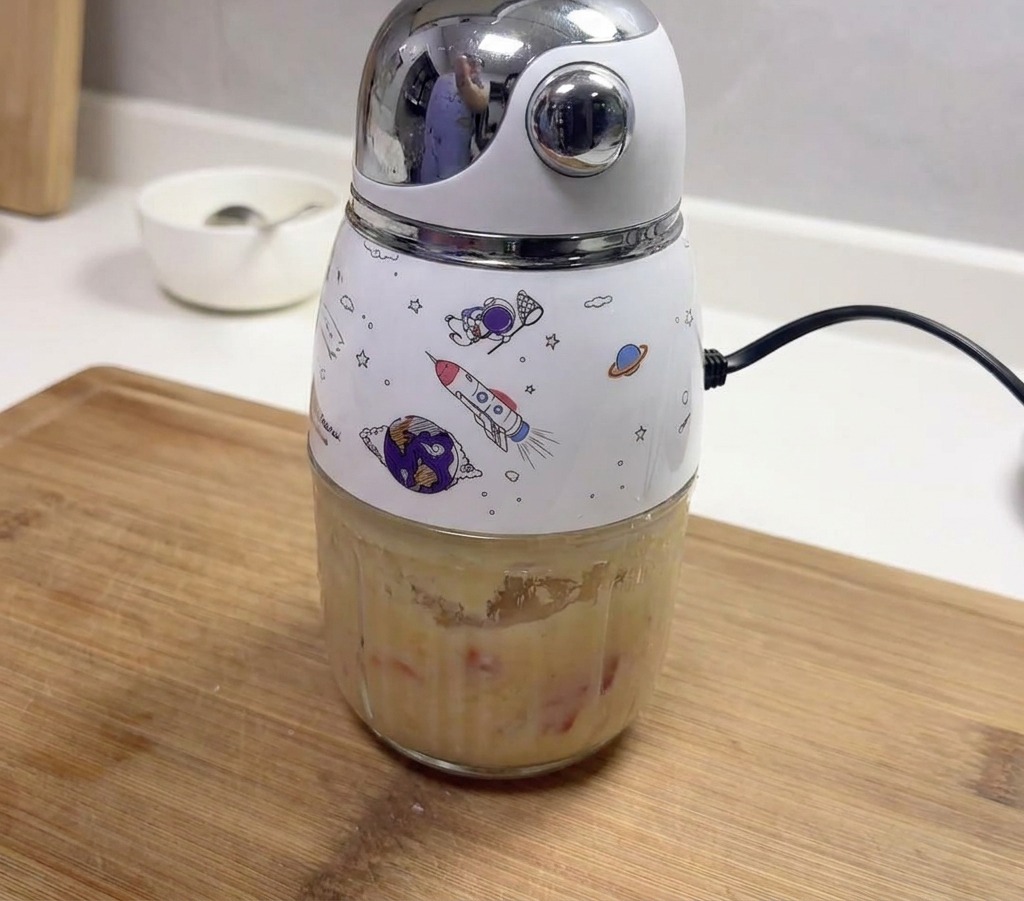
After blending a basic garlic paste, set aside two spoonfuls for later. Add several red millet chilies to the remaining paste in the blender and continue processing until the chilies are fully incorporated and the mixture is smooth and vibrant.
Tip: Millet chilies are quite hot, so adjust the quantity based on your personal heat tolerance. - 3Season the chili sauce
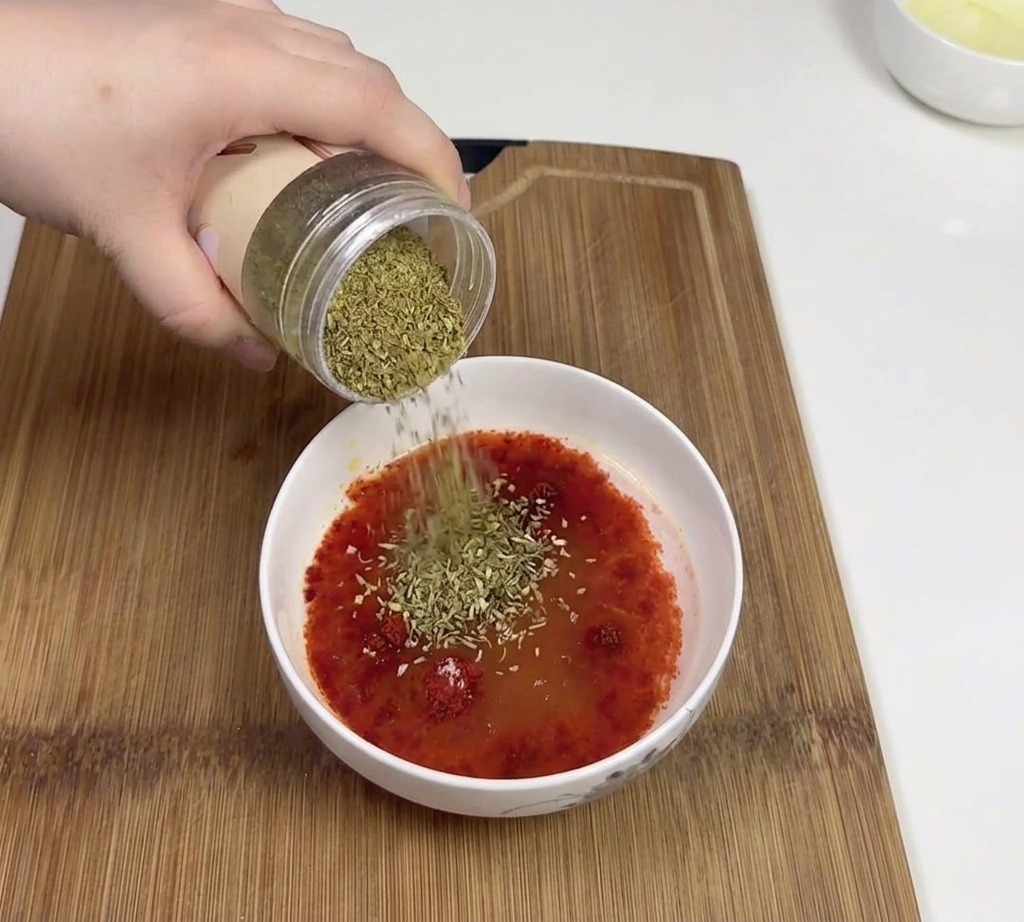
Transfer the spicy garlic paste to a bowl and whisk in water, chili powder, salt, sugar, chicken bouillon, and MSG. Add the cumin powder and mix thoroughly until a slurry forms. This seasoned base will be cooked shortly to develop a rich, savory depth.
Tip: The sugar helps balance the intense heat from the millet chilies and the pungency of the raw garlic. - 4Toast the cumin powder
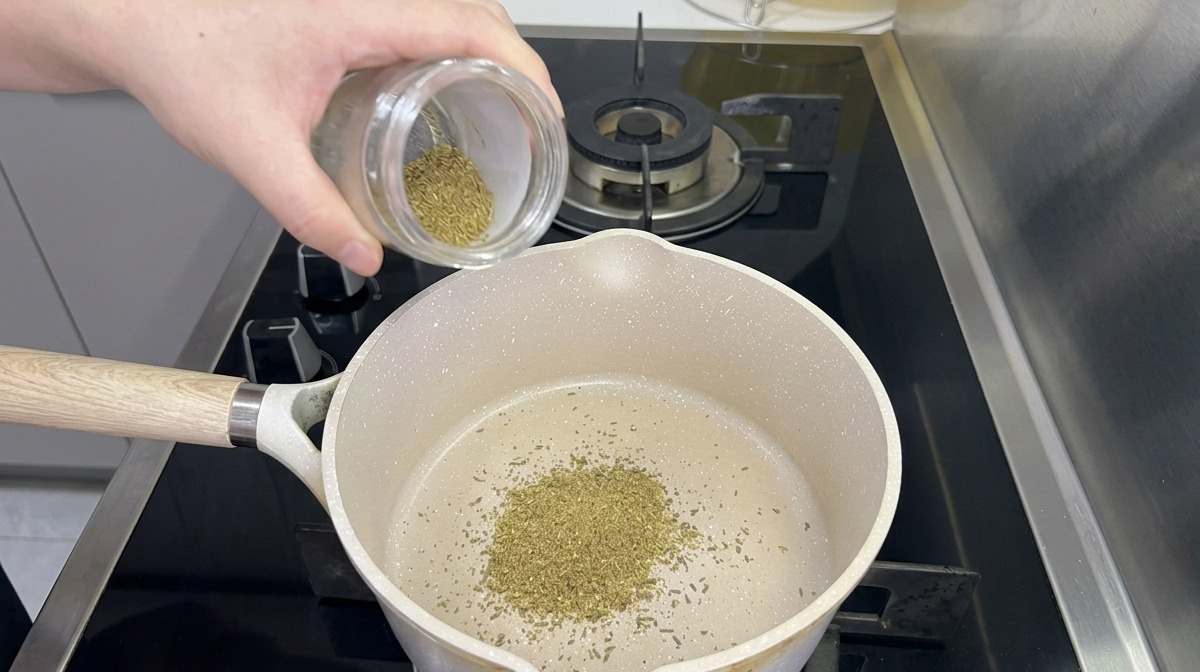
To prepare the dedicated cumin dipping sauce, pour an appropriate amount of dry cumin powder into a saucepan. Stir-fry over medium heat until the powder is fragrant and hot to the touch. Dry-toasting the spice helps release its essential oils for a deeper flavor.
Tip: Stir constantly to prevent the powder from burning, as it only takes a minute or two to become aromatic. - 5Simmer the cumin infusion
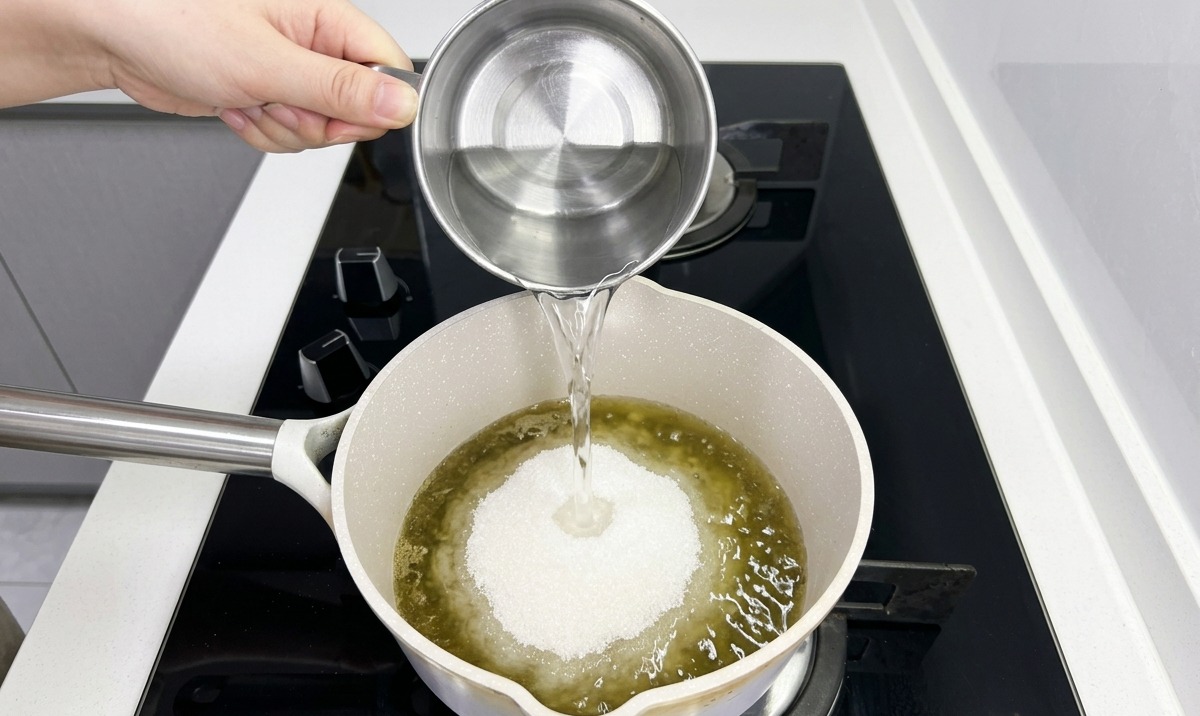
Once the cumin powder is toasted, pour in a measured amount of water. Add a pile of seasonings including salt, MSG, and chicken bouillon. Bring the mixture to a boil, then reduce to low heat and simmer for about 8 minutes to extract the full essence of the spice.
Tip: Starting with toasted spice and then simmering ensures the water is thoroughly infused with the earthy warmth of the cumin. - 6Finalize the cumin sauce
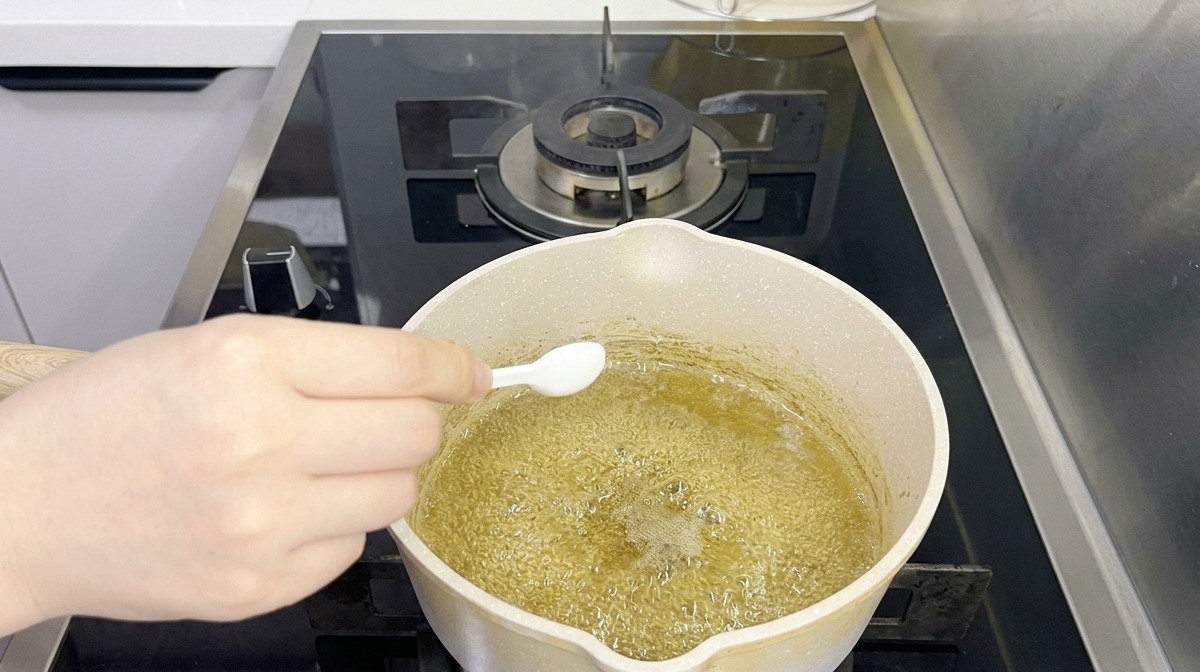
After simmering the cumin water, add any remaining salt, MSG, or chicken bouillon to taste. Bring the sauce back to a boil to ensure all seasonings are fully dissolved, then pour it out. This sauce is perfect for those who prefer a savory, aromatic dip without the spice.
Tip: Taste the sauce at this stage; it should be savory and deeply fragrant with the scent of toasted cumin. - 7Simmer the chili sauce
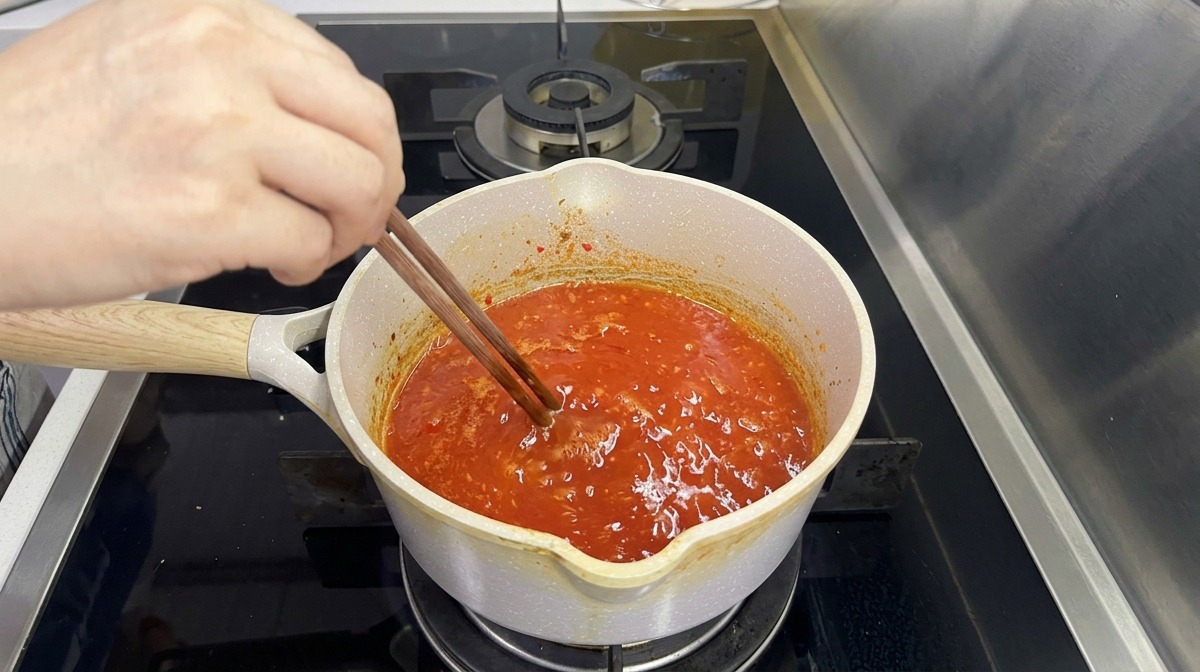
Pour the seasoned chili slurry from the previous step into a pan. Simmer over medium-low heat while stirring constantly with chopsticks. This step is vital to cook the raw garlic, removing its harsh bite and creating a silky, aromatic dipping broth.
Tip: Keep the heat low and stir constantly to prevent the garlic and spices from sticking to the bottom and burning. - 8Infuse the chili oil
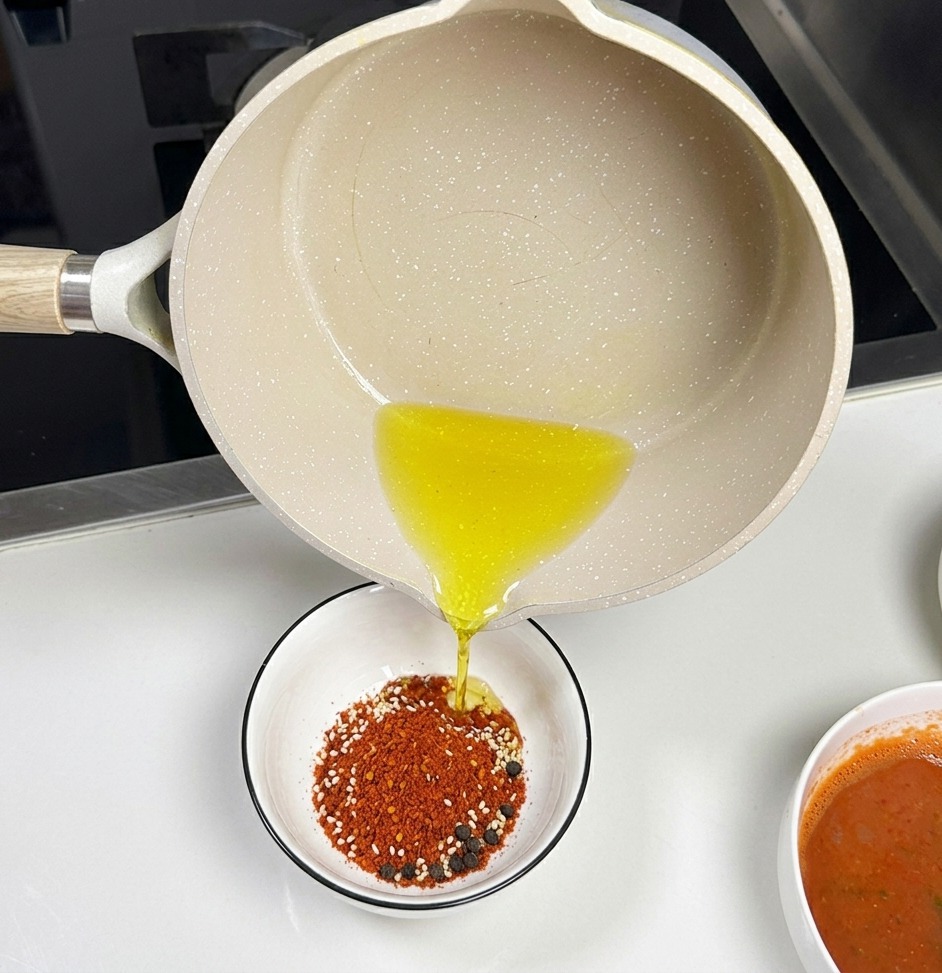
Heat cooking oil in a small saucepan until it is hot but not smoking. Carefully pour the hot oil over the bowl containing chili powder, salt, and sesame seeds. You should hear a sizzling sound as the hot oil toasts the spices and instantly releases their fragrant aroma.
Tip: If you are worried about burning the chili powder, you can add a few drops of room-temperature oil to the dry spices to dampen them slightly before pouring the hot oil. - 9Whisk the egg batter
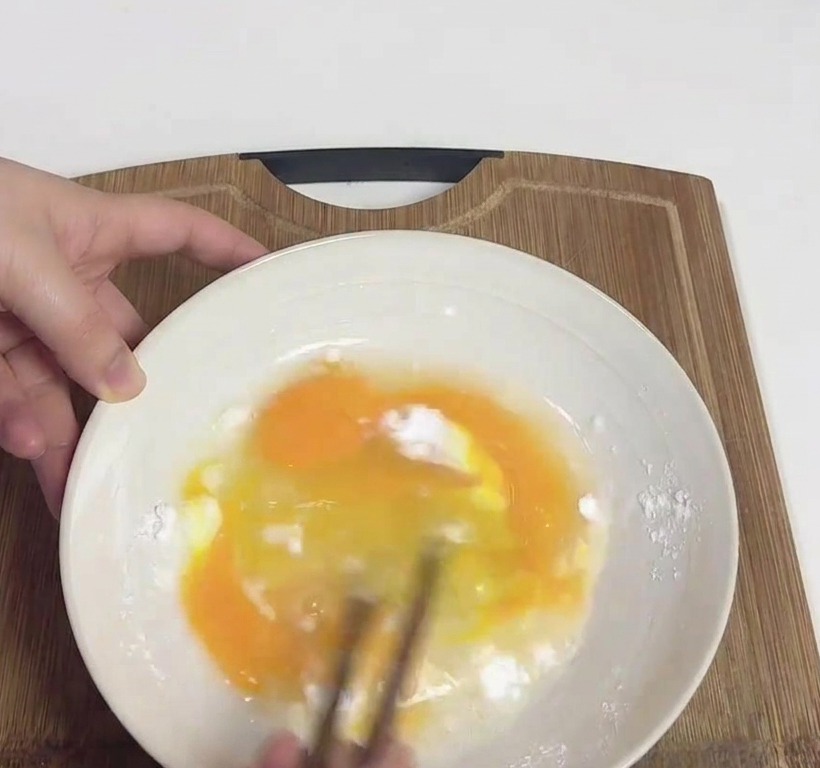
Crack three eggs into a bowl and add a spoonful of potato starch and a small amount of water. Whisk the mixture thoroughly with chopsticks until the starch is completely incorporated and no lumps remain. The starch is the secret to making the pancakes durable enough to hold the sauce without breaking.
Tip: Ensure the potato starch is fully dissolved before cooking to prevent white spots in your finished pancakes. - 10Fry the thin egg pancakes
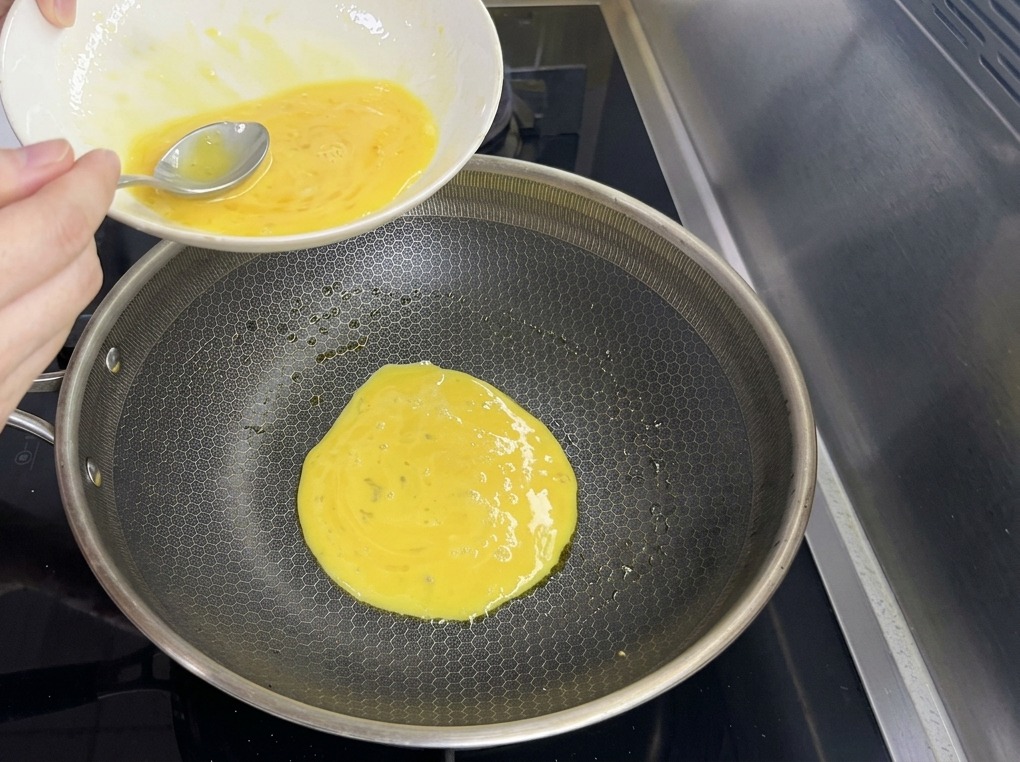
Lightly grease a large frying pan or wok and set it over medium-low heat. Pour in a portion of the egg batter, swirling the pan immediately to spread it into a thin, even layer. Cook for a minute or two until the edges lift and the pancake is set, then remove it from the heat.
Tip: If the pan is too hot, the egg will set before you can swirl it. Keep the heat moderate for a perfectly thin result. - 11Slice the pancakes
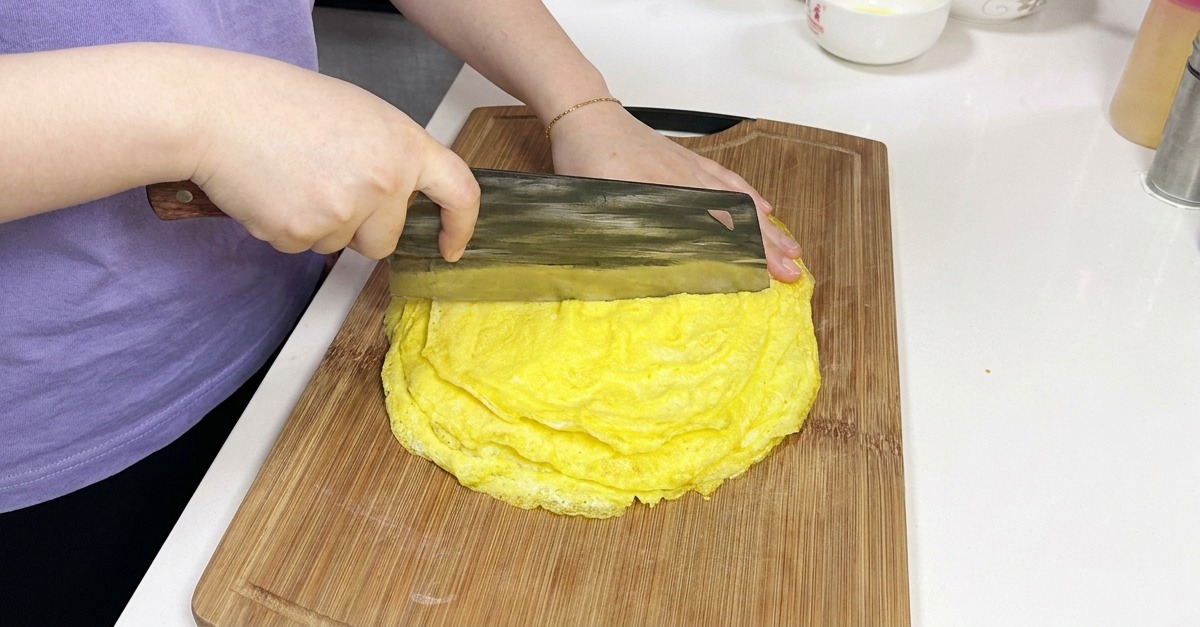
Stack the finished egg pancakes on top of each other on a cutting board. Use a sharp cleaver to slice through the entire stack, cutting them into bite-sized squares or rectangles. These thin, flexible pieces are the traditional vessel for soaking up the Zhanzhan dipping sauces.
Tip: Let the pancakes cool slightly before stacking and cutting; this prevents them from sticking together or tearing. - 12Prepare the ham sausages
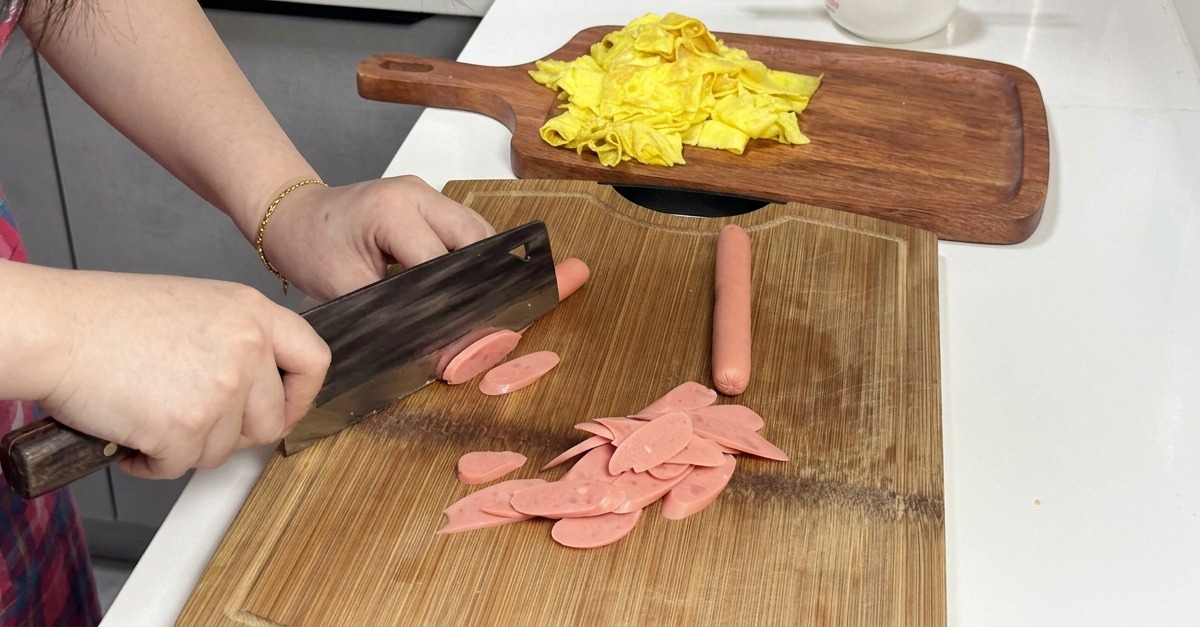
Place the ham sausages on the cutting board and slice them thinly on a sharp diagonal. Cutting them at an angle increases the surface area of each slice, allowing more of the spicy or cumin-flavored sauce to cling to the meat during dipping.
Tip: Uniformly thin slices ensure a consistent texture and make the sausages easier to pick up with chopsticks. - 13Slice the bean curd and snacks
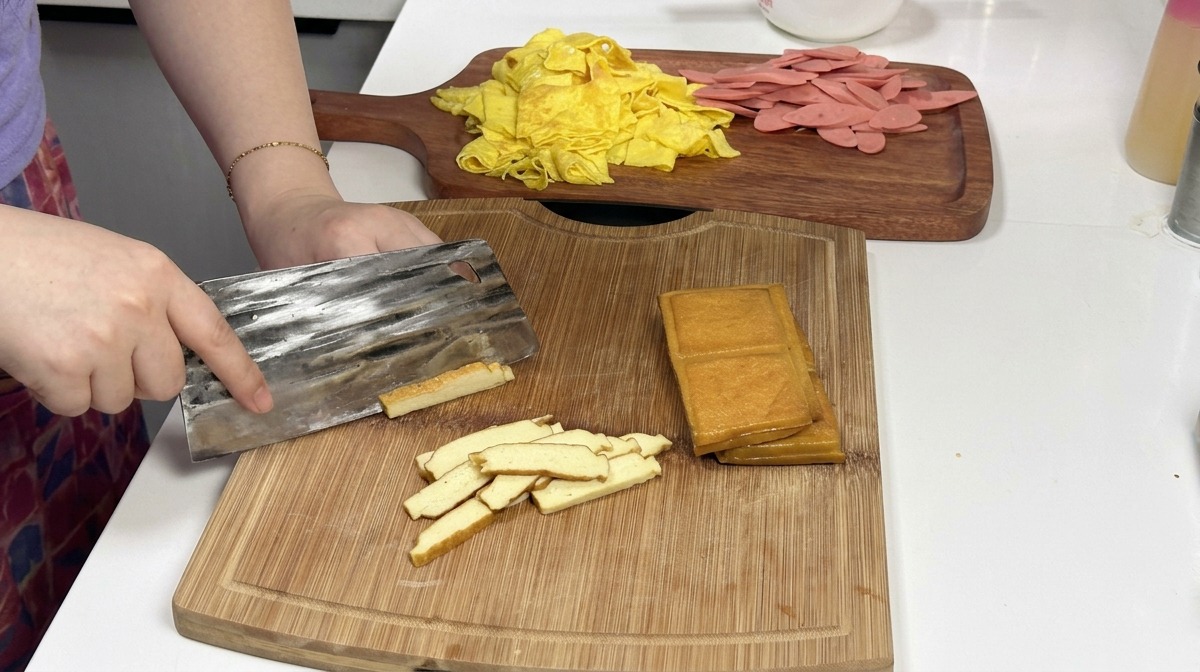
Slice the blocks of smoked bean curd into thin, uniform strips. If using latiao (spicy gluten strips), ensure they are cut to a similar length. These chewy components provide a wonderful textural contrast to the soft noodles and spongy gluten.
Tip: Maintain a consistent thickness for all strips to ensure an even texture and better sauce absorption when mixed with the other ingredients. - 14Prepare the steamed gluten
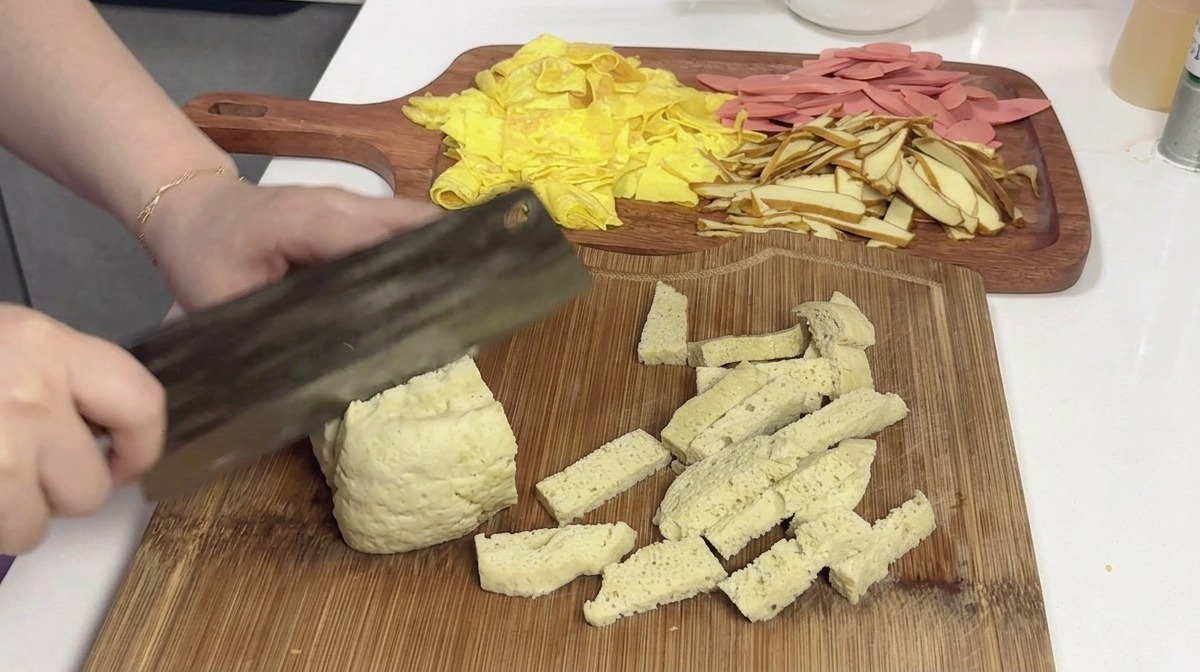
Cut the thick block of steamed gluten into small, bite-sized rectangular pieces. Steamed gluten has a spongy, porous texture that is perfect for Zhanzhan, as it acts as a sponge that soaks up every drop of the flavorful dipping broth.
Tip: If the gluten is very soft, use a gentle sawing motion with your knife to prevent squashing the airy structure while you cut. - 15Untangle the cold noodles
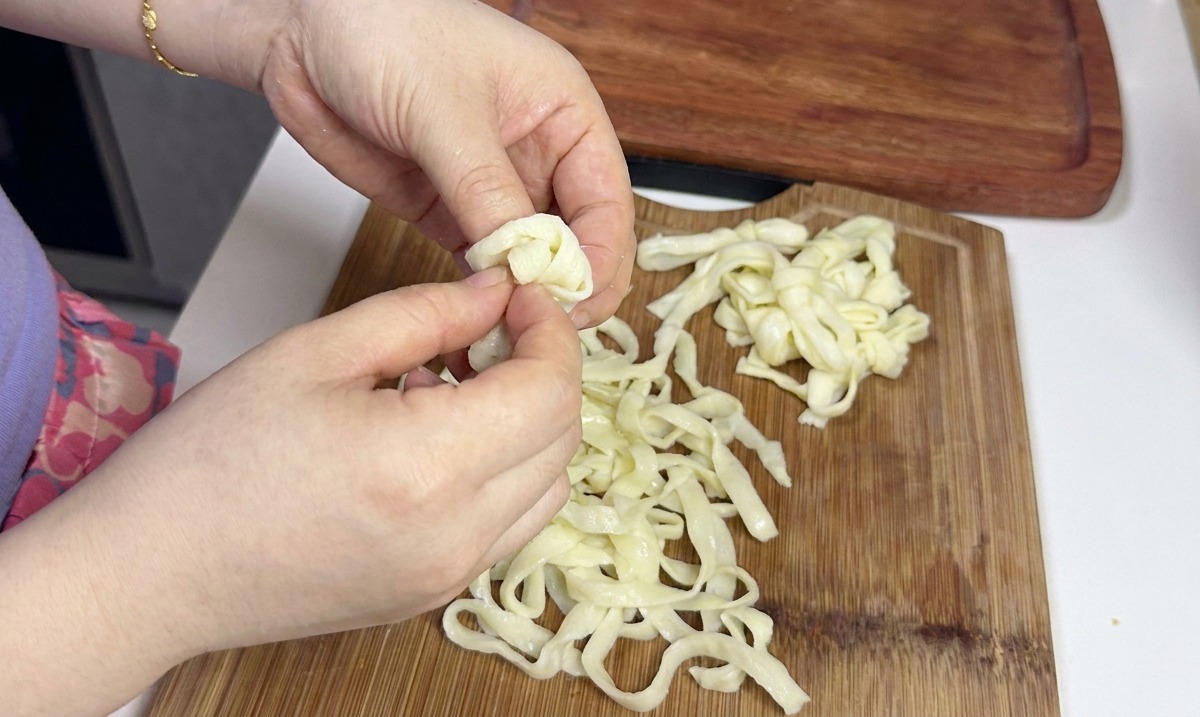
Gently pull apart the tangled strands of wide, flat white cold noodles by hand. Separating them ensures they are loose and ready for dipping, preventing them from clumping together and allowing the sauce to coat every strand evenly.
Tip: Work carefully to loosen the strands without tearing the delicate rice-based noodles; a light touch is key for a perfect presentation. - 16Cut the spicy strips
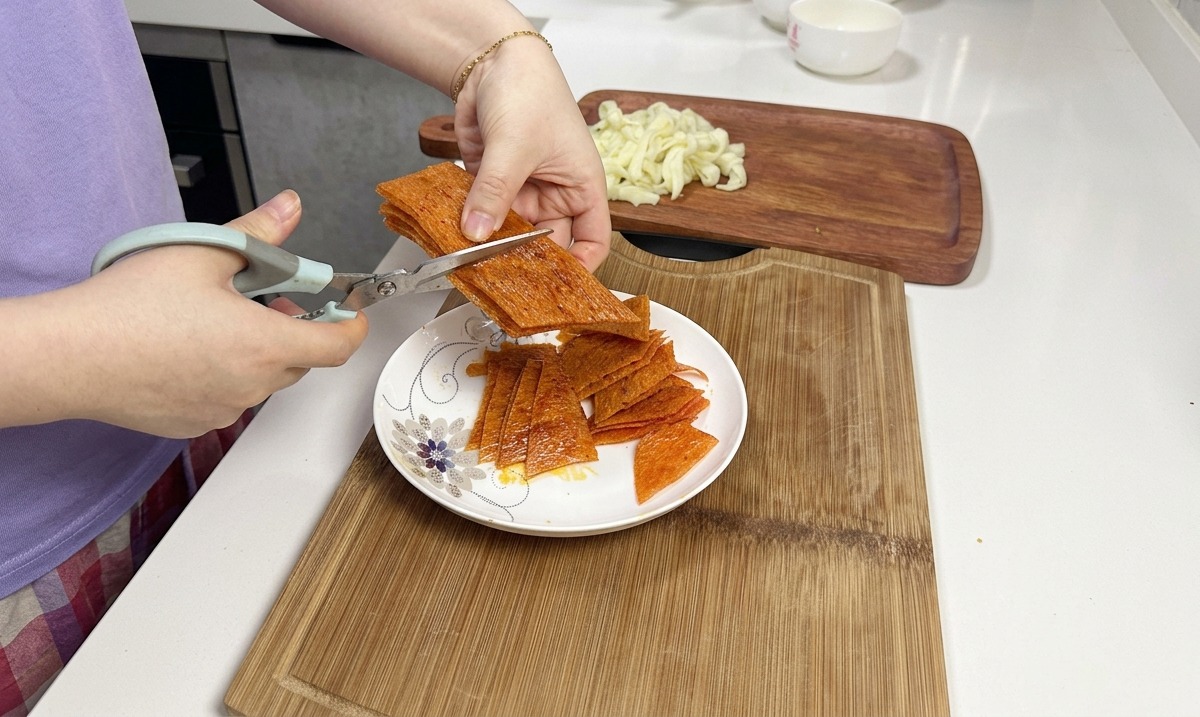
Use kitchen scissors to cut the long orange spicy latiao strips into smaller, manageable sections. These chewy, savory snacks add a spicy oil and a distinct texture to the meal, making them a popular side dish for dipping.
Tip: Scissors are the most efficient tool for cutting oily, flexible snacks like latiao, as they provide quick and clean cuts without the mess of a knife.